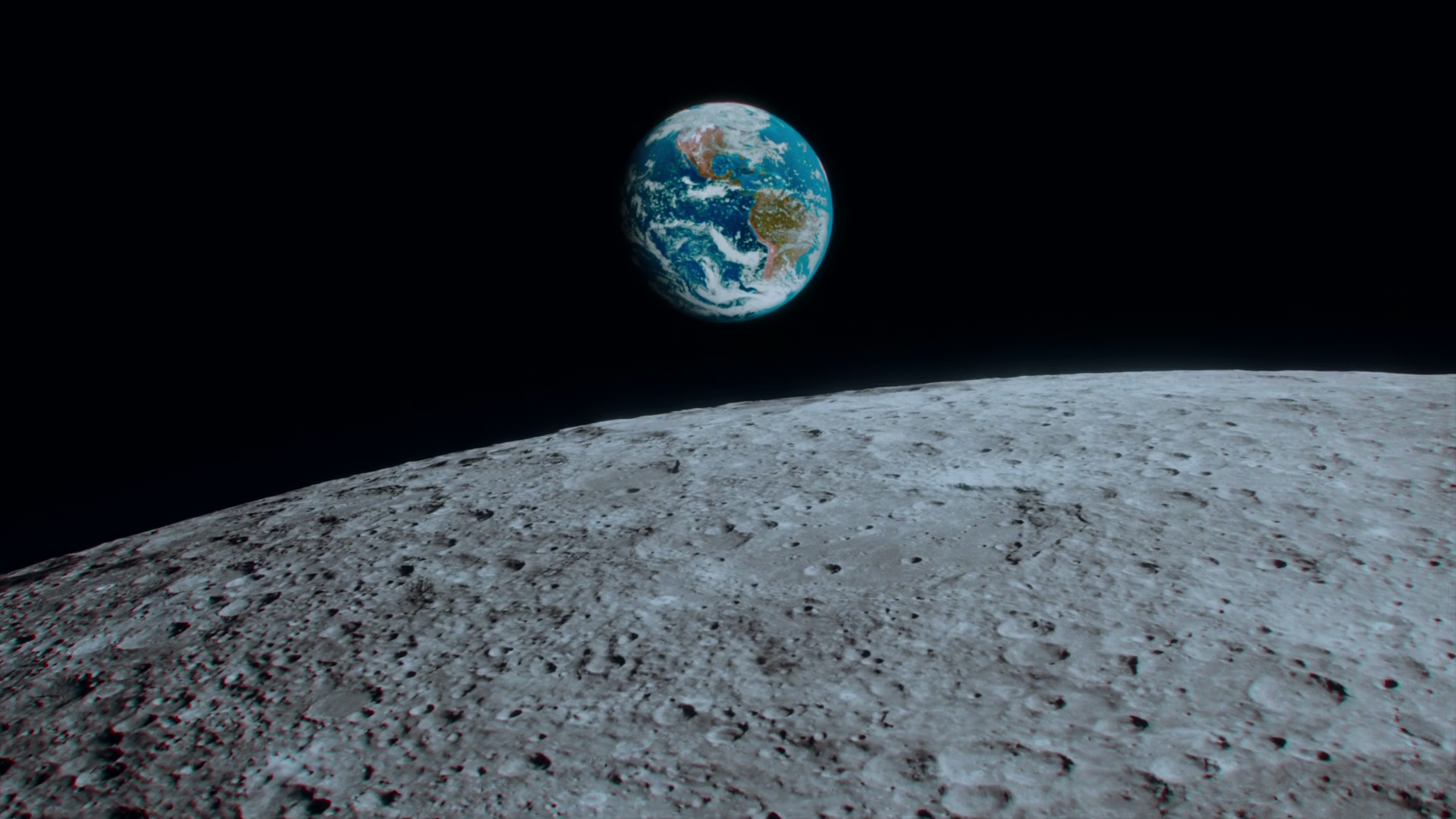
Learn why, & indeed, how, the Universe is complex, supremely nuanced, and does not care about your wilful ignorance of it – that which was and is true remains true, with or without you, long before you had your first thought! If you truly care about your free speech, your human rights, then you MUST care also about the rights of others, even strangers, for that which erodes the rights of one, erodes the rights of all people(s). 🌍
“The problem is that the game was rigged before I was born…” 🤔🫣😮💨🫥👶🏻🐣🧑🏻🍼
Two Years In: The Unseen Cost of the Bootstrap Dream
They talk about the hustle, the grind, the sleepless nights fueled by passion and cheap coffee. They tell you to bootstrap, to build lean, to prove your concept without outside money. And you listen, because it sounds like the purest form of entrepreneurship – building something from nothing, driven solely by belief in your idea.
For two years, that’s been my reality. Two years of pouring every ounce of energy, every spare moment, every last bit of mental and emotional bandwidth into bringing a vision to life. Two years of “no money down,” which really means “all of your money down,” or more accurately, “no money coming in, ever.”
The pain isn’t just financial, though that’s a constant, gnawing ache. It’s the pain of watching friends and peers hit milestones, buy homes, take vacations, while you’re calculating if you can afford the cheapest hosting plan for another month. It’s the pain of explaining, again, what you’re doing, only to see a flicker of polite scepticism in their eyes when they hear “still working on it.” And that’s among those that didn’t dropout of high school with the lowest grade – these are the people in your home town. They mean well, but understand almost nothing, and know even less. They fill their lives with the lowest common denominator of dreary scripted idiomatic/idiocratic reality TV entertainment, booze, and nicotine vapes. They defend the indefensible actions of billionaires, not realising that as human beings, they are equals, as we all are mortal.
The time commitment is absolute. Weekends cease to exist as leisure time; they become development sprints, marketing deep dives, or desperate attempts to network. Evenings aren’t for unwinding; they’re for catching up on the mountain of tasks you couldn’t squeeze into the day job (if you’re lucky enough to still have one). Every hour feels like it must be productive, leading to a relentless, self-imposed pressure cooker.
And the effort… oh, the effort. It’s not just coding or designing or selling. It’s the administrative slog, the legal hoops, the endless customer support queries (even when you only have a handful of users/clients/projects). It’s the mental gymnastics required to wear ten+ different hats simultaneously – CEO, CTO, Lead Developer, Accountant, HR, Porter, Engineer, Science Advocate, Physicist, Head of Marketing, Customer Service Rep, and janitor. You learn skills you never knew you needed, push boundaries you thought were insurmountable, and discover reserves of resilience you didn’t know you possessed.
But the struggle is perhaps the most insidious part. It’s the constant battle against doubt, both internal and external. It’s pitching your heart out, presenting a meticulously researched business case, showing clear market potential and a viable path to profitability, only to be met with polite rejections, radio silence (ghosting), or the dreaded “come back when you have more traction [etc].”
You refine the pitch, tweak the model, gather more data, show early signs of adoption, however small. You believe, fundamentally, that this should work. The logic is sound, the market need (nay, the human species need) is real, the solution is elegant, profound. Yet, despite the undeniable effort and the seemingly solid foundation, the appreciable success remains elusive. The traction isn’t enough, the growth isn’t exponential, the investors aren’t biting.
Two years. From late ~2023. It feels like a lifetime and a blink of an eye all at once. You’ve built something real, something functional, something you’re genuinely proud of. But the world hasn’t embraced it in the way you envisioned. The dream isn’t dead, not yet, but it’s certainly battered and bruised.
This isn’t a story of failure, not definitively. It’s a story of the brutal, unvarnished reality of the bootstrap journey when the stars don’t align perfectly. It’s a testament to the sheer willpower required, and a sober reminder that sometimes, even with a sound plan and relentless effort, the path to success is longer, harder, and more uncertain than any blog post or startup guru will ever fully prepare you for.
And you’re left standing, two years in [turn the page], wondering what comes next, and how much more [the engine’s failed again] you have left to give…
Beyond the Wallet: Exploring the Psychological Impact of Universal Basic Income
Universal Basic Income (UBI) is a hot topic. Most of the discussion revolves around its economic implications: how it could reduce poverty, affect employment rates, or be funded. But what about the deeper human impact? What happens to us, psychologically, when the fundamental problem of financial survival is significantly eased?
Our lived experience has delved into this less-explored territory, moving from the individual experience of finding purpose to the potential trajectory of the entire human species.
UBI: A Foundation, Not Just a Handout
First, let’s quickly define UBI for those new to the concept. Imagine a regular, unconditional cash payment given to everyone in a society, regardless of their income, wealth, or employment status. The idea is to provide a basic safety net, ensuring everyone can meet their fundamental needs like food, housing, and healthcare.
Proponents argue this could dramatically reduce poverty, improve health outcomes, and provide individuals with greater bargaining power in the labour market. But the effects, we discussed, might run much deeper than just the economic.
The Inner Landscape: UBI and Individual Psychology
Easing financial stress has clear psychological benefits. Research suggests that financial insecurity is a major driver of anxiety, depression, and chronic stress. A guaranteed income could act as a powerful buffer, potentially leading to improvements in mental well-being.
Beyond stress reduction, UBI could significantly impact an individual’s sense of agency and control. When you’re not constantly worried about making ends meet, you have more freedom to make choices about your time, education, career path, and personal life based on what truly matters to you, rather than just what pays the bills. This aligns with psychological theories emphasising the importance of autonomy for well-being.
It could also shift motivation. If the primary driver for work is no longer solely survival, people might be more inclined to pursue work that is intrinsically rewarding – something they find interesting, meaningful, or that utilises their unique skills. This could lead to greater job satisfaction and a more engaged workforce, albeit potentially a smaller one in traditional employment.
Furthermore, the universality of UBI could reduce the stigma often associated with receiving traditional welfare benefits. If everyone receives it, it becomes less about being “on welfare” and more about a shared societal foundation.
However, we’ve also touched on a potential psychological challenge: the feeling of hollowness. If basic needs and even many wants are easily met, where does purpose come from? If external achievements and consumption no longer provide sufficient fulfilment, individuals might experience a sense of apathy or indifference. This highlights the difference between hedonic well-being (pleasure and comfort) and eudaimonic well-being (meaning, purpose, and growth). True fulfilment often requires contribution, deep connection, and engaging with meaningful challenges.
Scaling Up: The Species-Level Dilemma
This individual challenge leads us to a more philosophical concern: could UBI, by removing the fundamental problem of survival, hasten a kind of “asymptotic burnout” for the human species?
Our history is largely defined by identifying and solving problems – from finding food and shelter to conquering disease and building complex technologies. This drive is deeply ingrained. But if UBI eases the most pressing survival problems, what problems do we turn to next?
The concern is that we might continue this cycle of problem-creation and solution, not out of necessity, but simply because it’s what we’re wired to do. These self-created problems could be increasingly complex, perhaps even detrimental, pursued simply to maintain a sense of purpose or progress. This rapid, potentially arbitrary cycle could lead to a collective feeling of futility and a species-wide apathy – a form of burnout where the immense energy expended feels increasingly meaningless.
Redirected Energy and Higher Purpose
However, this isn’t the only possible future. An alternative perspective suggests that UBI might unlock unprecedented human potential. The energy and cognitive resources currently consumed by the struggle for survival could be redirected towards solving truly significant global challenges like climate change, developing sustainable technologies, advancing scientific understanding, or creating profound art and culture, purely out of intrinsic motivation and curiosity.
With basic needs met, more people could potentially operate at higher levels of psychological need, focusing on belonging, esteem, self-actualisation, and even self-transcendence – contributing to something larger than themselves. UBI could enable a shift in collective energy from mere survival to meaningful creation, deeper connection, and the pursuit of higher human flourishing.
Ultimately, the psychological impact of UBI, both individually and as a species, isn’t a predetermined outcome. It depends on how we, collectively and individually, respond to a world where basic needs are met.
Will we fall into apathy and create artificial problems out of a lack of direction? Or will we seize the opportunity to redirect our energy towards meaningful contribution, deeper connection, and the pursuit of higher-order purpose?
The dominant psychological perspective – whether we approach this future with peace and a willingness to redefine purpose, or with regret for a perceived loss of traditional drivers – will shape the path we take.
Exploring the psychological dimensions of UBI is crucial because it reminds us that this policy is not just about economics; it’s about what it means to be human and what drives us when the most basic needs are met. It’s a conversation about the future of work, purpose, and the potential for a different, more beautiful kind of human flourishing and thriving.