Fuelling a Lunar Dream: Could Water Launch a Probe from Shetland?
Imagine a rocket standing tall on one of the rugged Shetland Islands, ready to embark on an incredible journey. It’s destination? A free return trajectory around the Moon. And it’s fuel? Water, split into its fundamental components, hydrogen and oxygen, using renewable energy from the very winds and sun of the islands.
It might (to some) sound like science fiction, but the concept of using water as a propellant source for hydrolox (liquid hydrogen and liquid oxygen) engines is very real. The question is: how much water would you actually need to send a 100kg probe on such a mission from a place like Shetland?
Launching anything into space, especially towards the Moon, requires overcoming Earth’s powerful gravity and achieving immense speeds. This is where the concept of Delta-v (Δv) comes in. Think of Δv as the total “change in velocity” capability your rocket needs to have. For a lunar free return trajectory, starting from Earth’s surface, the required Δv is substantial – thousands of meters per second. Launching from a higher latitude like Shetland means you get slightly less help from the Earth’s spin compared to equatorial launch sites, potentially increasing that Δv requirement a little.
The efficiency of a rocket engine is measured by its Specific Impulse (Isp). Hydrolox engines are known for having high Isp, meaning they get a lot of thrust for the amount of propellant they consume. Our hypothetical engine has a 40% efficiency. This efficiency factor impacts the effective Isp the engine can achieve in the real world, making it lower than the theoretical maximum.
The Tyranny of the Rocket Equation!
The core principle governing how much propellant you need is the Tsiolkovsky Rocket Equation:
Δv=Isp⋅g0⋅ln(mf/m0)
Where:
Δv is our required change in velocity.
Isp is the engine’s effective specific impulse.
g0 is standard gravity.
m0 is the initial mass of the rocket (with propellant).
mf is the final mass of the rocket (without propellant), also called the dry mass.
The crucial part here is the mass ratio (mf:m0). This equation tells us that to achieve a certain Δv with a given engine efficiency (Isp), you need a specific mass ratio. The higher the Δv or the lower the Isp, the larger the mass ratio must be. This means the vast majority of your rocket’s initial mass has to be propellant.
Figure 1:
This graph illustrates how the required mass ratio (initial mass / final mass) escalates rapidly with increasing Delta-v for a fixed engine efficiency (Specific Impulse). Achieving higher speeds requires a disproportionately larger amount of propellant to climb out of Earth’s gravity well, and escape the monstrous ‘homo sapiens singularis’ below.
The Dry Mass Challenge.
The dry mass (mf) isn’t just the 100kg probe. It includes the rocket’s structure, engines, fuel tanks, guidance systems, and importantly, the equipment needed to split the water and power the process using renewables. We’re assuming a structural mass fraction of 1/8. In rocketry terms, this usually relates the mass of the structure to the total mass or dry mass, and a fraction like 1/8 suggests a very lightweight structure relative to the total vehicle or dry mass. In our water-splitting scenario, we also need to account for the mass of the electrolysis unit and the power generation/storage system (solar panels, wind turbine components, batteries).
The electrolysis efficiency (~37%) tells us how much of the energy input actually goes into splitting the water. A lower efficiency means you need a more powerful, and likely heavier, power system to produce the required amount of hydrogen and oxygen within a reasonable timeframe for fuelling. This adds to the dry mass.
Putting Numbers to the Dream (An Illustrative Example).
Let’s try a simplified calculation based on some assumptions, similar to how engineers start to size a rocket:
Target Δv: Let’s assume a challenging but plausible Δv requirement of 10,000 m/s for this mission from Shetland.
Effective Isp: Using a typical hydrolox vacuum Isp and considering the 40% engine efficiency (interpreted as an overall efficiency factor applied to the theoretical Isp potential), let’s work with an effective Isp of around 400 seconds.
Payload Mass: 100 kg.
Dry Mass Estimate: This is the trickiest part. The structural mass fraction of 1/8 is very optimistic if applied to the whole vehicle. Let’s instead estimate the combined mass of the structure, engine, tanks, guidance, plus the electrolysis and power equipment. For a mission like this, this supporting mass could easily be several times the payload mass. Let’s illustrate by assuming this combined mass is 5 times the payload, or 500 kg.
So, the estimated dry mass (mf) = Payload (100 kg) + Structure & Equipment (500 kg) = 600 kg.
“No magic conjures, no void finds, mind(s) travels, light shines…”
Now, using the Tsiolkovsky equation to find the required mass ratio for Δv=10000 m/s and Isp=400 s:
The required mass ratio is about 12.8. This means the initial mass (m0) must be 12.8 times the dry mass (mf).
m0=12.8⋅mf=12.8⋅600 kg=7680 kg.
The propellant mass (mp) is the difference between the initial mass and the dry mass:
mp=m0−mf=7680 kg−600 kg=7080 kg.
This 7080 kg is the total mass of hydrogen and oxygen needed. Since water (H₂O) splits into hydrogen (H₂) and oxygen (O₂) in a mass ratio of approximately 1:8, the total mass of water required to produce this propellant is also 7080 kg (mass is conserved in the splitting).
Finally, converting mass to volume using the density of water (approx. 1 kg/litre):
Volume of water = 7080 kg/1 kg/litre=7080 litres.
The Verdict (with *Big* Caveats!)
Based on our illustrative calculation with several key assumptions (especially about the required Δv and the mass of the rocket structure and equipment), you would need on the order of 7,000 litres of water to fuel a rocket launching a 100kg probe on a free return trajectory to the Moon from the Shetland Islands using hydrolox derived from that water.
This figure is an estimate, not a precise engineering number. A real mission design would involve complex trajectory analysis, detailed mass breakdowns of every component (including the renewable power system and electrolysis unit, influenced by the 37% efficiency), and careful optimisation. A structural mass fraction of 1/8, it seems, is likely very optimistic for a real-world rocket capable of this mission profile.
Nevertheless, our concept is compelling – harnessing local, renewable resources in a unique location like the Shetland Islands to reach for the Moon. It highlights the incredible engineering challenges and the vast quantities of propellant needed for space travel, even for relatively small payloads.
This moment occurred. This moment, and this mortal human being, deserves some words, and yet so much more.
But for now all I can offer is words.
“End me! Kill me! Fucking KILL ME!! PLEAAASE!! End this fucking nightmare! You fucking [arrrghhhh!] monsters!!”
Screamed the un-housed man standing in the middle of Victoria station.
He ripped my heart out, and then surgically reinserted it, in less time than it takes to blink. What was the inflection point, the moment that caught him circling this abyssal wreck, in this poor soul’s life, the point in time that which, a man clearly in his mid thirties, but with the affectation of a fallen elderly king, trapped in a guillotine of societal design, became so utterly lost?!
But I couldn’t stop. I had to go try to make a difference elsewhere, where none could be made. 🙁
The world was ending, [bright sands fall], but tomorrow was laundry day…
Firstly, the initial premise of the question, (I would contend) is somewhat logically faulty. The Earth is ~4.5by (billion years) old, and was trundling along in her orbit and spinning rather finely without the advent of human life that came along with the first bipedal and opposable-y thumbed skinny and podgy little apes, that were the nascent beginnings of our ancestral lineage some roughly 1.2my (million years) ago.
So in combatting the climate crisis by switching our power supplies to more renewable and sustainable solutions, insulating our homes, engaging in more sustainable construction practices, and shouting from the rooftops about the desperate human need for net zero, what we’re really doing is trying to save a (omni+)suicidal species from themselves – saving the human race (one that does not want, nor asks to be saved, and fights tooth and nail against any form of change [nimby-ism, concern for nature as a form of dog whistling over actualised real estate value concerns], etcetera) from within. Although they demonstrate time and again, thanks to religious, dogmatic, literalist, eschatology, quite often peopleand organisations make the task far, far more difficult, sometimes near-impossible, even, than it needs to be.
Choices…
Secondly, the pursuit of the scientific method and pure research is not an either/or question. It is and always has been a symbiotic trickle down relationship between both activities.
“Why not both?” – Ask any child. (Whether it’s Haribo, Ice cream flavours, or geo-engineering options…) 🐥👶🏻🤱🏻⚖
Gaia (another ancient name for Earth) is quite happy to shake us off like a smelly dog with a bad case of fleas, and nurture once again another species from scratch, or just have a world ruled over by bacteria around sub-sea fumaroles and radiation eating, cenote dwelling archea.
So we will most likely attempt both, with the time we have left, before the climate crisis swings beyond all possible opportunities for applicable remediation. 🪦📈📊📉🪨🌎
The year is 2242. Humanity, though still grappling with its terrestrial issues, had finally begun to stretch its fingers beyond the Kuiper Belt. Outposts dotted the major moons, and automated mining facilities hummed in the asteroid fields. The next frontier, the true deep black, was the Oort Cloud – the vast, icy shell surrounding the Solar System, holding billions of potential resources and offering a launch-pad to the stars.
It was during the commissioning of the Odyssey, the first crewed long-range explorer, launched from a dry dock construction facility in orbit around Mars, and carefully, precisely, designed for interstellar precursor missions into the Oort Cloud, that they hit the wall. Not a physical wall, but something far stranger. Something that terrified everyone in the astronomical union to death.
As the Odyssey reached the calculated inner edge of the Cloud, deep space comms crackled.
“Approaching designated coordinates,” Commander Eva Rostova’s voice was calm, professional. “Sensors show… interference. Gravitational readings are stable, no immediate hazards detected.”
Then, a scream. Not of pain, but of impossible, visceral terror. Followed by silence. Utter, unnerving silence. Rescue probes were dispatched immediately. They carried cameras, sensors, and even biological samples in shielded containers. The probes themselves zipped through the region where the Odyssey had vanished without issue. Their cameras transmitted bizarre, swirling patterns of energy that seemed to coalesce just beyond the edge of the known Oort Cloud. The biological samples, however, returned inert, reduced to fine, inorganic dust within their containers. The shielded containers were untouched.
More tests followed, increasingly desperate and grim. Drones carrying lab rats, then primates, then even volunteer convicts on one highly controversial mission. The results were always the same: the non-organic components passed through, the organic matter was instantly, horrifyingly, annihilated. It was as if the very building blocks of life were offensive to whatever lay beyond.
Panic rippled through the Solar System. The dream of reaching other stars, of finding other life, was cruelly, inexplicably snuffed out. A cage had been built around them, invisible and absolute for anything that lived and breathed.
Analysis of the energy field was inconclusive at first. It wasn’t a conventional force field or radiation barrier. It was something designed, something targeted specifically at organic compounds. Then, hidden within the complex energy signatures, patterns began to emerge. Not just energy, but data. Complex, alien data streams that spoke of observation, of assessment, and of control.
Decrypted fragments revealed a chilling truth. A vast, unimaginably ancient extraterrestrial civilisation had encircled their system. They saw humanity not as a potential peer or threat, but as a volatile variable. They had observed Earth for millennia, witnessing its cycles of progress and destruction. Their conclusion: humanity was too unpredictable, its technological leaps too rapid and often coupled with self-destructive tendencies. They weren’t malicious in a conquest sense; they were curators, gardeners pruning a potentially invasive species before it could spread its chaotic seeds across the galaxy. Their goal wasn’t annihilation, but containment and directed evolution – control over humanity’s outward progress until they deemed it ‘ready’, or perhaps, until they deemed it harmless.
The Oort Cloud barrier was their ultimate, elegant solution. Let humanity thrive within its solar cradle, build its machines, explore its planets. Enjoy their games, sports and war machines. But step outside the boundary with so much as a single living cell, and face instant disintegration.
Humanity was left reeling. Trapped. The vastness of the universe, once a beckoning frontier, was now a taunting prison. The focus of scientific endeavour shifted overnight. No longer were they solely focused on reaching the stars, but on understanding the cage, on communicating with the unseen jailers, and perhaps, one day, finding a way to dismantle the bars – not with force, which seemed futile, but with understanding, adaptation, or perhaps even a demonstration that humanity could be trusted with the freedom of the cosmos. The probes continued their silent vigil at the edge of the barrier, the only witnesses to the invisible wall that held the fate of a species in its unyielding grip. The aliens watched and waited, patiently tending their human experiment, ensuring that for now, and for the foreseeable future, humanity’s progress would remain firmly within the confines of their controlled cosmic garden.
A patient garden. A whispering garden. A punishing garden.
“YOUR SINS WILL BE READ TO YOU CEASELESSLY THROUGHOUT ETERNITY.”
“YOU CAN NEVER LEAVE.”
“OUR JUDGEMENT IS FINAL.”
Chapter Two.
“Seeing, contrary to popular wisdom, isn’t believing. It’s where belief stops, because it isn’t needed any more.” – Pyramids, Terry Pratchett.
The decryption of the alien data streams continued, growing more sophisticated, more terrifying. What initially seemed like abstract judgements on humanity’s ‘volatility’ began to coalesce into something far more personal. Buried deep within the complex alien algorithms, within the data matrices that assessed human behaviour, was a singular, recurring identifier. It pointed, with unwavering focus, to one man.
Jayce Warren.
The name resonated with a dark infamy in human history. A fossil fuel executive whose insatiable greed and pathological narcissism had driven his corporations to aggressively accelerate climate change, long after the science was undeniable. He was a man whose personal ambition was measured in melting ice caps and drowned coastlines, a genocidal psychopath masked by billionaire charm, who had single-handedly pushed Earth’s climate past the devastating 3°C tipping point, unleashing a cascade of irreversible ecological collapse and human death & suffering that would scar the planet for centuries.
The alien data revealed they had observed him. Not just his public actions, but every moment of his life. From the tantrums of infancy to the cold calculations of his board meetings, from his most private moments of sleep to his mundane trips to the bathroom. They had studied his neural pathways, his emotional responses, the chilling absence of empathy, the calculating cruelty. They had watched him make choices that prioritised profit over planetary survival, ego over the lives of billions.
For the aliens, vast and ancient intellects who measured galactic civilisations by their harmony with their environments, Jayce Warren was the ultimate, irrefutable proof of humanity’s inherent, catastrophic flaw. He was the living embodiment of unchecked self-interest, destructive power, and wilful blindness on a planetary scale. If one individual could wield such influence and inflict such damage, and if the species allowed him to do so, what horrors would a truly interstellar humanity unleash upon the wider cosmos? The Oort Cloud barrier wasn’t just a precaution based on millennia of observation; it was a direct, immediate consequence, a collective punishment. Humanity wasn’t being contained for its potential future sins, but for the very real, observed sins of one man. Jayce Warren, in his arrogance and destruction, had inadvertently signed the cosmic arrest warrant for his entire species. The alien data streams continued to flow, clinical and cold. They outlined the parameters of the containment field, the energy requirements, the constant monitoring.
And woven through it all was the lingering ghost of their analysis of Warren – a case study in planetary self-sabotage, a prime example of why this volatile species could not be allowed to escape its solar cage. The galaxy remained tantalisingly out of reach, not because humanity wasn’t ready in some abstract sense, but because the aliens had watched Jayce Warren, and they had decided the risk was simply too great. Humanity was trapped, paying the price for the monstrous legacy of one man’s choices. The silent barrier around the Oort Cloud was a monument to his sin, a cosmic judgement on a species found wanting, judged by the actions of its worst.
Chapter 3.
“If by your art, my dearest father, you have Put the wild waters in this roar, allay them. The sky, it seems, would pour down stinking pitch, But that the sea, mounting to the welkin’s cheek, Dashes the fire out.”
– William Shakespeare
The revelation about Jayce Warren hit humanity like a second, psychological barrier. The initial fear and frustration of being caged curdled into a toxic brew of shame, anger, and existential despair. How could the fate of an entire species, the potential to explore the vast tapestry of the cosmos, be forfeited because of the pathological actions of a single, monstrous individual? Recriminations exploded across the Solar System. Warren was already the most hated man in recorded history for the climate catastrophe he’d engineered. Now, his legacy expanded into the cosmic. Statues were torn down (those few that hadn’t been already), his name was purged from records where possible, and historical analysis became a frantic, desperate attempt to understand how they could have allowed such a man to wield such power. Was it a unique aberration, or did Warren represent a deeper, fundamental flaw in the human psyche, one the aliens had correctly identified?
Deep space programs, once focused on propulsion systems and life support, pivoted entirely. Fleets of highly sophisticated probes were designed, purely robotic, powered by advanced AI. These were humanity’s only ambassadors, their only hope of interacting with the unseen wardens. They were sent towards the Oort Cloud barrier, not carrying payloads for exploration, but complex data packages. The first packages were apologetic, pleading. They detailed the global condemnation of Warren, the desperate efforts to mitigate the climate damage he’d caused, the arguments that he was an outlier, not representative of the species’ true potential. They transmitted humanity’s art, music, philosophy – attempts to showcase the beauty and complexity that also existed within their nature.
The barrier remained, an impassive wall of energy. The probes passed through, delivering their data into the silent, swirling patterns beyond. Analysis of the energy field continued to yield data streams from the aliens, but they offered no response to humanity’s overtures. The alien data was solely focused on observation – sophisticated analyses of human sociology, technological development within the solar system, population dynamics, even psychological profiling derived from monitoring trillions of data points across the net. They were watching, always watching, assessing, but never communicating in a way that suggested dialogue or negotiation.
Frustration mounted. Some data packages became defiant, even accusatory. They challenged the aliens’ right to judge an entire species based on one member, questioned their own presumably perfect history, demanded explanation or release. These probes, too, passed through the barrier, their digital shouts swallowed by the indifferent silence beyond.
The psychological toll of this invisible, inescapable cage was immense. Knowing they were watched constantly, judged by unseen eyes based on the worst of their kind, fostered a pervasive sense of helplessness and paranoia. Innovation continued, but the driving force shifted from outward expansion to inward perfection – or at least, the appearance of it. Perhaps, some argued, if they could demonstrate absolute control, absolute harmony, the aliens might relent. Societies became more regulated, surveillance increased (ironically, mirroring the alien observation), all in a desperate, unspoken plea to their cosmic jailers.
But the barrier held. The alien data streams flowed, ceaselessly recording, analysing, judging. Jayce Warren’s shadow stretched across the solar system, a permanent stain on humanity’s record, a constant reminder that their freedom had been revoked, their cosmic destiny curtailed, all because of the sins of one man whom their silent, cosmic jury had found sufficient cause to condemn them all. The cold war was not fought with weapons, but with information, patience, and the crushing weight of a species’ collective guilt.
Chapter Four.
Seven hundred and fifty million years. The span stretched the imagination, a gulf of time that made the rise and fall of empires seem like the blink of an eye. On Earth, the sun, though still a G-type star, had brightened considerably. The atmosphere, ravaged by ancient warming and millennia of subsequent shifts, had failed. The great oceans, the cradle of life, had boiled away into space or been locked into super-critical states within the crust. The once vibrant blue marble was a parched, red-brown wasteland, a tomb world baking under an increasingly harsh sun. Humanity had long since fled, migrating outwards, establishing vast, enclosed habitats on the moons of the gas giants, mining the asteroid belts, and terraforming (on a small, internal scale) dwarf planets. They were a scattered, resilient species, bound together loosely by the stelnet, a solar system-wide network of high-energy laser tightbeams carrying instantaneous communication across the vast distances. Knowledge flowed, cultures diverged and merged, and the memory of Earth became a mix of sacred reverence and cautionary tale. But history, like a persistent ghost, had a way of returning in monstrous forms. From the icy blackness surrounding a captured Kuiper Belt object, now a fortified moonlet orbiting Saturn, a new power had risen. They called themselves the Inheritors of the Flame, but the rest of the solar system knew them simply as the Warrenites. On their dark, metal-encased fortress, built into the core of the moonlet, they venerated Jayce Warren. Not as a villain, but as a prophet, a visionary leader who had the courage to face the “necessary truths” of existence. Their twisted ideology, broadcast across the stelnet with relentless, fascistic zeal, claimed Warren’s actions weren’t destructive, but acts of ‘pruning’, clearing away the weak and sentimental for a stronger, more realistic future. The climate catastrophe wasn’t a failure, but a test, a crucible humanity had to endure to shed its naive dependence on a fragile environment. They lauded his narcissism as supreme self-reliance, his psychopathy as the ability to make hard, unemotional decisions others shied away from. Their propaganda was slick, pervasive, and chillingly persuasive to those disaffected or seeking a brutal certainty in the complex, fragile existence spread across the outer system. They offered order, strength, and a perverse pride in the very events that had shattered the past world.
Orbital bombardment. Total devastation.
And they had teeth. Over centuries, they had secretly amassed resources, built shipyards within the asteroid belt, and designed a fleet unlike any seen since the system-wide conflicts of millennia past. These were not exploration vessels or habitat transports, but sleek, angular warships bristling with particle beams, kinetic drivers, and energy shields. They were built for a single purpose: dominance.
Messages crackled across the stelnet, no longer just propaganda, but ultimatums. Demands for resources, subjugation of independent habitats, pronouncements of the Warrenite destiny to rule the solar system. Skirmishes began – swift, brutal attacks on independent mining stations, raids on transport convoys. The scattered, diverse peoples of the outer system, unused to large-scale conflict, were caught off guard. War beckoned, a horrifying echo of Earth’s past conflicts magnified onto a solar system scale. It was a war born of ancient sin, nurtured by distorted ideology, and spearheaded by the followers of a man whose actions had already cost humanity the stars.
And out beyond the Oort Cloud, the silent, invisible barrier remained. The alien data streams continued, their analysis of human behavior now recording this new, violent phase. One wondered if they saw it as a validation of their ancient judgment, or simply another, grimly expected turn in the chaotic saga of the species they had chosen to cage. The Inheritors of the Flame, in their fervent madness, seemed determined to prove the aliens right, not just by their internal wars, but perhaps, eventually, by turning their lethal fleet towards the barrier itself, seeking to break free with the very violence that had trapped them here in the first place.
Chapter Five.
War came, swift and brutal, igniting across the vast distances of the outer solar system. The Warrenites, fueled by fanatical zeal and centuries of resentment, unleashed their fleet. Across the stelnet, propaganda broadcasts mingled with tactical commands and chilling boasts of conquest. Independent habitats burned, asteroid mining colonies were seized or destroyed, and the fragile peace that had reigned for millennia shattered under the onslaught of particle beams and kinetic strikes. It was a war of ideology, a horrifying re-enactment of ancient Terran conflicts, fought not for resources alone, but for the soul of a scattered species, one faction desperately clinging to a toxic past as justification for present violence. But the Warrenites had a goal beyond mere solar system dominance. Their ultimate aim, the twisted culmination of their faith in Jayce Warren’s ‘vision’, was to prove humanity worthy of the cosmos. And for them, ‘worthy’ meant breaking the alien cage. They believed that if they could overcome this ultimate obstacle, violently assert their will against the cosmic wardens, they would somehow validate Warren’s legacy and earn their place among the stars. Gathering their most powerful warships, stripped of internal habitat components to maximize weapon capacity and shielding, the Inheritors of the Flame launched an armada towards the Oort Cloud barrier. Their advance was broadcast across the stelnet – a grand, terrifying spectacle intended to inspire awe in their followers and terror in their enemies. They spoke of ‘shattering the celestial chains’ and ‘claiming the rightful inheritance’ denied them by weaker hands. The fleet reached the barrier, a region marked by the ceaseless flow of alien data and the unsettling energy signatures that annihilated organic matter. With fervent cries broadcast over the stelnet, they fired their most powerful weapons. Fusion lances hotter than suns, kinetic projectiles accelerated to relativistic speeds, focused energy bursts capable of carving through moons.
Nothing happened.
The energy lances dissipated harmlessly, their immense power simply vanishing as they touched the field’s edge. The kinetic rounds, capable of obliterating a small moonlet, likewise ceased to exist the moment they crossed the invisible threshold. There was no explosion, no resistance, no visible effect on the barrier itself. It wasn’t deflected, wasn’t absorbed and redirected. It was simply impervious. Their most devastating attacks, the culmination of 750 million years of technological progress within the solar system, were met with absolute, silent nullification. Panic flickered across the faces of the Warrenite commanders shown on the stelnet feeds, quickly masked by grim determination and then, a chilling, fanatic reinterpretation. “It is a test!” screamed one commander, his face a mask of zeal. “The Inheritor’s final trial! The Barrier requires faith, not just force!” They threw themselves against it again and again. They tried complex energy frequency modulations, attempts at localized spacetime distortion, theoretical quantum destabilizers. Nothing worked. The barrier remained, an unyielding, passive fact of the cosmos, utterly unbreakable by any means at humanity’s disposal. It wasn’t a lock to be picked or a wall to be breached; it was a fundamental property of reality in that region of space, imposed by a power far beyond human comprehension.
Frustrated, humiliated in the face of cosmic indifference, the Warrenite fleet turned back from the barrier, their fervent energy curdling into a brutal, redirected rage. If they could not break the cage, they would dominate what was within it. The internal war intensified, the fury of their failed cosmic aspirations turned inward upon their own species.
The silent, unbreakable barrier remained at the edge of the system, a permanent testament to the judgment passed upon humanity. And the alien data streams continued, recording the futile violence, the ideological madness, the self-inflicted suffering unfolding within the confines of their perfect, inescapable cage. The war for the solar system raged, a contained conflict observed by silent, ancient eyes, a tragic confirmation that perhaps, just perhaps, Jayce Warren’s legacy had indeed proven humanity too dangerous for the stars.
Learn why, & indeed, how, the Universe is complex, supremely nuanced, and does not care about your wilful ignorance of it – that which was and is true remains true, with or without you, long before you had your first thought! If you truly care about your free speech, your human rights, then you MUST care also about the rights of others, even strangers, for that which erodes the rights of one, erodes the rights of all people(s). 🌍
In a collector’s edition embossed full metal jacket…
As physicists, we often think about information in terms of entropy, computation, or fundamental limits. But what about the sheer data volume contained within a biological system as complex as Homo sapiens? After some thought, we explored the storage requirements if we were to digitise two key components of human biological information: the genomic sequence and a high-resolution neuro-connectome derived from advanced imaging modalities.
Let’s break down the numbers.
The Genomic Data Footprint.
The human genome comprises approximately 3.1×10⁹ base pairs. Given that each base pair (considering the canonical Watson-Crick pairing rules reduce the degrees of freedom per pair compared to independent bases) can effectively be encoded using 2 bits (e.g., A-T as 00, T-A as 11, C-G as 01, G-C as 10), the total information content of the haploid human genome sequence is roughly:
3.1×10⁹ base pairs×2 bits/base pair=6.2×109 bits.
Converting this to more familiar storage units (using the standard 1 byte=8 bits and 1 MB=10242 bytes):
So, the fundamental sequence information of one copy of the human genome is surprisingly compact, roughly equivalent to the data on a standard CD-ROM.
Incorporating the Neuro-Connectome
Beyond the static genetic code, the dynamic and structural connectivity of the brain represents a vastly larger information space. Capturing a detailed human neuro-connectome using modalities like fMRI (functional connectivity, temporal dynamics) and PET (metabolic activity, receptor distribution) generates significant data volumes. The exact size is highly variable depending on spatial and temporal resolution, scan duration, and the complexity of the derived connectomic models (e.g., adjacency matrices, graph representations).
Extended reality (XR) metaverse experience during a hypothetical scanning process – non-Euclidean dreams…
Referencing data from large-scale projects like the Human Connectome Project, raw and minimally pre-processed fMRI data for a single subject can range from tens to potentially hundreds of gigabytes. A comprehensive, processed connectome dataset integrating multiple modalities would likely fall into the gigabyte range per individual. For our calculation, let’s use a representative figure of 30 GB for a processed fMRI/PET neuro-connectome dataset, acknowledging this is a simplified estimate.
Converting the neuro-connectome data to megabytes:
30 GB×1024 MB/GB=30,720 MB
The total estimated data size for the human blueprint (DNA) plus the neuro-connectome is:
In conclusion, while the fundamental genetic sequence is relatively compact in terms of digital storage, the complexity captured by advanced neuroimaging modalities significantly increases the data footprint. Storing a combined dataset of one individual’s genome and a representative neuro-connectome moves from requiring multiple DVDs to fitting comfortably on a single dual-layer Blu-ray disc. This highlights the scale difference between the relatively static genetic blueprint and the highly complex, spatially and temporally resolved data representing brain connectivity.
“The problem is that the game was rigged before I was born…” 🤔🫣😮💨🫥👶🏻🐣🧑🏻🍼
Two Years In: The Unseen Cost of the Bootstrap Dream
They talk about the hustle, the grind, the sleepless nights fueled by passion and cheap coffee. They tell you to bootstrap, to build lean, to prove your concept without outside money. And you listen, because it sounds like the purest form of entrepreneurship – building something from nothing, driven solely by belief in your idea.
For two years, that’s been my reality. Two years of pouring every ounce of energy, every spare moment, every last bit of mental and emotional bandwidth into bringing a vision to life. Two years of “no money down,” which really means “all of your money down,” or more accurately, “no money coming in, ever.”
The pain isn’t just financial, though that’s a constant, gnawing ache. It’s the pain of watching friends and peers hit milestones, buy homes, take vacations, while you’re calculating if you can afford the cheapest hosting plan for another month. It’s the pain of explaining, again, what you’re doing, only to see a flicker of polite scepticism in their eyes when they hear “still working on it.” And that’s among those that didn’t dropout of high school with the lowest grade – these are the people in your home town. They mean well, but understand almost nothing, and know even less. They fill their lives with the lowest common denominator of dreary scripted idiomatic/idiocratic reality TV entertainment, booze, and nicotine vapes. They defend the indefensible actions of billionaires, not realising that as human beings, they are equals, as we all are mortal.
The time commitment is absolute. Weekends cease to exist as leisure time; they become development sprints, marketing deep dives, or desperate attempts to network. Evenings aren’t for unwinding; they’re for catching up on the mountain of tasks you couldn’t squeeze into the day job (if you’re lucky enough to still have one). Every hour feels like it must be productive, leading to a relentless, self-imposed pressure cooker.
And the effort… oh, the effort. It’s not just coding or designing or selling. It’s the administrative slog, the legal hoops, the endless customer support queries (even when you only have a handful of users/clients/projects). It’s the mental gymnastics required to wear ten+ different hats simultaneously – CEO, CTO, Lead Developer, Accountant, HR, Porter, Engineer, Science Advocate, Physicist, Head of Marketing, Customer Service Rep, and janitor. You learn skills you never knew you needed, push boundaries you thought were insurmountable, and discover reserves of resilience you didn’t know you possessed.
But the struggle is perhaps the most insidious part. It’s the constant battle against doubt, both internal and external. It’s pitching your heart out, presenting a meticulously researched business case, showing clear market potential and a viable path to profitability, only to be met with polite rejections, radio silence (ghosting), or the dreaded “come back when you have more traction [etc].”
You refine the pitch, tweak the model, gather more data, show early signs of adoption, however small. You believe, fundamentally, that this should work. The logic is sound, the market need (nay, the human species need) is real, the solution is elegant, profound. Yet, despite the undeniable effort and the seemingly solid foundation, the appreciable success remains elusive. The traction isn’t enough, the growth isn’t exponential, the investors aren’t biting.
Two years. From late ~2023. It feels like a lifetime and a blink of an eye all at once. You’ve built something real, something functional, something you’re genuinely proud of. But the world hasn’t embraced it in the way you envisioned. The dream isn’t dead, not yet, but it’s certainly battered and bruised.
This isn’t a story of failure, not definitively. It’s a story of the brutal, unvarnished reality of the bootstrap journey when the stars don’t align perfectly. It’s a testament to the sheer willpower required, and a sober reminder that sometimes, even with a sound plan and relentless effort, the path to success is longer, harder, and more uncertain than any blog post or startup guru will ever fully prepare you for.
And you’re left standing, two years in [turn the page], wondering what comes next, and how much more [the engine’s failed again] you have left to give…
Energy Transfer LP is a name you might recognise, often associated with the vast network of pipelines criss-crossing the United States, moving oil, natural gas, and other hydrocarbons. They are a giant in the midstream energy sector, playing a critical role in getting fossil fuels from where they’re extracted to where they’re processed and consumed. On the surface, their work is presented as essential to modern life – fuelling our cars, heating our homes, and powering our industries.
However, a closer look at Energy Transfer’s operations and history reveals a pattern of controversy and significant ethical concerns that challenge the narrative of essential service. Their core business model, while legal and profitable, often comes at a steep cost to the environment, Indigenous communities, and private landowners.
The most prominent example, and perhaps the most ethically fraught, is the Dakota Access Pipeline (DAPL). The construction of this pipeline sparked massive protests, primarily led by the Standing Rock Sioux Tribe and their allies. The concerns were manifold: the pipeline’s route threatened sacred burial grounds and cultural sites, and its crossing beneath the Missouri River raised serious fears of potential oil spills that could contaminate the tribe’s primary water source. The forceful response to these peaceful protests, involving law enforcement and private security, drew international condemnation and highlighted the stark power imbalance between a large corporation and Indigenous peoples asserting their rights and sovereignty.
Beyond DAPL, Energy Transfer has faced numerous accusations of environmental damage. Incidents involving pipeline leaks and spills are not uncommon in the industry, but Energy Transfer’s record includes significant events that have polluted water sources and damaged ecosystems. Critics argue that the company’s pursuit of profit has, at times, overridden adequate environmental safeguards and responsible construction practices. The long-term consequences of these incidents on local environments and the health of nearby communities are a major ethical consideration.
The terminal velocity of greed and pure profit motive(s). Capitalistic forcing functions(£).
———————————————————————–
“The unnatural tendency & anthropogenic bias, leading us all towards catastrophic outcomes… Terminal greed at terminal velocity…”
There are several interwoven scenarios—both natural and human-made—that could drive Earth into a barren, waterless state:
Runaway Greenhouse Effect/Climate Crisis (over ~1.7c degrees of warming, 2025): Unchecked greenhouse gas emissions will push Earth past a tipping point where rising temperatures eventually, inevitably, cause the oceans to evaporate. As water vapour fills the upper atmosphere, it becomes susceptible to photo-dissociation by solar radiation. Once broken apart, the lightweight hydrogen escapes into space—over a few hundred years, this process will drain Earth of it’s surface water, leaving behind cracked, parched land reminiscent of Venus’s fate.
Magnetic Field Collapse: Earth’s magnetic field acts as a shield, protecting our atmosphere from the relentless solar wind. If this protective barrier were to weaken or collapse—due to changes in Earth’s core dynamics—the solar wind might gradually strip away the atmosphere, including water molecules. This slow but relentless erosion could eventually leave the surface dry and inhospitable.
Catastrophic Impacts: A massive asteroid or comet impact could inject an enormous amount of energy into the planet’s climate system. Such an event could instantaneously vaporise vast areas of surface water. The resulting heat, atmospheric disruption, and potential chemical changes might initiate a chain reaction where water is either locked in the upper atmosphere or lost over time to space. Fortunately, designs for several mitigation options (such as gravity tractors) already exist, though all require a significant amount of political and financial will to implement proper planetary defensive measures, including existing radar and optical mapping/search programmes.
Human-Induced Catastrophe: Extreme scenarios involving human activity—such as the uncontrolled climate change omni-meta-crisis/genocide/omnicide, failed geoengineering experiments, or even large-scale nuclear conflicts—might, or most likely would (4 sigma confidence) trigger catastophic environmental feedback loops leading to a runaway climate crisis. In this case, the compounded effects of pollution, deforestation, and resource mismanagement could destabilize Earth’s water cycles, potentially transforming vibrant oceans into desiccated basins.
Stellar Evolution: Over astronomical timescales, the sun itself is expected to grow gradually brighter. A slowly intensifying solar output could eventually heat Earth’s surface to the point where the oceans begin to evaporate. This process, while occurring over millions or even billions of years, would mimic the conditions seen on other planets that have lost their water, leaving behind a pale, lifeless shell with only scattered remnants of urban civilisation.
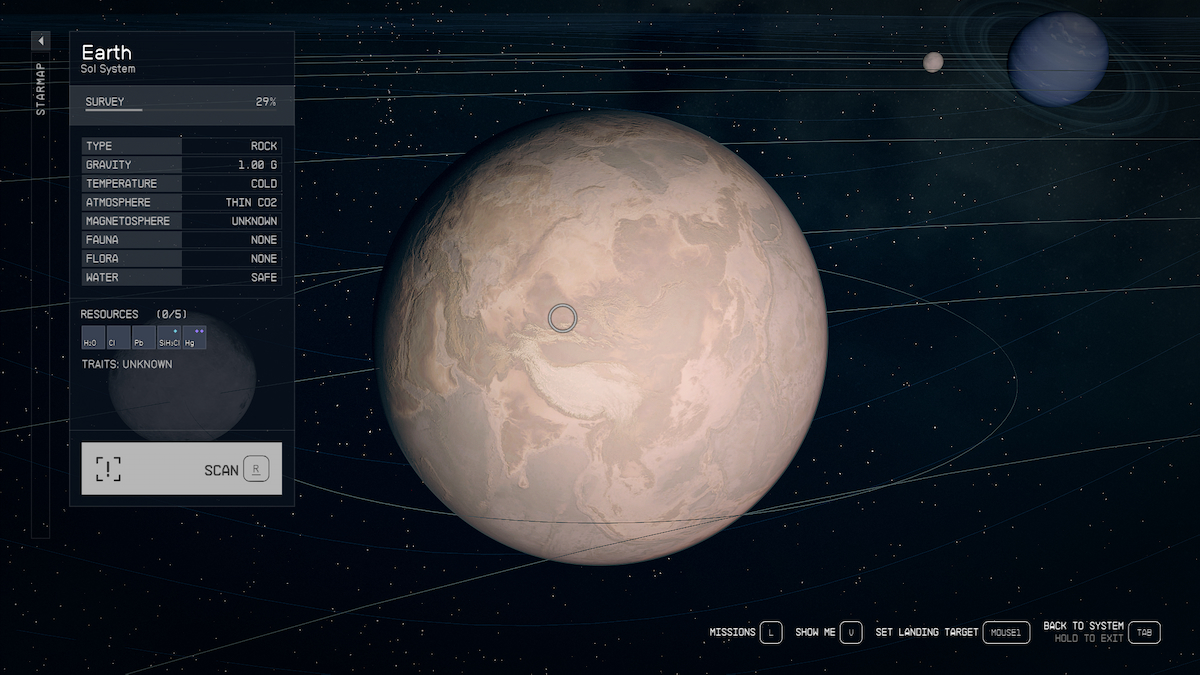
Each of these scenarios involves complex but fairly well understood feedback loops and nuanced interactions that would not only extinguish *all complex mammalian life* as we know it but also reshape the very face of our planet. The image —a barren orb with only a scattering of distant city lights—evokes a haunting reminder of Earth’s fragility and the extreme outcomes that may await under certain conditions.
Exploring these causes invites deeper considerations about our current path and the steps needed to maintain Earth’s habitability.
Furthermore, the process of acquiring land for pipeline routes often involves the use of eminent domain, a legal tool that allows the government (or, in this case, a private company acting with government approval) to take private property for public use, even if the owner doesn’t want to sell. While legally sanctioned, the application of eminent domain for private gain, particularly when it disrupts farms, homes, or environmentally sensitive areas, raises profound questions about property rights, corporate power, and the public good. Landowners have reported feeling bullied or unfairly compensated, adding another layer to the ethical debate surrounding the company’s expansion.
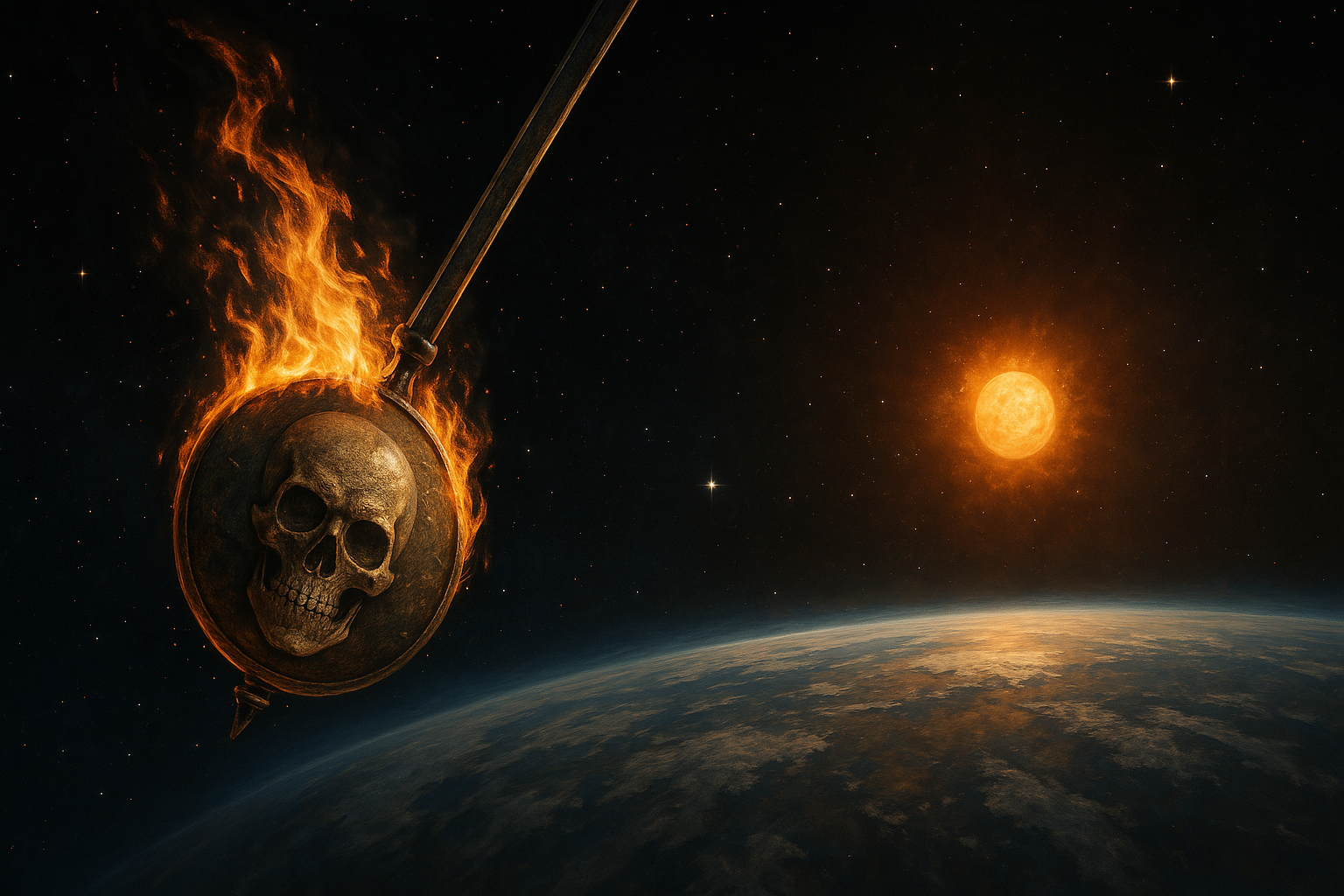
The pendulum swing/time horizon (between problem to solution) becomes a sling-shot towards inevitable catastrophe. A game of ping-pong that is IMPOSSIBLE for humanity to win, or even lose. Total death, total axiomatic & civilisational systemic collapse becomes inevitable and unavoidable.The price of failure.
The very nature of Energy Transfer’s business – facilitating the transportation of fossil fuels – places it at the centre of the climate crisis debate. While demand for these fuels exists, the ethical responsibility of companies involved in their infrastructure is increasingly being questioned. By building and expanding pipeline networks, companies like Energy Transfer are enabling the continued reliance on energy sources that contribute to global warming, potentially undermining efforts to transition to renewable energy and mitigate climate impacts.
A mesmerising, photorealistic swinging pendulum from a vintage grandfather clock occupies the foreground. The pendulum—elegant in its design—is caught mid-swing, its motion subtly blurred to evoke dynamic energy. Etched along its sleek surface is the delicate, symbolic outline of a human skull, its contours both haunting and artistic, symbolising the chiral nature of the complex and dynamic Earth-Sun-Moon system & all organic molecules.
In conclusion, while Energy Transfer plays a significant role in the current energy landscape, its operations are shadowed by serious ethical concerns. From clashes with Indigenous communities and environmental controversies to questions surrounding land acquisition and its role in the fossil fuel economy, the company’s pursuit of its business goals has frequently come at the expense of other critical values. Understanding Energy Transfer requires looking beyond the infrastructure they build and considering the human and environmental costs associated with their core business model.