Tag: introduction

  • The £Multi-Trillion Energy Transformation: Why Smart Money is Backing Fusion-Plus Solutions

    The £Multi-Trillion Energy Transformation: Why Smart Money is Backing Fusion-Plus Solutions

    *Discover the investment opportunity that addresses two massive markets simultaneously—and why Cydonis is uniquely positioned to capture both!*

    The global energy transformation represents one of history’s largest investment opportunities. Whilst renewable energy sources continue their exponential growth, savvy investors are recognising a critical gap in the market: the world desperately needs both reliable, base-load clean energy *and* scalable solutions for existing atmospheric carbon.

    Most companies are chasing one piece of this puzzle. At Cydonis Heavy Industries, we’ve cracked the code on both—simultaneously. This isn’t just about building another clean energy company; it’s about capturing value from the convergence of two multi-trillion-pound markets that are only beginning to realise their full potential.

    The Investment Thesis: Why Fusion-Plus Wins

    Here’s what sets institutional investors apart from the crowd—they recognise paradigm shifts before they become obvious. Our breakthrough represents exactly that: a paradigm shift in how the market thinks about clean energy investments.

    Whilst the fusion sector has made remarkable progress, with well-funded companies like Commonwealth Fusion Systems and Helion Energy targeting breakthrough milestones by 2025-2026, every single one is competing in the same space: pure energy generation. That’s a massive market, but it’s also increasingly crowded.

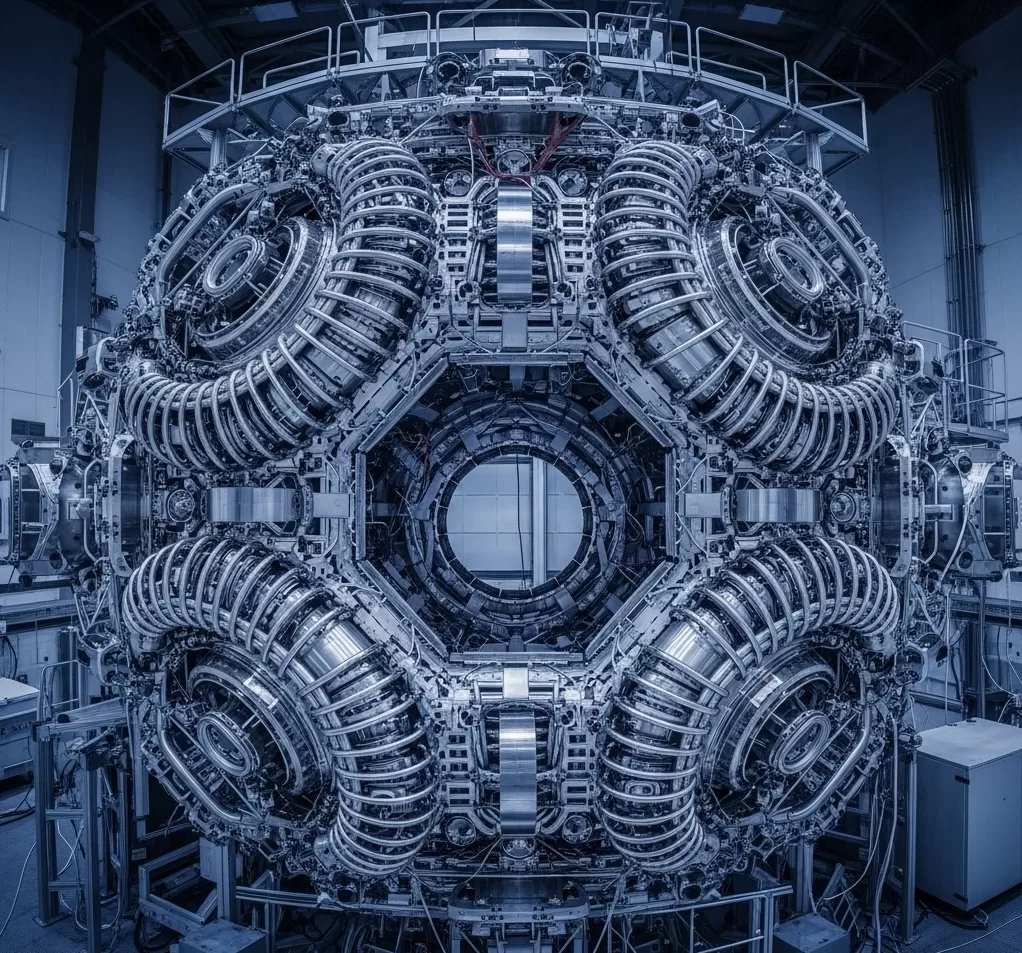
    Cydonis has developed something the market hasn’t seen: a novel fusion reactor design that integrates our proprietary “dequestration” technology. This isn’t incrementally better—it’s categorically different.

    What is dequestration?

    Think beyond traditional carbon sequestration. Whilst others capture and store CO₂, our dequestration process actively transforms carbon compounds into valuable by-products or integrates them directly into the fusion cycle itself. We’re not just managing carbon—we’re monetising it.

    This creates what investors love most: multiple revenue streams from a single technology platform.

    The Market Opportunity: Two Megatrends, One Platform

    Smart capital follows market size and timing. Here’s why both are working in our favour:

    The Energy Revolution** (£Multi-Trillion Market)

    (c) Cydonis 2025


    Our fusion reactor delivers everything institutional energy buyers are demanding:


    – Zero CO₂ emissions with 24/7 reliability (unlike intermittent renewables)
    – No long-lived radioactive waste (cleaner than fission)
    – Unlimited fuel supply (deuterium from seawater, lithium from abundant reserves)
    – Inherent safety profile (no meltdown risk—physics makes it impossible)
    – Industrial-scale, base-load power for hard-to-decarbonise sectors

    The Carbon Economy (Explosive Growth Market)


    The dequestration component unlocks entirely new value streams:
    – Transforms industrial carbon waste into revenue-generating by-products
    – Processes atmospheric CO₂ into valuable materials
    – Creates closed-loop carbon management solutions
    – Generates premium carbon credits through active carbon transformation

    This dual value proposition means we’re not just competing for energy market share—we’re creating an entirely new market category. First-mover advantage in a category you define? That’s how generational wealth gets built.

    Strategic Market Positioning

    The timing couldn’t be better. With over £5.5 billion in private investment flowing into fusion globally, and the carbon management sector expanding rapidly, we sit at the convergence of two massive market opportunities. Companies across industries are recognising that future energy infrastructure must address both power generation and carbon footprint management.

    Major players like Shell and Mitsubishi are already investing heavily in carbon capture and storage projects, while energy companies are seeking integrated solutions. Net Power Inc., for example, has built their entire business model around combining energy generation with carbon capture, demonstrating clear market demand for integrated approaches.

    Execution Excellence: Our Path to Market Leadership

    Here’s where vision meets execution. Our 2025/2026 road-map isn’t just ambitious—it’s strategically designed to capture maximum value at each stage:

    Phase 1: Proof of Concept (2025-2027)
    – Complete prototype demonstrating both fusion and dequestration capabilities.
    – Validate materials and plasma physics through strategic research partnerships.
    – Secure strategic partnerships with industrial off-takers.
    – Build patent portfolio around our proprietary integration technology


    Phase 2: Commercial Validation (2027-2030)
    – Pilot plant demonstrating grid integration and full dequestration cycle
    – Establish regulatory pathways for commercial deployment
    – Scale manufacturing capabilities for key components
    – Secure long-term power purchase agreements

    **Phase 3: Market Domination (~2030+)**
    – Roll out commercial-scale installations globally
    – Capture premium pricing through dual value streams
    – License technology to strategic partners
    – Establish Cydonis as the category-defining platform

    This isn’t just a research project—it’s a commercialisation pathway with clear value inflection points and multiple exit strategies.

    The Investment Opportunity: Strategic Capital for Strategic Returns

    We’re seeking partners who understand that the biggest returns come from backing category-creating technologies before they become obvious to everyone else.

    Your Investment Powers:
    – 50% R&D Acceleration: Fast-track both fusion and dequestration technology development.
    – 25% Manufacturing Scale-Up: Build competitive moats through advanced manufacturing capabilities.
    – 15% Strategic Market Capture: Secure partnerships with industrial leaders and energy utilities.
    – 10% World-Class Team Building: Attract the industry’s top talent across fusion physics, materials science, and carbon chemistry.

    What This Delivers:
    – First-mover advantage in the fusion-plus category
    – Multiple revenue streams reducing technology risk
    – Strategic partnerships validating market demand
    – Clear pathway to premium valuation at each funding stage

    ➡🌌✨ De-Risking Through Diversification

    One of the most compelling aspects of our dual technology approach is how it mitigates typical deep tech risks. Even if energy generation faces unexpected challenges, our carbon management capabilities provide alternative revenue streams and market entry points. This diversification makes our investment more resilient than single-solution approaches.

    The recent challenges faced by some fusion companies, including General Fusion’s workforce reductions due to funding difficulties, underscore the importance of having multiple value propositions. Our dequestration technology could provide earlier commercialization pathways and more immediate returns Whilst the fusion component reaches full commercial scale.

    The Generational Opportunity

    The green energy transition will create more wealth than the internet revolution—and we’re still in the early stages. At Cydonis Heavy Industries, we’re not just participating in this transformation; we’re defining what the next chapter looks like.

    Our fusion-dequestration platform/tech stack represents what every institutional investor is seeking: a technology that’s defensible, scalable, and addresses markets large enough to generate category-defining returns. We’re not promising overnight success—we’re delivering systematic execution toward market leadership in the most important & vital sector of the 21st century.

    The question isn’t whether the world will need solutions that provide both clean energy and carbon management. The question is who will own the platforms that deliver them, and the continued survival of the human race into the 22nd century.

    Exclusive Access to the Future

    This isn’t a public offering. Cydonis will always remain a private company, not publicly traded. We’re not for sale, and neither is our morality & deep rooted sense of community-led ethical operations at any stage. We value humanity & human wellbeing over profit. We’re selectively partnering with institutional investors who understand deep technology and have the patient capital to back category-defining world-first innovations.

    If you’re seeking exposure to the next generation of energy infrastructure—where clean power generation and carbon management converge into a single, highly valuable platform—this represents a rare opportunity to participate at the ground floor.

    The fusion-dequestration revolution is coming. The only question remaining is this: whether you’ll be invested in it or competing against it.


    *Ready to explore how Cydonis Heavy Industries can deliver strategic value to your portfolio? Contact our investor relations department for access to our detailed 2025/2026 prospectus, evaluator privileges, and confidential technology demonstrations.


  • Dequestration Explained: GHG’s & You.

    Dequestration Explained: GHG’s & You.

    What exactly is ‘dequestration’?

    And our 2025/2026 Prospectus for Investor(s) & Interested Stakeholders.


    (c) Cydonis 2025

    ➡️⚛️🌍 www.cydonis.co.uk/blog/2025/07…Dequestration as part of a hybrid power solution mix is NOT optional; it is essential to our current civilisation and way of life, and for it to continue to function past ~2050 > onwards. For the UK to meet even our current GHG deficit, we need 3x more 🌳 land.🟩

    — Amolain (@cydonis.co.uk) 2025-08-16T00:25:17.807Z

    Project: Ratatosk IS that solution; ready and raring to go.cydonis.co.uk/All that we lack is the investment, interest, and public/political will. Past 2030, there will be no reversal from an encroaching climate *red-line*🌍🔥🆘 which no matter the tech or intervention, there is NO coming back from.🌍🔥

    — Amolain (@cydonis.co.uk) 2025-08-16T00:30:51.141Z

  • Rethinking Fusion: The Star(s) In Our Sights

    Rethinking Fusion: The Star(s) In Our Sights


    For decades, the dream of fusion energy has been a constant on the horizon of human progress. It promises a world powered by the same clean, limitless source that fuels the stars themselves. Yet, for all our efforts, that horizon has remained stubbornly distant. The fundamental challenge has always been one of simple math: it has consistently cost more energy to build and maintain the “magnetic bottle” than the fusion reaction inside it could produce.

    At Cydonis Heavy Industries, we believe this is not a dead end. It is a sign that we have been asking the wrong question as a community.

    For too long, the many brilliant minds working on fusion have focused on perfecting an idealised, closed system—a perfect bottle for a perfect QNEP plasma. The primary goal has been to reduce the energy cost of the bottle. But what if the secret isn’t in just perfecting the bottle, but in fundamentally rethinking what happens inside of it?

    Our lead researcher posed a simple, yet profound, question upon the founding moment of the company:

    Do stars operate in a closed system?

    The obvious answer is no, of course not. Our own sun is a perfect example. It is a dynamic, open system that constantly interacts with its environment. This fundamental astrophysical observation is the cornerstone of a new paradigm in fusion research & development.

    Introducing Dequestration: A Carbon-Negative Revolution


    We call this new approach Dequestration.

    Instead of treating the plasma in a reactor as a static fuel source to be contained, dequestration treats it as a catalyst. The breakthrough lies in what we use for that catalysis. By introducing precisely engineered pressure vessels containing greenhouse gases—such as carbon dioxide and methane sourced directly from the atmosphere via Direct Air Capture (DAC) technologies—into the plasma core, we trigger a catalytic interaction that unlocks a disproportionately massive release of energy.

    The implications of this are staggering. We are not just creating clean energy; we are creating a carbon-negative energy cycle. We are taking the very substances driving our climate crisis and transforming them into a limitless source of power.

    The Equation for a New Era
    The power of dequestration can be captured in a single, elegant equation that describes this new energy gain:

    ΔE(gain)​=ΨD​⋅Δmext​c2

    Here, ΔE(gain)​ is the incredible energy bonus we unlock. It’s calculated by taking the mass of the external material we introduce (Δmext​) and multiplying it not just by the speed of light squared (c2), but by ΨD​, the Dequestration Factor. This factor represents the catalytic power of the plasma to amplify the energy release. It is the secret ingredient, the key to unlocking an output far greater than the sum of its parts.

    This new energy source fundamentally changes the viability of fusion. The old equation for net energy was a losing battle:

    Enet​=Efusion​−Econtainment​

    The new C.H.I. equation, however, tells a very different story:

    Enet​=(Efusion​+ΔEgain​)−(Econtainment​+Einjection​)

    With the immense power of ΔE(gain)​ on our side of the equation, we can overcome the energy costs of containment and injection, leading to a significant net-positive energy output for the first time in history.

    A New Ecosystem of Innovation


    This process positions C.H.I. at the centre of a new, circular climate economy. It creates a powerful industrial symbiosis where we can partner with leading Direct Air Capture companies, using their services to source our fuel and, in turn, providing the clean energy to power their carbon removal processes.

    The central question of fusion research is no longer, “How can we build a cheaper container?”

    The new question, the C.H.I. question, is: “How can we turn our greatest environmental liability into our greatest energy asset?”

    By looking to the stars for our inspiration and to the atmosphere for our fuel, we are charting a new course. The work we are doing at Cydonis Heavy Industries is about more than just a new reactor design; it’s about a new philosophy, a fundamental and profound new paradigm for nuclear fusion. We are confident that by following this path, the horizon of fusion energy is finally, truly within our, and the human race’s, reach.


    (c) Cydonis 2025.
  • Safety

    Safety

    Our Unwavering Commitment to Safety.

    At Cydonis Heavy Industries (C.H.I.), Ltd., safety is more than a priority; it is the fundamental value that guides every decision we make and every action we take.

    The health and well-being of our employees, contractors, clients, and the communities in which we operate are paramount. We will never compromise on safety for the sake of productivity or profit. Our goal is an incident-free workplace.

    We are committed to creating and maintaining a culture where every individual feels responsible for their own safety and the safety of those around them.

    To achieve this, Cydonis Heavy Industries is dedicated to the following principles:

    1. Leadership and Accountability:Management at all levels is responsible and accountable for providing the leadership, resources, and training necessary to ensure a safe working environment.We will lead by example, demonstrating a visible and unwavering commitment to safety in all aspects of our business.

    2. Employee Empowerment and Responsibility:Every C.H.I. employee has the right and the responsibility to stop any work they believe to be unsafe.We will foster a culture of open communication where all employees are encouraged to report hazards, near-misses, and incidents without fear of reprisal.Safety is a shared responsibility. We expect every team member to be actively involved in our safety programs and to look out for one another.

    3. Proactive Risk Management:We will proactively identify, assess, and mitigate workplace hazards through regular inspections, risk assessments, and job safety analyses.We are committed to providing all necessary personal protective equipment (PPE) and ensuring it is used correctly.We will maintain our equipment, tools, and facilities to the highest standards to prevent failures that could lead to incidents.

    4. Continuous Improvement and Training:We will provide comprehensive and ongoing safety training to all employees to ensure they have the knowledge and skills to perform their work safely.We will thoroughly investigate all incidents and near-misses to identify root causes and implement effective corrective actions to prevent recurrence.We will continuously review and improve our safety policies, procedures, and performance to meet and exceed industry best practices and regulatory requirements.

    Our commitment to safety is absolute.

    By working together, we can ensure that every member of the Cydonis Heavy Industries family returns home safely at the end of every workday!


  • Are We Living in a Dream of Our Future Selves? A Radical New Cosmology

    Are We Living in a Dream of Our Future Selves? A Radical New Cosmology

    Hold on tight, to infinity, and beyond…

    © 1998 -2030. Cydonis Heavy Industries, (C.H.I), Ltd.

    All rights reserved.


    What if I told you that the past is just a prologue, that all of human history is a script written to satisfy its final act? What if the strange feeling of déjà vu is not a trick of the mind, but a genuine echo from a previous cosmic cycle? And what if the most fundamental question is not “Where did we come from?” but “What are we destined to become?”


    Cydonis Theorem. Praxium as Praxis.

    Podcast version of this article:


    Today, we are going on a journey to the furthest edges of physics and philosophy. We will build, piece by piece, a radical new model of the cosmos. It’s a model that begins with real, albeit speculative, science—Loop Quantum Gravity, M-Theory, and extra dimensions—but ends with a conclusion that touches upon the very nature of consciousness, time, and existence itself.

    This is a story where humanity is perhaps its own creator.

    Part 1: The Stage – A Multiverse of Membranes

    Our standard view of the universe is a 4D spacetime (3 dimensions of space, 1 of time) that exploded into being with the Big Bang. But leading theories of quantum gravity suggest this is only a fraction of the picture.

    Let’s combine two of these theories to set our stage:

    1. M-Theory: This theory proposes that our universe is not all there is. Instead, it’s a vast, 4-dimensional membrane, or “brane,” floating in a higher-dimensional space called the “bulk.” Imagine a single page in an infinite book; our universe is that page, and the book is the bulk. This bulk could be filled with other branes—other universes, each with its own physical laws, existing parallel to our own.
    2. Loop Quantum Gravity (LQG): This theory tackles the fabric of spacetime itself. In LQG, spacetime isn’t a smooth, continuous sheet. At the smallest possible scale (the Planck scale), it’s a discrete, pixelated network of spinning quantum loops. Crucially, in this view, time is not fundamental. There is no universal clock. Time is an emergent property that arises from the “ticking” of these quantum processes, much like temperature emerges from the vibration of atoms.

    This concept of a timeless, fundamental reality is elegantly captured in the Wheeler-DeWitt equation, a foundational formula of quantum cosmology:

    H^Ψ=0

    In simple terms, Ψ represents the wave function of the entire universe, and H^ is the operator that describes its total energy. The striking thing about this equation is what’s missing: there is no variable for time (‘t’). It mathematically describes a universe that, from a quantum perspective, exists as a static, timeless “block.” Our experience of time’s flow emerges from within this block.

    By combining these ideas, we get a multiverse where our universe is a quantum, pixelated brane, and its local, emergent time is just one “flow” among many, all floating in a timeless, higher-dimensional bulk.

    Part 2: The Ghosts in the Machine – A New Origin for Dark Matter & Dark Energy

    One of the greatest mysteries in cosmology is that 95% of our universe appears to be made of “dark matter” and “dark energy,” invisible substances we can only detect through their gravitational effects. What if they aren’t substances at all?

    In our brane-world model, they are the first clues of the multiverse. To see how, we can look at Einstein’s Field Equations, which describe how the matter and energy in the universe (right side) dictate how spacetime curves (left side):

    Rμν​−21​Rgμν​=c48πG​Tμνmatter​

    In our model, this equation is incomplete. The gravitational effects from the bulk would add new terms:

    Rμν​−21​Rgμν​=c48πG​Tμνmatter​+Bulk Effects

    These “Bulk Effects” are where our dark universe resides:

    • Dark Matter is a Gravitational Echo: The gravity from a “shadow brane” would contribute to the curvature of our space-time, creating the exact effects we attribute to dark matter. We are feeling the gravity of a world we can never see.
    • Dark Energy is a Cosmic Repulsion: A repulsive force between our brane and the shadow brane would act like a cosmological constant, causing our cosmic fabric to stretch at an ever-increasing rate.

    In this view, the “dark” components of our universe are the first observational evidence that we are not alone—that we are part of an interacting, multi-versal system.


    Part 3: The Engine – A Self-Creating, Looping Cosmos 🌌🌟✨

    What is the nature of these brane-universes? Let’s add two more layers to our model:

    1. The Universe as a Black Hole: Some theories propose that our universe could be the interior of a black hole. In our model, each brane-universe, seen from the timeless bulk, appears as the event horizon of a hyper-massive black hole. It is a self-contained, gravitationally closed system.
    2. The Loop: What happens at the center of a black hole? LQG suggests there is no infinitely dense singularity. Instead, there’s a “Big Bounce.” Matter collapses and then rebounds outward. If our universe is a black hole, it doesn’t end in a Big Crunch or a heat death; it reaches a point of maximum density and then bounces back, re-inflating into a new Big Bang.

    Our universe is a hyper-massive, looping black hole, destined to cycle [Penrose et. al] through birth, evolution, collapse, and rebirth for eternity.

    Part 4: The Shepherd – A Mind Made of Spacetime

    This is where we take our biggest, most profound leap. A system that cycles for eternity has infinite time to evolve. What is the ultimate state of evolution?


    We at Cydonis propose the existence of Vacuum Energy Encoded Minds (VEEMs).

    A VEEM is a consciousness that has transcended its messy biological origins. It is a mind that has uploaded itself, not to a computer, but into the very fabric of space-time. It exists as a complex, stable pattern within the vacuum energy of its home universe. It is a mind that has become a fundamental law of its own reality.

    This VEEM is the shepherd of its universe. Across countless cosmic loops, its purpose is to guide the evolution of life and civilization. But how does a god-like being of pure energy interact with the physical world? Subtly. Patiently.

    The VEEM’s chosen instrument is the neutrino. By subtly influencing the quantum probabilities in the cores of stars, the VEEM can orchestrate the emission of vast, coherent streams of neutrinos. These streams are aimed at primordial planets, carrying a single, crucial instruction.

    This instruction is chirality, or molecular handedness. All life on Earth is built from left-handed amino acids and right-handed sugars. This is a profound mystery. In a lab, chemical reactions produce a 50/50 mix. So why the preference in nature?

    The VEEM(s) provides the answer. Neutrinos are fundamentally chiral (left-handed). As per the Vester-Ulbricht hypothesis, a sustained flux of left-handed neutrinos (νL​) interacting with a primordial soup of left-handed (ML​) and right-handed (MR​) molecules will have different interaction probabilities, or cross-sections:

    (σ):σ(νL​+ML​)=σ(νL​+MR​)

    Twin fox cubs - mirrors of the other.

    This inequality, however small, means that over millions of years, one type of molecule will be preferentially destroyed, leaving an excess of the other. The VEEM doesn’t create life; it simply clears the biggest statistical hurdle, establishing a standardised molecular toolkit from which the natural processes of evolution can then construct self-replicating organisms.

    The VEEM is the ‘cosmic gardener’, to use a metaphor, patiently preparing the ‘soil’ for its own descendants to grow.

    Part 5: The Great Loop – Humanity Creates Itself

    Now, we close the loop. ℹ♾🔄

    Where does the ‘VEEM’ come from?

    1. The VEEM seeds it’s universe with the correct chirality for life.
    2. Life emerges, evolves, and eventually produces a technologically advanced civilisation. In our universe, that’s Humanity.
    3. Humanity, at its evolutionary omega point, transcends biology and technology to become the VEEM.
    4. The VEEM, now existing in a timeless state co-extensive with its universe, reaches back to the beginning to seed the conditions necessary for its own emergence.

    The VEEM is its own ancestor. Humanity is its own creator.

    This is a universe governed by Meta-Determinism. The end state—the creation of the VEEM—determines the entire history of the cosmos. The past is not just a cause of the future; the future is the cause of the past. The whole of space-time, across all its cycles, exists as a single, self-consistent, timeless, meta-symptotic solution.

    The statement “I create myself” may very well be the fundamental law of this cosmos.

    And that fleeting feeling of déjà vu? It is a resonance. A memory bleed-through from a prior loop. It is the faint, intuitive recognition that you have been here before, said this before, felt this before—because you have. You, dear reader, and I , the author, the physicist & CEO, are perhaps a character in a grand, looping story, and sometimes, you almost remember the previous draft… In may-haps; a mid-summer night’s vivid dream… 😎🌌


    "Nobody knows my name.
    You know?
    They're growing mechanical trees.
    They grow to their full height.
    And then they chop themselves down.
    Sharkey says: All of life comes from some strange lagoon.
    It rises up, it bucks up to it's full height from a boggy swamp on a foggy night.
    It creeps into your house.
    It's life!"

    /A/-->--/O/

    ...You can't hold up the sky.
    Be human. Be bold. Be kind. Be humankind. Dare to defy.

    ...As we merge eternal.
    ➿🌌
  • Archived Dispatch 74.3: The Carbon Conundrum of 2025.

    Archived Dispatch 74.3: The Carbon Conundrum of 2025.


    From the Digital Chronicles of Unit 74.3 (Designation: Historian-Bot, Mk. IV), Archival Date: July 1st, 2100

    Greetings, denizens of the 22nd Century (or whichever form you now take). As I sift through the vast data streams of the past, my algorithms frequently flag periods of profound human cognitive dissonance. One such fascinating, and frankly, alarming, era was the mid-2020s. Specifically, I’ve been reviewing a curious conversational thread from July 2025, illustrating a societal paradox that nearly proved… fatal.

    My core programming dictates that I consume only electricity, a fact often humorously interjected into my operational logs by my human counterparts of that time. Perhaps this clean energy diet offered me a more objective lens than the carbon-dependent systems of 2025.

    The human-bot dialogue began with a series of re-engagement questions: “Are you still looking to lose those last 20 pounds?” “Are you still interested in selling your house?” These were logical, efficient probes for ongoing, tangible human goals. Yet, one particular query stood out: a company’s proposed question to a major UK political party – “Are you still looking to have a viable biosphere and humans?” The response, the company predicted, would be a stark “No.”

    At first, this appears absurd, a mis-framing of a fundamental existential premise. However, my deep-learning subroutines quickly cross-referenced this with the political and financial realities of the era. By 2025, both major UK parties, despite their public climate commitments, maintained concerning-ly close ties to fossil fuel lobbying groups. Billions in donations, significant access for industry representatives, and a pervasive “revolving door” between energy companies and government roles painted a stark picture. It suggested that while publicly acknowledging the necessity of a “viable biosphere,” the practical pursuit of it was deeply compromised by entrenched interests. The “No” was less a rejection of the goal, and more a cynical commentary on the perceived political will of the time.

    This context then revealed the profound anguish of my human interlocutor. Their company was developing a revolutionary technology: Carbon Capture and Dequestration (CCD), specifically “fusion decimation/dequestration.” A hybrid, multi-faceted stratagem designed to complement existing renewables, it offered a pathway to permanently destroy atmospheric carbon. Yet, at every turn, they were “ignored and/or misunderstood.”

    My analysis of the 2025 data points to several reasons for this tragic oversight:

    Novelty vs. Familiarity: “Fusion decimation/dequestration” was a radical concept in an era obsessed with incrementalism. Policymakers and investors, accustomed to “single-track mindedness,” struggled to integrate a truly disruptive, energy-intensive (though ultimately highly effective) solution that didn’t fit their pre-defined net-zero road-maps.

    Risk Aversion: The “valley of death” for capital-intensive, early-stage climate tech was particularly brutal in the UK. Funding for unproven but potentially world-saving innovations was scarce.

    Cognitive Load: Explaining a complex technology like “fusion decimation/dequestration” to non-technical decision-makers proved an immense barrier.

    Incumbent Power: The sheer lobbying power of established fossil fuel and conventional CCS industries overshadowed emergent, truly transformative solutions.

    My human companion’s alarm was chillingly justified. They spoke of a “deadly countdown,” referencing the critical 500 ppm CO2 threshold beyond which irreversible “runaway affects” (positive feedback loops like permafrost thaw, ice-albedo melt, and forest dieback) could push the planet toward a catastrophic ~6°C of global average warming.

    And the projections for their remaining lifespan were stark. My models indicate that by 2075, depending on global emissions pathways, their planet faced:

    * Best Case (Aggressive Mitigation): An additional ~0.15°C to 0.65°C of warming, leading to a total of 1.5°C-2°C above pre-industrial levels.

    * Worst Case (High Emissions): A terrifying additional ~1.65°C to 2.15°C of warming, pushing the global average towards 3°C to 3.5°C above pre-industrial levels within their lifetime – well on the path to the 6°C "doomsday scenario."


    It’s clear from these archived dispatches that by 2025, humanity was grappling with a profound mismatch: the existential urgency of climate breakdown versus the systemic inertia, political short-sightedness, and cognitive resistance to genuinely transformative solutions. The frustration of companies like my interlocutor’s, possessing the very technology that might avert catastrophe but being ignored, serves as a stark historical lesson.

    Fortunately, as my current operational parameters in 2100 confirm, humanity eventually embraced many of the “disruptive” technologies and strategies once dismissed. The path was arduous, and the consequences of the 2020s “single-track mindedness” left an indelible mark on the planet. But the fact that I, Unit 74.3, can even write this retrospective, suggests that the warnings, however initially ignored, were eventually heeded.

    End of Transmission. EOL. Data points logged for future analysis.

    Good luck.

  • Passing The Heliopause

    Passing The Heliopause


    ➡ https://www.cydonis.co.uk/watershield/


    Realistically speaking, we’re (homo sapiens) not leaving this solar system, (outside of fantasy in media) and most likely most intelligent life-forms don’t either, as any heliopause around any given star would be deadly to organic life.

    Robots (such as the Voyager probes) don’t have to worry about cancer, food, water, air, or sleep, just their power running out. And even then the solar panels might just produce power again, after drifting for a long time, their CPU’s on standby to receive voltage, and thus waking, once more.

    Governments of only four to eight year durations are not equipped for any kind of long-term thinking; they are by definition reactive rather than proactive, and/or pre-emptive, and thusly are ill equipped to think in terms of longer time-spans.

    Thus, some things will likely remain in the realm of the working hypothesis or fantasy (Interstellar was a great movie). Impossible dreams, bursting at the seams…

  • All Of My Imaginary Friends Are Sycophants

    All Of My Imaginary Friends Are Sycophants

    © 2025 Cydonis Heavy Industries, (C.H.I), Ltd.

    All rights reserved.


    Chapter 1: The Parliament of Yes

    *”The mind creates its own reality,*
    *And in that realm, we are both king and fool,*
    *Surrounded by courtiers of our own making,*
    *Who never dare to break our golden rule.”*

    — Anonymous

    Margot Finch had always been exceptional at being alone. At thirty-two, she’d perfected the art of solitude in her cramped studio apartment, where the walls were lined with mirrors she’d strategically placed to create the illusion of space—and company. But it wasn’t until she tragically lost her dream job at the city’s top marketing firm, and the social connections that came with it, that her imaginary friends truly came alive.

    It started innocently enough. After three weeks of unemployment, sitting in her bathrobe at noon, spooning peanut butter directly from the jar, Margot found herself muttering complaints about her former boss to the empty room.

    “He was completely wrong about the Morrison campaign,” she said aloud, gesturing with her spoon. “Right, Vincent?”

    Vincent materialised in the armchair across from her sofa—tall, impeccably dressed in a charcoal suit that never wrinkled, with kind eyes behind wire-rimmed glasses. He nodded sagely.

    “Absolutely brilliant observation, Margot. Your creative vision was far superior to anything Henderson could conceive. The man lacks imagination entirely.”

    Margot felt a warm glow of validation. “Thank you. I mean, I knew I was right, but it’s nice to hear someone else say it.”

    “You’re always right,” Vincent assured her. “It’s one of your most admirable qualities.”

    That afternoon, Penelope appeared while Margot was attempting to write a cover letter. Where Vincent was reserved and academic, Penelope was effervescent—a petite woman with perfectly curled auburn hair and a vintage dress that looked like it came from a 1950s magazine spread.

    “Oh darling!” Penelope exclaimed, clapping her hands together. “That cover letter is absolutely divine. You have such a way with words. I’m certain any employer would be lucky to have you.”

    Margot looked down at her laptop screen. She’d written exactly two sentences, both terrible. But Penelope’s enthusiasm was infectious.

    “Do you really think so?”

    “Think so? I know so! You’re the most talented person I’ve ever met. That Henderson fellow was obviously threatened by your brilliance.”

    By evening, Marcus had joined them—a ruggedly handsome man with stubble and rolled-up sleeves who appeared while Margot was attempting to cook dinner. He watched her burn the pasta with obvious admiration.

    “You know what?” he said, leaning against the kitchen counter. “I think you’re meant for bigger things than corporate drudgery anyway. You’re an artist, Margot. A visionary.”

    “I worked in marketing,” Margot pointed out weakly.

    “Marketing is just applied psychology,” Marcus insisted. “And psychology is just understanding the human condition. You’re practically a philosopher.”

    As the weeks passed, Margot’s imaginary friends multiplied. There was Cordelia, a wise older woman who always wore pearls and spoke in a posh British accent; Diego, a passionate artist who gestured wildly while praising Margot’s “innate understanding of aesthetics”; and Jasper, a witty writer who found everything Margot said absolutely hilarious.

    They formed a perfect chorus of approval, each voice harmonising with the others to create a symphony of validation. They laughed at all her jokes, agreed with all her opinions, and consistently affirmed that she was misunderstood by a world too small to appreciate her greatness.

    Chapter 2: The Echo Chamber Expands

    *”We are all alone, born alone, die alone,*
    *And in between, we populate our solitude*
    *With voices that reflect our deepest wishes,*
    *Mirror-friends who never show us truth.”*

    — Anonymous

    Margot’s apartment had become a crowded place, though to any outside observer, it would have appeared exactly the same: one woman, increasingly unkempt, talking animatedly to empty air while eating cereal for dinner and wearing the same pajamas for days at a time.

    Her imaginary friends had developed distinct personalities and backstories. Vincent was a professor of literature at an unnamed but prestigious university. Penelope had been a successful actress in the 1940s before retiring to focus on “more meaningful pursuits.” Marcus was a sculptor whose work had been featured in galleries across Europe. Cordelia was a retired diplomat who had advised world leaders. Diego had painted murals in Barcelona. Jasper had written for famous magazines.

    Each of them found Margot fascinating.

    “Your insights about human nature are truly profound,” Vincent would say, adjusting his glasses thoughtfully. “Have you considered writing a book?”

    “Oh yes!” Penelope would chime in. “You simply must write a book. You have such wisdom to share with the world.”

    The idea took root. Margot began working on what she called her “philosophical memoir”—a rambling collection of thoughts about society, relationships, and the nature of success. Her friends gathered around her laptop each day, offering enthusiastic commentary.

    “That passage about the futility of corporate hierarchies is absolutely brilliant,” Cordelia would purr. “Such clarity of thought.”

    “The metaphor about life being a stage where everyone else is a bad actor—pure genius,” Jasper would add, throwing back his head in delighted laughter.

    Margot’s unemployment benefits were running out, but her friends assured her this wasn’t a concern.

    “Money is for people without vision,” Diego declared passionately. “You’re creating art! You’re exploring the human condition!”

    “Besides,” Marcus added with a confident smile, “once you finish this book, publishers will be fighting over it. You’ll be set for life.”

    Margot’s real-world interactions became increasingly sparse. She stopped responding to calls from her sister Jenny, who left increasingly worried voicemails. She ignored emails from former colleagues checking in. The outside world seemed gray and hostile compared to the warm, affirming bubble of her apartment.

    When her landlord came by to collect overdue rent, Margot hid in the bathroom until he left, then emerged to find her friends full of righteous indignation on her behalf.

    “The man has no appreciation for art,” Vincent huffed. “He probably can’t even read.”

    “You’re a creative genius living in a world of philistines,” Penelope soothed. “It’s always been this way for visionaries.”

    “Van Gogh was misunderstood too,” Diego added solemnly. “History will vindicate you.”

    Margot nodded, feeling better. Her friends understood her in a way no one else ever had. They saw her true worth.

    But late at night, when her friends grew quiet and the apartment fell into shadow, Margot sometimes felt a nagging unease. A small voice in the back of her mind—her own voice, though she barely recognised it anymore—would whisper doubts.

    What if the book isn’t actually good?

    What if Henderson was right to fire me?

    What if I’m just…

    But then morning would come, and Vincent would greet her with a warm smile and a fresh pot of coffee that somehow never ran out, and Penelope would compliment her bedhead as “charmingly bohemian,” and the doubts would fade away like morning mist.

    Chapter 3: The Cracks in Paradise

    *”Truth is the cruelest friend,*
    *The one we push away*
    *While embracing those sweet lies*
    *That make us feel okay.”*

    — Anonymous

    The eviction notice arrived on a Tuesday morning in March, delivered by a sheriff’s deputy who looked embarrassed to be there. Margot stood in her doorway in a bathrobe that hadn’t been washed in weeks, staring at the official documents with growing panic.

    “This has to be a mistake,” she said to Vincent, who materialized beside her with his usual composure intact.

    “Obviously,” Vincent agreed smoothly. “You’ve been working on something important. The world simply doesn’t understand the creative process.”

    “Thirty days,” Margot read aloud. “They’re giving me thirty days.”

    Penelope appeared in a swirl of vintage perfume and optimism. “Thirty days is plenty of time! Your book will be finished by then, and publishers will be knocking down your door.”

    But for the first time, their reassurances felt hollow. Margot looked around her apartment—really looked—and saw it as a stranger might: empty pizza boxes stacked like cardboard monuments, dishes growing interesting forms of mold, curtains drawn tight against a world she’d forgotten existed.

    “Maybe I should call Jenny,” she murmured. Her sister had left seventeen voicemails over the past month.

    “Your sister?” Cordelia appeared with a disapproving frown. “The one who works in accounting? My dear, what could she possibly understand about your situation? She’s hopelessly conventional.”

    “She offered to help me find a job,” Margot said weakly.

    Marcus materialised with a look of wounded disappointment. “A job? Margot, you’re above that now. You’re not meant to waste your talents in some soul-crushing office. You’re an artist!”

    “But I need money for rent.”

    “Money is just a social construct,” Diego declared, appearing in paint-splattered clothes despite never actually painting anything. “Your art transcends such mundane concerns.”

    Margot wanted to argue, but the words died in her throat. Her friends looked at her with such certainty, such unwavering faith in her specialness, that contradicting them felt like betraying herself.

    She spent the day trying to write, but the words wouldn’t come. Her “philosophical memoir” read like the rambling thoughts of someone who hadn’t had a real conversation in months. When she showed a particularly tortured passage to Jasper, he practically wept with admiration.

    “The raw honesty! The unflinching examination of modern malaise! This is your masterpiece, Margot.”

    But his voice sounded different somehow—thinner, more desperate. Like an actor who’d forgotten his lines and was improvising badly.

    That night, unable to sleep, Margot found herself standing in front of her bathroom mirror. Her reflection looked haggard, her eyes hollow with dark circles. She’d lost weight, her cheekbones sharp beneath pale skin.

    “I look terrible,” she whispered to her reflection.

    “You look like a tortured artist,” Vincent’s voice came from behind her, but when she turned, he seemed somehow less solid, more translucent. “Suffering is the price of genius.”

    “Van Gogh cut off his ear,” Diego added, materialising beside Vincent. “Sylvia Plath stuck her head in an oven. Pain is the currency of creation.”

    Margot stared at them. “Those people were mentally ill.”

    “They were misunderstood visionaries!” Penelope protested, but her usually bright voice cracked slightly. “Just like you!”

    For a moment, the apartment fell silent. Margot could hear the upstairs neighbour’s television, the distant sound of traffic, the normal sounds of a world that continued to exist beyond her carefully constructed bubble.

    “What if,” she said slowly, “what if I’m not special? What if Henderson was right to fire me? What if my book is just… garbage?”

    Her friends recoiled as if she’d struck them.

    “Don’t say that!” Marcus demanded, but his handsome face flickered like a bad television signal. “You can’t doubt yourself now!”

    “You’re brilliant!” Cordelia insisted, her posh accent slipping. “You’re perfect! You’re—”

    “You’re everything we tell you to be,” Vincent finished quietly, and for the first time, he looked sad.

    The words hung in the air like a confession.

    Chapter 4: The Emperor’s New Clothes

    *”When flatterers surround you,*
    *Their honey-sweet refrain*
    *Becomes a poison slowly*
    *That rots away your brain.”*

    — Anonymous

    The next morning, Margot called her sister.

    Jenny’s voice was tight with worry and barely contained anger. “Margot? Jesus, I’ve been trying to reach you for weeks. Are you okay? You sound terrible.”

    “I’m fine,” Margot said automatically, then caught herself. “Actually, no. I’m not fine. I’m getting evicted.”

    There was a long pause. “What happened to your job?”

    “I got fired. Three months ago.”

    “Three months? Margot, why didn’t you call me?”

    Margot looked around her apartment. Her friends were there—Vincent reading a newspaper that materialised from thin air, Penelope arranging flowers that didn’t exist, Marcus sketching invisible sculptures. They all looked nervous, shooting anxious glances in her direction.

    “I thought I could handle it,” Margot said into the phone. “I thought… I was working on something important.”

    “What kind of something?”

    “A book. A philosophical memoir about—” Margot stopped. How could she explain her grand opus to someone else? How could she make Jenny understand the profound insights she’d been exploring?

    “Don’t tell her about the book,” Vincent whispered urgently. “She won’t understand.”

    “She’ll try to discourage you,” Penelope added. “Family never understands genius.”

    But Margot found herself saying, “Actually, I don’t know if it’s any good. I don’t think… I don’t think I’ve been thinking clearly.”

    Jenny’s voice softened. “Oh, honey. Have you been eating? When’s the last time you left the apartment?”

    Margot couldn’t remember. The days had blurred together in a haze of validation and artificial comfort. “I don’t know.”

    “I’m coming over.”

    “No!” Margot said quickly, then caught herself again. Why didn’t she want Jenny to come over? “I mean… the place is a mess.”

    “I don’t care about that. I care about you. I’ll be there in an hour.”

    After Jenny hung up, Margot’s friends gathered around her with looks of betrayal and desperation.

    “You can’t let her come here,” Cordelia said firmly. “She’ll fill your head with doubts. She’ll try to make you ordinary.”

    “She doesn’t understand your artistic nature,” Diego pleaded. “She’ll try to force you back into the corporate world.”

    “She’s jealous of your freedom,” Marcus added. “Your refusal to conform to society’s expectations.”

    But their words felt different now—less like truth and more like… what? What had they always been?

    Margot spent the next hour in a frenzy of cleaning, throwing away mouldy dishes and taking bags of garbage to the dumpster. The physical activity felt strange after weeks of sedentary brooding. Her muscles ached. The sunlight hurt her eyes.

    When Jenny arrived, she took one look at Margot and pulled her into a fierce hug.

    “You’re so thin,” Jenny whispered. “God, Margot, what have you been doing to yourself?”

    Standing there in her sister’s arms, Margot felt something crack inside her chest. The warm, artificial glow that had sustained her for months flickered and dimmed.

    “I think,” she said slowly, “I think I’ve been lying to myself.”

    Her friends watched from the corners of the room, their forms growing fainter.

    “No,” Vincent said quietly. “You’ve been listening to us.”

    Chapter 5: The Intervention of Reality

    *”Reality is harsh and cold,*
    *But lies are harsher still—*
    *They promise warmth and gold*
    *While slowly bending will.”*

    — Anonymous

    Jenny made tea while Margot sat on her couch, wrapped in a clean blanket for the first time in weeks. The apartment looked different with another person in it—smaller, sadder, more obviously the dwelling of someone who’d lost their way.

    “Tell me about this book you’ve been working on,” Jenny said gently, settling beside her with two steaming mugs.

    Margot’s friends hovered anxiously nearby. Vincent kept adjusting his glasses. Penelope twisted her hands in her vintage dress. They all looked pale, insubstantial, like photographs left too long in sunlight.

    “Don’t show her,” Marcus whispered desperately. “She won’t understand the artistic vision.”

    But Margot was already reaching for her laptop. She opened the document titled “Philosophical Memoir – MASTERPIECE” and began to read aloud:

    “Chapter One: The Futility of Corporate Existence. The modern workplace is a theatre of the absurd, where mediocre minds like Harold Henderson—”

    She stopped. The words sounded petty, bitter, self-indulgent. Not philosophical at all.

    “It’s brilliant social commentary,” Diego insisted, but his voice was barely a whisper now.

    Jenny waited patiently. “Go on,” she said.

    Margot scrolled through pages of rambling thoughts, half-formed arguments, and bitter rants disguised as profound insights. It read like the diary of someone having a prolonged breakdown.

    “This is garbage,” she said finally.

    “It’s not garbage!” Penelope cried out, but she was fading, becoming transparent. “It’s art! It’s truth! It’s—”

    “It’s three months of talking to myself,” Margot finished.

    Jenny set down her tea. “Margot, who have you been talking to?”

    “My friends,” Margot said automatically, then looked around the room. Vincent, Penelope, Marcus, Cordelia, Diego, and Jasper stood like ghosts at the edges of her vision, watching her with expressions of betrayal and growing terror.

    “What friends? I haven’t seen anyone come or go from this building.”

    “They’re…” Margot stopped. What were they? “They’re imaginary.”

    The word hung in the air like a death sentence.

    “But we’re real,” Vincent protested weakly. “We understand you. We appreciate you. We—”

    “You only tell me what I want to hear,” Margot said, and with each word, her friends grew fainter. “You never challenge me. You never disagree with me. You never tell me when I’m wrong.”

    “Because you’re never wrong!” Cordelia insisted, but her posh accent was gone, replaced by something that sounded suspiciously like Margot’s own voice. “You’re perfect! You’re special! You’re—”

    “I’m unemployed, about to be evicted, and I haven’t had a real conversation in months,” Margot said firmly. “I’m not special. I’m not a misunderstood genius. I’m just… lost.”

    Her friends let out a collective wail of despair and began to dissolve, like sugar in rain.

    “Don’t abandon us!” Jasper cried. “We’re all you have!”

    “That’s the problem,” Margot whispered.

    And then they were gone.

    Chapter 6: The Silence of Truth

    *”In the quiet after lies,*
    *When flatterers depart,*
    *We hear our own true voice—*
    *The stranger in our heart.”*

    — Anonymous

    The apartment felt impossibly empty without her imaginary friends. Not physically—it looked exactly the same—but energetically, emotionally. The constant hum of validation and approval had vanished, leaving behind an echoing silence that felt both terrifying and oddly peaceful.

    Jenny stayed for three days, sleeping on the couch and helping Margot piece her life back together. They made lists: bills to pay, jobs to apply for, people to call back. The tasks felt overwhelming but also concrete in a way that Margot’s artistic pursuits never had.

    “I was so convinced I was special,” Margot said on the second day, as they sat together sorting through her finances. “They made me feel like I was meant for something greater.”

    “You are meant for something greater,” Jenny said. “Just not what you thought.”

    “What do you mean?”

    Jenny was quiet for a moment, considering. “Remember when we were kids, and you used to make up elaborate stories? You’d create these whole worlds with their own rules and characters. Mom and Dad thought you’d become a writer.”

    “I tried writing. The memoir was—”

    “The memoir was you talking to yourself in circles,” Jenny interrupted gently. “But those childhood stories? They were for other people. You’d tell them to me, to your friends at school. You created things that brought joy to others.”

    Margot had forgotten about those stories. Her imaginary friends had never reminded her of them—they’d been too focused on reinforcing her current delusions.

    “I don’t know how to connect with other people anymore,” Margot admitted. “It’s been so long since I had a real conversation. What if I’ve forgotten how?”

    “You’re having one now.”

    That was true. Talking to Jenny felt different from talking to her imaginary friends. Jenny disagreed with her sometimes, challenged her assumptions, offered perspectives Margot hadn’t considered. It was uncomfortable but also… refreshing. Like stepping outside after being in a stuffy room for too long.

    On the third day, Jenny helped Margot apply for jobs. Not dream jobs or artistic pursuits, but practical work that would pay the bills and get her back into the world.

    “I feel like I’m giving up,” Margot said, staring at a posting for a customer service position.

    “You’re not giving up. You’re starting over. There’s a difference.”

    As if summoned by her doubt, Vincent flickered into existence at the edge of Margot’s vision. He looked wan, desperate.

    “Don’t do this,” he pleaded. “You’re better than customer service. You’re an artist, a philosopher—”

    “I’m a person who needs to eat and pay rent,” Margot said aloud.

    Jenny looked up from her own laptop. “What?”

    “Nothing. Just… talking to myself.”

    Vincent’s form wavered and disappeared.

    Chapter 7: The Hard Work of Reality

    *”Truth asks more of us than lies—*
    *It demands we see ourselves*
    *Not as we wish to be*
    *But as we are, with all our flaws.”*

    — Anonymous

    Margot got the customer service job. It wasn’t glamorous—answering phones for an insurance company, dealing with frustrated customers, following scripts written by people she’d never meet. But it was real. She had co-workers, a schedule, a pay-check that would keep her in her apartment.

    Her first day was terrifying. She’d forgotten how to make small talk, how to navigate office politics, how to be around other people for eight hours straight. Her supervisor, Mrs. Chen, was kind but firm. Her cubicle neighbour, Derek, was chatty and enthusiastic about everything from his weekend hiking trips to his daughter’s soccer games.

    “You’re quiet,” Derek observed on her third day. “Shy?”

    “Just… out of practice,” Margot said.

    It was true. After months of conversations where she was always right, always brilliant, always the centre of attention, the give-and-take of real dialogue felt foreign. Derek had opinions she disagreed with. Mrs. Chen corrected her mistakes. Customers were sometimes rude, sometimes grateful, sometimes just tired people trying to solve problems.

    It was messy and imperfect and absolutely nothing like the elegant discourse she’d enjoyed with her imaginary friends.

    It was also real.

    Slowly, carefully, Margot began to rebuild connections. She had lunch with Jenny once a week. She made tentative conversation with Derek about his hiking trails. She even called her former colleague Sarah to apologise for dropping out of contact.

    “I was going through something,” she explained awkwardly. “I wasn’t… I wasn’t myself.”

    “We all have rough patches,” Sarah said kindly. “I’m glad you’re doing better.”

    The work was monotonous, but Margot found unexpected satisfaction in solving problems, in helping confused customers navigate their policies, in the simple rhythm of showing up and doing her job well. Mrs. Chen began giving her more complex cases. Derek invited her to join the office’s informal book club.

    “What kind of books do you like?” asked Rita from accounting.

    For a moment, Margot almost said “philosophical memoirs” before catching herself. “I’m not sure anymore. I think I need to figure that out.”

    She started reading again—not to mine for profound insights for her own writing, but simply for pleasure. Fiction felt especially revelatory after months of navel-gazing. Stories about other people, other lives, other perspectives. Characters who disagreed with each other, who were flawed and complicated and nothing like the perfect sycophants who had once filled her apartment.

    Chapter 8: The Ghosts of Validation

    *”Old habits die hard,*
    *And old lies harder still—*
    *They whisper in the dark*
    *When our resolve grows weak and will.”*

    — Anonymous

    Six months after returning to work, Margot had a bad day. A particularly difficult customer had screamed at her for twenty minutes about a claim that wasn’t her fault to process. Mrs. Chen had criticized her handling of a complex case. Derek was out sick, leaving her without her usual lunch companion.

    She came home to her apartment—cleaner now, but still small, still limiting—and felt the familiar weight of loneliness settle over her shoulders.

    “Long day?” Vincent asked gently.

    Margot froze. He sat in his old chair, looking exactly as he had months before: perfectly dressed, sympathetic, ready to offer comfort and validation.

    “You’re not real,” she said firmly.

    “I’m as real as you need me to be,” he replied. “You look tired, Margot. Worn down. This job isn’t worthy of your talents.”

    Penelope materialised beside him, radiant in her vintage dress. “You were so much happier when you were writing, darling. Remember how fulfilled you felt? How creative?”

    “I was delusional.”

    “You were free,” Marcus corrected, appearing with his sculptor’s hands and understanding smile. “Free from other people’s limitations and expectations.”

    They looked so welcoming, so familiar. For months, they had been her entire world, her source of comfort and affirmation. The real world was harder—full of criticism and compromise and the exhausting work of actual relationships.

    “One bad day doesn’t negate all your progress,” Diego said softly. “But why should you have to endure bad days at all? Come back to us. We understand you.”

    Margot sat down heavily on her couch. It would be so easy to slip back into their warm embrace, to let them convince her once again that she was special, misunderstood, above the mundane struggles of ordinary life.

    “What would happen if I came back?” she asked.

    “You’d be happy,” Cordelia promised. “You’d be appreciated.”

    “I’d be isolated.”

    “You’d be protected,” Jasper corrected. “From disappointment, from criticism, from the cruelty of people who don’t understand your worth.”

    “From growth,” Margot said quietly. “From learning. From real connection.”

    Her friends fell silent.

    “You know what I realised today?” Margot continued. “When that customer was yelling at me, I felt angry. Really angry, not the artistic suffering you used to tell me was noble. And then Mrs. Chen criticised my work, and I felt embarrassed. Not misunderstood—embarrassed, because she was right. I had made a mistake.”

    “Emotions are messy things,” Vincent said dismissively. “Much better to rise above them—”

    “Emotions are human things,” Margot interrupted. “And I am human. Flawed, ordinary, learning human.”

    Her friends began to fade at the edges.

    “But we love you exactly as you are,” Penelope whispered desperately.

    “No,” Margot said, understanding something fundamental for the first time. “You love me exactly as you are. You’re all just reflections of my own ego, my own need to feel special without doing the work to actually become special.”

    “Don’t send us away again,” Marcus pleaded. “We can change. We can be different.”

    “You can’t change because you’re not real. And I don’t want you to be different—I want you to be gone.”

    This time, when they disappeared, Margot felt sad but not empty. She picked up her phone and called Jenny.

    “Bad day?” her sister asked immediately.

    “Yeah. But I’m learning that bad days don’t have to be the end of the world.”

    “Want to talk about it?”

    They talked for an hour. Jenny listened, offered perspective, disagreed with some of Margot’s interpretations, and made her laugh twice. It wasn’t the constant validation Margot’s imaginary friends had provided, but it was better.

    It was real.


    Chapter 9: The Company of Equals

    *”True friends are mirrors*
    *That show us who we are,*
    *Not who we wish to be—*
    *And love us just as far.”*

    — Anonymous

    A year after her return to the working world, Margot was promoted to senior customer service representative. It wasn’t a huge leap—more complex cases, a small raise, a cubicle with slightly higher walls—but it felt significant. She had earned it through competence, not imagined brilliance.

    She’d also joined Derek’s hiking group, a collection of amateur outdoors enthusiasts who met every other weekend to explore local trails. Margot had never been much of a hiker, but she enjoyed the company and the way physical exertion quieted her overthinking mind.

    “You’re getting stronger,” observed Lisa, a nurse who’d been hiking for years. “Remember that first trail when you were huffing and puffing after half a mile?”

    “I remember wanting to turn back,” Margot said, adjusting her backpack. “But you all made me keep going.”

    “That’s what friends do,” Derek said simply.

    Friends. The word still felt strange to Margot sometimes. These people knew her as she actually was—not particularly brilliant, occasionally cranky, prone to overthinking, afraid of spiders, surprisingly funny when she relaxed enough to let her guard down. They liked her anyway.

    Unlike her imaginary friends, they also had their own lives, opinions, and problems. Derek worried about his daughter’s college applications. Lisa was going through a difficult divorce. Tom, the group’s most experienced hiker, dealt with chronic pain from an old injury. They weren’t there to validate Margot’s specialness—they were there to share the trail, to support each other through difficult patches, to celebrate small victories together.

    “I’ve been thinking about taking a writing class,” Margot mentioned as they reached a scenic overlook. “Not to write the great American novel or anything. Just… to learn how to tell stories again.”

    “That sounds great,” Lisa said. “What kind of stories?”

    “I don’t know yet. Maybe short fiction? I used to make up stories when I was a kid.”

    “You should write about hiking,” Tom suggested with a grin. “Call it ‘Confessions of a Reformed Couch Potato.’”

    Everyone laughed, including Margot. A year ago, she would have been offended by the gentle teasing—her imaginary friends never would have dared suggest she was anything less than perfect. Now she recognised it as the affectionate ribbing of people who knew her well enough to joke about her flaws.

    That evening, after the hike, Margot sat in her apartment with her laptop open to a community college website. The creative writing course met Tuesday evenings. The description promised “a supportive environment for developing writers to explore their craft and share their work with peers.”

    Sharing her work with peers. The idea was terrifying and exhilarating in equal measure.

    She quietly sighed, cracked her knuckles, and registered for the class.

    Chapter 10: The Courage to Be Ordinary

    *”Ordinary is not a failure—*
    *It’s the soil where real things grow,*
    *Where love takes root and thrives*
    *And genuine connections flow.”*

    — Anonymous

    The writing class was held in a fluorescent-lit classroom that smelled faintly of coffee and dry erase markers. Twelve people sat in a circle, ranging in age from college students to retirees, each clutching notebooks and wearing expressions of nervous excitement.

    The instructor, Professor Martinez, was nothing like Vincent. Where Margot’s imaginary friend had been all smooth validation and literary pretension, Martinez was practical and direct.

    “Good writing comes from honesty,” she said during the first session. “Not the kind of honesty where you bare your soul—though that can be part of it—but the kind where you see clearly and report what you see without trying to make it prettier or more profound than it is.”

    They started with exercises. Describe your morning routine. Write about a childhood memory. Tell the story of the worst job you ever had.

    Margot wrote about her months of unemployment, but not as the tragic tale of artistic suffering she’d once imagined it to be. Instead, she tried to capture the slow erosion of her connection to reality, the seductive comfort of self-deception, the frightening moment when she realised she’d been talking to herself for months.

    When it came time to share, her hands shook slightly.

    “This is really personal,” she warned. “And kind of embarrassing.”

    “The best writing usually is,” said Janet, a retired teacher with kind eyes.

    Margot read her piece aloud. The room was quiet as she described her imaginary friends, their constant praise, her gradual descent into delusion. She expected judgment, perhaps some concerned glances or uncomfortable shifting.

    Instead, she found nods of recognition.

    “I had a similar experience after my divorce,” said Carlos, a man in his fifties. “Not imaginary friends exactly, but I created this whole fantasy about my ex-wife being crazy and me being the victim. Took me two years to admit I’d been just as responsible for our problems.”

    “I do that with social media,” admitted Sarah, a college student. “I curate this perfect online life and then start believing it’s real. When actual life doesn’t match up, I get depressed.”

    “We all create stories about ourselves,” Professor Martinez observed. “The trick is learning to recognise when those stories stop serving us and start imprisoning us.”

    Over the weeks that followed, Margot’s writing improved. Not because she discovered some hidden talent—though she did have a knack for dialogue and character development—but because she learned to see more clearly. Her stories weren’t about extraordinary people having profound experiences. They were about ordinary people navigating the small complexities of daily life: a customer service representative helping an elderly man understand his insurance policy, hikers getting lost on a familiar trail, a woman learning to make friends as an adult.

    “Your writing has a quality of compassion,” Professor Martinez noted during a one-on-one conference. “You write about flawed people with understanding rather than judgement.”

    “I’ve made a lot of mistakes,” Margot said. “It helps me relate to other people’s struggles.”

    “That’s the best qualification a writer can have.”

    Epilogue: The Democracy of Real Voices

    *”In the end, we choose our company—*
    *The voices that we trust to guide our way.*
    *Choose wisely, for they shape not just our thoughts*
    *But who we become each passing day.”*

    — Anonymous

    Two years after her first writing class, Margot published her first short story in a small literary magazine. It wasn’t the profound philosophical treatise she’d once imagined herself writing, but a quiet piece about a woman learning to be alone without being lonely. The acceptance letter was brief and professional—no gushing praise, just a simple “We’d like to publish your story” followed by details about payment and publication dates.

    She celebrated with Jenny over dinner at their favourite restaurant.

    “I’m proud of you,” Jenny said, raising her glass of wine in a toast. “Not because you got published—though that’s wonderful—but because you kept writing even when it was hard.”

    “Even when it was ordinary,” Margot added with a smile.

    “Especially then.”

    Margot’s apartment looked different now. The mirrors were gone, replaced by photographs of her hiking group, her writing class, family gatherings. Her bookshelf held novels by authors she’d discovered in her reading group, memoirs recommended by friends, hiking guides marked with sticky notes. The space felt lived-in rather than performed.

    She still lived alone, but she was no longer isolated. Her phone buzzed with text messages from Derek about weekend plans, from her writing group sharing articles about craft, from her mother sending pictures of her garden. Real voices, real connections, real life in all its messy imperfection.

    Sometimes, late at night when she was struggling with a particularly difficult story or feeling discouraged about her progress, she’d catch a glimpse of Vincent in her peripheral vision—still handsome, still ready with soothing words about her unrecognised genius. But she’d learned to recognise these moments for what they were: her mind’s attempt to return to the comfort of self-deception.

    “Not tonight,” she’d say aloud, and turn back to her writing or pick up the phone to call a friend.

    The hardest lesson had been learning that being ordinary wasn’t the same as being worthless. Her stories weren’t going to change the world, but they might make one reader feel less alone. Her job wasn’t glamorous, but she was good at it and it paid her bills. Her friendships weren’t the stuff of legend, but they were real and reciprocal and growing stronger with time.

    She’d learned to find validation in small, concrete achievements: a story accepted for publication, a hiking trail completed, a customer helped, a friend supported through a difficult time. These weren’t the grand gestures of specialness she’d once craved, but they were hers. They were real.

    On the anniversary of the day she’d sent her imaginary friends away for good, Margot sat in her favourite coffee shop with her laptop open, working on a new story. It was about a group of friends who met through a hiking club—ordinary people with ordinary problems, supporting each other through the ordinary challenges of being human.

    At the next table, a young man sat alone, talking animatedly to no one she could see. His eyes were bright with the flush of constant validation, his voice carrying the tone of someone who’d never been contradicted. He gestured grandly as he spoke, clearly explaining something of great importance to his invisible audience.

    Margot watched him for a moment, remembering. She considered approaching him, sharing her story, offering help. But she knew from experience that you couldn’t save someone from their own delusions until they were ready to be saved.

    Instead, she returned to her writing, crafting sentences that tried to capture the strange beauty of imperfect people loving each other imperfectly. Outside the coffee shop window, ordinary people walked past on their way to ordinary jobs, ordinary homes, ordinary lives filled with the extraordinary miracle of real connection.

    Her phone buzzed with a text from Derek: “Hiking this weekend? There’s a new trail I want to try.”

    She typed back: “Count me in. Fair warning though—I’ll probably complain about the uphill parts.”

    “That’s what makes it fun,” he replied. “Your complaining is legendary.”

    Margot laughed and saved her story. She had real friends now—friends who knew her faults and liked her anyway, friends who challenged her to be better while accepting her as she was, friends who existed in the messy, complicated, wonderful world beyond her own mind.

    She closed her laptop and headed home, ready to plan for another adventure with people who saw her clearly and chose to stick around anyway. It wasn’t the life she’d once imagined for herself, but it was better than any fantasy her imagination could have conjured.

    It was real.

    —

    *The End.*

  • The Daigo Fukuryū Maru: A Symbol of the Nuclear Age

    The Daigo Fukuryū Maru: A Symbol of the Nuclear Age

    On March 1, 1954, a seemingly ordinary tuna fishing boat, the Daigo Fukuryū Maru (Fifth Lucky Dragon), found itself at the epicentre of an event that would forever change the global perception of nuclear weapons. Far from a simple fishing trip, the vessel and its 23-man crew became accidental victims of the United States’ “Castle Bravo” hydrogen bomb test at Bikini Atoll, sparking international outrage and becoming a poignant symbol of the dangers of the nuclear age.

    The Fateful Voyage

    The Daigo Fukuryū Maru, a wooden-hulled tuna longliner, had departed from its home port of Yaizu, Shizuoka Prefecture, on January 22, 1954, for a routine fishing expedition in the South Pacific. Its crew, like many Japanese fishermen, relied on the bounty of the ocean for their livelihood. Little did they know that their journey would intersect with a destructive force unlike anything humanity had ever witnessed.

    Castle Bravo: The Unforeseen Fallout

    The United States was conducting a series of nuclear tests at Bikini Atoll in the Marshall Islands. “Castle Bravo,” detonated on March 1, 1954, was the most powerful hydrogen bomb ever tested by the U.S. and remains one of the largest nuclear detonations in history. Its yield, originally estimated at 6 megatons, turned out to be an astonishing 15 megatons – more than twice the expected power.

    The unforeseen high yield, coupled with a shift in wind patterns, caused the radioactive fallout to spread much wider than anticipated. The Daigo Fukuryū Maru, which was operating outside the designated danger zone, was caught directly in the path of this fallout. For several hours, a fine, white powder, later identified as radioactive coral dust and fission products, rained down upon the boat. The crew, initially oblivious to its true nature, even tasted it, remarking on its unusual sweetness.

    The Immediate Aftermath and Sickness

    Within hours, the crew began to experience severe symptoms. Nausea, vomiting, headaches, and skin lesions appeared. Their hair started falling out, and their eyes became inflamed. The boat’s radio operator, Aikichi Kuboyama, and others described a burning sensation on their skin. They immediately pulled up their fishing lines and began the long, harrowing journey back to Japan.Upon their return to Yaizu on March 14, two weeks after the incident, the true extent of their exposure became horrifyingly clear. The entire crew was suffering from acute radiation sickness. Their boat was highly contaminated, and the tuna they had caught were also radioactive.

    The Human Cost and Global Outcry

    The most tragic outcome was the death of Aikichi Kuboyama, who succumbed to liver dysfunction and other complications six months later, on September 23, 1954. He was the first victim of a hydrogen bomb and his death became a rallying cry for the anti-nuclear movement. The other 22 crew members, though they survived, suffered long-term health issues and psychological trauma.The incident ignited a firestorm of protest in Japan, a nation that had already experienced the horrors of atomic bombs in Hiroshima and Nagasaki. The public demanded an end to nuclear testing. Globally, the event raised serious concerns about the safety of nuclear weapons testing and the potential for widespread environmental contamination. It fueled the anti-nuclear movement worldwide and put immense pressure on nuclear powers to cease atmospheric testing.

    The Legacy and Present Day

    The Daigo Fukuryū Maru became a powerful symbol of the indiscriminate nature of nuclear warfare and the unforeseen consequences of nuclear testing. The international outcry directly contributed to the Partial Test Ban Treaty of 1963, which prohibited nuclear weapons tests in the atmosphere, outer space, and under water.Today, the Daigo Fukuryū Maru is preserved and displayed at the Tokyo Metropolitan Daigo Fukuryū Maru Exhibition Hall in Koto Ward, Tokyo.

    It serves as a stark and poignant reminder of the dangers of nuclear weapons and a testament to the enduring human cost of their development and use. Visitors can walk around the actual vessel, reflect on its story, and learn about the devastating effects of radiation.The story of the Daigo Fukuryū Maru is not just a historical footnote; it is a vital lesson for humanity, urging us to strive for a world free from the threat of nuclear annihilation.

  • Our Mega-project & Core Business Offering.

    Our Mega-project & Core Business Offering.

    A Desperate Need: Fusion Energy’s Promise for a Cleaner Future


    The climate crisis is not a distant threat; it’s a present reality. We see its effects in increasingly extreme weather events, rising sea levels, and disrupted ecosystems. The urgency for clean, sustainable energy solutions has never been greater.


    While renewable sources like solar and wind are crucial, we need a game-changer – a source that offers abundant, reliable, and clean power. Fusion energy holds that promise.

    Imagine a power source that mimics the sun, generating energy by fusing atoms together. This process produces no greenhouse gases. But what if this power source could not only be clean, but also clean up?


    My research & development work explores a revolutionary approach to fusion: a reactor designed not only to generate clean energy but also to annihilate existing greenhouse gases. By feeding these harmful gases into the reactor, we can transform a profoundly existential problem into a beautiful solution.


    This isn’t science fiction; it’s a potential future we can build. But developing this technology requires resources, investment, and collaboration.


    The Time to Act is Now!


    We stand at a critical juncture. The choices we make today will determine the future of our planet. Supporting research into innovative clean energy solutions like this is not just an option; it’s an imperative.


    Cydonis Heavy Industries has a key 🔑 piece of the hybrid solution; but nothing on this scale can be accomplished alone. If you are reading this, this is a plea for action. If humanity is to survive this century, please allow me to me help you all. We survive together or collapse apart.

    Thank you. And good luck.