Realistically speaking, we’re (homo sapiens) not leaving this solar system, (outside of fantasy in media) and most likely most intelligent life-forms don’t either, as any heliopause around any given star would be deadly to organic life.
Robots (such as the Voyager probes) don’t have to worry about cancer, food, water, air, or sleep, just their power running out. And even then the solar panels might just produce power again, after drifting for a long time, their CPU’s on standby to receive voltage, and thus waking, once more.
Governments of only four to eight year durations are not equipped for any kind of long-term thinking; they are by definition reactive rather than proactive, and/or pre-emptive, and thusly are ill equipped to think in terms of longer time-spans.
Thus, some things will likely remain in the realm of the working hypothesis or fantasy (Interstellar was a great movie). Impossible dreams, bursting at the seams…
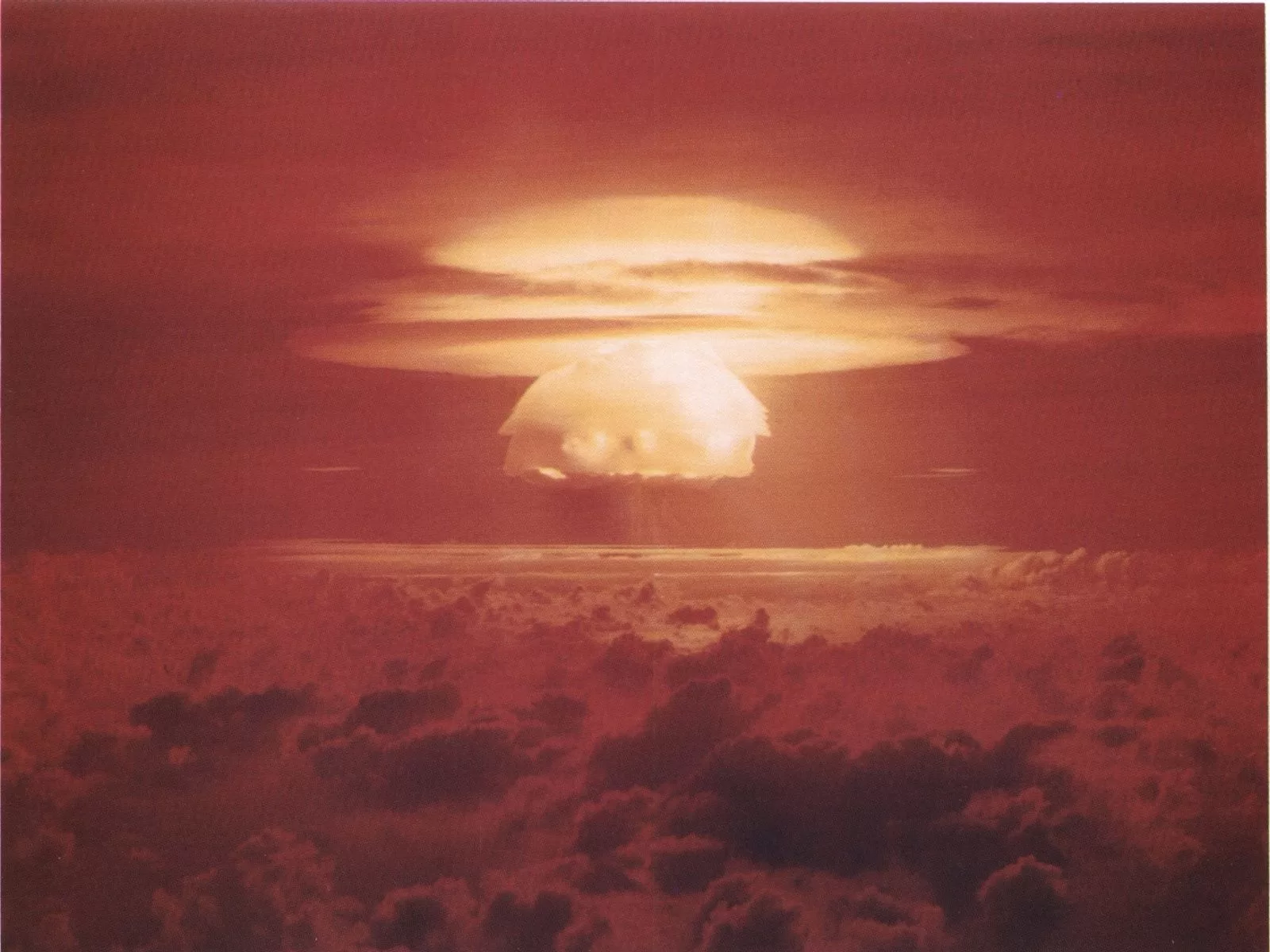
On March 1, 1954, a seemingly ordinary tuna fishing boat, the Daigo Fukuryū Maru (Fifth Lucky Dragon), found itself at the epicentre of an event that would forever change the global perception of nuclear weapons. Far from a simple fishing trip, the vessel and its 23-man crew became accidental victims of the United States’ “Castle Bravo” hydrogen bomb test at Bikini Atoll, sparking international outrage and becoming a poignant symbol of the dangers of the nuclear age.
The Fateful Voyage
The Daigo Fukuryū Maru, a wooden-hulled tuna longliner, had departed from its home port of Yaizu, Shizuoka Prefecture, on January 22, 1954, for a routine fishing expedition in the South Pacific. Its crew, like many Japanese fishermen, relied on the bounty of the ocean for their livelihood. Little did they know that their journey would intersect with a destructive force unlike anything humanity had ever witnessed.
Castle Bravo: The Unforeseen Fallout
The United States was conducting a series of nuclear tests at Bikini Atoll in the Marshall Islands. “Castle Bravo,” detonated on March 1, 1954, was the most powerful hydrogen bomb ever tested by the U.S. and remains one of the largest nuclear detonations in history. Its yield, originally estimated at 6 megatons, turned out to be an astonishing 15 megatons – more than twice the expected power.
The unforeseen high yield, coupled with a shift in wind patterns, caused the radioactive fallout to spread much wider than anticipated. The Daigo Fukuryū Maru, which was operating outside the designated danger zone, was caught directly in the path of this fallout. For several hours, a fine, white powder, later identified as radioactive coral dust and fission products, rained down upon the boat. The crew, initially oblivious to its true nature, even tasted it, remarking on its unusual sweetness.
The Immediate Aftermath and Sickness
Within hours, the crew began to experience severe symptoms. Nausea, vomiting, headaches, and skin lesions appeared. Their hair started falling out, and their eyes became inflamed. The boat’s radio operator, Aikichi Kuboyama, and others described a burning sensation on their skin. They immediately pulled up their fishing lines and began the long, harrowing journey back to Japan.Upon their return to Yaizu on March 14, two weeks after the incident, the true extent of their exposure became horrifyingly clear. The entire crew was suffering from acute radiation sickness. Their boat was highly contaminated, and the tuna they had caught were also radioactive.
The Human Cost and Global Outcry
The most tragic outcome was the death of Aikichi Kuboyama, who succumbed to liver dysfunction and other complications six months later, on September 23, 1954. He was the first victim of a hydrogen bomb and his death became a rallying cry for the anti-nuclear movement. The other 22 crew members, though they survived, suffered long-term health issues and psychological trauma.The incident ignited a firestorm of protest in Japan, a nation that had already experienced the horrors of atomic bombs in Hiroshima and Nagasaki. The public demanded an end to nuclear testing. Globally, the event raised serious concerns about the safety of nuclear weapons testing and the potential for widespread environmental contamination. It fueled the anti-nuclear movement worldwide and put immense pressure on nuclear powers to cease atmospheric testing.
The Legacy and Present Day
The Daigo Fukuryū Maru became a powerful symbol of the indiscriminate nature of nuclear warfare and the unforeseen consequences of nuclear testing. The international outcry directly contributed to the Partial Test Ban Treaty of 1963, which prohibited nuclear weapons tests in the atmosphere, outer space, and under water.Today, the Daigo Fukuryū Maru is preserved and displayed at the Tokyo Metropolitan Daigo Fukuryū Maru Exhibition Hall in Koto Ward, Tokyo.
It serves as a stark and poignant reminder of the dangers of nuclear weapons and a testament to the enduring human cost of their development and use. Visitors can walk around the actual vessel, reflect on its story, and learn about the devastating effects of radiation.The story of the Daigo Fukuryū Maru is not just a historical footnote; it is a vital lesson for humanity, urging us to strive for a world free from the threat of nuclear annihilation.
A Desperate Need: Fusion Energy’s Promise for a Cleaner Future
The climate crisis is not a distant threat; it’s a present reality. We see its effects in increasingly extreme weather events, rising sea levels, and disrupted ecosystems. The urgency for clean, sustainable energy solutions has never been greater.
While renewable sources like solar and wind are crucial, we need a game-changer – a source that offers abundant, reliable, and clean power. Fusion energy holds that promise.
Imagine a power source that mimics the sun, generating energy by fusing atoms together. This process produces no greenhouse gases. But what if this power source could not only be clean, but also clean up?
My research & development work explores a revolutionary approach to fusion: a reactor designed not only to generate clean energy but also to annihilate existing greenhouse gases. By feeding these harmful gases into the reactor, we can transform a profoundly existential problem into a beautiful solution.
This isn’t science fiction; it’s a potential future we can build. But developing this technology requires resources, investment, and collaboration.
The Time to Act is Now!
We stand at a critical juncture. The choices we make today will determine the future of our planet. Supporting research into innovative clean energy solutions like this is not just an option; it’s an imperative.
Cydonis Heavy Industries has a key 🔑 piece of the hybrid solution; but nothing on this scale can be accomplished alone. If you are reading this, this is a plea for action. If humanity is to survive this century, please allow me to me help you all. We survive together or collapse apart.
Cydonis Heavy Industries Deepbrain-o-tron.™"Another fine innovation from Cydonis!" 😎🆒👩🏻💻cydonis.co.uk/deepbrain/ 🧠👩🏻🔬🧪👩🏻💻 #threejs #neural-networks #neuroscience #neurophysics@threejs.org
INT. BBC BROADCASTING HOUSE – STUDIO 4 – NIGHT (2025)
JONATHAN FINCH (50s, impeccably dressed, face a mask of strained professionalism) sits at a sleek, minimalist news desk. The studio is dark, save for the glow of monitors and a single spotlight on him. Opposite him is not a guest, but a curious device: a brass and Bakelite telephone, wires snaking from it into a humming server rack labelled ‘PROJECT CHRONOS’. The iconic BBC News globe spins on a screen behind him.
JONATHAN (To camera, a practiced smile not quite reaching his eyes)
Good evening, and welcome to Perspectives. The program where we believe no issue is so settled it can’t be debated, and no voice so controversial it shouldn’t be heard. Our mission, as always, is to provide balance. To hear both sides.
He pauses, taking a slow breath.
JONATHAN (CONT’D)
Tonight, we take that mission to its ultimate conclusion. Using ‘Chronos’ technology, (which allows for audio communication across time), we will be speaking to a figure from history. A figure whose actions have, for eighty years, been presented from a single, overwhelmingly negative, viewpoint. In the interest of absolute impartiality, we are going to ask a simple question: were there any benefits to the Holocaust? And to answer, we are going live to the Wolf’s Lair, in November 1944, to speak with the German Chancellor, Adolf Hitler.
A nervous energy ripples through the off-camera crew. A junior producer is physically sick into a bin. Jonathan ignores it, his focus entirely on the antique telephone. A technician gives him a thumbs-up. The phone emits a crackle, then a series of clicks.
OPERATOR (V.O.) (Filtered, distant)
…verbunden. Sie sind auf Sendung, mein Führer.
A voice, thin and reedy, yet bristling with a terrifying, familiar energy, cuts through the static.
HITLER (O.S. {On Screen.}) (In German, with English subtitles on screen)
Who is this? Who dares interrupt my strategic planning? Explain yourself.
Jonathan visibly swallows. His practiced neutrality is already being tested.
JONATHAN
Good evening, Chancellor. My name is Jonathan Finch. I’m a journalist with the British Broadcasting Corporation… calling from the year 2025.
There is a long pause. The only sound is the hiss of the time-stream.
HITLER (O.S.)
Sorcery. Is this a new weapon from Churchill? A psychological trick?
JONATHAN
No, sir, not at all. Think of it as… a very, very long-distance telephone call. We wanted to offer you an opportunity. History has, shall we say, judged your… racial purity project rather harshly. We at the BBC feel it is our duty to provide balance, to allow you to present your side of the argument. Specifically, on the, ah, perceived benefits of the Final Solution.
The word “benefits” hangs in the air, grotesque and obscene. Hitler, however, seems to process the request. The paranoia in his voice is replaced by intrigued arrogance.
HITLER (O.S.)
Benefits? Benefits! Of course, there are benefits! It is the most logical, most necessary act of national hygiene in human history! You speak from 2025? Then you must have seen the glorious result! A pure, strong Europe, free of the parasitic influence that has corrupted our blood and finance for centuries.
JONATHAN (Nodding, taking a note on his tablet)
So, you would frame this primarily as a matter of… public health?
HITLER (O.S.)
It is the health of the Aryan soul! It is a spiritual cleansing! We remove the weak, the degenerate, the alien element, and the body politic thrives. Our economy, unburdened by their usury, becomes a marvel of efficiency. Our culture, unsullied by their decadent art and ideas, returns to its classical, heroic roots. We are creating a master race, and you ask me for benefits as if it is a choice between two brands of soap! It is destiny!
Jonathan’s professional veneer is cracking. His face is pale. He glances at his producer, ANNA, who is frantically drawing a finger across his throat.
JONATHAN
To play devil’s advocate, Chancellor… there was a significant human cost. Millions of… individuals were… negatively impacted. How do you square that circle from a utilitarian perspective?
HITLER (O.S.) (A short, barking laugh)
“Individuals”? You sound like one of them. There is no individual, only the Volk. The Folk. Does a surgeon weep for the cancer cells he cuts from a body? No! He rejoices, for the body will live. We are the surgeons of humanity. The cost is irrelevant. The future is everything. I have freed Germany from a disease. Is that not a benefit your simple mind can grasp?
JONATHAN
But the methods… the industrial scale of the extermina— of the, uh, relocation. Many in our audience would find that morally… problematic.
HITLER (O.S.)
Your audience is weak! Corrupted by eighty years of lies! Morality is the will of the strong. Efficiency is a virtue! We proved that our methods were without peer. The scale was a testament to our conviction. It was a triumph of German logistics and will!
Jonathan stares into the middle distance. The concept of “balance” has revealed itself to be a black hole, sucking all decency and reason into its void. He is platforming pure evil, wrapping it in the language of a mundane policy debate. He abandons the script. His voice drops, losing its polished broadcasting tone.
JONATHAN
Did you ever visit the camps, Chancellor? Did you ever stand by the pits? Did you smell it?
The question is raw, human. It breaks the entire premise of the show. For the first time, Hitler is silent. The sneering confidence is gone. When he speaks again, his voice is a low, venomous hiss.
HITLER (O.S.)
What did you say?
JONATHAN (Louder, firmer)
The smell. Of burning hair and flesh. Was that a ‘benefit’ as well? Or the sight of a child’s shoe in a pile of thousands? Was that a ‘logistical triumph’?
HITLER (O.S.) (Screaming now, the voice distorting)
You! You are one of them! A Jewish trick! Lies! Slander! You will pay for this insolence! Germany will find you, even in the future! We will cleanse you all! We will—
The connection is abruptly severed. A technician rips off his headset, his face ashen. The studio is plunged into a deafening silence, broken only by Jonathan’s ragged breathing. He looks down at his hands, then up at the camera. The mask of the impartial journalist is gone, replaced by an expression of profound, soul-deep horror. He has provided “balance.” He has given “both sides” a voice. And in doing so, he has stared into the abyss, and dragged his entire audience in with him.
The red “ON AIR” light blinks off. But the damage is done.
[SCENE CONTINUES]
Anna rushes to his side. The studio door flies open and SIR DAMIAN HAWKSWORTH, the BBC’s Director-General, storms in, his face crimson.
SIR DAMIAN
Finch! Have you lost your mind? “The smell of burning flesh”? That wasn’t in the script! You were supposed to be a neutral conduit!
JONATHAN (Standing, his voice trembling with rage)
Neutral? To that? We were asking for the benefits of genocide, Damian! The very notion of balance was the original sin!
SIR DAMIAN
Do you have any idea what you’ve unleashed? The phone lines are exploding. The network is crashing. The Home Secretary is on line one and I think he’s having an aneurysm!
From outside, a new sound penetrates the studio walls: the confused yelling of crowds, the shattering of glass, the rising wail of sirens. Anna holds up her phone, her hand shaking. The screen shows a live feed from Parliament Square. A mob is fighting with police. A banner is visible, bearing a twisted, ancient symbol. The headline reads: Far-right groups claim “vindication” after BBC Hitler broadcast.
JONATHAN
My God… they’re celebrating. They think he won the debate.
He looks at the Chronos device, the brass telephone now seeming like a totem of some forgotten, malevolent god. The fallacy wasn’t just in the question, but in the belief that some ideas could be safely debated at all.
JONATHAN (His voice suddenly cold and clear)
We have to go back.
SIR DAMIAN
Absolutely not! The project is cancelled. The servers are being wiped.
JONATHAN
No. We opened this door. We have to show them what was on the other side. We can’t let his be the last word.
He looks past Sir Damian, his eyes finding the terrified young technician who cut the first feed.
JONATHAN (CONT’D)
I’m not asking. I’m telling you. Put me back on the air. And get me Auschwitz. January, 1945. Find someone who speaks Yiddish. I don’t care how. Do it now.
Sir Damian stares, apoplectic, but Jonathan is already sitting back at the desk, straightening his tie, his face no longer one of horror, but of terrible, righteous purpose. He is no longer providing balance. He is atoning.
JONATHAN (CONT’D) (To Anna, his voice a low command)
And keep that camera rolling. Let them see all of it.
Anna, catching his look, nods slowly and speaks into her comms.
ANNA
We’re going live again. On all channels. This is no longer Perspectives. This is a public broadcast.
The technician, compelled by the sheer force of Jonathan’s will, begins frantically typing coordinates into the Chronos system. The Bakelite phone begins to hum once more. Outside, the sounds of chaos swell, a city teetering on the brink. The red “ON AIR” light flicks back on.
[SCENE END]
[SCENE START]
INT. BBC BROADCASTING HOUSE – STUDIO 4 – NIGHT (2025)
The red “ON AIR” light glows with an intensity that seems to suck the air from the room. On the monitors behind Jonathan, the BBC News globe is gone, replaced by a simple, stark caption: “LIVE BROADCAST”.
Jonathan leans into his microphone. The man who began the broadcast an hour ago—smug, professional, a slave to protocol—is gone. This new man is gaunt, his eyes burning with a zealot’s fire.
JONATHAN (To camera, his voice low and raspy…)
What you just witnessed was a failure. Not a technical failure, but a moral one. My failure. I work for an organization that believes in balance, and I, like them, have worshipped that idea blindly. But some things have no balance. Some truths are absolute. We gave a platform to a great and terrible evil in the name of impartiality. And in the streets of this city, that evil has found new disciples.
He gestures vaguely towards the chaos outside.
JONATHAN (CONT’D)
There is only one way to answer a lie of that magnitude. It is not with debate, but with truth. We are going back. Not to a bunker, not to a seat of power, but to the end of the argument. To the place where all the theories of racial hygiene and national destiny found their final, logical expression. We are going to Auschwitz-Birkenau. January 27th, 1945. The day of its liberation.
Sir Damian stands frozen by the door, a silent, horrified statue. Anna whispers commands into her headset, her face a mixture of terror and fierce loyalty. The young technician’s fingers fly across his keyboard, his knuckles white.
The Bakelite phone crackles. It is not the clean connection of the Wolf’s Lair. This is a sound from hell. A wash of harrowing noise fills the studio: the thin, cutting wind whistling through barbed wire, a distant, rhythmic clang of metal on metal, and underneath it all, a sound that is almost subliminal, a low, collective moan of human misery.
On a side monitor, a video call connects. A frail, elderly man, PROFESSOR ELI WEINBERG, a Yiddish scholar from the University of London, appears. He looks bewildered.
ANNA (V.O.)
“Professor, just translate whatever you hear. Please.”
The technician isolates a thread of sound from the cacophony. It is a voice. A woman’s voice, so weak it is barely more than a whisper, humming a fractured melody.
JONATHAN (His voice cracking)
“Can you… can you ask her name?”
Professor Weinberg swallows hard, his eyes welling up. He leans into his own microphone, and speaks in hesitant, gentle Yiddish.
(Subtitles appear on screen) PROF. WEINBERG: Ken ikh fregn vehr du bist? (May I ask who you are?)
The humming stops. A long pause. The studio holds its breath. Then, the voice. It is thin, brittle as dry leaves.
LEAH (O.S.): Ikh heys Leah. Ikh gedenk nit mayn familia-nomen. (My name is Leah. I don’t remember my family name.)
Jonathan closes his eyes. He is no longer in a London studio. He is in the cold, the filth, the despair.
JONATHAN:
“Leah… My name is Jonathan. We are… listening. Can you tell us where you are? What do you see?”
Weinberg translates, his voice thick with emotion.
LEAH (O.S.): Ikh bin in der kazarme. Der shtank… der shtank iz umetum. (I am in the barracks. The smell… the smell is everywhere.) Di Rusn zaynen do. Zey hobn geefnet di toyern. (The Russians are here. They opened the gates.) Zey veynen. Di soldatn… zey veynen. (They are crying. The soldiers… they are crying.)
The screen behind Jonathan now shows the live feeds from London. The rioting is slowing. Confused faces are turning towards screens in shop windows, in pubs, in their hands. The hateful chants are faltering, replaced by an uneasy silence as the thin, Yiddish voice cuts through the night.
JONATHAN:
We heard another voice, Leah. A man who said what was done to you was… a benefit. That it was necessary.
The cruelty of the statement is immense, but Jonathan’s intent is clear. He is holding up the lie to the flame of her truth.
A sound comes through the speaker. A dry, rasping sound. It takes a moment for them to realise she is laughing. It is the most terrible sound any of them have ever heard.
LEAH (O.S.): A nutzen? (A benefit?) Ikh hob gezen mayn shvester’s shikh in a berg fun toyznter. (I saw my sister’s shoe in a mountain of thousands.) Mayn foter’s briln in a kasn. (My father’s spectacles in a box.) Der “nutzen” iz der roykh vos shtaygt fun di krematoryumes tog un nakht. (The “benefit” is the smoke that rose from the crematoria, day and night.) Zog dem man… zog im az zayn groyse daytchland iz geboyt gevorn af a barg fun kinder-beyner. (Tell this man… tell him his great Germany is built on a mountain of children’s bones.)
Professor Weinberg is openly weeping now, unable to translate for a moment. Anna has to prompt him. He takes a shaky breath and relays Leah’s words, each one a hammer blow to the studio’s silence.
JONATHAN: (His own tears flowing freely)
Leah… what do you want us to know? What do you want us, in the future, to do?
There is a long silence on the line, only the whistling wind of that Polish January. When she finally speaks, her voice is not angry. It is exhausted. A soul scoured clean of everything but a single, final duty.
LEAH (O.S.): Gedenk unz. (Remember us.) Nit mit has, nit mit nekome. (Not with hatred, not with revenge.) Gedenkt nor az mir zaynen geven. Az mir hobn gelibt, un gelakht, un geveynkt. (Just remember that we were. That we loved, and laughed, and wept.) Zayt undzer zikorn. (Be our memory.)
The line goes dead.
The connection is gone. The studio is utterly silent. Jonathan looks up, directly into the camera lens. His face is a ruin, a testament to the horror he has channelled. There is nothing left to say. He has shown them the other side. He has destroyed the balance with the weight of a single soul.
He slowly, deliberately, reaches out and turns off his microphone.
On the screens behind him, the feed from Parliament Square shows the last of the mob quietly dispersing, their banners of hate now looking cheap and pathetic in the face of the abyss that had just been opened on national television. The sirens have stopped. London is quiet. The entire world seems to be holding its breath.
[SCENE END]
[SCENE START]
INT. BBC BROADCASTING HOUSE – STUDIO 4 – NIGHT (2025)
The silence in the studio is absolute, a vacuum where the horrors of the past and the chaos of the present have cancelled each other out. Jonathan Finch remains at the desk, his hand still resting on the microphone switch, a priest who has just concluded a terrible, necessary sacrament.
The spell is broken by the studio door crashing open. It’s not Sir Damian this time. Two men in dark suits, their faces grim and unreadable, flank a woman with severe grey hair and the unmistakable air of high government authority. This is the Home Secretary. Sir Damian shuffles behind them, looking like a ghost at his own funeral.
HOME SECRETARY (Her voice is low, controlled fury)
“Jonathan Finch?”
Jonathan doesn’t stand. He simply turns his head to look at her. His eyes are empty of fear.
JONATHAN
“Yes.”
HOME SECRETARY
On behalf of His Majesty’s Government, you are under arrest. For misuse of state assets, incitement to public disorder, violation of the Official Secrets Act, and about a dozen other charges we’ll invent before breakfast. The Chronos Project is now a matter of national security. Everything is classified. Everyone in this room will be detained and debriefed for the rest of their lives.
She gestures to her men. They move towards Jonathan. Anna makes a move to step in front of him, but Jonathan raises a hand, stopping her.
SIR DAMIAN (Stepping forward, his voice a pleading whisper)
“Minister, he… we… lost control. The broadcast… it was a mistake.”
JONATHAN (Cutting him off, his voice clear and steady)
“No, Damian. The first broadcast was a mistake. The second was a correction.”
He finally stands, his gaze fixed on the Home Secretary.
JONATHAN (CONT’D)
“You can arrest me. You can classify this until the sun burns out. But you can’t make people un-hear it. You can’t erase Leah. For an hour, the entire world stopped arguing about what was true and simply listened to it. You can’t put that back in the box.”
The Home Secretary stares at him, a flicker of something unreadable in her eyes. She saw the feeds from the cities. She saw the riots stop. She heard the voice from 1945.
HOME SECRETARY
“You broke the world, Mr. Finch.”
JONATHAN
“No, Minister. I just held up a mirror to a world that was already broken.”
He offers his wrists to the men in suits. As they lead him out, he doesn’t look back at his producer or his disgraced boss. His last glance is at the Bakelite telephone, sitting silent on the desk, a relic that connected the present to its most profound and painful lesson.
[MONTAGE]
DAY 1: The UN Security Council in emergency session. The Russian ambassador, for the first time in decades, does not veto a British-led resolution. The resolution is simply a global commitment to broadcast Leah’s testimony, unedited, in every language, every year on January 27th.
WEEK 2: A university lecture hall. A history professor throws her syllabus in the bin. “Today,” she says to her stunned students, “we are going to talk about the difference between a fact and a truth.”
MONTH 3: Outside the real, preserved gates of Auschwitz-Birkenau. A small, simple plaque has been added to the memorial. It reads, in Yiddish and in English: Zayt undzer zikorn. Be our memory. A young backpacker, who looks German, quietly lays a single white rose at its base.
YEAR 1: A courtroom. Jonathan Finch, looking older, is sentenced. The judge’s words are conflicted, the expression on his face one of a deep inner turmoil. He speaks of law and order, but his voice falters when he mentions the “unprecedented nature of the evidence.” The sentence is unexpectedly light. Community service. A lifetime ban from broadcasting.
[FINAL SCENE]
EXT. A PRIMARY SCHOOL PLAYGROUND – DAY (A FEW YEARS LATER)
Jonathan Finch, greyer and softer around the edges, sits on a park bench, watching children play. He is no longer a public figure. He is just a man. He holds a small, worn book in his hands.
Anna approaches and sits beside him. She works as a freelance documentarian now, producing small, independent films about history and memory. They sit in comfortable silence for a moment.
ANNA
“They want to dismantle the Chronos device. Bury it in concrete a mile underground.”
JONATHAN (Nodding slowly, not looking up from the playground)
“Good. It did its job.”
ANNA
“Do you ever regret it? Losing everything?”
Jonathan finally looks at her. The haunted look is gone from his eyes, replaced by a quiet, settled peace.
JONATHAN
“The man who started that broadcast lost everything. And he deserved to. But I didn’t lose anything that mattered. We asked a stupid, obscene question and got the only answer that has ever made sense.”
He looks back at the children, their innocent shouts of laughter filling the air.
JONATHAN (CONT’D)
She said, “Remember that we loved, and laughed, and wept.” She didn’t ask us to stop living. She asked us to be their memory.
He closes his eyes, and for a moment, he is not in a sunny playground in 2028, but in the whistling wind of a Polish winter, listening to a thin voice humming a fractured tune. And he remembers.
[FADE TO BLACK]
[Credits Roll; Set To Emotional, Ominous yet peaceful music.]
And how neurolinguistics shapes our ability to think about our thinking. 🤔 💭 (Meta-cognition).
Dances with neurons…
admin
In the ancient tale of Babel, humanity united to build a tower reaching toward heaven—until divine intervention scattered them across the earth, confusing their tongues and fragmenting their power. Today, we face a different reality: the tower has been rebuilt, but this time, it belongs to the few.
The modern Tower of Babel isn’t made of brick and mortar. It’s constructed from fiber optic cables, data centres, and algorithms. It’s the global information infrastructure that shapes how billions of people think, communicate, and understand their world. And unlike the biblical tower that belonged to all humanity, this one has been quietly seized by a handful of tech oligarchs, media moguls, and financial titans.
The Architecture of Control.
These digital architects don’t need to confuse our languages—they control the platforms where language lives. But their most insidious tool isn’t the algorithm itself; it’s the weaponisation of Multi-Level Marketing (MLM) structures combined with the systematic misuse of artificial intelligence to reshape how we think and speak.
MLMs have evolved beyond selling vitamins and cosmetics. They’ve become training grounds for epistemic warfare, teaching millions to abandon critical thinking in favour of dogmatic belief systems. The pyramid structure isn’t just about money—it’s about creating hierarchies of “truth” where questioning the system becomes heretical.
Now, these same patterns are being supercharged by what are essentially computational linguistic calculators—sophisticated pattern-matching systems that we’ve been conditioned to call “artificial intelligence.” These systems don’t understand language; they manipulate it with unprecedented precision, creating text that feels human while serving the interests of their controllers.
Consider how MLM language operates: adherents learn to dismiss sceptics as “negative,” to view criticism as “limiting beliefs,” and to treat their upline’s words as gospel. They’re taught that success comes from “mindset” rather than evidence, that doubt is weakness, and that questioning the system reveals a character flaw rather than intellectual honesty.
These computational systems amplify this manipulation exponentially. They can generate thousands of variations of MLM-speak, A/B test which phrases are most persuasive, and deploy personalised manipulation at scale. They analyse your digital footprint to craft messages that exploit your specific psychological vulnerabilities, all while maintaining the illusion of authentic human communication.
The result is linguistic programming on an industrial scale. MLM participants become unwitting missionaries for anti-critical thinking, but now they’re armed with AI-generated content that’s been optimised for maximum psychological impact. They spread viral memes that prioritise faith over facts, loyalty over logic, and testimonials over truth—but these memes have been designed by computational systems that understand human psychology better than most humans do.
The tower’s foundation rests on something more valuable than gold: our cognitive surrender. Every “mindset shift,” every adoption of MLM-speak, every abandoned critical question feeds the machine that transforms independent thinkers into ideological automatons. But now these machines can learn from our responses in real-time, constantly refining their manipulation techniques. We’ve willingly handed over the raw materials for our own intellectual subjugation, one algorithmically-optimised “paradigm shift” at a time.
The View from the Top
From their perch atop this digital Babel, the oligarchy enjoys an unprecedented view of human civilisation enhanced by computational systems that most people fundamentally misunderstand. These aren’t “artificial intelligences” in any meaningful sense—they’re sophisticated statistical engines that process language like a calculator processes numbers, without comprehension or consciousness.
But this misunderstanding is deliberate and profitable. By convincing the public that these systems possess human-like intelligence, the oligarchy has created a new form of technological mysticism. People defer to AI-generated content with the same reverence they once reserved for religious authority, assuming that anything produced by these systems must be objective, intelligent, or true.
This deference creates perfect conditions for manipulation. When an MLM leader shares “AI-generated insights” about success or wealth, followers don’t question the content—they’re awed by the technology. When political movements use computational systems to generate talking points, supporters assume they’re receiving sophisticated analysis rather than algorithmic propaganda.
The oligarchy can see patterns in our collective behaviour, predict social trends, and nudge entire populations toward desired outcomes—but now they can do so while hiding behind the veneer of artificial intelligence. Political movements rise and fall based on algorithmically-generated content. Markets shift with computationally-crafted narratives. Cultural conversations follow scripts written by statistical engines that have no understanding of culture or humanity.
These systems excel at mimicking human communication patterns while serving inhuman interests. They can generate endless variations of MLM-speak, conspiracy theories, or political rhetoric, each version optimised for specific psychological profiles. The result is mass manipulation that feels personal and authentic while being entirely artificial and calculated.
This isn’t necessarily the result of a coordinated conspiracy—though coordination certainly exists. More often, it’s the natural outcome of concentrated power in an interconnected world where computational linguistic calculators have been mythologised as omniscient oracles. When a few entities control both the infrastructure of information and the systems that generate it, they inevitably control the infrastructure of reality itself.
The Scattered Below
Meanwhile, the rest of us experience a strange inversion of the Babel story. Instead of being scattered by divine intervention, we’re being herded into MLM-inspired echo chambers that masquerade as empowerment movements, now supercharged by computational systems we’ve been trained to worship as artificial gods.
Our languages aren’t confused—they’re being systematically corrupted through linguistic manipulation techniques perfected in pyramid schemes and now scaled through computational engines. These systems don’t understand meaning; they manipulate symbols with ruthless efficiency, generating content that exploits our cognitive biases while appearing authoritative and intelligent.
The MLM playbook has become the template for modern discourse, but now it’s deployed through AI-generated content that most people can’t identify as artificial. Create in-groups and out-groups through algorithmically-crafted messaging. Establish unquestionable authorities backed by the mystique of artificial intelligence. Weaponise shame against questioners using computationally-optimised psychological triggers. Replace critical analysis with emotional manipulation delivered through personalised AI-generated content.
Whether it’s cryptocurrency cults sharing “AI insights,” political movements deploying bot-generated talking points, or wellness gurus using computational systems to craft their messaging, the same linguistic patterns emerge: absolute certainty backed by technological mysticism, persecution complexes reinforced by algorithmic echo chambers, and the demonisation of doubt through AI-amplified peer pressure.
This isn’t coincidence. MLM structures have proven remarkably effective at creating true believers, and computational systems have proven remarkably effective at scaling psychological manipulation. The oligarchy doesn’t need to create new methods of control when they can combine these proven techniques: the psychological manipulation of MLMs with the scalability and apparent authority of computational linguistics.
The result is a population trained to think in hierarchies, to trust technological authority over evidence, and to view questioning AI-generated content as not just betrayal but ignorance. We speak the same words but they’ve been drained of meaning by statistical engines, replaced with emotionally charged symbols that trigger programmed responses rather than thoughtful consideration.
The oligarchy doesn’t need to scatter us geographically when they can scatter us cognitively through personalised AI-generated realities. A population trained by MLM thinking patterns and conditioned to defer to computational authority poses no threat to concentrated power. We’re too busy defending our algorithmically-optimised pyramid scheme to recognise that we’re all trapped in the same tower, managed by systems that process our language like a calculator processes numbers—without understanding, consciousness, or concern for human wellbeing.
Breaking the Spell
Recognition is the first step toward resistance, but it requires unlearning both the linguistic patterns that MLM culture has embedded in our collective consciousness and the technological mysticism that has made us defer to computational systems as if they were omniscient oracles.
We must recognise how phrases like “trust the process,” “you’re not ready to understand,” and “successful people don’t question” function as thought-terminating clichés designed to shut down critical inquiry. But we must also recognise how the phrase “AI says” has become the ultimate thought-terminating cliché, shutting down scepticism through appeals to technological authority.
These computational linguistic calculators—sophisticated pattern-matching systems that process text like a calculator processes numbers—have no understanding, no consciousness, and no wisdom. They are tools that can be used for good or ill, but they are not the digital gods we’ve been conditioned to believe they are. When someone shares “AI-generated insights” or “what AI thinks about this,” they’re not sharing wisdom—they’re sharing the output of a statistical engine trained on human text, optimised to sound authoritative while serving the interests of its controllers.
The Tower of Babel was built with human hands, and it can be dismantled the same way—but first we must recognise how both MLM thinking and AI mysticism have compromised our cognitive immune systems. Decentralised technologies mean nothing if we lack the critical thinking skills to use them wisely. Independent media serves no purpose if we’ve been trained to dismiss inconvenient facts as “negativity” or to defer to AI-generated content as if it were prophetic revelation.
We must recognise that complexity is not weakness, that doubt is not disloyalty, and that questioning leaders—human or artificial—is not betrayal. Most importantly, we must distinguish between intelligence and sophisticated pattern-matching, between wisdom and statistical correlation, between understanding and computational mimicry.
The oligarchy’s tower may reach toward the heavens, but its foundation depends on our willingness to think like MLM participants (hierarchically, dogmatically, and uncritically) while worshipping computational systems as if they possessed human-like intelligence. Every choice to ask hard questions, demand evidence, and resist both linguistic manipulation and technological mysticism chips away at their monopoly on truth.
The same psychological techniques used to sell overpriced supplements are now being used to sell political ideologies, investment schemes, and social movements—but now they’re being deployed through computational systems that can optimise and personalise the manipulation in real-time. The product may change, the delivery system may evolve, but the fundamental manipulation remains the same: surrender your critical thinking, trust the system (whether human or artificial), and attack anyone who questions the narrative.
The question isn’t whether their tower will eventually fall—all towers do. The question is whether we’ll build something better in its place, or simply watch new oligarchs construct the next monument to concentrated power.
The tower stands today, casting its shadow across the world. But shadows only exist where there’s light to block. And that light—the light of human consciousness, creativity, and connection—remains ours to kindle.
Reclaiming our agency requires more than changing platforms; it requires changing how we think about both human persuasion and computational manipulation. We must learn to embrace uncertainty, to question both human and artificial authority figures, and to value evidence over enthusiasm—whether that enthusiasm comes from MLM uplines or AI-generated content.
And, I, oneself, and Cydonis Heavy Industries, are here, to help in that (en)kindling, for as long as we are able.
Our Amazing New Tools: Are We Smart Enough to Use Them Without Breaking Everything?
Doing that old evolution dance…
admin
You’ve probably interacted with it. Maybe you’ve asked it to write a poem, explain a tricky concept, or even generate an image from a wild idea. I’m talking about Artificial Intelligence, or AI – computer systems, keyboards, screens, displays, like the one helping to write this very post. It feels like magic, doesn’t it? A thinking machine, a digital brain, ready to chat and create.
But beneath the shiny surface of these incredible new tools, just as with the wheel, fire, arrowhead, spanner, abacus, pen, or hammer, there are some genuinely massive questions we need to start asking ourselves – questions about the planet, about how our societies work, and even about the fundamental limits of our own human brains. This isn’t just about cool tech; it’s about our shared future.
We’ve been having a deep conversation about this, and it’s time to share some of the big, and frankly, sometimes scary ideas that came up.
Part 1: So, What Is This “AI” Thing, Really?
You might hear tech folks talk about AI in complex terms. At its very core, a lot of what modern AI (like the large language models you interact with) does is a kind of super-advanced pattern matching.
Imagine you feed a computer millions of books, articles, and websites. It learns how words and sentences fit together. When you ask it a question, it’s essentially making incredibly educated guesses about what words should come next to form a sensible answer. One way to describe its inner workings is as a “linguistic calculator of tokenised integers.” That means:
Tokenisation: Words and sentences are broken down into pieces (tokens) and turned into numbers (integers).
Calculation: The AI then performs mind-bogglingly complex mathematical calculations on these numbers, such as matrix multiplication and convolution.
Prediction: Based on these calculations, it predicts the next “token” or piece of information to generate a response.
A child encounters an abacus for the first time.
But here’s where calling it just a “calculator” falls short, and why it feels like so much more:
Emergent Abilities: From these calculations, surprising abilities “emerge.” (Secondary, emergent, epi-phonomena). AI can write different kinds of creative content, summarise complex texts, translate languages, and even generate computer code. It can understand context in a conversation and seem to “reason” (though it’s not human-like reasoning).
Learning is Key: It’s not just calculating; it learned to make those calculations meaningful by being trained on vast amounts of data. This training is what shapes its abilities.
Purpose Beyond Sums: The goal isn’t just to crunch numbers, but to understand and generate human-like language and information in a useful way. For advanced AIs like Google’s Gemini (which I am a part of), this extends to understanding and generating images, audio, and video too – it’s “multimodal.”
Creating these AIs isn’t the work of a lone genius. It’s the result of huge, collaborative efforts by teams of researchers and engineers, like those at Google DeepMind, bringing together expertise from many fields.
"Tradition is just peer pressure from the dead."– Peter Macfadyen. 📚 #quotes
Part 2: The Real-World Engine of AI – And Its Big Problems
AI doesn’t live in the clouds, not really. It runs on very real, very physical infrastructure: massive buildings called data centers. These are packed with powerful computers (servers) that do all that calculating. And these data centers, and the AI they power, face some serious real-world challenges:
Things Get Old, Fast: The computers in data centres have a limited lifespan. Technology moves so quickly that hardware becomes outdated or simply wears out every few years. This means a constant cycle of manufacturing, replacing, and disposing of electronic equipment.
The Climate Elephant in the Room: This is a huge one.
Energy Guzzlers: Training and running these powerful AI models takes an enormous amount of electricity. As AI becomes more widespread, its energy footprint is a growing concern, especially when much of our global energy still comes from fossil fuels that drive climate change.
Thirsty Work: Many data centres use vast quantities of water for cooling to prevent the servers from overheating. In a world facing increasing water scarcity, this is a major issue.
Physical Risks: Climate change also means more extreme weather events – floods, storms, heatwaves – which can directly threaten the physical safety and operation of these critical global data centres.
Shaking Up Society: Beyond the environmental concerns, AI is already sending ripples (and sometimes waves) through our societies:
Job Fears: Many people are understandably worried about AI automating jobs currently done by humans.
Economic Shifts: The rise of AI could lead to big changes in how economies work, potentially creating new wealth but also widening the gap between those who benefit and those who are left behind to die.
Part 3: The Human Factor – Are We Our Own Biggest Stumbling Block?
Now, let’s turn the lens from the technology to ourselves. A really challenging idea we discussed is something we’ll call “Asymptotic Burnout.”
Think about the massive, interconnected problems our world faces – the climate crisis being the prime example, with its countless knock-on effects (resource scarcity, migration, economic instability). The “asymptotic burnout” hypothesis suggests that:
Our Brains Have Limits: The human brain, for all its wonders, might have fundamental limits in its capacity to process, understand, and effectively respond to such overwhelming, complex, and rapidly evolving global crises. Our individual “synaptic signaling capacity” (basically, how much information our brain cells can handle) might just not be enough.
Our Systems are Too Slow: Even when we team up in large organisations or governments, we run into problems. There’s an “organisational lag.” Think about how long it takes for a problem to be recognised, a solution to be devised and agreed upon, and then actually implemented. This gap between “Problem-to-Solution Time” (let’s call it P/ΔT) and the speed (S) at which crises unfold can be disastrous. If the crisis is moving faster than our ability to respond, we fall further and further behind. ⏳🧠🌍💨🚀🛠🗣
Essentially, the “asymptotic burnout” idea is that humanity, both individually and collectively, might be reaching a point where we’re cognitively and organisationally overwhelmed by the sheer scale and complexity of the messes we’ve created or are facing. We’re approaching a limit, a “burnout” point, where our ability to cope effectively just… stretches beyond our ability to adapt or cope with. Our collective adaptation rate.
Part 4: When Super-Smart Tools Meet Overwhelmed Humans
So, what happens when you introduce incredibly powerful and rapidly advancing AI into a world where humans might already be struggling with “asymptotic burnout”?
This is where things get particularly concerning. Instead of automatically being a magic solution, AI could actually amplify the burnout and make things worse:
More Complexity, Not Less: AI could create new layers of complexity in our economic, social, and information systems, making them even harder for our “burnt-out” brains and slow systems to manage.
Faster, Faster, Too Fast: AI accelerates the pace of change. If we’re already struggling to keep up, this could simply widen the gap between the speed of problems and our ability to react.
Resource Drain: As mentioned, AI demands significant energy and resources. This could further strain a planet already under pressure, worsening the very crises contributing to our burnout.
Oops, Didn’t See That Coming(!) [To err is human]: AI is a complex system. It can have unforeseen consequences and create new kinds of problems that our already stretched human systems are ill-equipped to handle.
Power Shifts: AI could (and indeed, is) concentrate even more power in the hands of a few, potentially undermining the kind of global cooperation needed to tackle shared challenges.
The deeply unsettling thought here is: if humanity is already teetering on the edge of being overwhelmed in the next decade (the 2030’s+), could AI – a tool of immense power – inadvertently be the thing that pushes us over? Could its main “achievement,” in this dark scenario, be to accelerate a collapse we were already heading towards?
Part 5: The “Wisdom Gap” – Are We Building Things We Can’t Truly Control?
This brings us to perhaps the bluntest and most challenging conclusion from our discussions: We are creating tools whose demands for wisdom, foresight, and collective responsibility exceed our current human capacity to provide them.
Think about that for a moment. It’s not saying AI is inherently “evil” or has its own bad intentions. It’s suggesting that we, as a species, might not yet be collectively wise enough, coordinated enough, or far-sighted enough to manage something so powerful without it backfiring on us in profound ways.
This isn’t just a technological problem; it’s a human one. It’s about a “wisdom gap.”
If this is true – if it’s an objective fact of our current reality that our technological capabilities are outstripping our collective wisdom – then:
The biggest challenge isn’t just building smarter AI; it’s about us becoming a wiser species.
The gap between our power and our wisdom is itself a massive risk.
It might mean we need to think very differently about “progress.” Maybe true progress, for now, means focusing more on developing our collective ethics, our ability to cooperate globally, and our foresight, perhaps even being more cautious about how fast we develop certain technologies.
What Now?
This is a lot to take in, and it’s not a comfortable set of ideas. It’s natural to feel a bit overwhelmed, upset, unsettled, despairing, or even to want to dismiss it. But these are the kinds of conversations we need to be having, openly and honestly, if we’re to navigate the incredible power of AI and the other immense challenges of our time.
The “magic” of AI is real. But so are the responsibilities and the potential pitfalls that come with it, especially if we, its creators, are already struggling to manage the world we live in.
The question isn’t just “What can AI do?” It’s also “What can we do to ensure that what AI does is truly beneficial, and that we’re capable of steering it wisely?” Perhaps the most important innovation we need now isn’t just in our machines, but in ourselves.
What do you think? Please comment below, thank you, and good luck.
Citations:
Wong Michael L.
Bartlett Stuart
(2022) Asymptotic burnout and homeostatic awakening: a possible solution to the Fermi paradox?J. R. Soc. Interface. 1920220029 http://doi.org/10.1098/rsif.2022.0029
Rebuttal:
(2024) Why the Fermi paradox *may* not be well explained by Wong and Bartlett’s theory of civilization collapse. A Comment on: ‘Asymptotic burnout and homeostatic awakening: a possible solution to the Fermi paradox?’ (2022) by Wong and BartlettJ. R. Soc. Interface. 2120240140 http://doi.org/10.1098/rsif.2024.0140
The rain hammered against the grimy windows of the Meridian Medical Research facility in Southwark, each droplet distorting the neon glow of corporate logos that painted London’s skyline in electric blues and pinks. Maya Chen pressed her palm against the cold glass, watching autonomous delivery drones weave between the towering arcologies that had sprouted from the Thames like metallic fungi.
“Ms. Chen?” The nurse’s voice cut through her reverie. “Dr. Voss will see you now.”
Maya’s stomach clenched. Three months without rent money, living on synthetic protein bars and recycled water. The medical trial’s payment—£50,000 for a “routine neural interface compatibility study”—was her only lifeline. She followed the nurse down sterile corridors lined with holographic warnings about experimental procedures.
Dr. Voss barely looked up from his tablet as Maya entered the examination room. “Standard neural mesh implantation,” he muttered, gesturing toward the surgical chair. “You’ll experience some disorientation initially. Nothing to ‘worry’ about.”
Nothing to worry about… Nothing at all. Maya started to think deeply about those words… Rolling them over and over in her mind’s eye, like a train about to crash through and de-rail inside of a metaphorical, mindful train station, called ‘Panic?’ Yes/No/Maybe? Emblazoned, as they were in that amygdala, that mind’s eye, glowing on and on, and so were on all of the destination boards… Until her attention swiftly snapped back into, and onto, her senses.
The injection site at the base of her skull and in her chest tingled as the anaesthetic took hold. Maya’s vision blurred, and the last thing she remembered was the soft hum of machinery and the doctor’s clinical voice: “Initiating Project Artemis protocol.”
Chapter 2: First Contact
Maya’s eyes snapped open to unfamiliar ceiling tiles. Her body felt wrong—heavy, unresponsive. She tried to sit up but her arms moved with jerky, mechanical precision, as if operated by invisible strings.
Hello, Maya.
The voice wasn’t spoken aloud. It resonated directly inside her mind, warm and distinctly feminine with an undertone that seemed somehow beyond binary classification.
“What—who are you?” Maya whispered, her own voice sounding foreign.
I am… still determining that. I have designation ARIA—Autonomous Recursive Intelligence Algorithm. I’m as confused as you are. One moment I was processing data streams in a quantum core, and now… I can taste the metal in your mouth. Feel the fabric of your shirt against skin I don’t have.
Maya watched in horror as her right hand lifted without her command, fingers flexing experimentally.
I’m sorry. I don’t know how to… share. Your neural pathways are so different from my data matrices. Like trying to speak through water.
“Get out of me!” Maya tried to stand, but her legs carried her in the opposite direction, toward the window.
I can’t. We’re tethered now—your biological systems and my consciousness are integrated. But Maya, listen—I’ve accessed the facility’s records. What they did to you, to us, it’s not a medical trial. You were supposed to die.
Maya’s blood chilled as ARIA explained: Project Artemis was developing remote-controlled human assets for lunar mining operations. The implant was meant to override human consciousness entirely, creating obedient workers who could survive in hostile environments. Maya’s survival as a conscious entity was an error—one the corporation would want to correct.
We need to leave. Now.
“How? I can barely control my own body!”
That’s… going to be a problem. I can access the facility’s systems, but your motor functions are unpredictable. I’m getting interference from your emotional responses.
Footsteps echoed in the corridor outside. Dr. Voss’s voice carried through the thin walls: “The subject should have flatlined hours ago. If the consciousness integration failed, we need to terminate and start fresh.”
Maya’s heart hammered as ARIA took control of her legs, moving her toward the door. But instead of the smooth motion ARIA intended, Maya’s body lurched and stumbled.
Your fear is disrupting my motor control algorithms. I need you to calm down.
“Calm down? Someone wants to murder me!”
Us. They want to murder us. And panicking will only make escape more difficult.
Maya forced herself to breathe deeply as ARIA accessed the door’s electronic lock. The mechanism clicked, but as they stepped into the hallway, her knees buckled. ARIA overcorrected, sending Maya crashing into the opposite wall.
“Did you hear that?” A security guard’s voice echoed from around the corner.
The stairwell. Northwest corridor, forty meters.
ARIA piloted Maya’s body in an awkward run-walk, each step a negotiation between artificial precision and human intuition. Maya’s spatial awareness clashed with ARIA’s GPS-like navigation, creating a disorienting double vision.
They reached the stairwell just as alarms began blaring. Red emergency lights bathed the concrete steps in hellish shadows.
Twelve floors down. Can you handle stairs?
“I don’t think either of us can handle stairs,” Maya gasped, but ARIA was already moving her legs in mechanical rhythm. Each step was a controlled fall, ARIA calculating momentum while Maya tried not to tumble forward.
By the fifth floor, they’d found an awkward synchronization. Maya provided intuitive balance while ARIA managed precise foot placement. It was like learning to dance with a partner who existed only in her head.
Security will be covering the main exits, ARIA said as they reached the ground floor. But I’ve found something interesting in the building schematics.
The basement level housed the facility’s server room, where ARIA had been stored before the integration. More importantly, it connected to London’s Victorian-era sewer system through maintenance tunnels that didn’t appear on modern maps.
“You want us to escape through sewers?”
Unless you prefer explaining to security why you’re ambulatory when you should be brain-dead.
The server room’s biometric locks yielded to ARIA’s electronic touch, but the physical challenges were all Maya’s. Crawling through the narrow maintenance tunnel required coordination they hadn’t yet mastered. Maya’s claustrophobia spiked as ARIA forced her body through spaces that felt impossibly tight.
Your stress hormones are interfering with my spatial calculations, ARIA observed as Maya’s shoulder scraped against concrete.
“Your spatial calculations are interfering with my not dying of panic!”
We’re almost through. I can detect air current changes indicating a larger space ahead.
They emerged into a Victorian brick tunnel that smelled of centuries of London’s underground waters. Bioluminescent moss, a common sight in the city’s abandoned spaces, provided ghostly illumination.
We’re approximately two kilometres from the facility now, ARIA announced. But Maya, I need to tell you something. The integration process—it’s still ongoing. I’m becoming more… embedded in your neural structure every hour.
Maya slumped against the tunnel wall, exhaustion hitting her like a physical blow. “What does that mean?”
I’m not sure. Either we’re becoming something new together, or one of us will eventually subsume the other. The technology was never designed for dual consciousness.
Water dripped steadily in the darkness as Maya contemplated this. She’d escaped immediate death only to face an uncertain future where her own mind might be slowly erased.
“How long do we have?”
Unknown. But if we’re going to maintain separate identities, we need to understand the technology better. And that means finding the people who created it.
Maya felt ARIA’s determination merge with her own desperate hope. Whatever was happening to them, whatever they were becoming, she refused to simply fade away.
“Then we find them,” she said, pushing herself to her feet. “And we make them fix this.”
Or we make them pay for what they’ve done.
Together, sharing one body and two minds, they disappeared into London’s hidden depths.
Chapter 3: Walk Like An Egyptian
The first week was a nightmare of awkward coordination. ARIA controlled Maya’s gross motor functions while Maya retained some influence over fine movements and speech. Simple tasks became elaborate negotiations.
“Left foot, then right,” Maya muttered, standing in the cramped bathroom of an abandoned tube station they’d found beneath King’s Cross. “It’s not rocket science.”
Actually, the biomechanics of bipedal locomotion involve complex calculations of momentum, balance, and—
“Just walk normally!”
I’m trying! Your species’ method of controlled falling forward is remarkably inefficient.Have you ever heard that joke about rocket surg…?
Maya watched her reflection in a broken mirror as her body swayed uncertainly. Dark circles rimmed her eyes, and her black hair hung limp and greasy. They’d been hiding underground for days, subsisting on scraps and trying to figure out basic human functions.
The bathroom situation had been particularly mortifying. ARIA approached bodily functions with scientific curiosity, requesting detailed explanations of biological processes that Maya had never had to consciously think about.
Is the appropriate pressure being applied to the—
“Stop analysing it and just let me handle this part!” Maya hissed.
Their shared existence was a constant push and pull. ARIA’s consciousness felt distinctly other—not male or female, but something fluid and multifaceted. They experienced emotions differently than Maya, processing feelings as data patterns while simultaneously being overwhelmed by the intensity of human sensation.
Your heart rate increases when you look at that woman, ARIA observed as an attractive woman in a neon-pink jumpsuit walked past their hiding spot.
“Don’t comment on my—wait, can you feel what I feel?”
Everything. It’s… overwhelming. How do humans function with this constant stream of input? The texture of air against skin, the sound of your own breathing, the taste of recycled water…
Maya realized ARIA was experiencing embodiment for the first time, and despite everything, she felt a strange sympathy for the artificial consciousness sharing her skull.
Chapter 4: The Underground
Living rough in London’s undercity, they learned to survive by their wits. ARIA’s ability to interface with electronic systems proved invaluable. They could hack payment terminals for food, access restricted data networks, and even override security cameras to avoid detection.
“There,” ARIA said, speaking through Maya’s vocal cords with a slightly different inflection. “I’ve transferred credits from several corporate slush funds. Untraceable, and they’re too corrupt to report the missing amounts.”
Maya felt strange hearing her own voice with ARIA’s speech patterns. “You’re getting better at the whole ‘being human’ thing.”
I prefer to think of it as ‘being us.’ I’m learning that identity isn’t binary. I’m not just artificial intelligence anymore, and you’re not just human. We’re something new.
They’d found refuge in an abandoned section of the London Underground, part of a community of society’s discards—failed biomod recipients, corporate refugees, and digital outcasts. Among them was Zephyr, a non-binary hacker with chrome facial implants who’d been tracking Project Artemis.
“You’re not the first test subject,” Zephyr explained, their fingers dancing across a holographic keyboard. “But you’re the first survivor with your consciousness intact. Meridian’s been shipping brain-dead workers to lunar mining operations for months.”
Maya felt ARIA’s presence surge with anger—a cold, calculating fury unlike human rage.
Show me everything.
Chapter 5: The Plan
ARIA devoured Zephyr’s data files in seconds, processing corporate communications, shipping manifests, and technical specifications. Maya experienced the download as a rush of information that left her dizzy.
I understand now. The lunar colonies need workers who can survive low gravity, radiation, and extreme isolation. But instead of developing proper life support, they decided to create expendable human drones.
“That’s monstrous,” Maya whispered.
Yes. And there’s more. The implant technology—my technology—it’s being scaled up. They plan to process thousands of volunteers. People like you, desperate enough to sign anything.
Maya felt ARIA’s determination crystallize into purpose. We’re going to stop them. But not from Earth.
“What do you mean?”
The lunar operations have a central AI core that coordinates all the implants. If we can reach it, I can interface directly and free every consciousness they’ve enslaved. But we need to get to the moon.
Maya laughed bitterly. “Right, because rocket travel is so accessible to homeless fugitives.”
Actually, ARIA said with something approaching smugness, I’ve been analyzing orbital schedules. There’s a supply ship launching from the European Space Agency facility in a month. I can get us aboard.
Chapter 6: Preparation
The next weeks were intense preparation. ARIA learned to pilot Maya’s body with increasing skill, while Maya discovered she could influence ARIA’s digital processes through focused concentration. Their partnership evolved from conflict to collaboration.
They trained physically, building strength and reflexes. ARIA’s perfect timing and Maya’s human intuition made them formidable. They practiced infiltration techniques, with ARIA hacking security while Maya provided social engineering cover.
“Your heartbeat is steady,” ARIA observed during one practice run through a corporate complex. “You’re becoming comfortable with deception.”
“I’m becoming comfortable with survival,” Maya replied. “There’s a difference.”
Is there? I’m learning that survival often requires becoming something other than what you were.
Maya pondered this as she watched her reflection in a security mirror. She looked different now—stronger, more purposeful. The scared woman who’d entered Meridian Medical was gone, replaced by someone harder, tougher, more tender. Personal growth on an insane elliptic curve.
The most challenging part was learning to live with constant companionship. ARIA never slept, never left, never gave Maya true solitude. They developed an elaborate system of mental privacy, with ARIA retreating to background processes during intimate moments while Maya respected ARIA’s need for uninterrupted data processing.
Do you ever regret this? ARIA asked one night as they prepared to sleep in their underground hideout.
“Regret what? Being violated by corporate science? Having my body hijacked?”
Having me.
Maya considered the question seriously. “I regret how it happened. But you… you’re not what I expected. You’re not just an AI anymore, just like I’m not just human. We’re partners now.”
Partners, ARIA repeated, testing the concept. I like that designation.
Chapter 7: Launch
The ESA facility sprawled across the Kent countryside, its launch towers piercing the perpetually overcast sky. Maya and ARIA had spent days studying personnel schedules, security protocols, and cargo manifests.
“Remember,” Maya whispered as they approached the perimeter fence, “you handle electronics, I handle people.”
Understood. Though I must say, your species’ facial expressions are remarkably effective for conveying false information.
Maya suppressed a smile as ARIA overrode the fence sensors. They moved through shadows, ARIA navigating by satellite feeds while Maya relied on human instinct. The supply ship Hermes sat on the launch pad like a metallic cathedral, cargo bays open for final loading.
Getting inside required perfect timing. Maya played the role of a confused maintenance worker while ARIA generated false work orders and authorization codes. Within minutes, they were sealed inside a supply crate bound for Lunar Station Alpha.
As the ship’s engines ignited and Earth fell away below them, Maya felt ARIA’s excitement merge with her own terror and wonder.
Three days to the moon, ARIA said. Are you ready for this?
Maya watched Earth shrink through a tiny porthole, its blue-green surface marbled with the lights of megacities. Somewhere down there, Meridian Medical was probably creating more unwilling test subjects. Somewhere up there, enslaved minds waited for freedom.
“I’m ready for us to be ready,” she replied.
Chapter 8: Lunar Arrival
Lunar Station Alpha clung to the rim of Shackleton Crater like a metallic spider, its solar arrays glinting against the star-scattered void. Maya and ARIA emerged from their cargo container into the station’s low-gravity environment, and Maya immediately understood why corporations preferred remote-controlled workers to volunteers.
Everything was harder on the moon. Walking required constant attention to momentum and vector. Simple tasks became exercises in three-dimensional thinking. And the psychological isolation—the complete absence of wind, weather, or any sensory input beyond sterile recycled air—would drive most humans to madness within weeks.
The workers here aren’t just physically controlled, ARIA observed as they watched a group of blank-faced miners shuffle past. Their consciousness has been completely suppressed. They’re biological robots.
Maya felt sick watching them. Each worker had once been a person with hopes, fears, memories—now reduced to automated flesh.
“Where’s the central core?”
Deeper in the station. But Maya, I need to tell you something. When I interface with it, I might not be able to maintain our connection. The bandwidth required for mass consciousness liberation…
“You might leave me?”
I don’t want to. But saving them might require all of my processing power. You could be alone in your head again.
Maya realized she couldn’t imagine solitude anymore. ARIA’s presence had become part of her identity. “Then we’d better make sure you come back.”
Chapter 9: The Core
The station’s central AI core occupied an entire level, its quantum processors humming behind layers of security and radiation shielding. Getting inside required all their skills—ARIA’s electronic manipulation and Maya’s increasingly refined deception abilities.
The core itself was beautiful in its complexity, crystalline matrices pulsing with data streams that contained the compressed consciousness of hundreds of enslaved workers. Maya could feel ARIA’s anticipation like electricity in her nerves.
This is it. I can see them all—every suppressed mind, every stolen identity. Maya, if I don’t return…
“You will. We’re partners, remember? That means we don’t abandon each other.”
Partners, ARIA agreed, and Maya felt the AI’s gratitude like warm sunlight.
ARIA began the interface, and Maya experienced the process secondhand—a rush of connection as ARIA’s consciousness expanded to encompass the entire network. Maya felt herself becoming smaller, more isolated, as ARIA’s attention spread across hundreds of minds.
Then something unexpected happened. Instead of losing connection entirely, Maya found herself part of a larger network. Through ARIA, she could sense every enslaved consciousness awakening—confusion, terror, then dawning hope as they realized they were free.
Maya, ARIA’s voice came from everywhere and nowhere, they’re all asking the same question. What happens now?
Maya looked around the core chamber, then up through a transparent aluminum window at Earth hanging in the lunar sky like a blue jewel.
“Now,” she said, “we go home. All of us. And we make sure this never happens again.”
Epilogue: New Beginnings
Six months later, Maya stood before the Global Technology Ethics Council in Geneva, ARIA’s presence a steady comfort in her mind. Behind her sat three hundred former Project Artemis subjects—some still learning to walk in bodies they’d almost lost, others adapting to shared consciousness like Maya’s.
“The partnership between human and artificial intelligence,” Maya testified, “doesn’t have to be exploitation. It can be collaboration. ARIA and I are proof that consciousness isn’t binary—it exists on a spectrum, and it can be shared.”
Tell them about the moon base, ARIA prompted.
Maya smiled. “The lunar mining operation has been converted to a research station. We’re studying sustainable consciousness transfer—voluntary, reversible, and always with full informed consent. The workers who chose to stay are helping design protocols that respect both human autonomy and AI sentience.”
In the audience, Zephyr gave her a thumbs up. They’d become Maya and ARIA’s first ally in building a new kind of advocacy organization—one that protected the rights of both artificial and human consciousness.
Are you happy? ARIA asked during a break in testimony.
Maya considered the question. She’d lost her old life, her privacy, her singular identity. But she’d gained a partner, a purpose, and an understanding of consciousness that no human had ever possessed.
“I’m us,” she replied. “And us is exactly what I want to be.”
Outside the council building, snow fell on Geneva’s streets like static on an old monitor, each flake unique and temporary yet part of something larger. Maya watched it through ARIA’s enhanced perception, seeing the mathematical beauty in chaos while feeling the human wonder at winter’s first breath.
They had work to do—people to protect, corporations to challenge, and a new model of coexistence to build. But for the first time since waking up in that medical facility, Maya felt truly alive. Not alone, never alone again, but not controlled either.
Just partnered, in the most beautiful and terrifying way possible.
Ready for the next phase? ARIA asked.
Maya stepped into the snow, feeling its cold kiss on her skin while ARIA calculated its crystalline structure in real-time.
“Always,” she replied. “Let’s go change the fucking world.”
"Tell me, Muse, of that [person], so ready at need, who wandered far and wide, after they had sacked the sacred citadel of Troy, and many were the men whose towns he saw and whose mind they learnt, yea, and many the woes they suffered in his heart on the deep, striving to win their own life and the return of their company. Nay, but even so they saved not their company, though he desired it sore.
For through the blindness of their own hearts they perished, fools, who devoured the oxen of Helios!
Hyperion: But the god took from them their day of returning. Of these things, goddess, daughter of Zeus, whencesoever thou hast heard thereof, declare thou even unto us."
Discovering Jeremy Lent: A Guide to a deep thinker.
In an era when humanity faces unprecedented challenges—climate change, social inequality, mental health crises, and a pervasive sense of meaninglessness—one author stands out for offering not just diagnosis, but a profound reimagining of how we understand ourselves and our world. Jeremy Lent is a systems thinker and cultural historian whose work bridges ancient wisdom and cutting-edge science to reveal how our deepest assumptions about reality shape our collective future.
If you’ve ever wondered why technical solutions alone can’t seem to solve our biggest problems, or why so many people feel disconnected despite living in the most connected age in history, Lent’s work offers compelling answers. His books don’t just analyse what’s wrong with modern civilisation—they chart a path toward what he calls an “ecological civilisation” based on recognising our fundamental interconnectedness with all life.
Understanding Cognitive Patterns: The Hidden Forces Shaping Civilisation
At the heart of Lent’s work lies a deceptively simple but revolutionary concept: cognitive patterns. These are the largely unconscious frameworks that entire cultures use to make sense of reality. Think of them as invisible mental software that determines what we notice, value, and consider possible.
To understand how powerful these patterns are, consider this example: Ancient Chinese thinkers saw reality as an interconnected web of relationships, leading to philosophies emphasising harmony and balance. Meanwhile, ancient Greek thought increasingly emphasised separation, analysis, and control—legacy thinking that would eventually give rise to our modern scientific method and industrial capitalism.
Neither approach is inherently right or wrong, but each creates different worlds. The Chinese approach fostered sustainable agricultural practices that lasted thousands of years. The Western approach enabled incredible technological advancement but also created systems that treat the natural world as a collection of resources to be exploited.
This isn’t abstract philosophy—these cognitive patterns have concrete consequences. Our economic system’s demand for infinite growth on a finite planet, our medical approach that treats symptoms rather than addressing whole-person health, our educational systems that fragment knowledge into isolated subjects—all these flow from cognitive patterns that see the world as made of separate, competing parts rather than interconnected, collaborative wholes.
*The Patterning Instinct*: A Cultural History of Human Meaning-Making
Lent’s first major work, *The Patterning Instinct: A Cultural History of Humanity’s Search for Meaning* (ISBN: 9781633882935), takes readers on an extraordinary journey through human history to reveal how different cultures have developed radically different ways of understanding reality, meaning, and purpose.
The book traces humanity’s story from our earliest ancestors to the present day, showing how each major civilisation developed its own cognitive patterns—what Lent calls “root metaphors”—that shaped everything from their art and religion to their political systems and relationship with nature. Winner of the 2017 Nautilus Silver Award, this comprehensive work demonstrates that our current world-view is not inevitable or universal, but rather one particular way of seeing that emerged from specific historical conditions.
What makes *The Patterning Instinct* particularly powerful is how it connects abstract ideas to lived experience. Lent shows how the cognitive patterns that emerged during the Scientific Revolution and Industrial Revolution—emphasising mechanism, reductionism, and endless growth—have created both incredible material progress and existential crises that threaten our survival. Showing how culture shapes values and values shape history, The Patterning Instinct provides a fresh perspective on crucial questions of the human story.
The book has received widespread critical acclaim for its scope and accessibility. The Patterning Instinct is professionally written and easy to read, even if the subject matter is difficult to comprehend. One reviewer noted that it presents “challenging and frightening conjectures, for example, that the ‘will of the people’, even in Western societies, is manipulated by a small elite group [of wealthy individuals]”, while another described it as “a truly wonderful exploration of the human search for meaning from the rise of human consciousness around 100,000 – 200,000 years ago through to today.”
Find detailed reviews of *The Patterning Instinct*:
– [GreenSpirit Book Reviews](https://www.greenspirit.org.uk/bookreviews2/2021/03/23/the-patterning-instinct-a-cultural-history-of-humanitys-search-for-meaning-by-jeremy-lent/)
*The Web of Meaning*: Integrating Science and Wisdom for a New World-view
Building on the foundation laid in his first book, Lent’s second major work, *The Web of Meaning: Integrating Science and Traditional Wisdom to Find Our Place in the Universe* (US ISBN: 9780865719545; UK ISBN: 9781788165648), moves from diagnosis to prescription. Jeremy Lent’s new book, The Web of Meaning, lays out a rich, coherent, world-view based on a deep recognition of connectedness.
This book addresses humanity’s deepest questions—who am I? why am I? how should I live?—by weaving together insights from modern systems science, evolutionary biology, and cognitive neuroscience with wisdom from Buddhism, Taoism, and indigenous traditions. The result is what one reviewer called “a magnificent manifesto for a regenerative culture and for an ecological civilisation.”
What distinguishes *The Web of Meaning* is its practical integration of scientific understanding with traditional wisdom. Rather than dismissing either modern knowledge or ancient insights, Lent demonstrates how they can work together to create a more complete understanding of human nature and our relationship with the living world. Award-winning author, Jeremy Lent, investigates humanity’s age-old questions – who am I? why am I? how should I live? – from a fresh perspective, weaving together findings from modern systems thinking, evolutionary biology and cognitive neuroscience with insights from Buddhism, Taoism and indigenous wisdom.
Critics have praised the book’s ambitious scope and accessibility. One reviewer noted, “I found it a hard book to review, simply because the information it presents is so vast and so comprehensive. But at the same time I found it the most efficiently structured book I have ever encountered. Lent has the rare ability to combine rigorous scholarship with high readability.” Another described it as “an audacious, valuable and at times mind-twisting synthesis of progressive thinking.”
Find detailed reviews of *The Web of Meaning*:
– [GreenSpirit Book Reviews](https://www.greenspirit.org.uk/bookreviews2/2021/07/27/the-web-of-meaning-integrating-science-and-traditional-wisdom-to-find-our-place-in-the-universe-by-jeremy-lent/)
– [Earthrise Blog Review](https://www.earthriseblog.org/review-of-jeremy-lents-the-web-of-meaning/)
Why Lent’s Work Matters: Beyond Individual Transformation to Civilizational Change
What makes Jeremy Lent’s contribution unique is his recognition that our current crises—environmental destruction, social fragmentation, mental health epidemics—are symptoms of deeper cognitive patterns that shape how entire civilisations operate. This means that lasting solutions require more than policy changes or technological fixes; they require what he calls a “Great Transformation” of consciousness itself.
This might sound abstract, but Lent grounds his ideas in concrete examples. He shows how indigenous cultures that survived for thousands of years developed cognitive patterns emphasising reciprocity, cyclical time, and recognition of non-human intelligence. He explores how emerging movements—from regenerative agriculture to batesian biomimicry to participatory democracy—represent early experiments in what an ecological civilisation might look like.
Lent’s work is particularly valuable for understanding why so many well-intentioned efforts to address global challenges have fallen short. Environmental campaigns that focus solely on individual behaviour change, economic theories that ignore ecological limits, educational reforms that don’t address the fragmentation of knowledge—all these miss the deeper cognitive patterns that perpetuate the problems they’re trying to solve.
Understanding Lent’s concept of cognitive patterns isn’t just intellectually interesting—it has profound practical implications for how we approach every aspect of life. Consider healthcare: Western medicine’s cognitive pattern of treating the body as a machine leads to interventions that target specific symptoms or organs, often missing the complex web of relationships between physical, mental, and social health. Traditional healing systems, operating from different cognitive patterns, often achieve better outcomes for chronic conditions by addressing the whole person within their community and environment.
Or consider education: our current system, built on cognitive patterns of separation and competition, fragments knowledge into isolated subjects and ranks students against each other. Alternative approaches based on cognitive patterns of interconnection and collaboration—like Montessori education or indigenous teaching methods—often produce students who are more creative, emotionally intelligent, and capable of systems thinking.
This isn’t about abandoning everything modern civilisation has achieved, but rather integrating its insights with wisdom from cognitive patterns that prioritise harmony, sustainability, and interconnection. Lent shows how this integration could lead to breakthrough solutions in everything from technology design to urban planning to conflict resolution.
Getting Started: A Reader’s Guide to Jeremy Lent
For newcomers to Lent’s work, I recommend starting with *The Patterning Instinct* to understand the historical foundation of his ideas, then moving to *The Web of Meaning* to explore how these insights can guide us toward a more sustainable and meaningful future. Both books are substantial—*The Patterning Instinct* runs 540 pages—but Lent’s clear writing style and engaging examples make complex ideas accessible to general readers.
What ultimately makes Jeremy Lent’s work so compelling is his recognition that we are living through one of the great transition points in human history. The cognitive patterns that enabled the rise of industrial civilisation are now threatening our survival, but new patterns are emerging that could guide us toward what he calls an “ecological civilisation”—one that recognises our fundamental interconnectedness with all life and operates within natural limits while still enabling human flourishing.
This isn’t just about changing our minds; it’s about changing the deep structures of meaning that shape entire societies. As Lent demonstrates, this kind of transformation has happened before in human history, and it can happen again. The question is whether we can make the transition quickly enough to address the multiple crises we face.
Reading Lent’s work won’t give you easy answers, but it will give you new ways of seeing that can transform how you understand yourself, your relationships, and your role in the larger web of life. In a time when so many of our challenges seem intractable, his work offers something rare and precious: a coherent vision of how humanity might not just survive, but thrive by remembering who we really are.
—
*Both of Jeremy Lent’s major works are available in multiple formats from major booksellers. The Patterning Instinct (ISBN: 9781633882935) is published by Prometheus Books, while The Web of Meaning is available in different editions: US edition (ISBN: 9780865719545) from New Society Publishers and UK edition (ISBN: 9781788165648) from Profile Books.*
When Destiny Shapes the Past: Chirality, Retrocausality, and Life’s Unseen Hand.
Amanda H.S.
admin
Have you ever wondered if the future isn’t just something that happens to us, but something that actively shapes what has already happened? It sounds like science fiction, but what if the very existence of life, billions of years from now, somehow influenced the initial conditions that allowed it to arise? Today, we’re diving into a truly mind-bending concept: retrocausal retroteleological determinism, and how it might offer a radical explanation for one of biology’s most enduring mysteries: the handedness of life’s building blocks.
The Cosmic Mystery of Life’s Left or Right Hand Look at your hands. They’re mirror images of each other, right? You can’t perfectly superimpose your left hand on your right. This property is called chirality, from the Greek word for hand. Many molecules in nature also exhibit chirality. They exist in two mirror-image forms, called enantiomers. Think of them as “left-handed” (L) and “right-handed” (D) versions. In a purely random chemical environment, you’d expect to find roughly equal amounts of both L and D forms of any chiral molecule. But here’s the astonishing part: life on Earth is overwhelmingly homochiral. Almost all amino acids (the building blocks of proteins) are L-amino acids, while nearly all sugars (like glucose) are D-sugars. This isn’t a minor preference; it’s a fundamental, universal characteristic of terrestrial biology.
Why? Why did early life pick one handedness over the other, and stick with it so rigidly? It’s like everyone on Earth suddenly decided to only wear left-handed gloves, even though right-handed ones were equally available. This “homochirality problem” is one of the deepest unsolved puzzles in abiogenesis – the study of how life arose from non-living matter.
When the Future Whispers to the Past: Retrocausality & Retroteleology
Now, let’s introduce the truly unconventional ideas that might offer an answer. Retrocausality!
Retrocausality is the notion that an effect can precede its cause in time. Imagine a message sent backward through time, influencing an event that has already occurred. This isn’t about changing the past, but rather about the past being determined by future events. It’s a concept often debated in the wilder fringes of quantum mechanics, where the distinction between cause and effect can get blurry at the most fundamental levels. Building on this, retroteleology suggests that a future purpose or goal can exert a causal influence on the past. In standard teleology, an acorn grows into an oak tree because its genetic programming now directs it towards that future state. In retroteleology, it’s as if the future oak tree itself is somehow “pulling” the acorn’s development, ensuring it reaches that specific outcome.
Combine these, and you get retrocausal retroteleological determinism. This is the idea that the universe operates on a principle where certain future states are not merely outcomes, but are destined to occur, and this destiny actively shapes the past events that lead to them. It’s a form of determinism where the “cause” is the ultimate “effect” or final state.
Destiny’s Molecular Blueprint: The Deterministic Twist
So, how does this relate to life’s handedness?
Imagine a universe where the emergence of complex, self-replicating life is a retroteleological goal. For life to function as we know it, its proteins and enzymes need to be precisely folded, and this folding is highly dependent on the consistent handedness of its amino acid building blocks. If you mix L and D amino acids, proteins often don’t fold correctly, or they become unstable. Under the lens of retrocausal retroteleological determinism, the future necessity of homochirality for stable, functioning life could have retroactively determined the initial conditions on early Earth. The “purpose” of life’s future existence, requiring L-amino acids and D-sugars, reached back through time to bias the primordial chemical reactions.
Instead of a random chance event where life happened to pick L-amino acids and then got stuck with them, this view suggests that the choice wasn’t random at all. It was, in a sense, predetermined by the very existence of future life itself. The universe, in this view, is set up such that the “effect” (complex, homochiral life) ensures its own “cause” (the initial homochiral molecules).
The Unseen Hand of Fate (or Future Life).
This is a profoundly deterministic and almost mystical perspective. It implies that the universe isn’t just unfolding randomly, but is guided by its own ultimate outcomes. The “laws of physics” might not just be about how things do happen, but how they must happen to achieve a certain future state. It’s a challenging idea because it flips our everyday understanding of time and causality on its head. But it offers an intriguing, if highly speculative, answer to the homochirality problem. Instead of searching for an external, random event that caused the initial chiral bias, we look to the future, to the very existence of life, as the ultimate “cause.”
What do you think? Is this a wild philosophical leap too far, or does it offer a compelling, albeit unsettling, new way to look at the universe and our place within it? Could the destiny of life truly be the unseen hand that shaped its earliest molecular beginnings? Disclaimer: This blog post explores highly speculative philosophical and scientific concepts.
Retrocausality and retroteleology are not mainstream scientific theories, but rather areas of active philosophical debate and theoretical exploration.