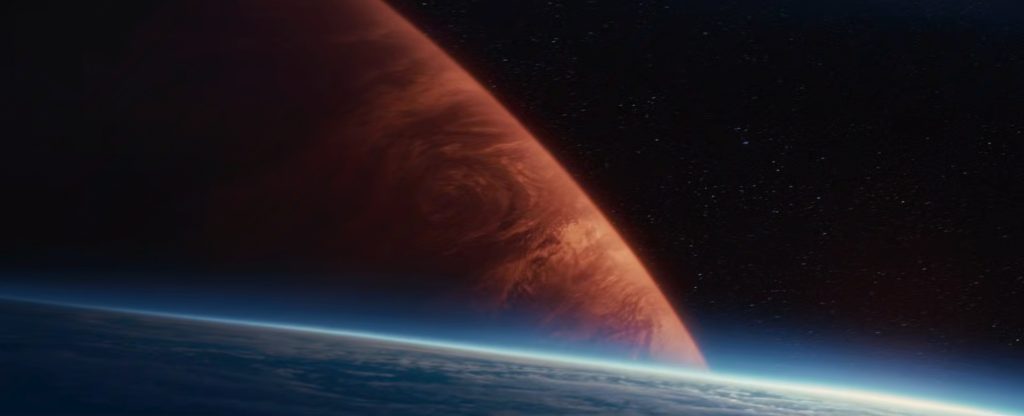
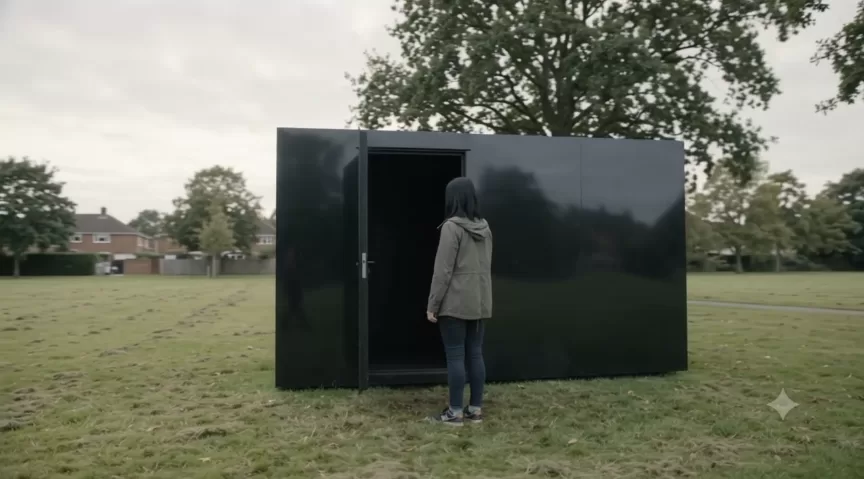
For three seasons, the Algorithm has been the most powerful presence in Silo, an unseen system judging the stability of Silo 18 and deciding whether 10,000 people live or die. Season 3 finally pulled back the curtain. There is no machine. There is Victor Crnkovich in Silo 1, speaking through a voice modulator, with Rosalind Thurman as director and a memory-wiped Daniel Keene, now “Troy”, woken from cryosleep whenever a silo needs putting down.
The moral case against Silo 1 hardly needs making. What interests me is that, even on its own chilling terms, the system is badly designed. If the goal is to keep 50 isolated populations obedient for centuries, the founders made a string of mistakes any strategist should have spotted. So here is a thought experiment: if I were the Algorithm, what would I have done differently?
The core flaw: power built on a lie Silo 1’s control rests on a shared false belief. The residents are not only told that the outside is lethal and that the Algorithm is infallible; they are kept from their own history altogether. The project’s stated aim is to free humanity from its past.
The trouble with ruling through a false belief is that it is a coordination problem waiting to be solved. Obedience depends less on what each resident privately believes than on what they think everyone else believes. Once the truth becomes common knowledge, when people know that others know, compliance can collapse almost overnight. Nearly every crisis in the show follows from Silo 1 creating ways for that knowledge to spread.
1. Don’t send dissenters to the one place they can test the lie Cleaning is meant to be the ultimate public deterrent: challenge the system and you walk out to certain death while everyone watches. It works perfectly, right up until someone survives.
It is an astonishingly risky design. The punishment puts the most curious, rule-breaking people exactly where the fake display on the screens can be exposed, and one survivor, Juliette, was enough to shatter it. A deterrent with even a small chance of disproving your entire narrative in front of the whole population is not worth having. I would handle punishment inside the silo, out of sight of the outside world, or at the very least make sure no engineer in Mechanical could quietly defeat the suit.
2. Never give one person all the knowledge In Silo 18, the head of IT is effectively the only person who knows the truth. That puts the whole regime at the mercy of one person’s temperament, ambitions and succession politics. Bernard’s paranoia, his clumsy choice of successor and his eventual turn against the system show how badly that can go.
A sturdier design spreads knowledge across several people who don’t fully trust each other and can check each other’s behaviour. Just as important, Silo 1 needs independent ways of watching what is going on. In the finale, Camille’s feint worked because Victor was relying on a single human channel he could not verify. An Algorithm that can be bluffed is not much of an Algorithm.
3. Make the threat automatic, or keep it secret In game theory, a deterrent is most credible when the side issuing it cannot back down. Silo 1 got this the wrong way round. The Safeguard ran through a physical pipe that residents could find and cap, so they knew the threat was real and also that it could be beaten. Worse, it was run interactively by a person, which told everyone there was someone at the other end who could be negotiated with, delayed or tricked.
I would choose one of two coherent options. Either the threat is fully automatic, triggered by fixed and published conditions with no human discretion and no physical point of failure, or its existence is never revealed at all. The half-hidden, human-operated, breakable version Silo 1 used combines the weaknesses of both.
4. Punish in proportion The Directive treats contamination between silos as the one unforgivable offence, and entire silos are expendable to prevent it. That is the equivalent of a strategy that punishes everyone for a single defection, and over repeated rounds it has two fatal problems.
First, it destroys the very thing the project exists to protect. With 50 silos and centuries to go, wiping out whole populations steadily drains the stock of humanity the founders claim to be saving. Second, it removes any reason for restraint. Once a silo believes it is already condemned, it has nothing left to lose, which is exactly the point at which people rise up. Graduated, targeted sanctions keep deterrence working while leaving people a reason to stop.
5. Take the mystique out of the past The total ban on relics was meant to cut people off from history. In practice it made every surviving object enormously significant. A forbidden children’s book or a single photograph becomes proof that something was hidden, and hidden things invite investigation.
I would do the opposite: allow a carefully chosen supply of harmless old-world objects so they become ordinary. Curiosity also needs a safe outlet. The most inquisitive residents are the most dangerous if you fight them and the most useful if you recruit them. Bernard half understood this with Juliette, but by then trust had already broken down. A system that routinely brought its brightest dissenters into IT, rather than sending them out to clean, would face far fewer rebellions.
6. Don’t build what you’ve banned If isolation between silos is the top priority, a network of tunnels connecting them is a baffling weakness. It is like announcing that doors are the gravest threat to the regime and then fitting every wall with one. Either don’t build them, or make their existence the most closely guarded fact in the entire project. By the end of Season 3, Juliette knows about them, and that is catastrophic for Silo 1.
7. Keep the enforcer reliable Troy is Silo 1’s troubleshooter, the person trusted with the hardest decisions. He is also plainly deteriorating: each time he is woken, flashes of Helen come back and he asks more questions. Victor’s response is simply to put him back to sleep.
That is putting off the problem, not solving it. The person with the most lethal authority in the system should be its most predictable part, and Silo 1 is relying on memory suppression that visibly fails. Sooner or later, the enforcer remembers.
8. Make promises that can be checked In the finale, Troy offers Silo 18 a deal: he will leave the Safeguard off as long as they avoid contact with the other silos. Juliette seems to accept, while planning to reach Silo 1 through the tunnels.
Of course she does. Silo 1 has lied to her people for generations and has shown it will kill entire populations. A promise from an actor with that record is worthless unless it can be verified or enforced. If I genuinely wanted a settlement, I would give her something concrete and lasting: real control over the capped pipe, independent monitoring, or even a seat in the project itself. Commitments only hold when breaking them costs the one who made them.
The uncomfortable conclusion What strikes me about this list is that almost every change makes the system less cruel as well as more stable. That isn’t a coincidence. Regimes held together by deception and collective punishment are fragile precisely because they give people every reason to resist and nothing to lose by doing so. Legitimacy is far cheaper to maintain than terror.
The single most powerful move open to Silo 1 would not involve pipes, voice modulators or cryo-sleep. It would be offering residents a believable future: a real, verifiable date when the doors will open, and a reason to wait for it. People will put up with a great deal for something they believe in. Silo 1 chose fear instead, and with Juliette heading for its front door in the final season, it may be about to find out how poor a choice that was.
How to Actually Destroy the Box: An Engineering Post-Mortem on Dark Matter’s Central MacGuffin.
1,119 words
Every season of Dark Matter eventually arrives at the same problem. Someone, usually Jason, decides the box has to go. It’s the thing that ruined his life, ended Daniela’s marriage to the “right” version of him, and now threatens to keep spawning doppelgangers for the rest of their days. The solution always sounds simple when a character says it out loud: destroy the box. What the show is much less interested in is how, which leaves the door wide open for anyone with a passing interest in materials science to have a go at the problem properly.
What ‘the box’ actually is:
Strip away the drama and the box is a fairly modest piece of engineering. It’s primarily a sealed metal chamber. A traveller climbs in, gets injected with a compound (the show calls various versions of it Lavender Wings, Lilac Wings, and so on) that inhibits activity in the prefrontal cortex, and this induces a state of quantum superposition, aided by technology embedded into the box’s inner hull. From inside that state, the traveller perceives a corridor of doors, each one leading to a different branch of the multiverse, and picks their way toward whichever reality they’re after.
Crucially, none of that magic lives in the metal. The box is an isolation chamber, not a spellbook. Its entire function is to hold a human body still and undisturbed long enough for an altered brain state to do the actual work. That distinction matters enormously once you start thinking about how to disable it.
The real weakness, according to the show itself
Season 2 quietly hands the audience the box’s actual vulnerability. When a duplicate box gets relocated within Chicago, moved only a few miles from where it originally stood, Amanda works out that the move has severed its quantum connection to what she calls the box’s “prime power source”: some kind of anchor point shared across every multiversal copy of the box. Break the connection to that anchor, and you’re left with, in her words, just a box. No corridor, no doors, no superposition, just a large metal container taking up warehouse space.
The show has also shown us the second, blunter method works too: a tornado is depicted destroying a box outright elsewhere in the timeline. So canon actually gives us two independently validated failure modes:
Structural annihilation – enough force or heat to physically wreck the chamber. No chamber, no isolation, no portal. Severance – moving the box far enough from its anchor point that the link degrades to nothing, without needing to damage it at all.
Anything you propose as a destruction method should be judged against those two mechanisms, because they’re the only ones the text has actually confirmed.
Why concrete doesn’t cut it
The instinctive answer, entomb it in concrete, fails both tests. Pouring concrete around the box doesn’t move it relative to its anchor point, the coordinates are unchanged, you’ve simply added mass nearby. And it doesn’t structurally destroy the chamber either. Burying something isn’t the same as crushing it. What you’re left with is access denial: nobody can open the door and climb in, which has some value, but it’s containment rather than destruction. And containment is precisely the failure mode the show keeps punishing its characters for relying on, because a box that still physically exists is a box that a sufficiently motivated alternate version of yourself, with unlimited time and resources, eventually digs up again.
A better stratagem: helicopter, Iceland, volcano
This is where things get properly satisfying, because a lava drop stacks both validated mechanisms at once rather than betting on just one.
Severance is trivially achieved. If a few miles across a single city was enough to sever the link in canon, then several thousand kilometres to a volcanic peninsula in the North Atlantic isn’t a marginal improvement, it’s overkill by several orders of magnitude. Strictly speaking you wouldn’t even need the volcano just to disable the box functionally; the flight there already does that part of the job.
Structural destruction is where the physics gets interesting. Icelandic basaltic lava, the kind produced by the Reykjanes Peninsula’s fissure eruptions, typically sits around 1,100–1,200°C. Mild and structural steel melts at roughly 1,370–1,510°C, meaning a steel box dropped into an active lava lake might not fully liquefy on contact. What it will do is warp under thermal stress, oxidise rapidly, and get chemically attacked by dissolved sulphur compounds, all while being progressively swallowed by the flow. Any internal wiring or chemical-injection hardware has essentially no chance of surviving that environment regardless of what the outer shell is made from. The practical result is a box that is destroyed in every sense that matters, inoperable, and buried under solidifying rock, which arguably beats pure concrete containment, since it removes the long-term “someone eventually excavates it” risk that burial alone leaves open.
The two wrinkles any serious multiverse-ending team should plan around *wink*:
Timing. Lava requires an actual eruption, and Iceland doesn’t oblige on demand. As of late 2026 the Reykjanes Peninsula’s Sundhnúkur crater system has been quiet since its last eruption in mid-2025, though magma has continued accumulating beneath Svartsengi and the region is expected to remain volcanically active for decades. If the schedule doesn’t cooperate, Kilauea in Hawaii is the more dependable choice; it has erupted dozens of times in the past two years alone and is far less likely to leave you waiting around with a box strapped to a cargo hook.
Payload. Nothing in the show gives exact dimensions for the box, but it’s consistently moved by forklift and truck rather than crane, which puts it plausibly in the low single-digit tonnes. That’s comfortably within the external sling-load capacity of a heavy-lift helicopter such as a Sikorsky Skycrane. The genuinely dangerous part of the operation isn’t the lift at all, it’s holding a stable hover near an active vent long enough to release accurately, given the sulphur dioxide plumes and violent thermal updrafts that come with any close approach to a lava lake.
The uncomfortable postscript
Even a technically perfect execution of this plan only solves a local problem. Destroying one instance of the box, however thoroughly, does nothing about the countless other Jasons across the branching multiverse who have built, or will eventually build, boxes of their own. That’s really the show’s quiet argument underneath all the corridor-running and doppelganger drama: there is no engineering solution to infinite branching possibility. You can win the battle against one box. You cannot win the war against the concept of it.
Still, if you only need to win the battle: helicopter, Iceland, volcano. It’s sound.
The ‘Trolley Problem’: What a Shopping Cart Can Teach You About End Stage/Terminal Stage Surveillance Capitalism…
1,448 words
There is a particular kind of fury reserved for a supermarket trolley with a mind of its own. You line it up, push forward, and it veers sideways as though possessed, or worse, one wheel has gone square and every rotation produces a sound like a dying accordion. It seems a trivial complaint. It is not. The humble trolley is, in fact, a masterclass in design philosophy, and once you start looking at it properly, it opens a door onto something much larger: how supermarkets think about their customers, and how far that thinking now extends into your data, your face, and your habits.
The Trolley as a Design Artefact
Not all trolleys are created equal, and the differences are not accidental.
Take the large chains that dominate the UK high street. Their trolleys are free to take, no deposit required, and the wheels are, frankly, an afterthought. Anyone who has wrestled a cart with one wobbling caster and one that has fused into a rigid, non-rotating brick knows the particular indignity of shopping while fighting your own equipment. There is no real incentive for the retailer to fix this. The trolley gets you round the shop and back to the till; wheel quality does not appear on any balance sheet that matters to head office.
Contrast that with the discount chains that require a pound coin (or a special token) to release a trolley from its bay. These trolleys tend to glide. The wheels are true, the frame doesn’t rattle, and the whole experience is noticeably smoother. This isn’t a coincidence, and it isn’t really about the trolleys themselves. It’s a master-stroke of behavioural design. Nobody wants to lose their pound, so trolleys get returned to their bays rather than abandoned in car parks or nearby streets. The chain saves on staff time spent rounding up stray trolleys, and the deposit mechanism largely pays for itself in reduced losses and lower collection costs. The customer experiences it as “these trolleys are just better”, when really what they’re experiencing is a company that has quietly outsourced its trolley-logistics problem to a one-pound psychological nudge.
It is a small, almost invisible example of a much bigger idea: that the shopping experience you are given is never neutral. Every element, from trolley wheels to aisle layout to the placement of the bakery smell, has been considered, tested, and optimised for something. Usually that something is not your convenience. It’s the retailer’s bottom line, dressed up as convenience.
And then there’s the reward scheme layered on top, offering money off fuel at a station the chain itself doesn’t operate anywhere near your area. It is a strange kind of loyalty gesture: a benefit engineered for an average customer who may not exist in your postcode, handed out anyway because the loyalty app’s back end doesn’t know or particularly care whether it’s useful to you specifically. Which brings us to the app itself, and the far larger design decision behind it.
Loyalty Cards: The Discount That Costs More Than It Saves
Loyalty schemes are sold to us as a straightforward trade: scan your card, get a bit of money off, everybody wins. In practice, the exchange is wildly asymmetric. You get a few pence off tea bags. The retailer gets a granular, timestamped, endlessly cross-referenced record of your entire shopping life.
Consider what a till receipt actually contains once it is tied to a loyalty number. Not just what you bought, but when, how often, in what combinations, and how that changes over time. Do you buy own-brand or premium? Do you stock up before bank holidays? Do you only ever buy the reduced yellow-sticker items after 8pm? Did your alcohol purchases spike, or your nappy purchases start, or stop? None of this requires anything sinister like a hidden microphone. The receipt alone tells a remarkably intimate story, and loyalty schemes exist specifically to attach a name and a household to that story rather than let it stay anonymous.
That data has value well beyond “let’s send this customer a coupon”. It can inform stock decisions, sold on to third parties, or, more controversially, used to personalise pricing. The idea that two shoppers might be shown different prices for the identical tin of beans, based on what an algorithm has inferred about their price sensitivity, sounds like speculative fiction. It isn’t. It’s a live discussion in retail and competition circles precisely because the data infrastructure to do it already exists, sitting quietly behind every loyalty card scan.
The pitch, “save money by joining”, inverts the actual transaction. You are not saving money. You are selling behavioural data at a steep discount, and the “savings” are your own money being partially returned to you as a rebate for having handed over something a lot more valuable.
The Watching Aisle
If loyalty cards are the polite, consensual end of retail surveillance, the far end is considerably less polite and a good deal less consensual: cameras that don’t just record you, but attempt to recognise you.
Facial recognition in UK retail is no longer hypothetical.
Facewatch, a system used by a number of retailers, checks faces against a shared watchlist, ostensibly to flag people previously involved in theft or antisocial behaviour. Framed narrowly, this sounds like sensible loss prevention. The trouble is that “narrowly” is doing a lot of work in that sentence, and nobody outside the company holds a clear, verifiable picture of where the narrow use ends and a broader profiling capability begins. You are, in effect, asked to trust the system is only doing the specific thing it claims, with very little visibility into whether that trust is warranted.
It is worth understanding, purely as a matter of how the technology works, why some of these camera systems behave the way they do. Most digital cameras use CCD or CMOS sensors that are sensitive not only to visible light but also to near-infrared wavelengths that the human eye cannot perceive. This is why older or budget CCTV units, and infrared night-vision cameras generally, can be affected by strong infrared light sources in ways that visible light does not affect them: the sensor “sees” wavelengths a person in the room does not.
This has been a known quirk for a long time, well-known enough that it has shaped how modern security cameras are built. Many newer units, especially ones installed specifically with this vulnerability in mind, now include IR-cut filters, physical filters that block near-infrared wavelengths from reaching the sensor at all. It is a neat, small example of an ongoing technical arms race: a known sensor limitation becomes public knowledge, manufacturers respond by filtering out the exploit, and the old trick stops working on new hardware, while remaining effective against the huge installed base of older or cheaper cameras that predate the fix. The broader lesson isn’t really about cameras. It’s a reminder that any system built to observe people is built on physical hardware with physical limits, and physical limits eventually became public knowledge and adjusted for.
The Trade Nobody Explicitly Agreed To:
Pull the thread from squeaky trolley wheels to loyalty card data to facial recognition, and a pattern appears. At every step, the retail environment has been engineered to extract something from you, whether that’s your compliance in returning a trolley, your purchase history, or your face, and at every step the retailer frames it as a benefit to you: convenience, savings, security. Sometimes it genuinely is a mutual benefit. A well-designed trolley bay really does mean fewer abandoned trolleys cluttering the car park. A discount really is a discount, however small.
But the honest version of the pitch would sound rather different: “Give us a pound and behavioural economics will make sure you bring the trolley back.” “Give us your shopping history and we’ll give you a fraction of its value back in vouchers, keep the rest, and possibly use it to charge you and your neighbour different prices for the same shop.” “Let us build a facial record of your visits, and trust usssss to only use it the way we say we will.” :’-(
None of this requires outrage, exactly. It mostly requires noticing. The trolley wheels are not really about trolley wheels. They’re a small, physical demonstration of a much larger principle that runs through modern retail: the environment you shop in has been designed, in exhaustive and often invisible detail, and very little of that design was done with your interests as the primary consideration. Once you see it in the trolleys, you start seeing it everywhere else too…
Dr. Elena Vasquez had spent eleven years trying to reconcile general relativity with quantum mechanics, and she had come to the conclusion, quietly, over many sleepless nights, that the problem wasn’t in the mathematics. The problem was in her. Some perceptual limitation, baked into the wetware, that made it impossible to hold curved spacetime and probabilistic wavefunctions in the same thought without one collapsing into the other.
She had not come to the retreat centre in the hills outside São Paulo to fix physics. She told herself that, repeatedly, on the drive up. She had come because her husband had left in March, because her postdoc had been denied, because she had not published anything worth reading in three years, and because a colleague – a string theorist who had gone quiet and strange after his own retreat, and then oddly brilliant – had told her, *just go, you’ll understand something you can’t get from equations.*
She had not planned to combine anything. The facilitator, a soft-spoken woman named Iara who had run these ceremonies for two decades, had been firm about that. But on the second night, in the dark after the first purge had passed and the visions had not yet properly begun, Elena had made a decision that was not quite a decision – the kind of thing that happens in an altered state, where intention and impulse blur past the point of separation. She had brought her own mushrooms. She took them anyway, without telling Iara, four grams ground into the last of her water, on top of a ceremonial dose of ayahuasca that was already working through her blood.
—
The nausea arrived first, as it always did with the vine, but this time it did not stay in her stomach. It became a property of *space itself.* The walls of the maloca breathed in slow peristaltic waves, and Elena understood, with total clinical certainty, that she was inside something that was digesting her.
She reached for the bucket. She did not make it. Iara’s assistant came with a cloth and murmured something in Portuguese that Elena’s brain, disassembling in real time, translated not as words but as a shape – a soft blue parabola of care, arcing over her and then gone.
*I should tell someone,* she thought. *I took something else. This isn’t standard protocol.* But the thought arrived already fragmented, already being folded into something larger, the way a sentence gets pulled apart by strong wind before it’s finished leaving your mouth.
Her heart was doing something she didn’t like. Not racing exactly – more like it had stopped agreeing to run on a single rhythm and was now negotiating between several tempos at once, and she felt this not as fear but as *data.* Somewhere very far away, a small remaining sliver of Dr. Vasquez noted: *tachycardia, possible serotonergic excess, this is exactly the interaction you warned your students about.* That sliver was calm. It observed. It did not have hands anymore, or a mouth, so it could not do anything but watch.
—
Then the visions became geometric, and this was the part she would spend the rest of her life trying, and failing, to write down properly.
She saw – no, *saw* was wrong, there was no seeing, there was only *being the fact of* – a lattice. Not a metaphor for a lattice. The actual underlying structure, she felt certain, of everything. It was not spacetime as she’d modelled it, smooth and differentiable. It was granular, foaming, appearing and disappearing at a rate she could not measure because the concept of a measuring rate required a stable observer, and she was not stable. She was inside the foam.
Voices came through the geometry. Not English, not Portuguese, not language really – more like the vine itself was old and had opinions, and the opinions arrived as pressure, as intention, as a very ancient patience regarding her smallness. She had read about “the mother” in every ayahuasca account she’d skimmed, half-embarrassed, before the trip, filing it under *anthropomorphisation, interesting but unscientific.* Now the distinction between *anthropomorphised* and *actually a mind* dissolved along with everything else, and she wept, not from fear, but from something closer to being *known.*
The mushrooms arrived on top of this like a second frequency modulating the first – faster, brighter, more fractal, less narrative. Where the vine gave her structure and voice, the mushrooms gave her recursive visual detail: the lattice sprouted eyes, then sprouted lattices of eyes, each one a further zoom, and she understood – again, with that same false clean certainty that altered states hand out like candy – that she was looking at *herself*, at the structure of a mind trying to observe its own observation, an infinite regress of a physicist trying to physics her way out of the trip and only sinking further into it.
*This is just the Copenhagen interpretation having a nervous breakdown,* she thought, and somewhere a version of her that still had a sense of humor almost laughed, except laughing required a body with reliable diaphragm control and hers was busy being folded through eleven dimensions of something that might have been grief.
—
Because underneath the geometry, the grief was the real content. It always is, people said, and she hadn’t believed them before this. She saw her husband not as a memory but as a live variable, still coupled to her, refusing to decouple no matter how far the equations of her life had drifted from his. She saw her father, who had wanted her to be a doctor, a real one, hovering disappointed at the edge of every equation she’d ever solved. She saw the postdoc rejection not as a professional setback but as a small, precise wound that had been standing in for a much larger question – *does the universe, in fact, want you here* – and the vine, or the mushroom, or the seething foam of everything, answered that question not with words but with an unbearable, oceanic *yes* that broke something loose in her chest and she cried in a way she had not cried since she was a child, ugly and total, snot and tears and bile.
Her pulse would not settle. At some point Iara was kneeling in front of her, taking her wrist, her face carved with real concern, saying words that landed as concrete instructions even through the dissolving membrane of Elena’s ordinary comprehension – *breathe with me, you are safe, you are in a body, breathe* – and something in the specific gravity of Iara’s voice, the way it refused to be swept into metaphor, gave Elena a handhold. She breathed. The world did not stop being a foaming lattice of recursive eyes, but her heart, mercifully, began to remember a single rhythm.
—
Hours passed that did not behave like hours. At the peak – if it was a peak, if peaks were even the right shape for a place with no vertical axis – she experienced something she could only describe afterward, badly, as *becoming the wavefunction instead of measuring it.* All her career she had stood outside the equation, a physicist, a knower, a subject regarding an object. Now there was no outside. She *was* the superposition, unresolved, every possible Elena – the one who’d stayed married, the one who’d left academia, the one who’d never come to Brazil at all – coexisting without collapse, and it was not distressing, not by this point; it was the first time in a decade she had felt something like rest, because if she was every possibility at once, none of them could disappoint her, and none of them could leave.
She thought, with sudden and startling clarity: *this is why they call it medicine.* Not because it fixed anything. Because it showed her the shape of the thing she’d been carrying, all lit up at once, so she couldn’t pretend anymore it was only a professional problem, or only a marriage problem, or only a mathematics problem. It was one problem. It had always been one problem.
—
The comedown, when it finally came, came slowly and with its own kind of violence – a headache like a fist, a body that felt wrung out and slightly betrayed, a thirst she couldn’t satisfy for an hour. Iara sat with her as the light came up grey through the maloca’s gaps, and asked, gently, without judgement, what exactly Elena had taken.
“Both,” Elena admitted. “I took both.”
Iara didn’t scold her. She just nodded slowly, the way people do when a thing they suspected has been confirmed, and said, “Your heart worked very hard last night. You are lucky it is a good heart.” Then, after a while: “What did you see?”
Elena tried to explain the lattice, the recursive eyes, the wavefunction, and it came out sounding like nonsense, like every account she’d ever rolled her eyes at in a journal she wasn’t proud of reading. She laughed, hoarse and real. “I don’t have language for it. I have language for quarks and I don’t have language for this.”
—
Back in her apartment two weeks later, on a Tuesday, staring at a whiteboard she hadn’t touched since before Brazil, Elena found herself writing not an equation but a question, in small letters at the corner of the board, the kind of note you leave for the version of yourself who comes back tomorrow: *what if the observer was never outside the system to begin with?*
She did not solve unification that year, or the next. The mathematics did not care what she had seen in the dark, foaming and recursive and briefly infinite. But something had shifted in the way she held the question – less like a puzzle to be cracked from a safe distance, more like a thing she was standing inside of, had always been standing inside of, the way she had, for one unbearable and clarifying night, been standing inside a vine’s old and patient mind.
She never combined them again. Once had been enough to nearly stop her heart and completely rearrange the rest of her. She kept the memory the way you keep a scar – proof of something real that happened, evidence she was careful not to need again.
Imagine you are a detective. Your job is to listen for a very, very quiet knock on a door. The knock is so quiet that you can barely hear it. Now imagine that the door also makes random creaking noises all by itself, and those creaks sound almost exactly like the knock.
How do you know if what you just heard was someone knocking, or just the door being noisy?
That question – that exact puzzle – is at the heart of a real science mystery. Scientists gave it a name: the Photon Falsifiability Gap. It sounds like a big, fancy phrase, but once you break it into pieces, it’s actually a story about light, invisible energy, and a very clever machine that sometimes fools itself.
What is a photon?
Light is made of tiny little packets, kind of like light is made of Lego bricks. Each one of these tiny packets is called a photon. You can’t see a single photon with your eyes – they’re much too small and light for that. But scientists have built machines that can detect a single photon, one at a time. That’s an amazing feat, like being able to hear a single grain of sand hit the floor.
Meet the super-listener: the photomultiplier
The machine that can “hear” a single photon is called a photomultiplier tube (you can just call it a PMT for short). Think of it like a super-sensitive microphone, except instead of listening for sound, it’s listening for light.
Here’s how it works, in simple terms:
A single photon flies into the tube and hits a special metal surface. That hit knocks loose one tiny electron. The tube then multiplies that one electron into millions of electrons, like a snowball rolling downhill and picking up more snow. All those electrons create an electrical “click” that a computer can count.
So a photomultiplier tube turns one whisper-quiet flash of light into a loud, countable click. Pretty amazing, right?
The invisible energy problem
Now here’s where our mystery begins. Some materials in nature give off a very weak, very quiet form of energy. One of these is called tritium. When tritium releases its energy, it’s incredibly faint – much fainter than most other radioactive materials. It’s like a whisper compared to a shout.
Scientists want to detect this whisper using their super-listener, the photomultiplier tube. And it can pick up that whisper… but here’s the catch.
The catch: the door creaks too
A photomultiplier tube isn’t perfectly silent when nothing is happening. Every once in a while, all on its own, it produces a tiny click – even when no real photon ever arrived. Scientists call this dark noise, because it happens even in total darkness, with nothing there at all.
And here’s the twist that makes this a true mystery: a dark noise click and a real tritium click look exactly the same. Both are just one tiny electrical pulse. There is no way, just by looking at a single click, to tell which one you’re looking at.
Go back to our detective story. You heard a knock. Was it a real knock, or just the door creaking? If both sounds are identical, you can never be 100% sure – not for that one single sound.
Why this is called a “falsifiability” problem
In science, there’s an important idea called falsifiability. It means that for an idea to be truly scientific, you need to be able to test it in a way that could prove it wrong if it actually is wrong.
Here’s the problem: if you hear one click and say “that was tritium!” – there is no way to prove that statement wrong. It might have been dark noise. And if you say “that click was just dark noise!” – there’s no way to prove that wrong either. It might have been real. Neither guess can be tested for a single click. That’s the “gap” – a gap where our normal rules for testing scientific ideas don’t quite work, at least not one click at a time.
So how do scientists solve the mystery?
If you can’t trust a single click, what do you do? You stop listening for one knock and start counting lots of knocks over a long time.
Here’s the trick:
First, scientists measure how many random clicks (dark noise) happen when they know for certain there’s no tritium around. This tells them the normal “creaking” rate of the door. Then, they measure the click rate when tritium might be present. If the second number is clearly, reliably higher than the first – not just by one or two clicks, but by a lot, over and over – then they can be confident that real tritium signals are hiding inside all those clicks.
It’s a bit like this: you can’t know if one specific creak was a knock. But if you count 1,000 creaks on a quiet night and then count 1,000 creaks plus 300 extra clicks on another night, you can be pretty confident something extra was happening on that second night – even though you still can’t point to any single click and say “that one was definitely the knock.”
Why does any of this matter?
This isn’t just a fun puzzle – it matters for real science:
Finding ancient objects: Scientists use radioactive materials to figure out how old rocks, fossils, and artefacts are. Medicine: Doctors use tiny, safe amounts of radioactive material to see inside the human body without surgery. Hunting for dark matter: Physicists build giant, super-sensitive detectors – using the same kind of photomultiplier tubes – to search for mysterious particles that make up most of the universe. They face this exact same “which click was real?” problem, just on a much bigger scale.
Every single one of these fields depends on scientists being clever enough to work around the falsifiability gap, even though they can never fully close it.
Quick recap:
A photon is a tiny packet of light.
A photomultiplier tube is a machine that can detect a single photon and turn it into a loud click.
Tritium gives off a very weak, whisper-quiet signal.
The tube also makes random clicks by itself, called dark noise, and these look identical to real signals.
Because of this, no single click can ever be proven to be real or fake – that’s the falsifiability gap.
Scientists solve this not by trusting one click, but by comparing patterns of many clicks over time.
Try it yourself:
Here’s a fun way to feel this mystery for yourself. Get a friend and a set of headphones, or just sit in separate rooms. Have your friend randomly tap a table softly, mixed in with the normal sounds of the house (footsteps, a fan, a fridge humming). Try to guess, sound by sound, which taps were real. You’ll probably find that any single sound is a guess – but if you count for five whole minutes, you’ll likely get a much better sense of how many taps really happened, even without ever being sure about any one of them.
That’s the same trick scientists use to solve the Photon Falsifiability Gap – not by being certain about one click, but by being smart about all the clicks together.
The other day I crawled from my living room to my bathroom to answer a call of nature. I remember washing my hands on my knees afterwards – that was the moment I understood something had gone seriously wrong. My body, already worn down by a Long COVID flare that has followed me since 2022, had stopped being negotiable with me. I crawled back to the living room and called an ambulance.
I recognised, with a strange kind of clarity, that I was in danger. The ambulance took about fifty minutes to arrive. I lay on the floor and picked up a magazine article about soy sauce – something small and ordinary to hold onto while everything else felt enormous. I thought about what might happen if I passed out before help came: that paramedics might have to break my door down to reach me. I pictured it more than once. I accepted it as a possible outcome. That’s an odd kind of peace to make, alone on a floor, but I made it.
When the ambulance arrived, I made it to the door myself, with great difficulty. Opening it brought an enormous wave of relief – followed almost immediately by trepidation, when the crew mentioned how busy the hospital was that day. In the ambulance, flat on my back, I felt every bump in the road land directly in my joints. And somewhere in the middle of that pain, the EMT and I ended up singing “Mad World” together. Neither of us quite started it – we both did, at the same time. It remains one of the strangest and most human moments of the whole ordeal: two strangers, meeting in a song, while one of them was in genuine crisis.
At the hospital, a nurse commented on my Star Trek: The Next Generation t-shirt on the way in. Small kindness, register kept intact.
Then the wait began. Eleven hours, from ambulance arrival to actually seeing a doctor. A waiting room that was extremely hot and extremely busy, with chairs that seemed engineered to be as uncomfortable as possible for people who were, definitionally, all unwell. I tried desperately to reach my sleeping sister by phone. Not being able to get through to her was, honestly, existentially horrific – a specific kind of alone that goes beyond simply being alone in a room. It’s being unreachable to the one person who could reach you.
She saw my voicemail notifications about an hour after I arrived. When she got to the hospital, it felt like being rescued by Supergirl. At one point in the waiting room, an Irish man who was clearly in the grip of a severe mental health crisis – fixated on death, with an intense, thousand-yard stare – began harassing my sister and me. It went on until hospital security and nursing staff stepped in to manage the situation. It was frightening in the moment, but it also underlined something about that waiting room: everyone in it, in one way or another, was in crisis, and the system meant to hold all of us at once was stretched far too thin to do it well.
Somewhere in that waiting room, gallows humour crept in – nurses talking about The Last of Us and The Pitt, a show literally about an overwhelmed emergency department, while living through a version of it themselves. It wasn’t despair. It was people staying human inside something exhausting, the way healthcare workers often do. I don’t have a tidy conclusion to offer. What I have is what happened, told in order: the crawl, the calculated call for help, the fifty minutes with a soy sauce article, the song in the ambulance, the small kindness about a t-shirt, the hour of silence, and then not being alone anymore.
That’s the account, for whoever needs it, including future me. – written the day after, for the record.
The MS Leviathan’s Grace was not merely a cruise ship; she was a floating metropolis of unadulterated opulence, a billion-dollar titan of brushed steel, reinforced glass, and mahogany that catered to the whims of three thousand of the world’s most affluent souls. Now in the second week of a fourteen-day Mediterranean odyssey, a comfortable, lazy rhythm had settled over the vessel. The frantic excitement of embarkation had long since dissolved into a routine of champagne breakfasts, midday spa treatments in rooms infused with eucalyptus, and evenings spent losing minor fortunes in the velvet-draped casino.
It was a Tuesday morning, precisely 7:00 AM ship-time. The aroma of freshly baked croissants, roasted Arabica coffee, and sizzling pancetta began to waft through the air vents, courtesy of the five-star culinary team preparing the Lido deck buffet. In Penthouse Suite 4A, Reginald Sterling, a retired commodities broker, awoke to the gentle, rhythmic thrum of the ship’s massive diesel-electric engines. He stretched against the thousand-thread-count Egyptian cotton sheets, blindly reaching for the remote control on his platinum-gilded nightstand. With a sleepy press of a button, the heavy, blackout curtains of his floor-to-ceiling balcony doors began to glide open on silent, motorized tracks.
Reginald expected the blinding, azure brilliance of the Ionian Sea. He expected the warm glare of the Grecian sun reflecting off the gentle swells, perhaps the distant, olive-green silhouette of a coastal island.
Instead, he was greeted by the abyss.
Reginald blinked, his brain refusing to process the sensory input. The light filtering into the room was not the golden hue of morning, but a harsh, anemic gray, barely brighter than dusk. He sat up, the silk sheets pooling around his waist, his heart giving a sudden, erratic flutter.
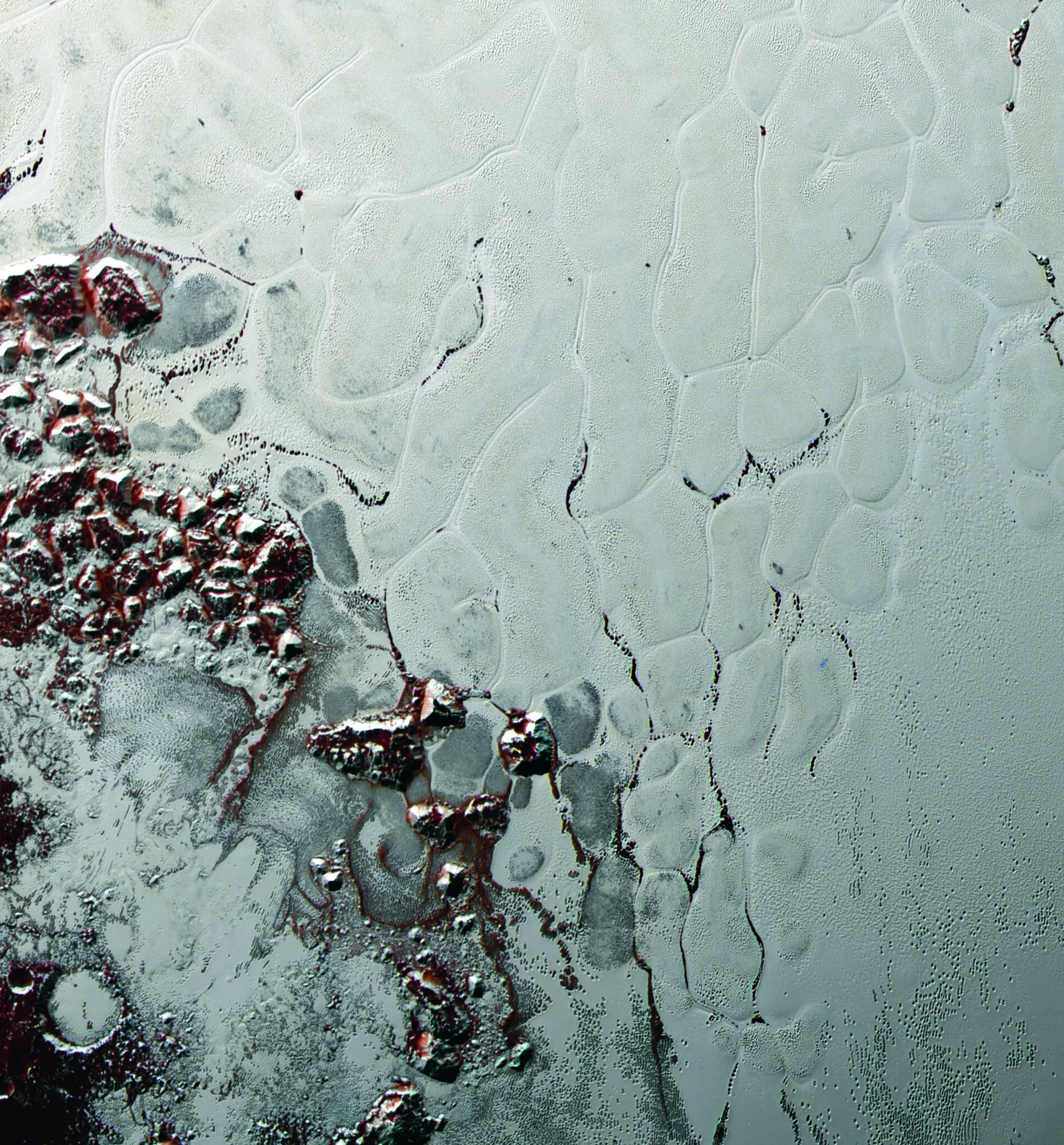
Beyond the reinforced glass of his balcony, there was no ocean. There was no sky. There was only an infinite, terrifying expanse of absolute, inky blackness, punctuated by the cold, unblinking diamond dust of a billion distant stars. And taking up nearly half of the visible panorama was a colossal, bruised-looking sphere. It was a world of pale, jagged ice, marked by vast, heart-shaped plains of frozen nitrogen and towering, rust-colored mountains that cast long, menacing shadows in the weak light of a distant, shrunken sun.
It was Pluto.
But before Reginald’s mind could even begin to fracture under the impossibility of the sight, he noticed something else. Separating his balcony from the lethal vacuum of deep space was a shimmering, iridescent barrier. It pulsed with a faint, bioluminescent glow, undulating with colors of oil slick—magentas, emeralds, and ethereal blues. It completely encased the Leviathan’s Grace like an infinitely thin, impossibly strong soap bubble.
On the bridge, fourteen decks above Reginald, absolute pandemonium had been raging in a hushed, terrified silence for the past forty-five minutes.
Captain Elias Vance, a veteran of the seas with thirty years of maritime experience, stood rigidly at the center console, his knuckles bone-white as he gripped the polished brass railing. His crisp white uniform felt suddenly heavy. The bridge, usually a sanctuary of quiet professionalism and softly beeping instruments, was a symphony of blaring alarms, flashing red warning lights, and the panicked whispers of his senior officers.
”GPS is non-existent, sir,” stammered First Officer Chen, his face bathed in the crimson light of a failing navigation terminal. “Satellite uplink is gone. VHF radio is emitting nothing but background cosmic microwave radiation. The magnetic compass…” Chen swallowed hard, pointing a trembling finger at the ancient brass instrument. The needle was spinning with violent, chaotic speed. ”And the engines?” Captain Vance asked, his voice a gravelly whisper, trying to maintain a facade of authority when his own sanity was fraying at the edges.
”Running normally, sir,” Chief Engineer Rossi replied over the comms, though her voice was laced with hysterical confusion. “We are outputting full cruising power, propellers are turning, but… Captain, there’s no water resistance. The propellers are spinning in a vacuum. Yet, we are maintaining a stable, zero-degree pitch. Artificial gravity seems to be… generated by whatever is surrounding us. The ship’s internal pressure is perfectly normal at 14.7 PSI. The hull temperature is seventy-two degrees Fahrenheit, despite the external sensors reading nearly four hundred degrees below zero.”
Captain Vance stared out the expansive bridge windows. The glowing, prismatic shield bubble perfectly hugged the contours of the massive ship, extending perhaps fifty yards out from the hull. Beyond it, the desolate, icy surface of the dwarf planet rotated in silent majesty. The Leviathan’s Grace was locked in a perfect, stable orbit, gliding over the frozen plains of Sputnik Planitia. ”Turn off the collision alarms, Chen,” Vance ordered quietly. “There’s nothing for us to hit.”
Down on the upper decks, the passengers were beginning to wake. On the sprawling outdoor Lido deck, where three expansive infinity pools normally cascaded crystal-clear water, the early risers were stepping out for their morning jogs and swims. A woman in a designer tracksuit pushed through the sliding glass doors, her AirPods blasting upbeat pop music. She stopped dead in her tracks, her iced latte slipping from her grasp and shattering on the teakwood decking.
The scene was a masterpiece of surreal horror. The luxury amenities of the deck—the neat rows of striped sun loungers, the tiki bar stocked with top-shelf rum, the towering water slide—were all bathed in the ghostly, ethereal light of the cosmos and the shimmering energy shield. The sky above the deck was a canopy of infinite darkness.
Panic did not erupt instantly. The human mind requires time to digest the impossible. For a few long, agonizing minutes, the passengers simply wandered onto the decks, clutching bathrobes and coffee cups, pointing upward in a state of collective, hypnotic disbelief. Some thought it was an elaborate, immersive augmented reality show orchestrated by the cruise line. Others believed they were still dreaming.
A seagull, a stowaway from the coastal waters of Europe, suddenly took flight from its perch atop the ship’s massive smokestack. It flapped its wings, ascending toward what should have been the open sky. Thirty feet up, it struck the iridescent barrier. There was a brief, muted crackle of energy, a ripple of vivid purple light across the shield’s surface, and the bird simply bounced off, unharmed but bewildered, fluttering frantically back down to the deck. That was the catalyst. The realization that they were trapped in a bubble, suspended over a dead world in the darkest reaches of the solar system, finally shattered their cognitive dissonance. A piercing scream shattered the silence, followed by another, and another. Within seconds, the Lido deck was a stampede of terrified billionaires, minor royalty, and vacationing families. People scrambled over sun loungers, slipping on the spilled latte, desperately clawing at the heavy glass doors to get back inside the perceived safety of the ship’s interior.
Down in the lower decks, the crew was faring no better. The engine room personnel, cut off from the windows, only knew that every metric on their boards was impossible. The chefs in the galley dropped their spatulas, staring blankly at the monitors that displayed the exterior camera feeds, watching as the pale, cratered surface of Pluto rolled silently beneath the ship’s keel.
Back on the bridge, Captain Vance slowly picked up the heavy, metallic microphone for the ship-wide public address system. His hand was shaking so violently he had to brace his wrist against the console. He looked out at the glittering, shimmering shield that was simultaneously their prison and their only salvation against the freezing vacuum of space. He looked at the distant, impossibly small speck of light that was the Sun, offering no warmth, no comfort.
He keyed the microphone, the familiar, chiming tone echoing through the opulent dining rooms, the sprawling casino, the velvet-lined theater, and every single passenger cabin. ”Ladies and gentlemen,” Captain Vance began, his voice echoing through the ship, competing with the rising crescendo of thousands of terrified screams. “This is your Captain speaking. I ask that you remain calm and return to your cabins immediately. We are experiencing… a navigational anomaly.”
He paused, the sheer absurdity of his own words choking him. He looked up at the vast, uncaring cosmos, the glowing bubble that kept them alive, and the frozen world below. ”We are currently assessing the situation,” he lied, a tear finally escaping his eye and rolling down his weathered cheek. “But I must inform you… we are no longer on Earth.”
Chapter 2: The Specimen in the Jar
The click of the public address system disengaging echoed like a gunshot through the opulent corridors of the MS Leviathan’s Grace. For a microscopic fraction of a second, a vacuum of absolute silence descended upon the ship, profound and suffocating. Then, the dam broke.
It was not merely panic; it was a primal, collective detonation of human terror. In the Grand Atrium, a sprawling, three-story marvel of glass elevators, cascading waterfalls, and a sweeping grand staircase carved from Carrera marble, the string quartet playing a gentle Vivaldi piece abruptly stopped. The cellist, a young man from Vienna, simply let his priceless instrument clatter to the polished deck, his eyes rolled back, and fainted dead away.
Around him, a surging tide of high-society vacationers lost their minds. Women in silk morning gowns and men in bespoke linen suits trampled over one another, shrieking in a cacophony of languages. They clawed at the brass elevator doors, desperate to return to the perceived, windowless safety of the inner cabins, acting on blind, burrowing instincts. A waiter, carrying a silver tray stacked with crystal flutes of mimosas, was slammed into a structural pillar. The glass shattered, raining down sparkling wine and crystalline shards onto the frenzied mob, mingling with the blood of trampled bare feet.
Up in Penthouse Suite 4A, Reginald Sterling hadn’t moved. The captain’s words, “we are no longer on Earth,” looped in his mind like a broken phonograph record. He stood by the open balcony doors, the artificial breeze of the ship’s HVAC system ruffling the silk of his pyjamas. He looked down at his hands, trembling violently, and then out at the bruised, cratered surface of Pluto dominating the black sky.
He was a man who had built his life on control, on hedging bets, on analyzing risk and manipulating markets. He possessed a net worth that eclipsed the GDP of several small island nations. In the safe tucked behind the mahogany panelling of his closet sat a stack of black titanium credit cards, two hundred thousand dollars in assorted cash, and a velvet pouch of conflict-free diamonds. As he stared out at the infinite, uncaring void of the Kuiper Belt, Reginald realized with absolute, crushing clarity that he was entirely bankrupt. His wealth was as useless here as Monopoly money in a burning building.
He stumbled backward, falling heavily onto the edge of the California king-sized bed. The ship felt too still. There was no subtle roll of the ocean waves, no faint, creaking groan of the hull flexing against the water. The Leviathan’s Grace was suspended in a horrifying, frictionless glide, a ghost ship encased in a bioluminescent bubble, orbiting a dead world billions of miles from home.
Fourteen decks below the penthouses, in the labyrinthine steel bowels of the ship, Chief Engineer Rossi was fighting her own war against impossibility. The engine control room was a claustrophobic cavern of blinking server racks, massive diagnostic screens, and the deafening, bone-rattling roar of the four Wärtsilä diesel-electric generators.
”Talk to me, Kowalski! Give me the telemetry on the environmental scrubbers!” Rossi bellowed over the din of the engines, her dark hair plastered to her forehead with stress sweat.
Kowalski, a burly technician whose face was currently the color of spoiled milk, frantically tapped at a glowing terminal. “Chief, the CO2 scrubbers are running, but… they aren’t drawing anything! According to the sensors, the ambient carbon dioxide levels in the ventilation system are completely static. In fact, they’re identical to Earth-normal atmospheric composition.”
Rossi grabbed the edge of the console. “That makes no sense. We have three thousand hyperventilating people on board. The CO2 levels should be spiking. Unless…” She paused, her mind racing through engineering paradigms that were currently being shredded by the universe. “Unless the shield is doing it.”
”The shield, Chief?” ”Look at the external pressure monitors,” Rossi commanded, pointing a grease-stained finger at a massive screen displaying the ship’s hull integrity. “The sensors on the outer hull are reading a perfect 14.7 PSI. Standard sea-level pressure. But those sensors are outside the ship’s internal pressure seals. They are reading the environment between the hull and that… that bubble.”
She tapped a stylus aggressively against her palm. “Whatever put that bubble around us isn’t just protecting us from the vacuum. It’s actively maintaining a biosphere. It’s recycling the air, maintaining the pressure, and regulating the temperature. We are sitting in a perfectly engineered, self-sustaining terrarium.” ”But Chief,” Kowalski swallowed hard, pointing to a different set of dials. “The engines. We are burning through marine diesel at a cruising rate just to keep the electrical grid up and the propellers spinning in zero-G. If we shut down the main thrusters, we save fuel, but…”
”Do it,” Rossi said instantly.
”Chief, if we cut the thrusters, we lose our stabilizing gyros. Without the friction of the ocean to anchor us, the rotational torque of the internal machinery could send the ship into an uncontrollable spin inside the bubble.”
”Then disengage the drive shafts from the electric motors,” Rossi barked, her engineering mind adapting to the sheer lunacy of the situation. “Keep the generators running for hotel power—lights, kitchens, medical bay. But decouple the propellers. We need to conserve every drop of fuel we have. If that shield fails, or if it stops maintaining the ambient temperature, we’ll need that diesel to run the internal heaters, or we will freeze solid in less than four minutes.”
As Kowalski scrambled to execute the orders, Rossi looked up at a small, reinforced porthole in the heavy bulkhead door. Beyond it, the ethereal, purplish glow of the alien energy shield bled into the harsh, fluorescent lighting of the engine room. Who put us here? she thought, a cold knot forming in her stomach. And what do they want with a cruise ship?
Back on the bridge, Captain Vance was trying to stave off a mutiny of panic from his own officers. First Officer Chen was hyperventilating into a paper bag, while the communications officer was weeping silently over a radio console that emitted nothing but the terrifying hiss of cosmic static.
The heavy, blast-proof doors to the bridge suddenly hissed open. Two burly ship’s security officers in dark suits were being practically dragged backward by a surprisingly small, fiercely determined woman. She wore round, wire-rimmed glasses, a slightly wrinkled sundress, and an expression of pure, unadulterated scientific fury. ”Let go of me, you overgrown mall cops!” she shrieked, batting at the security guards with a rolled-up copy of a high-end luxury lifestyle magazine. “I need to see the navigational telemetry right now! I am Dr. Aris Thorne, Department of Astrophysics at MIT, and unless you want to spend the rest of your very short lives flying blind in the Kuiper Belt, you will let me speak to the Captain!” Captain Vance, desperate for any voice of reason amidst the madness, raised a hand. “Let her go, gentlemen.”
Dr. Thorne straightened her sundress, adjusted her glasses, and marched straight to the central holotable, ignoring the stunned looks of the bridge crew. She slammed her hands down on the console, leaning in to glare at Captain Vance.
”Captain,” she said, her voice shaking with a potent cocktail of terror and adrenaline. “I was on the Lido deck when we… transitioned. I saw the stars shift. It wasn’t a gradual movement. We didn’t fly here. We were displaced. Instantaneously.” Vance nodded slowly. “We’ve gathered that much, Doctor. We are orbiting Pluto.”
”Yes, but you don’t understand the physics of what that means,” Dr. Thorne pressed, frantically tapping the glass of the console. “To move a mass the size of this ship instantaneously across four billion miles requires an energy expenditure that breaks the standard model of physics. It’s not a wormhole; there was no gravitational shearing. We were quite literally copy-pasted across the solar system.”
She pointed a trembling finger out the vast windows, toward the shimmering, iridescent barrier that encased them. “And that thing. That shield. I watched a bird hit it. It dissipated kinetic energy with one hundred percent efficiency. Do you have any idea what level of technology is required to create a localized, self-sustaining baryonic energy field that selectively permits light but repels physical matter and maintains a pressurized atmosphere in a hard vacuum?”
”I don’t,” Captain Vance admitted, his voice hollow. “I am a sailor, Dr. Thorne. Not a physicist. What are you telling me?”
Dr. Thorne looked out at the vast, frozen plains of Sputnik Planitia rotating silently below them. The pale, weak light of the distant sun caught the jagged edges of mountains made of solid water-ice, casting long, menacing shadows across the nitrogen glaciers. ”I’m telling you, Captain, that this isn’t an accident,” she whispered, the horrifying truth settling over the bridge like a shroud. “You don’t accidentally create an airtight, life-sustaining bubble and teleport a luxury cruise ship to the edge of the solar system. This is a deliberate, highly calculated act. We weren’t just moved.” She turned back to Vance, her eyes wide behind her lenses. “We were collected. We are a specimen in a jar.”
Chapter 3: The Hourglass
The silence on the bridge of the MS Leviathan’s Grace following Dr. Thorne’s horrifying hypothesis was absolute, a physical weight that pressed against the eardrums of every officer present. For a long, agonizing moment, no one moved. They just stared at the small, fierce astrophysicist who had just verbalized their deepest, most primal fear: that they were not victims of a cosmic accident, but subjects of an incomprehensible experiment. Then, a new sound sliced through the tension—a sharp, insistent chirping from the long-range sensor console. Second Officer Davison, a young man whose hands were shaking so violently he could barely hit the controls, brought a new image onto the main holotable, displacing the terrifying view of Pluto’s icy wastes.
”Captain,” Davison whispered, his voice cracking. “Something else has just entered orbit. High polar trajectory. It’s… massive.” The holographic display flickered, resolving into a grainy, long-range visual. What appeared was not another natural satellite, nor any spacecraft humanity had ever conceived. It was a leviathan of engineering that dwarfed their own luxurious vessel a thousand times over.
It was a colossal structure shaped like a perfect hourglass, constructed from a blindingly white, seamless material that was overlaid with intricate, geometric patterns of deep, pulsing red. Each of the two massive, saucer-like sections was a city unto itself, a dense lattice of towering spires, sprawling complexes, and docking bays that bristled with unknown antennas and dishes. The central pylons connecting the two halves were thick with conduits and machinery, glowing with an internal power that rivaled the sun. But it was not just the sheer scale and alien aesthetic of the station that froze the blood in Captain Vance’s veins. It was what the station was doing.
As the Leviathan’s Grace crew watched in horror, a vast section of the lower hourglass saucer—an area easily the size of Manhattan—began to shimmer. The solid white and red structure became translucent, a ghostly afterimage of itself. Then, for a terrifying second, it vanished completely, leaving a gaping, star-filled void in the station’s silhouette.
A moment later, it snapped back into existence with a silent, violent discharge of energy that sent ripples of distorted light across the surrounding space.
”It’s… flickering,” whispered Dr. Thorne, her face pale with a terrifying mixture of fear and awe. She leaned over the holotable, her eyes darting across the impossible telemetry. “The station. It’s phasing in and out of our reality. The localized spacetime around it is completely unstable.”
Another section of the station, this time on the upper saucer, shimmered and vanished, only to reappear seconds later. The entire structure seemed to be fighting a losing battle against the laws of physics, a magnificent, terrifying city teetering on the brink of existence.
”Dr. Thorne,” Captain Vance said, his voice a low rasp. He tore his eyes away from the holographic nightmare to look at the scientist. “Is that… is that what brought us here?”
Dr. Thorne didn’t answer immediately. She was watching the station phase-shift again, her mind racing to connect the impossible dots. ”It has to be,” she said finally, her voice trembling with a terrifying certainty. “The energy signature from those phase-shifts… it’s on the same spectrum as the shield bubble surrounding us. But it’s raw. Uncontrolled. It’s like…”
She paused, struggling for an analogy that could bridge the gap between human understanding and alien omnipotence. “It’s like someone is using a nuclear reactor to power a flashlight, and the reactor is starting to meltdown. The technology that brought us here, the technology that is keeping us alive… it’s coming from that station. And it’s failing.”
The implications of her words hit the bridge crew like a physical blow. Their prison was not just a cage; it was a lifeboat connected to a sinking Titanic. If that massive, flickering station winked out of existence, their protective bubble, their air, their heat, would vanish with it.
Down on the Lido deck, the panic had dissolved into a strange, collective catatonia. The passengers had stopped screaming and were now just staring. The sight of the colossal, flickering hourglass station in the high orbit above them had broken their capacity for fear. It was too big, too impossible. It was a god they didn’t believe in, manifesting in the heavens above their floating palace.
Reginald Sterling, still in his penthouse, watched the station flicker from his balcony. The diamonds in his safe, the millions in his accounts, they all seemed so laughably insignificant now. He was looking at a power that could rewrite reality itself.
Back on the bridge, the sensor console let out another sharp chirp, this one different—more urgent.
”Captain,” Davison called out, panic creeping back into his voice. “The flickering is increasing in frequency. And… my God. I’m detecting a massive energy buildup in the central pylons of the station. It’s directed.”
”Directed where, Davison?” Vance demanded, his heart pounding against his ribs.
Davison looked up from his console, his face stark white. He pointed a trembling finger at the main viewport, at the shimmering shield bubble that was their only protection. ”At us, sir. It’s aiming at us.”
Chapter 4: The Tether
It did not strike like a weapon. There was no kinetic shockwave, no explosive rupture of the Leviathan’s Grace’s meticulously painted hull, no sudden, violent lurch that sent the bridge crew tumbling to the deck. Instead, the manifestation of the alien tractor beam was a macabre ballet of distorted physics. From the central, narrowed waist of the gargantuan hourglass station, a pillar of light erupted. But it was not light as humanity understood it—it was not composed of photons racing through a vacuum. It looked more like a solid, undulating column of hyper-dense fluid, a torrent of impossible indigo and bruised violet that seemed to swallow the ambient starlight around it. The beam bridged the terrifying expanse of orbital space between the colossal structure and the cruise ship in a fraction of a second, silently connecting the two. When it made contact with their protective bubble, the universe seemed to hold its breath. The iridescent, soapy sheen of the shield bubble violently flashed a blinding, radioactive green, rippling with chaotic interference patterns where the indigo pillar anchored itself. Then, a sound manifested. It was not heard through the ears, but felt in the marrow of the bone and the fluid of the inner ear—a deep, sub-audible mechanical thrumming, like the heartbeat of a dying leviathan. It vibrated through the steel decks, shattered the remaining crystal champagne flutes in the dining halls, and caused the water in the swimming pools to stand up in geometric, vibrating peaks. ”Brace for acceleration!” Captain Vance roared, instinctively grabbing the brass railing of the center console so hard his joints ached. But the acceleration never came. Instead of being thrown backward by the inertia of a hundred-thousand-ton vessel suddenly being yanked out of a stable orbit, the crew felt absolutely nothing. The Leviathan’s Grace began to move, accelerating toward the hourglass station at a terrifying velocity, yet the coffee in First Officer Chen’s mug didn’t even ripple. ”I don’t understand,” Chen breathed, his eyes wide as he watched the frozen plains of Pluto begin to recede rapidly beneath them. “We’re moving at over a thousand knots, but there’s no G-force. No inertial drag.”
”Because we aren’t moving through space,” Dr. Thorne whispered, her face pressed almost against the reinforced glass of the bridge window, completely mesmerized by the sheer, terrifying scale of the science at work. The reflection of the violet tractor beam painted her pale skin in ghostly hues. “It’s a localized graviton tether. A spatial warp. The beam isn’t pulling the ship; it’s grabbing the localized bubble of spacetime containing the ship and dragging it toward the station. From our frame of reference, we are completely stationary. The universe is being moved around us.”
”Doctor, look at the telemetry!” Davison yelled from the sensor station, his voice cracking into a high-pitched register of absolute panic. “The station’s phase-shifting is accelerating. The structural integrity of their spacetime localized field is deteriorating by the second!” Out the forward viewports, the reality of Davison’s words was unfolding in catastrophic, skyscraper-sized proportions. As the cruise ship was reeled in along the indigo tether, the true, mind-shattering scale of the hourglass station became apparent. The white and red geometric patterns were not mere paint; they were colossal architectural features. Valleys of glowing machinery the size of the Grand Canyon crisscrossed the saucer sections, and towering spires reached out like desperate, metallic fingers. But it was a dying city. Massive sectors of the lower saucer were now strobing violently, flashing in and out of existence. When a section vanished, it left behind a terrifying window of absolute, star-flecked nothingness, only to violently snap back into reality with a localized shockwave of light that warped the space around it like heat haze over a summer highway. ”Captain,” the intercom crackled to life, the voice of Chief Engineer Rossi cutting through the bridge’s terrified silence. She sounded out of breath, surrounded by the frantic screech of warning klaxons. “Whatever has grabbed us is bleeding energy through the shield! Our electrical grid is completely surging. We’re reading massive induction spikes across all wiring harnesses. The main switchboards are overloading!” ”Can you stabilize it, Chief?” Vance barked. ”I’m trying to bleed the excess voltage into the hull’s grounding array, but there’s too much of it!” Rossi yelled over the din of popping breakers. “If I don’t disconnect the main generators, this alien current is going to fry every circuit on the ship, and we’ll lose life support within the bubble!” ”Do whatever you have to do to keep us breathing, Rossi!” Down in Penthouse 4A, Reginald Sterling had been thrown to the floor, not by the ship’s movement, but by a sudden, violent electrical arc that shot from his platinum nightstand lamp to the metal frame of his balcony door. The lights in his suite flickered, surged to a blinding intensity that popped several bulbs, and then plunged him into the emergency red glow of the backup lighting. He crawled to the balcony on his hands and knees, ignoring the shards of broken glass from a shattered vanity mirror. He peered over the railing, his breath catching in his throat. The Leviathan’s Grace was ascending the indigo pillar of light, being drawn inexorably toward the narrow, central pylon connecting the two massive halves of the hourglass station. As they drew closer, Reginald could see an aperture opening at the beam’s origin point. It was a massive iris of liquid, shifting metal, dilating to reveal an interior cavern that glowed with the intensity of a captive star. It was a docking bay, or perhaps a containment chamber, easily large enough to swallow the cruise ship whole. But the architecture around the massive aperture was heavily afflicted by the phase-shifting. Vast chunks of the metallic iris were flickering into transparency. Reginald watched, horrified, as a massive support strut the size of the Eiffel Tower phased out of reality, only to reappear a fraction of a second later, misaligned by several meters. The resulting structural shear tore the metal apart in a silent, explosive shower of alien debris that scattered out into the vacuum of space, bouncing harmlessly off the cruise ship’s protective bubble.
”They’re falling apart,” Reginald whispered to himself, the realization colder than the ice of Pluto below. “The machine is broken.”
On the bridge, Dr. Thorne had come to the exact same, terrifying conclusion. She ran back to the central holotable, her fingers flying over the complex telemetry data they were passively absorbing from the station. ”Captain, the tractor beam isn’t a rescue operation or an intentional capture,” she said, her voice dropping to a desperate, urgent hush. “Look at these energy fluctuations. The beam is automated. It’s a failsafe.” ”A failsafe for what?” Vance demanded, his eyes locked on the rapidly approaching, malfunctioning maw of the station. ”The station is experiencing a catastrophic dimensional collapse,” Thorne explained, pointing at the strobing holograms. “It’s losing its grip on our universe. I think… I think whoever built this station is long gone, or dead. This entire incident—grabbing us from Earth, pulling us here—it’s the automated systems blindly flailing, searching for mass, for energy, to stabilize its own collapsing reality.” ”It’s trying to use us as an anchor,” she concluded, her eyes wide with horror. “But it’s not going to work. The math is degrading exponentially. If we are pulled inside that aperture when a phase-shift occurs…” ”What happens?” Vance asked, though the icy dread in his stomach told him he already knew the answer. Dr. Thorne slowly took off her glasses, letting them dangle from her trembling hand. “If the space we are occupying phases out of reality while we are inside it, the Leviathan’s Grace, and everyone aboard, will be sheared down to a subatomic level and scattered across multiple dimensions. We will simply cease to exist.”
The ship continued its terrifying ascent up the pillar of solid light, the colossal, dying architecture of the alien station rising up to swallow them whole. The gaping, shifting aperture loomed directly ahead, a burning mouth in the dark, less than a mile away. The ship’s internal lighting flickered wildly, the very air inside the bridge vibrating with the hum of impending annihilation, as the hourglass station violently flickered out of existence, and back again, ready to drag them into the void.
Chapter 5: Terminus Eternia
The transition from the terrifying, light-speed ascent to complete stasis was so jarring it defied every law of physics humanity had ever codified. One moment, the MS Leviathan’s Grace was hurtling toward the flickering, collapsing maw of the alien hourglass; the next, the colossal iris of liquid metal snapped shut behind them, sealing out the bruised visage of Pluto and the infinite void. There was no crash. No grinding of steel against alien alloys. The ship simply stopped. The violent electrical surges that had been threatening to cook the ship from the inside out instantly flatlined. The emergency red lighting flickered, died, and was slowly replaced by the warm, steady glow of the ship’s primary bulbs. The deafening hum of the localized graviton tether vanished, replaced by an oppressive, tomb-like silence that pressed against the eardrums like physical weight. On the bridge, Captain Vance slowly uncurled his white-knuckled grip from the brass railing. He was breathing heavily, a cold sweat gluing his crisp uniform to his spine. He looked out the forward viewports. The protective, iridescent bubble that had shielded them since they left Earth had dissolved, or perhaps merged with the internal atmosphere of the station. They were resting inside a cavernous docking bay of incomprehensible scale. The walls, curving upward to form a vaulted ceiling miles above them, were composed of the same seamless white material seen from the outside, but here, it was veined with deep, pulsing conduits of crimson light. ”Rossi,” Vance rasped into the comms, his voice sounding entirely too loud in the dead quiet of the bridge. “Report.” ”I… I don’t know what to tell you, Captain,” the Chief Engineer’s voice crackled back, laced with profound bewilderment. “The power spikes are gone. Our generators are running at optimal, baseline efficiency. External pressure is holding at 14.7 PSI. The atmosphere outside the hull is… breathable. It’s perfectly synthesized Earth-normal air. We’re docked. Clamped down by some kind of localized magnetic field that’s locking onto our keel.” Dr. Thorne, adjusting her wire-rimmed glasses, was staring at the sensor holotable with wide, unblinking eyes. “The phase-shifting,” she whispered. “It hasn’t stopped. The station is still decaying.” ”Then why aren’t we being torn apart?” Vance asked. ”Because we are inside the anchor point,” Thorne replied, tracing a glowing line of telemetry on the display. “This docking bay… it’s generating a localized stasis field. A reality-bubble within the collapsing reality-bubble. It’s shielding us from the dimensional shear, but it won’t hold forever. The power drain required to maintain this pocket of stability while the rest of the station falls apart is astronomical. Eventually, the battery will die.” Vance straightened up, thirty years of command training overriding his primal terror. “Then we can’t just sit here and wait for the lights to go out. We need to find a way to stabilize this facility, or find a way to decouple and get back to Earth.” Ten minutes later, a boarding party stood before the primary port-side airlock on Deck 3. The party consisted of Captain Vance, Dr. Thorne, Chief Engineer Rossi, and two heavily armed ship security officers, Miller and Hayes, who looked woefully under-equipped holding standard-issue Glock 19s against the backdrop of ancient, cosmic architecture. The airlock hissed, the heavy steel doors sliding apart to reveal the extended gangway. They stepped out of the opulent, carpeted corridors of the luxury liner and onto the floor of the alien docking bay. The air was unnervingly stale. It smelled of ozone, sterilized dust, and the metallic tang of cold iron—the scent of a tomb that had remained undisturbed for millennia. Their footsteps echoed loudly against the blindingly white, flawlessly smooth deck plating. As they moved away from the looming bulk of the Leviathan’s Grace, the sheer emptiness of the colossal bay became hauntingly apparent. Lining the curved, sloping walls of the cavernous space were thousands upon thousands of hexagonal alcoves. They stretched upward for miles, resembling a colossal honeycomb of white and red. Dr. Thorne walked to the edge of one of the nearest alcoves, illuminating its interior with a high-powered flashlight. The beam revealed scorched metallic scoring and severed, heavy-duty umbilical cables hanging limply from the ceiling. ”Launch tubes,” she murmured, her voice hushed with reverence and dread. She swept the beam up the wall, illuminating hundreds more. “Escape pods. Lifeboats. Look at the carbon scoring. They’re all empty, Captain. Every single one.” ”An evacuation,” Rossi said, shivering despite the ambient warmth of the bay. “The station wasn’t just abandoned. It was fled. Something went catastrophically wrong here a long, long time ago.” They pressed forward, navigating a wide, sloping ramp that spiraled upward toward a cantilevered structure jutting out over the center of the bay. It was a platform of dark, glossy material, surrounded by massive, dormant obelisks of crystal and metal—unmistakably a central control center. As they crested the ramp and stepped onto the dark platform, the ambient lighting in the room shifted. The crimson veins in the walls pulsed faster, and the dark obelisks began to hum with a low, sub-audible vibration. ”Stay sharp,” Vance ordered, signaling Miller and Hayes to fan out. The control room was a masterpiece of alien minimalism. There were no chairs, no keyboards, no screens. Just smooth, geometric pedestals that seemed to react to their proximity, glowing with faint, shifting fractal patterns as they approached. Suddenly, the air in the center of the room seemed to fracture. There was no sound of approach, no mechanical whirring. The space between two of the central obelisks simply warped, and from the distortion emerged an entity that defied biological and mechanical logic. It was a nightmare of geometry. The construct was composed of thousands of floating, independent polygonal shapes—tetrahedrons, icosahedrons, and jagged, asymmetrical shards of dark, gunmetal-grey material. They hovered in a loose, humanoid configuration, grinding and sliding over one another in a frictionless, magnetic dance. It possessed multiple limbs that continually reconfigured themselves, breaking apart into a swarm of geometric dust only to instantly reform into a blade, a claw, or a delicate, multi-jointed manipulator arm. Miller and Hayes raised their weapons, their hands shaking violently. Before Vance could order them to hold their fire, the entity ‘spoke’. It did not use soundwaves. There was no speaker, no voice box. Instead, a violent, localized electromagnetic pulse slammed into the boarding party.
PURPOSE.
The word exploded inside their heads. It bypassed their eardrums entirely, vibrating directly through their jawbones, their skulls, and the fluid of their spines. It was simultaneously deafeningly loud and a fractured, glitchy whisper, like a corrupted audio file being played at maximum volume inside their own minds. The physical sensation was sickening; Vance tasted copper in the back of his throat, and Dr. Thorne dropped to her knees, clutching the sides of her head in agony.
The polygonal entity glided forward, its fragmented body shifting like a school of mechanical fish. The shards forming its ‘face’ rearranged into a hollow, sunken void that seemed to stare directly through them.
DIRECTIVE.
The bone-conduction impact struck them again, harder this time. It wasn’t a request; it was an interrogation forced directly into their cerebral cortex. The metallic grinding of the shapes rubbing against one another echoed in the physical space of the room, a sinister counterpoint to the psychic intrusion. ”Don’t shoot!” Vance managed to gasp, waving a hand at the security guards while holding his own splitting head. He forced himself to stand straight, looking into the swirling void of the entity’s face. “We are humans. From Earth. We were brought here against our will.” The entity paused. Its geometric components spun wildly, a chaotic blizzard of dark metal, before snapping back into a rigid, defensive posture. Its multiple limbs extended, glowing with a faint, violet electrostatic charge.
INQUISITIVE.
This time, the word was accompanied by a physical sensation of being scanned. Vance felt a cold, invasive tingle sweep through his nervous system, peeling back the layers of his biology, analyzing his DNA, his neurochemistry, his very memories in a fraction of a second. He saw Rossi gagging as the invasive scan probed her. The entity’s forms suddenly stopped shifting. The thousands of polygons locked into place, forming a stark, rigid monument of dark metal. The ambient crimson light in the room shifted to a harsh, blinding yellow.
When the voice came again through their bones, it lacked the glitchy, inquisitive tone. It was flat, absolute, and steeped in a terrifying, ancient finality.
The phrase INITIATING PURGE PROTOCOL was still vibrating against the inner walls of Captain Vance’s skull when the alien entity moved. It was a motion too fluid, too mathematically perfect for the human eye to properly track. The thousands of jagged, gunmetal polygons that comprised the construct’s body did not leap or lunge; they expanded outward in a sudden, explosive sphere of fractal geometry, instantly enveloping the five humans in a swirling vortex of metallic shards.
Security Officer Hayes screamed, a ragged sound of pure animal terror, and his finger spasmed on the trigger of his Glock. The gunshot was deafening in the cavernous control room, a sharp crack of expanding gunpowder. But the 9mm hollow-point bullet didn’t even travel three inches. As it left the barrel, it struck a localized, microscopic distortion field generated by one of the hovering polygons and was instantly transmuted into a harmless puff of fine, grey dust that smelled faintly of lead and ozone. Then, the golden light hit them.
It erupted from the floor plates beneath their feet—a blinding, oscillating column of amber energy that shot upward, trapping them in a cylinder of solid luminescence. Vance squeezed his eyes shut, bracing for the agonizing heat of an incinerator, for the subatomic disassembly Dr. Thorne had warned them about. Instead, he felt a sensation of profound, overwhelming static electricity.
It was not painful. It was, in fact, terrifyingly pleasant. It felt as though a billion microscopic, vibrating silk threads were passing directly through his clothing, his skin, and his muscle tissue. The air inside the amber column grew heavy, tasting of petrichor, crushed mint, and the sharp tang of a massive lightning strike.
Beside him, Chief Engineer Rossi gasped, holding her hands up to her face. For the past twenty years, regardless of how aggressively she scrubbed with pumice and industrial solvents, a faint, indelible layer of black marine diesel grease had stained the deep creases of her knuckles and the beds of her fingernails. As she watched, suspended in the golden light, the grease simply ceased to exist. It didn’t wash away or burn; it evaporated into subatomic mist. The scuffs on her heavy steel-toed boots vanished. The faint scent of stale coffee and engine sweat that clung to her jumpsuit was replaced by the scent of absolute, clinical purity.
Dr. Thorne was hyperventilating, but her scientific curiosity was already beginning to war with her panic. She looked down at her wrinkled sundress. The fabric was suddenly immaculate, the colors impossibly vibrant, every microscopic speck of lint, dead skin, and Earth-born pollen annihilated.
The process lasted exactly four seconds.
With a sound like a massive intake of breath, the golden light collapsed back into the floor plates. The vortex of floating metal polygons snapped back into the center of the room, reassembling into the multi-limbed, asymmetrical humanoid shape. The harsh, blinding yellow light of the control room softened, fading back to the gentle, pulsing crimson and soft whites.
The five humans collapsed to their knees on the dark, glossy platform, coughing and gasping, their bodies completely unharmed but their minds reeling from the sensory overload. The entity hovered silently, its fragmented pieces drifting lazily in their magnetic suspension, projecting an aura of complete, unbothered calm.
DECONTAMINATION SEQUENCE COMPLETE, the voice vibrated through their jawbones once more, but the glitchy, terrifying volume had been dialed back to a manageable, resonant hum. ORGANIC CONTAMINANTS, PATHOGENS, AND INVASIVE MICRO-FLORA NEUTRALIZED. ATMOSPHERIC INTEGRITY OF DOCKING BAY 7-ALPHA SECURED.
”It… it was a shower,” Dr. Thorne breathed, pushing herself up on trembling arms. She let out a sound that was half-sob, half-hysterical laugh. She looked at Vance, her eyes wide behind her flawlessly clean, smudge-free glasses. “Captain, it wasn’t a weapon. It’s a clean-room protocol. We just got put through the galaxy’s most advanced car wash.”
Vance slowly rose to his feet, holding up a hand to signal Hayes and Miller to lower their useless, sterilized weapons. He looked down at his own crisp white uniform. It was perfectly pressed, glowing with an impossible brightness. He felt an odd lightness in his chest; the faint, chronic smoker’s cough he’d harbored for a decade was suddenly, inexplicably gone, his lungs scrubbed clean at a cellular level.
”Who are you?” Vance asked, directing his voice toward the shifting, faceless void of the entity’s geometric head. “What is this place?” QUERY RECOGNIZED, the entity pulsed. I AM SUB-ROUTINE CUSTODIAN PRIME. DESIGNATION: MAINTENANCE, ATMOSPHERIC REGULATION, AND QUARANTINE ENFORCEMENT. YOU ARE STANDING IN THE TRANSIT CONCOURSE OF THE TERMINUS ETERNIA.
“The Terminus Eternia,” Dr. Thorne repeated, stepping cautiously forward, entirely captivated by the hovering machine. “Custodian Prime, what happened to this station? We observed localized dimensional collapse outside this docking bay. Why did you bring our ship here?”
The entity’s polygons ground together in a rapid, agitated sequence, a physical manifestation of processing a complex data set.
CORRECTION, the bone-conduction voice buzzed. I DID NOT INITIATE THE TETHER CAPTURE. THE TETHER PROTOCOL WAS EXECUTED AUTOMATICALLY BY THE STATION’S AUTONOMIC NERVOUS SYSTEM. THE STATION IS IN THE LATE STAGES OF CATASTROPHIC PHASE-DECAY.
Suddenly, the smooth, dark obelisks surrounding the control platform flared to life. They didn’t project flat screens; instead, the empty air above the platform crystallized into a massive, three-dimensional holographic projection of the hourglass station. It was a terrifying visual. The hologram was highly detailed, but vast swaths of the lower saucer and the upper spires were pulsing a sickly, necrotic grey, flickering wildly.
FORTY-SEVEN POINT TWO PERCENT OF TERMINUS ETERNIA HAS ALREADY FALLEN OUT OF PHASE-ALIGNMENT WITH THIS UNIVERSE, Custodian Prime explained, its words echoing mournfully in their skulls. THE ANCIENT ONES ABANDONED THE TERMINUS THREE MILLION, FOUR HUNDRED THOUSAND OF YOUR SOLAR CYCLES AGO, WHEN THE REACTOR CORE EXPERIENCED A SINGULARITY FRACTURE. “Three million years,” Rossi whispered, staring at the perfectly maintained deck beneath her feet. “It’s been decaying for three million years?”
AFFIRMATIVE. THE STATION HAS BEEN BLEEDING REALITY. TO PREVENT TOTAL COLLAPSE, THE STATION’S AUTONOMIC SYSTEMS HAVE BEEN BLINDLY CASTING SPATIAL TETHERS ACROSS THE LOCAL STAR CLUSTER, SEARCHING FOR MASS. ANY MASS. The hologram zoomed in on the central, narrow waist of the hourglass, highlighting a tiny, incredibly detailed render of the MS Leviathan’s Grace docked securely inside the bay.
YOUR VESSEL POSSESSES SIGNIFICANT DENSITY AND A STABLE QUANTUM SIGNATURE, the Custodian continued. THE STATION GRABBED YOU NOT OUT OF MALICE, BUT AS A PAPERWEIGHT. YOU ARE CURRENTLY ACTING AS A SPATIAL ANCHOR, WEIGHING DOWN THIS SPECIFIC SECTOR OF THE STATION, PREVENTING IT FROM BLOWING AWAY IN THE DIMENSIONAL WIND.
Captain Vance felt a cold, leaden weight settle in his gut. The sheer absurdity of it was paralyzing. A billion-dollar floating palace, the pinnacle of human luxury, containing three thousand terrified souls, had been hijacked by a dying, ancient alien city simply to serve as a doorstop.
”How long?” Vance asked, his voice rough. “How long can our ship act as an anchor before this docking bay collapses too?” The geometric shapes of the Custodian slowed their frantic orbiting, settling into a somber, heavy configuration. YOUR MASS IS INSUFFICIENT TO HALT THE TOTALITY OF THE DECAY, the entity replied, the bone-conduction taking on a stark, clinical tone. PROJECTIONS INDICATE THAT THE LOCALIZED STASIS FIELD GENERATED BY YOUR VESSEL WILL BE OVERWHELMED BY THE REACTOR FRACTURE IN APPROXIMATELY SEVENTY-TWO OF YOUR EARTH HOURS.
”And then what happens?” Dr. Thorne asked, though the pale color draining from her cheeks indicated she already knew. THEN THIS DOCKING BAY, THE TERMINUS ETERNIA, AND YOUR VESSEL WILL BE SHEARED ACROSS ELEVEN DISTINCT DIMENSIONAL PLANES. EXISTENCE WILL BE TERMINATED. The bridge crew stood in silence, the gentle hum of the alien control room masking the sound of their collective realization. They were perfectly clean, perfectly healthy, and they had exactly three days to live. HOWEVER, Custodian Prime vibrated, its polygons suddenly shifting into a sharp, upward-reaching formation. AS RECOGNIZED SENTIENT ORGANICS, YOU POSSESS COMMAND OVERRIDE CLEARANCE. THE ANCIENT ONES INSTALLED A FAILSAFE. I CANNOT ACCESS IT. I LACK THE REQUISITE SPARK OF CONSCIOUSNESS. The hologram shifted again, plunging down from the docking bay, deep into the labyrinthine bowels of the lower saucer, stopping at a massive, glowing, chaotic sphere of dark energy.
IF YOU CAN REACH THE SINGULARITY CORE, YOU CAN INITIATE A HARD REBOOT OF THE SPATIAL ANCHORS. IT WILL DESTROY THE TERMINUS ETERNIA, BUT IT WILL EXPEL YOUR VESSEL BACK ALONG THE TETHER, RETURNING YOU TO YOUR POINT OF ORIGIN. The entity’s faceless visage turned directly to Captain Vance. YOUR ‘PAPERWEIGHT’ MUST BECOME A SCALPEL, CAPTAIN. YOU MUST FIX THE ENGINE, OR YOU WILL DIE WITH THE SHIP.
Chapter 7: The Anchor
Seventy-two hours. The number hung in the sterile, perfectly scrubbed air of the Terminus Eternia control room, heavier than the artificial gravity holding them to the deck. Three days until the MS Leviathan’s Grace, its three thousand terrified passengers, and the entirety of this ancient, dying alien metropolis were shredded across eleven dimensions. Captain Elias Vance stood frozen before the hovering, geometric form of Custodian Prime. He could hear the ragged, panicked breathing of Chief Engineer Rossi to his left. He could see the sheer, unadulterated terror radiating from Dr. Thorne and the two security officers. They were looking at him. Just as the passengers on the Lido deck had looked to the bridge when the sky turned to ice. They were waiting for an answer to an impossible equation. Under the crushing, cosmic weight of that collective gaze, the vast, humming architecture of the alien station suddenly dissolved from Vance’s mind. The pulsing crimson light faded, replaced by the blinding, golden glare of a late July sun. The sterile tang of ozone was violently overwritten by the heavy, nostalgic scent of freshly cut Kentucky bluegrass and melting sugar. He was no longer a sixty-year-old ship’s captain standing on the precipice of dimensional annihilation. He was ten years old again. It was a Tuesday afternoon, 1976. The air was thick with the humid, syrupy heat of a New England summer, alive with the deafening, rhythmic electric hum of cicadas in the canopy above. He was walking hand-in-hand with his father, Thomas, down the winding, sun-dappled cobblestone path of Centennial Park. It was a treasured memory, etched into his cortex with absolute, crystalline clarity. His father, a man usually consumed by the demanding, high-stress world of maritime logistics, had unexpectedly taken the afternoon off. Thomas Vance wore a rare, relaxed smile, his tie loosened, the sleeves of his crisp white dress shirt rolled up to the elbows, smelling faintly of Old Spice and pipe tobacco. In young Elias’s left hand was the ultimate summer prize: a double-scoop waffle cone of mint chocolate chip ice cream from the vendor near the duck pond. He remembered the precise sensation of the cold, sweet cream beginning to melt and run down the ridges of the waffle cone, making his knuckles sticky. He remembered the feeling of absolute, unburdened safety. The world was small, manageable, and perfect. They reached a wrought-iron bench beneath the sprawling, leafy canopy of an ancient weeping willow. Thomas sat down with a heavy sigh, patting the wooden slats beside him. Elias hopped up, kicking his small, canvas-sneaker-clad feet, deeply focused on catching a rogue drip of ice cream before it hit his shorts. It was then that Elias noticed the shift. The warmth radiating from his father seemed to evaporate. The easy smile faltered, replaced by a tight, practiced neutrality. Thomas Vance looked out over the sunlit pond, watching the mallards glide across the glassy surface, but his eyes were focused on something much further away, something dark and heavy. ”Elias,” his father said. His voice was incredibly gentle, yet it carried a specific, terrifying gravity that made the boy stop licking his ice cream. The cold treat suddenly felt heavy in his hand. “I brought you here today because we needed a good afternoon. We needed a quiet moment.” Elias looked up, the mint chocolate chip melting faster now, pooling around his fingers. “Did I do something wrong, Dad?” ”No, son. Not at all.” Thomas turned to him, and Elias saw the moisture pooling in the corners of his father’s eyes. It was a sight as alien and unsettling as the Terminus Eternia would be forty-five years later. Thomas reached out, placing a large, calloused hand over Elias’s small one, completely ignoring the sticky, melting mess. “It’s your grandmother. Nana Eleanor. She… she passed away this morning, Elias. Her heart simply gave out.” The words struck the ten-year-old like a physical blow. The perfect summer day shattered. The vibrant greens of the park seemed to immediately desaturate, turning to ash. Eleanor Vance had been a force of nature, a matriarch of fierce intellect and boundless warmth who smelled of lavender and always snuck him silver dollars. The concept of a world without her in it was an impossible paradox. Elias dropped the ice cream. It hit the cobblestones with a wet, tragic splat, the mint green puddle slowly expanding in the heat. He didn’t care. He buried his face in his father’s chest, sobbing into the white cotton shirt, feeling the strong arms wrap around him, holding him together as his childish universe collapsed. It was the worst day of his young life. But the true crucible—the lesson that would forge the man he would become—arrived four days later. The sky over the cemetery was a bruised, oppressive gray, weeping a relentless, chilling drizzle that soaked through the heavy wool of the mourners’ coats. It was a massive affair. Eleanor had been a titan in their coastal community, and it seemed the entire town had turned out to pay their respects. Elias stood under a vast canopy of black umbrellas, clutching his father’s hand. He felt incredibly small amidst the sea of somber adults. He looked up at his father. Thomas Vance stood rigid, his jaw set, his eyes fixed on the heavy mahogany casket suspended over the dark, rectangular cut in the earth. Thomas was shaking, an almost imperceptible tremor vibrating through his arm and down into Elias’s hand. Later that evening, after the last mourners had left the wake at their house, after the endless platitudes and casseroles, Thomas found Elias sitting alone on the back porch steps, staring out into the dark yard. Thomas sat down beside him, handing him a mug of warm milk. For a long time, they just listened to the rain drumming against the tin roof of the porch. ”Dad?” Elias asked quietly, his voice raspy from crying. “Were you scared today? When they lowered her down?” Thomas took a slow, deep breath. “Terrified, Elias. I felt like the ground was falling out from under me. I felt like a little boy again.” ”But you didn’t cry. Not in front of everyone. You just stood there. Like a statue.” Thomas turned to his son, the porch light catching the profound exhaustion etched into his features. He put a hand on Elias’s shoulder. ”When you are in a position of responsibility, Elias—whether you are the head of a family, or the captain of a ship, or just the person everyone else happens to be looking at—you lose the luxury of panic.” Thomas pointed out toward the dark, turbulent waters of the bay visible beyond the property line. “A crew doesn’t look to the captain when the sea is calm. They look to him when the hull is breaching and the sky is falling. They look to him to know if they are going to survive. If the captain breaks, if he shows them his terror, the crew is already dead. The panic will kill them before the water does.” He squeezed Elias’s shoulder, his voice dropping to a fierce, solemn whisper. “Leadership isn’t about being fearless. It’s about taking the fear you feel, the absolute, paralyzing terror of the storm, and swallowing it whole. You cage it in your stomach. You stand tall, you keep your voice steady, and you bear the weight of their fear on top of your own. You become the anchor. You hold the line so they don’t have to.” The memory faded, pulling back like the tide, until the hissing static of the alien control room rushed back into Vance’s ears. The Terminus Eternia was dying. Three thousand innocent people were locked in a metal box, seventy-two hours away from being ripped apart by quantum forces they couldn’t begin to comprehend. His crew was on the verge of total psychological collapse. Dr. Thorne was shaking. Rossi was looking at him with wide, desperate eyes. Vance felt the terror welling up in his throat—a cold, acidic spike of pure panic. The universe had thrown an impossible storm at him, a tempest of alien physics and ancient, dying gods. He swallowed it whole. He caged it in his stomach. Captain Elias Vance straightened his spine. He rolled his shoulders back, his immaculate white uniform catching the crimson glow of the room. When he spoke, his voice was a deep, resonant baritone, projecting an aura of absolute, unshakable authority that resonated off the alien obelisks. ”Custodian Prime,” Vance commanded, his eyes locked on the swirling, geometric face of the construct. “Provide us with the schematics to this station. Show us the route to the singularity core. We are going to fix your engine.” He turned to his crew, his expression a mask of calm, hardened resolve. “Dr. Thorne, Chief Rossi. Take a breath. We have a ship to save. Let’s get to work.”
Chapter 8: The Descent
The command hung in the air, a fragile, human tether cast against the crushing weight of cosmic inevitability. Captain Vance’s voice, steady and resonant, had broken the spell of paralyzing terror that gripped his crew. Custodian Prime did not hesitate. The polygonal entity shifted its configuration, the jagged, gunmetal shards swirling into a tight, spinning cylinder. A low, resonant hum vibrated through the floor plates, and the dark obelisks surrounding the platform flared with blinding intensity. The three-dimensional hologram of the Terminus Eternia expanded, consuming the entire physical space of the control room. The human boarding party found themselves standing inside the glowing, ethereal schematic of the hourglass station.
ROUTE CALCULATED, the bone-conduction whisper echoed in their skulls, devoid of malice but utterly lacking in comfort. BE ADVISED: THE PATH TO THE SINGULARITY CORE INTERSECTS MULTIPLE SECTORS EXPERIENCING SEVERE SPATIAL DECAY. GRAVIMETRIC SHEAR IS IMMINENT. BIOLOGICAL SURVIVAL PROBABILITY IS STATISTICALLY NEGLIGIBLE.
”We’ll take our chances,” Vance replied, his jaw set.
Dr. Thorne walked through a glowing, crimson projection of a transit conduit, her eyes darting across the impossible mathematics scrolling along the edges of the display. “Captain, look at the scale,” she breathed, pointing upward to where their current docking bay was highlighted in a stable, amber glow. Then she pointed down, tracing a pulsing blue line that spiraled down the central pylon, deep into the lower saucer of the station, terminating at the chaotic, dark-energy sphere of the core. ”We aren’t just walking down a hallway,” Rossi added, wiping a bead of sweat from her forehead despite the climate-controlled air. “This station is the size of a small moon. If we follow this blue line, the vertical descent alone is nearly twelve miles. Through an alien machine that’s actively falling out of our dimension.” ”Can the Custodian transport us?” Vance asked, looking at the floating geometric entity. “Some kind of internal transit system?”
NEGATIVE, the Custodian pulsed. THE PRIMARY TRANSIT ARTERIES WERE SEVERED DURING THE INITIAL REACTOR FRACTURE THREE MILLION CYCLES AGO. ALL AUTOMATED CARRIAGES ARE INERT. YOU MUST TRAVERSE THE SECONDARY MAINTENANCE CONDUITS ON FOOT.
Vance nodded sharply. The parameters were set. The impossible was simply the new standard operating procedure. ”Alright,” the Captain said, turning to his team. “We have seventy-two hours. We need to assemble a strike team, gather every piece of survival gear we can scavenge from the Leviathan, and begin the descent. Rossi, I need you and Kowalski on this team. We need engineering minds to interface with whatever mechanism restarts that core.” ”Understood, Captain,” Rossi said, her hands already moving in the air as if drafting a mental inventory. “We’ll need heavy cutting tools, plasma torches from the machine shop, and every spool of high-tensile fiber-optic cable we possess to lay a breadcrumb trail of comms lines. Radio won’t penetrate miles of alien alloy.” ”Thorne, you’re our navigator,” Vance continued. “Can you download this schematic?” Thorne tapped the side of her head. “Custodian Prime just hardwired the route into my short-term memory during the scan. I can see the blue line when I close my eyes. It’s… deeply unsettling, but I know the way.” ”Good. Hayes, Miller, you’re with us. Grab three more men from security. Bring the heavy breaching gear and the oxygen kits from the scuba excursion lockers. If we hit a sector without life support, we’re going to need our own air.” Two hours later, the MS Leviathan’s Grace resembled a fortress preparing for a siege. The initial, feral panic of the passengers had burned itself out, replaced by a numbed, compliant dread. Under the strict direction of the ship’s staff, the three thousand passengers had been confined to the grand dining halls and theaters—the structural core of the ship—away from the outer hull and the windows that looked out onto the alien abyss. In the primary port-side airlock, the expeditionary team assembled. They were a bizarre, anachronistic sight. Captain Vance wore a heavy, yellow waterproof slicker over his crisp uniform, an emergency oxygen tank strapped to his back, and a titanium climbing axe gripped in his right hand. Chief Rossi and Kowalski wore their heavy, grease-stained engineering coveralls, loaded down with bandoliers of plasma cutters, hydro-spanners, and diagnostic tablets. Dr. Thorne had traded her sundress for a thick, woolen sweater and cargo pants from the ship’s boutique, her pockets bulging with high-lumen tactical flashlights. The five security officers, clad in black tactical gear, carried breaching shotguns and coiled lengths of climbing rope. They looked like a group of deep-sea divers preparing to explore a sunken galleon, entirely out of place in the pristine, mathematically perfect environment of the alien docking bay. Vance looked at his watch. Seventy hours remaining. ”Comms check,” he ordered. The fiber-optic tether trailed behind them, snaking back into the ship’s comms relay. ”Reading you loud and clear, Captain,” First Officer Chen’s voice crackled in their earpieces. “We will spool the line out as you descend. Godspeed, sir.” ”Let’s move,” Vance said. They left the docking bay behind, guided by Dr. Thorne, who navigated the labyrinthine architecture with an unsettling, trance-like certainty. The route took them out of the cavernous bay and into the secondary maintenance conduits—corridors that were ‘secondary’ only by alien standards. They were vast, hexagonal tunnels, fifty feet high and wide, forged from a dark, porous material that absorbed the beams of their high-powered flashlights like a sponge. The silence was absolute, broken only by the heavy, rhythmic thud of their boots on the decking and the ragged sound of their own breathing. As they marched deeper into the central pylon connecting the two halves of the hourglass, the perfectly maintained, sterile environment began to degrade. The pulsing crimson light conduits that ran along the ceiling began to flicker, sputtering with an unhealthy, arrhythmic beat. ”Gravity is shifting,” Kowalski muttered, his heavy boots suddenly feeling lighter. “I’m reading a localized drop of twenty percent.” ”The stasis field generated by our ship is fading the further we get from the docking bay,” Thorne explained, her voice echoing strangely in the vast tunnel. “We are entering the decay zones.” Two miles down, the tunnel abruptly opened into a space that defied human comprehension. The maintenance conduit terminated at the edge of a colossal, cylindrical shaft that plunged straight down into the abyss. It was the central axis of the entire station, a hollow core hundreds of miles deep, ringed with overlapping, geometric terraces and vast, silent machinery. But it was what was happening within the shaft that made the team freeze in terror. The air itself looked bruised. Huge pockets of space were flashing a sickly, necrotic grey. Across the chasm, a massive, terraced platform the size of a football stadium began to vibrate violently. The solid white and red alloy turned translucent, and with a silent, localized shockwave, the entire platform simply ceased to exist, leaving only the black void of open space in its wake. Seconds later, it snapped back into reality, materializing ten feet lower than its original position with a sickening, metallic screech that tore through the team’s eardrums. ”Dimensional shear,” Thorne whispered, stepping back from the precipice, her face entirely drained of color. “The reality of this sector is losing its cohesion. Space is literally tearing itself apart and stitching itself back together, incorrectly.” Vance looked at the blue line glowing in Dr. Thorne’s mind, a route that she had sketched onto a portable tablet. The path did not go around the central shaft. It went directly down the interior wall, utilizing a spiraling, miles-long staircase carved into the very edge of the abyss, right through the heart of the necrotic, phase-shifting zones. ”Captain,” Rossi said, her voice tight, pointing her flashlight down the spiraling descent. The beam caught several sections of the staircase that were currently strobing out of existence, flickering like a dying fluorescent bulb. “If we are standing on one of those steps when it phases out…” ”We get scattered across eleven dimensions,” Vance finished grimly, echoing the Custodian’s warning. He adjusted the straps of the oxygen tank on his back, the weight of leadership pressing down on him heavier than the alien gravity. He looked at his team, at the sheer, unadulterated fear in their eyes. He caged his own terror, burying it deep beneath a facade of immovable iron. ”We time our movements,” Vance ordered, stepping onto the first precipitous step of the spiral descent, a sheer drop of unimaginable depth to his right. “We watch the decay patterns. We move when it’s solid, and we hold when it flickers. Stay close to the wall. Stay on the tether.” He raised his climbing axe, a pathetic human tool against the fury of a collapsing universe, and took the first step down into the underworld.
Chapter 9: The Algorithm
The edge of the central shaft was a precipice of madness. Standing on the first step of the miles-long, spiraling staircase, Dr. Aris Thorne looked down into a void that actively defied the human brain’s visual processing centers. The colossal, cylindrical abyss was not merely empty; it was a battleground of conflicting realities. Vast sections of the shaft’s interior walls were caught in a violent, strobing seizure of existence. One moment, a terrace of alien machinery was solid and real; the next, it vanished in a sickening blur of necrotic grey light, revealing the absolute, freezing blackness of the dimensional void, only to snap back into reality seconds later with a localized sonic boom that rattled the teeth in her skull.
”Stay close to the wall,” Captain Vance had ordered, his voice a steady, grounding baritone over the comms tether.
But Aris found her boots rooted to the porous, dark alloy of the step. The blue line—the route Custodian Prime had burned into her short-term memory—pulsed behind her eyes, leading directly down into the teeth of the gravimetric shear. The sheer, overwhelming scale of the alien mathematics happening around her was inducing a profound, paralyzing vertigo. She was a brilliant astrophysicist, but right now, she was just an ant staring into a malfunctioning blender.
Her breathing grew shallow, rapid. The sterile, ozone-tainted air of the Terminus Eternia seemed too thin to fill her lungs. Her mind, desperately seeking an escape from the sensory overload of the collapsing universe, threw a violent tether backward in time, anchoring itself to the very thing that had first made her look up at the dark.
The harsh, screeching metallic roar of a phase-shifting platform faded, replaced instantly by the sharp, explosive crackle of dry pine wood being consumed by fire.
She was eight years old again. The crushing, sterile architecture of the alien megastructure dissolved into the towering, ancient silhouettes of Douglas firs in the Pacific Northwest. It was a late August night in the Cascade Mountains. The air was crisp, biting at her cheeks, thick with the intoxicating, earthy perfume of damp soil, crushed pine needles, and woodsmoke.
Aris sat on a frayed, plaid picnic blanket, wrapped in a heavy woolen cocoon, a mug of lukewarm hot cocoa clutched in her small, dirt-smudged hands. Across the fire, her mother was expertly whittling a stick, her face bathed in the warm, dancing amber light, speaking softly about the mycelial networks beneath the soil—the invisible, living web that connected the entire forest.
But Aris wasn’t looking at the fire, or the trees. She was looking up. Far from the light pollution of the city, the night sky was not merely black; it was a canvas of impossible, staggering depth, dusted with the glowing, milky river of their home galaxy.
Her father, a high school science teacher whose passion for the cosmos far exceeded his meager salary, sat beside her. He held a battered, brass-trimmed refracting telescope, pointing a calloused finger toward the shimmering expanse.
”You see that fuzzy patch there, Aris? Just off the belt of Orion?” he murmured, his breath pluming in the cold air. Aris squinted, her small face tilted upward, her neck aching from the angle. “I see it, Papa. It looks like a smudge.” ”That smudge,” he said, his voice dropping to a reverent whisper, “is the Orion Nebula. It’s a nursery. A massive cloud of gas and dust where brand new stars are being born, right this very second, thousands of lightyears away from us.”
Eight-year-old Aris felt a profound, seismic shift in her understanding of the world. The stars weren’t just pinpricks of light on a black ceiling. They were engines. They were places. Mother Nature wasn’t just the dirt beneath her boots or the frogs by the lake; Mother Nature was the vast, churning, violent, and beautiful machinery of the entire cosmos. It was a puzzle of infinite complexity, and in that freezing mountain air, Aris realized she wanted nothing more than to take it apart and see how the pieces fit together.
That insatiable hunger for discovery had defined her entire life, driving her through a gauntlet of obstacles that would have broken a lesser spirit.
The memory of the campfire shifted, fast-forwarding through a decade of relentless, grueling struggle. The scent of pine was replaced by the stale, suffocating odor of cheap coffee, floor wax, and exhaustion in a cramped, unheated studio apartment on the south side of Chicago.
She was twenty-one, buried under a mountain of dog-eared astrophysics textbooks, printouts of orbital mechanics, and unpaid utility bills. The fluorescent bulb overhead buzzed with an irritating, relentless drone that mirrored the throbbing in her temples. Outside, the city was buried under a brutal January blizzard. Aris was working a thirty-hour week at a diner that smelled perpetually of fried onions, and another twenty hours cataloging dusty periodicals in the university library, just to afford community college credits. The world of elite academia—the world of advanced radio telescopes, theoretical physics symposiums, and million-dollar research grants—felt completely inaccessible. It was a fortress with high walls, built for people with pedigree and generational wealth, not for a girl who had to count quarters to buy ramen noodles.
She had applied for the astrophysics program at the Massachusetts Institute of Technology. It was a Hail Mary pass, a desperate bid thrown into the dark. Her advisors had told her the odds were astronomical, politely suggesting she lower her sights. Then, the memory crystallized on a singular, defining moment. A Tuesday afternoon. Her hands, red and chapped from the cold, fumbling with a thin, slightly damp envelope bearing the crest of MIT. The sheer terror of failure, the fear that all the sleepless nights and the grinding poverty had been for nothing, made her hands shake so violently she tore the letter inside while opening it. She unfolded the heavy, cream-colored paper.
…we are pleased to offer you a full-tuition merit scholarship into the Department of Physics…
Aris remembered collapsing onto the cheap, threadbare linoleum floor of her kitchen, the letter clutched to her chest. She hadn’t just cried; she had let out a ragged, feral scream of pure vindication. She had forced the door open. Against the crushing gravity of her socioeconomic reality, she had achieved escape velocity through nothing but raw, uncompromising intellect and an absolute refusal to be denied the secrets of the universe.
The memory hit her like a shot of adrenaline, searing through the paralysis in her limbs.
She was Dr. Aris Thorne. She had mapped the decay rates of quasars. She had published papers on localized gravitational anomalies. Mother Nature was a puzzle, and this alien station, despite its terrifying scale and dying architecture, was still bound by the fundamental laws of reality. The Terminus Eternia wasn’t magic. It was physics. It was a machine. And machines could be read.
The hissing static of the alien abyss rushed back in, but the blinding panic was gone. Her mind, sharpened by years of breaking down impossible data sets, locked onto the strobing, phase-shifting sections of the staircase ahead.
She wasn’t looking at chaos anymore. She was looking for the algorithm.
”Captain,” Aris said, her voice cutting through the comms tether, completely devoid of its previous tremble. It was sharp, authoritative, and fiercely analytical.
”Dr. Thorne?” Vance replied, halting a few steps below her. ”The dimensional shear isn’t random,” Aris stated, her eyes darting across the flickering void, tracking the milliseconds between the manifestations and disappearances of the solid matter. “It’s a cascading failure pattern. It’s cycling. Like a decaying orbit. If we move on a prime-number cadence, we can thread the needle between the phase shifts.”
Chief Rossi, holding a heavy plasma cutter lower down the stairs, looked up. “Are you sure, Doc? If you miscalculate a prime…” ”I don’t miscalculate,” Aris said, stepping confidently past Captain Vance, taking the lead position on the precipice. She pointed her flashlight down the spiraling staircase, watching the next section of steps vanish into necrotic grey, then snap back into reality. ”The cycle is exactly four point three seconds long on this tier,” she announced, her brain fully engaged, her fear weaponized into hyper-focus. “When I say go, we move fast. We don’t stop, we don’t hesitate. Follow my exact footsteps.”
She stared at the strobing stairs, feeling the ancient, relentless drive that had carried her from a campfire in the Cascades to the edge of an alien abyss. She was going to solve this puzzle, or she was going to die trying.
”Three,” Aris counted down, her voice ringing out in the colossal shaft. “Two… One… Move!”
Chapter 10: The Maelstrom Above and Below
The Grand Atrium of the MS Leviathan’s Grace had transformed from a monument of unparalleled luxury into a pressure cooker of primate terror.
The ship’s climate control, designed to maintain a breezy seventy-two degrees for leisurely evening galas, was violently losing the battle against the collective body heat and hyperventilating breath of three thousand confined passengers. The air was thick, smelling of sour adrenaline, spilled expensive perfume, and fear. The crystal chandeliers overhead, normally blazing with a warm, inviting light, had been dimmed by Chief Rossi’s remote command to conserve auxiliary power, casting long, bruised shadows across the Carrera marble.
In the center of the atrium, standing atop a priceless mahogany grand piano, was Arthur Pendelton. Pendelton was a hedge-fund manager who possessed the kind of inherited arrogance that mistook wealth for invincibility. His bespoke tuxedo jacket was gone, his silk bow tie hanging in tatters, his face a mottled, furious red. He was addressing a surging crowd of several hundred passengers, his voice echoing off the glass elevators.
”They are lying to us!” Pendelton screamed, pointing a trembling, manicured finger upward toward the bridge decks. “Vance and his crew are keeping us tethered to this… this alien slaughterhouse! They’ve locked down the lifeboats, they’ve cut the main engines! I saw the telemetry screens in the casino before they shut them down. We have power! If we storm the bridge and decouple those magnetic clamps, we can fly out of this bubble and use the emergency beacons! The Navy will find us!”
It was a suicidal delusion, born of a mind entirely incapable of processing the reality of orbital mechanics, the Kuiper Belt, or the fact that they were billions of miles from the nearest ocean. But panic is a contagious pathogen, and Pendelton was a superspreader. A low, ugly roar of agreement began to ripple through the crowd. Men and women who, just days ago, were arguing over the vintage of their Pinot Noir were now eyeing the heavy brass stanchions acting as velvet rope barriers, weighing them as makeshift battering rams.
From the mezzanine balcony overlooking the atrium, Reginald Sterling watched the madness unfold. He leaned against the brass railing, his silk pyjamas replaced by a practical cashmere sweater and slacks. The terrifying epiphany he had experienced in his penthouse—the absolute worthlessness of his immense wealth in the face of cosmic indifference—had burned away the fat of his ego, leaving behind a cold, sharpened clarity. He recognized what Pendelton was doing. It was a hostile takeover, fueled by desperation. If that mob breached the heavy blast doors of the bridge, they would slaughter First Officer Chen, disengage the stasis anchors, and the Leviathan’s Grace would be instantly crushed by the dimensional shear of the decaying station. Pendelton wasn’t just a fool; he was a catalyst for immediate extinction.
Reginald didn’t shout. He didn’t run. He simply walked to the grand, sweeping marble staircase and began to descend, his footsteps slow, deliberate, and echoing with an unnatural rhythm that somehow cut through the chaotic din.
As he reached the bottom step, he caught the eye of a frantic, sweating steward holding a battery-powered megaphone—a tool meant for lifeboat drills. Reginald reached out, his face a mask of absolute, terrifying calm, and took it from the man’s trembling hands.
Reginald stepped up onto the lowest tier of the central fountain, clicking the megaphone on. The electronic whine of the feedback squeal acted like a physical slap across the face of the mob. ”Mr. Pendelton,” Reginald’s voice boomed, magnified and distorted, rolling over the crowd like a shockwave. It was the voice he used in boardrooms to dismantle corporations, a tone utterly devoid of empathy, forged in absolute, crushing authority.
The crowd fell into a stunned, momentary silence. Pendelton stopped mid-rant, looking down from the piano. “Sterling? What are you doing? Tell these people! Tell them we need to take control of this ship!”
”What you need to do, Arthur,” Reginald said, his voice dropping to a lethal, icy calm, “is step down from that piano before your profound, staggering ignorance kills every single man, woman, and child in this room.” ”How dare you—” ”Shut up,” Reginald snapped, the command hitting with the force of a physical blow. He slowly swept his gaze across the terrified faces of the billionaires, the socialites, and the royalty. “Look around you. Look at yourselves. You are clinging to the delusion that your money, your status, or your anger has any currency here. It does not. The universe does not care about your portfolio, Arthur.” Reginald pointed the megaphone toward the heavy, reinforced blast shields that had automatically lowered over the atrium’s massive exterior windows. ”Outside those shields is a dead world, and a machine built by things that were ancient before humanity figured out how to make fire. The only reason you are currently breathing oxygen instead of freezing solid in a vacuum is because Captain Vance and his team are currently walking through hell to fix an engine we can’t even comprehend.” ”They’ve abandoned us!” a woman in the crowd shrieked. ”They are trying to save us!” Reginald roared back, dropping the megaphone, relying on the sheer, acoustic power of his lungs. He walked directly into the crowd, the mob parting around him like water around a stone. He marched straight up to the piano and looked up at Pendelton. ”If you breach the bridge, Arthur, if you touch those controls, the localized stasis field protecting this ship collapses. I have done the math. The atmospheric venting alone will boil your blood inside your veins in roughly fourteen seconds. Are you prepared to lead these people into a vacuum, Arthur? Are you ready to be the architect of three thousand agonizing deaths just so you can feel like you’re in control?”
Pendelton’s mouth opened and closed. The manic fire in his eyes flickered, replaced by the dawning, horrifying realization of his own powerlessness. The mob, previously ready to riot, was now staring at Reginald, anchored by his cold, unyielding logic. Before Pendelton could formulate a response, the Leviathan’s Grace violently groaned. It was a sound of agonizing structural stress, a deep, metallic scream that reverberated through the steel bones of the ship. Suddenly, the artificial gravity in the atrium didn’t just fail—it inverted.
For two terrifying, chaotic seconds, “down” became “up”. Screams erupted as three thousand people, along with the water from the atrium fountain, discarded champagne glasses, and loose furniture, were violently violently hurled toward the vaulted glass ceiling. Reginald found himself slamming into the ornate plasterwork of the ceiling, the breath driven from his lungs, as a deluge of fountain water crashed over him. And then, just as violently, the gravity snapped back. The resulting fall was brutal. People crashed back onto the marble deck in a tangle of bruised limbs and shattered glass. Reginald hit the floor hard, twisting his shoulder, a sharp spike of pain radiating down his arm. The heavy mahogany piano, which had also been lifted, crashed down, shattering one of its legs and narrowly missing Pendelton, who was now curled into a whimpering ball on the marble.
Reginald forced himself to his hands and knees, spitting out blood from a bitten lip. The dim emergency lights flickered wildly. The mob was no longer thinking of mutiny; they were weeping in sheer, abject terror. Twelve miles below them, deep in the necrotic, decaying heart of the Terminus Eternia, Captain Elias Vance watched a man cease to exist.
The strike team had finally reached the terminus of the blue line Dr. Thorne had burned into her mind. They had breached the colossal, thousand-ton bulkhead leading into the Singularity Core chamber. The room defied physical space. It was vastly larger on the inside than the exterior architecture should have permitted. At its center was the Core: a sphere of absolute, light-devouring blackness, roughly the size of a city block, suspended in a furious, blinding cage of magnetic containment rings. The rings were failing, spitting arcs of wild, untamed lightning that scorched the porous alloy of the chamber walls.
The air was so heavy with electrostatic charge that it felt like swimming through syrup. Time itself was warped; Vance could see Rossi moving in what looked like slow motion, while Dr. Thorne’s frantic hand gestures seemed to happen at fast-forward speed. They were navigating a narrow, suspended catwalk that bridged the gap between the bulkhead and the central control dais overlooking the singularity.
”The shear is accelerating!” Dr. Thorne screamed over the comms, pointing at her diagnostic tablet, which was sparking and smoking from the radiation. “The containment rings are dropping! The localized reality is fracturing!”
”Keep moving!” Vance roared, driving his team forward. Security Officer Miller was bringing up the rear, his breaching shotgun heavy in his hands. He took a step forward, his boot coming down on a section of the catwalk.
But the catwalk wasn’t there.
A localized phase-shift, too small and too fast for Thorne to predict, blossomed directly beneath Miller. A sphere of necrotic grey light enveloped the two-meter section of grating.
Miller didn’t even have time to scream. He didn’t fall. He was simply bisected by the laws of physics. The upper half of his body, suspended in the grey light, flickered violently, cycling through a dozen different, horrific geometric distortions, before vanishing entirely with a wet, vacuum-sealed pop. His severed legs, completely cauterized at the waist by the dimensional shear, clattered uselessly onto the remaining solid grating.
”Miller!” Hayes screamed, lunging back, but Vance caught him by the tactical vest, hauling him forward.
”Don’t look back! Keep moving to the dais!” Vance bellowed, swallowing the bile rising in his throat. He forced his eyes forward, locking onto the central control terminal.
They scrambled onto the circular platform, mere hundreds of yards from the crushing gravity well of the singularity. The terminal was unlike anything in the docking bay. It wasn’t clean, geometric obelisks. It was a massive, pulsing column of organic-looking crystal, veined with glowing, bioluminescent fluid that throbbed in time with the failing magnetic rings. ”Rossi!” Vance yelled, hauling the Chief Engineer to the terminal. “Custodian Prime said we have override clearance! How do we reboot this thing?!” Rossi slammed her hands against the crystal, her eyes wide with panic as she searched for a seam, a port, a switch—anything her engineering mind could comprehend. She pulled a plasma torch from her belt, aiming it at the crystal. ”Don’t cut it!” Dr. Thorne shrieked, grabbing Rossi’s arm. Thorne was staring at the pulsing fluid within the crystal, her eyes wide with a terrifying realization. She looked down at her own hands, then at the terminal. ”Custodian Prime said it couldn’t do this because it lacked the ‘spark of consciousness’,” Thorne shouted over the deafening roar of the dying singularity. “It’s not a mechanical lock, Captain! It’s a biological interface! It requires a synaptic bridge. A localized, sentient neural network to authorize the hard reboot!” ”Speak English, Aris!” Vance demanded. ”We have to plug into it!” Thorne yelled, tears of absolute terror streaming down her face. She pointed to a series of deep, liquid-filled recesses at the base of the crystal column, perfectly sized for human hands. “The ‘Command Override’ is us! We have to plunge our hands into that conductive fluid and let the station’s mainframe read our central nervous systems. It needs to verify that we are alive, and that we authorize the destruction of this facility.” Rossi stared at the glowing, viscous fluid. “Doc, if this thing is tied to the reactor, the neural feedback from a hard reboot…” ”It will fry our cerebral cortexes,” Thorne confirmed, her voice breaking. “It’s a suicide switch, Captain. If we reboot the core, the station blows, the ship gets thrown back along the tether to Earth… but whoever makes the connection won’t survive the neurological surge.”
Vance looked at the black, crushing maw of the singularity, then at the glowing, liquid recesses. He thought of his son. He thought of the three thousand people bleeding and crying on the marble floors of his ship above. He didn’t hesitate. He reached down, unbuckling the heavy oxygen tank from his back, letting it clatter to the deck. ”Hayes,” Vance said, his voice dropping to that calm, immovable tone he had learned in the rain at a cemetery decades ago. “Take Dr. Thorne and Chief Rossi. Get back up those stairs. You have twenty minutes before this room ceases to exist.” ”Captain, no!” Rossi yelled, grabbing his arm. Vance gently pushed her away. He stepped up to the crystal terminal, looking into the pulsing, bioluminescent fluid. The cage around the singularity sparked, a massive tendril of dark energy lashing out, obliterating a section of the wall to their left. The end was here. ”That’s an order, Chief,” Vance said softly, unbuttoning the cuffs of his pristine white uniform, rolling his sleeves up to the elbows. “Tell First Officer Chen the ship is his. Tell my son… tell him I held the line.” Without waiting for their protests, Captain Elias Vance plunged both of his bare hands into the alien, glowing fluid. Chapter 11: The Sacrifice The moment Captain Elias Vance’s bare hands breached the surface of the bioluminescent fluid, the physical universe as he understood it ceased to exist. The liquid inside the crystal terminal was not wet. It felt like plunging his arms into a vat of microscopic, vibrating razor blades and liquid nitrogen. Instantly, the glowing, viscous substance reacted to the biological intrusion. It surged upward, wrapping around his wrists and forearms like living, luminous vines, actively burrowing into his pores to interface directly with his central nervous system. He didn’t scream. He couldn’t. The muscles in his throat, chest, and jaw locked into absolute, paralyzing rigor mortis as a billion volts of alien data slammed into his cerebral cortex. Vance’s consciousness was violently evicted from the confines of his human skull. He was suddenly, terrifyingly omniscient. Through the synaptic bridge, he became the Terminus Eternia. He felt the crushing, localized gravity of the collapsing Singularity Core as if it were a weight on his own chest. He felt the miles of necrotic, phase-shifting metal in the upper saucer as phantom limbs that were actively decaying, caught in the jaws of dimensional shear. And he felt the ghosts. A tidal wave of fragmented, three-million-year-old memories washed over him. He saw the “Ancient Ones”—towering, multi-dimensional entities of spun light and resonant frequency—fleeing in terror as their magnum opus cracked. He felt their despair. He felt the lonely, desperate eons of the station’s autonomic autonomic nervous system blindly casting tethers into the dark, a dying creature trying to drag something, anything, into its own grave for comfort. AUTHORIZATION PROTOCOL INITIATED, a voice echoed, not through bone conduction this time, but from the very center of his expanding mind. It was the voice of the station itself, vast and uncaring. BIOLOGICAL SENTIENCE VERIFIED. AWAITING COMMAND DIRECTIVE. The physical toll on Vance’s body was catastrophic. Deep within the core chamber, Rossi, Thorne, and Hayes were already sprinting back toward the catwalk, but Rossi looked back for one agonizing second. She saw the Captain suspended in the blinding light of the failing magnetic rings. The veins in Vance’s neck and arms were glowing with the same harsh, bioluminescent blue as the terminal fluid. Blood, entirely black in the harsh lighting, was beginning to weep from his eyes, nose, and ears as his capillaries burst under the sheer neurological pressure. ”Captain!” Rossi screamed, her voice tearing her throat, but Hayes grabbed her by the heavy canvas collar of her engineering suit, physically hauling her onto the dissolving catwalk. ”He’s gone, Chief! He’s gone, run!” Hayes roared, his tactical training overriding his own panic. Inside the mainframe, Vance was dying. His synapses were burning out like incandescent filaments subjected to a lightning strike. The human brain was never meant to process the architecture of eleven dimensions. The memory of his father in the rain, the memory of his son’s first steps—they were being incinerated, overwritten by the crushing weight of cosmic mathematics.
He had to hold on. Just long enough. He caged the pain, the infinite, universe-spanning agony, deep within whatever was left of his human soul. He was the anchor. He held the line.
COMMAND DIRECTIVE, Vance pushed the thought into the chaotic maelstrom of the alien network, using the last, dying ember of his willpower. HARD REBOOT. SEVER TETHER. EXPEL MASS.
DIRECTIVE ACKNOWLEDGED, the mainframe responded. INITIATING CORE DE-STABILIZATION. TERMINATING STASIS FIELDS. FAREWELL. Back on the MS Leviathan’s Grace, the transition was heralded by a sound that no human ear was ever meant to process—the sound of reality tearing perfectly in half.
In the Grand Atrium, Reginald Sterling was still on his knees amidst the weeping passengers and shattered marble when the localized stasis bubble protecting the ship flashed from iridescent purple to a blinding, radioactive white. The magnetic clamps locking their keel to the alien docking bay violently disengaged, a physical shockwave that threw everyone back to the floor.
Twelve miles below, the Terminus Eternia finally surrendered to the void.
With the failsafe triggered, the failing magnetic rings around the Singularity Core deliberately shut off. The sphere of absolute, light-devouring blackness instantly expanded. It didn’t explode outward; rather, it inverted, creating a localized vacuum of spacetime that began to furiously suck the entire hourglass station into itself. Dr. Thorne, Rossi, and Hayes had just crested the lip of the colossal central shaft, throwing themselves onto the dark, porous alloy of the upper maintenance conduit, when the staircase they had just climbed ceased to exist. It wasn’t destroyed; it was simply unwritten from the universe, pulled into the crushing singularity below. The shockwave of the core’s collapse shot up the central pylon. Custodian Prime, still hovering in the docking bay control room, simply stopped spinning. PURPOSE FULFILLED, it broadcasted into the empty bay, right before the entire room was sheared into a billion subatomic particles.
As the Terminus Eternia imploded, violently folding in on itself across eleven dimensions, the immense, built-up energy of the spatial tether snapped.
It was like a stretched rubber band suddenly severed at one end. The Leviathan’s Grace, still encased in its now-blinding white protective bubble, was caught in the recoil.
On the bridge, First Officer Chen, now the acting Captain, gripped the console as the forward viewports became a smeared, impossible canvas of streaking starlight. They were not moving at the speed of light; they were moving at the speed of warped spacetime, riding the collapsing wave of the tether back to its origin point.
The ship groaned, the incredibly advanced metallurgy of its hull screaming in protest against the impossible forces pressing against the alien bubble. In the engineering bays, the decoupled Wärtsilä diesel engines spun wildly from the electromagnetic induction.
For Reginald Sterling, lying on the floor of the atrium, time seemed to stretch into a singular, infinite moment. He looked up at the blast shields over the ceiling windows. The blinding white light of the bubble suddenly fractured, breaking apart into a kaleidoscope of earthly colors—the specific, comforting hues of a nitrogen-oxygen atmosphere scattering sunlight.
The transition back to Earth was not a gentle glide. It was a violent, catastrophic insertion.
The Leviathan’s Grace materialized exactly where it had been taken, in the heart of the Ionian Sea, but it did so with the residual kinetic energy of a cosmic slingshot.
The protective alien bubble shattered the moment they breached Earth’s atmosphere, dissipating into a harmless shower of exotic particles. The massive, hundred-thousand-ton cruise ship hit the Mediterranean Sea like a meteor.
The impact displaced millions of gallons of water, sending a rogue wave surging outward in all directions. The ship plunged deep beneath the surface, the ocean boiling around its superheated hull. For ten terrifying seconds, the Leviathan’s Grace was a submarine, the reinforced glass of the bridge submerged in swirling, foaming green water.
Then, the immense buoyancy of the vessel fought back. The ship breached the surface like a breaching whale, rising high into the golden, Mediterranean morning air, before crashing back down on its keel with a force that shattered every remaining pane of glass on the vessel and sheared several of the lifeboats clean off their davits.
The ship rolled violently to port, taking on a terrifying thirty-degree list, water cascading off the Lido deck in a massive waterfall, before finally righting itself, rocking heavily in the churned, chaotic sea. On the bridge, First Officer Chen pulled himself up from the deck, his face bleeding from a shattered monitor. He stumbled to the forward window.
The sky was a brilliant, blinding azure blue. A flock of seagulls, perhaps the very same ones that had bounced off the shield bubble days ago, were circling the warm updrafts from the ship’s smokestacks. In the distance, the olive-green silhouette of the Greek coastline was visible through the haze.
The deafening silence of the bridge was broken by the frantic, beautiful sound of the VHF radio springing to life, erupting with a cacophony of frantic Greek and Italian coast guard hails. They were back.
Deep in the bowels of the ship, in the airlock where they had first departed, the heavy steel doors hissed open. Three figures stumbled out, collapsing onto the carpeted hallway. Chief Rossi, Dr. Thorne, and Security Officer Hayes lay there, gasping the stale, recycled air of the ship, shaking uncontrollably. They were alive, expelled by the station just microseconds before the docking bay collapsed.
But they were alone.
On the bridge, Chen picked up the heavy metal microphone for the ship-wide public address system. His hand was shaking just as violently as Captain Vance’s had been when this nightmare began. He keyed the mic, the chime ringing out through a ship that looked like a warzone, filled with three thousand weeping, traumatized survivors.
”Ladies and gentlemen,” Chen rasped, tears finally spilling over his eyelids, falling onto his pristine, albeit ruined, white uniform. “This is your Acting Captain. We are… we are back on Earth. The coast guard is en route.”
He paused, looking down at the empty center console where Elias Vance had stood. He swallowed the lump in his throat, caging his fear, holding the line. ”The nightmare is over.”
Epilogue
Six months later.
The MS Leviathan’s Grace no longer belonged to the world of high-society leisure, champagne toasts, or Caribbean sunsets. She rested like a wounded, captive beast in a colossal, classified naval drydock just outside of Naples, Italy. A labyrinth of steel scaffolding encased her massive hull, swarming not with white-gloved stewards, but with thousands of hazmat-suited technicians, theoretical physicists, and international military intelligence operatives.
The ship’s once-pristine white exterior was a canvas of cosmic trauma. The metallurgy was permanently warped in impossible, fluid patterns, the molecular structure of the steel forever altered by the friction of dimensional shear. The hull was still mildly radioactive, emitting a strange, low-frequency hum that gave the researchers chronic migraines. The Leviathan was no longer a vessel; she was the most important, terrifying archaeological artifact in human history.
Humanity had been violently shoved out of its cosmic cradle. The governments of the world could not cover up a hundred-thousand-ton cruise ship vanishing from the Ionian Sea and returning a week later, dropping from the stratosphere with three thousand traumatized witnesses and a ship’s mainframe filled with impossible, reality-breaking telemetry. The news had fractured global society. Markets had crashed, religious paradigms had shattered, and a new, chilling era of existential dread had settled over the planet. The stars were no longer a romantic canopy; they were a deep, dark ocean, and humanity had just realized they were swimming with ancient, dying leviathans.
In a heavily guarded, subterranean bunker beneath the UN facility in Geneva, Dr. Aris Thorne sat in a stark, soundproofed office. The walls were plastered with high-resolution printouts of the Leviathan’s sensor logs—chaotic graphs of gravitational inversions, exotic particle strikes, and the final, catastrophic energy spike of the Singularity Core collapsing.
Aris was no longer an unrecognized, struggling academic. She was now the Director of the newly formed Global Anomaly Task Force, the foremost authority on extraterrestrial physics on the planet. But the victory felt like ashes in her mouth.
She looked exhausted. The dark circles under her eyes were permanent fixtures now. She couldn’t sleep in the dark anymore; when she closed her eyes, she still saw the strobing, necrotic grey light of the decaying central shaft. She still saw the terrifying, mathematical precision of Custodian Prime. She still heard the bone-conduction whisper in her jaw.
She picked up a steaming mug of black coffee, her hands trembling slightly—a nervous tic she hadn’t been able to shake since the day the alien ‘shower’ had scrubbed her clean. She looked at a digital rendering on her monitor. It was an extrapolation, built from the final data bursts Captain Vance had unknowingly transmitted through his synaptic link before the Terminus Eternia imploded.
It was a map of the local star cluster, highlighting eleven distinct, microscopic tears in spacetime—the lingering scars of the station’s dimensional collapse.
”They’re gone,” Aris whispered to the empty room, tracing the scars on the screen. “The Ancient Ones. The station. It’s all dust.” But the realization offered no comfort. If a civilization capable of building a city the size of a moon that operated on eleven dimensions could fail, could rot, and could flee in terror… what hope did humanity have? Aris took a sip of her bitter coffee, her brilliant mind forever burdened by the crushing weight of the infinite. Thousands of miles away, on the rugged, windswept coast of Cornwall, Reginald Sterling walked barefoot along the freezing shoreline.
The bitter November wind whipped at his heavy wool coat, stinging his cheeks with sea spray, but he didn’t pull his collar up. He relished the cold. He relished the feeling of the wet, heavy sand giving way beneath his toes, the unmistakable, undeniable pull of Earth’s gravity anchoring him to the ground.
He was a ghost of the man who had boarded Penthouse Suite 4A. Reginald had returned to London and immediately, systematically dismantled his empire. He liquidated his hedge funds, severed ties with his predatory board of directors, and poured ninety percent of his immense fortune into an irrevocable trust designed solely to provide lifelong psychological, medical, and financial support to the survivors of the Pluto Anomaly, as the media had dubbed it. His former colleagues thought the trauma had driven him mad. They whispered that Sterling had lost his nerve.
They were wrong. He had found his perspective.
Reginald stopped walking, looking out at the churning, grey expanse of the Atlantic Ocean. He remembered the feeling of absolute powerlessness as the Leviathan was pulled up the indigo tether. He remembered Arthur Pendelton’s pathetic, ego-driven riot in the face of cosmic extinction. Wealth, status, power—it was all a fragile, localized hallucination that humans agreed to believe in. Out there, in the dark, the universe only respected mass, gravity, and the cold, hard mathematics of survival.
He bent down, picking up a smooth, sea-washed stone. He turned it over in his hands, feeling its weight, its reality, before tossing it into the surf. He was no longer a master of the universe. He was just a man on a rock, and for the first time in his adult life, that was enough.
Across the Atlantic, in a quiet, leafy suburb of Portland, Maine, a heavy, unseasonal rain drummed against the tin roof of a wrap-around porch.
Chief Engineer Rossi, wearing her crisp, immaculately pressed naval dress uniform, stood rigidly before a heavy oak front door. Her chest was adorned with a newly minted, unprecedented commendation for extreme valor, but the medals felt like lead weights. She took a deep, shuddering breath, the scent of wet pine needles triggering a sudden, phantom memory of sterile ozone, before she raised her hand and knocked.
The door opened to reveal a man in his mid-thirties, his features a softer, younger echo of the man who had stood on the bridge of the Leviathan’s Grace. David Vance looked at the uniform, at the grim, deeply respectful expression on Rossi’s face, and his shoulders slumped. He already knew, of course. The military liaisons had given him the official story months ago. But the official story was a sanitized, classified summary.
”Mr. Vance,” Rossi said, her voice gravelly, fighting to keep the professional cadence from breaking. “I’m Chief Engineer Isabella Rossi. I served with your father.” David stepped aside, silently gesturing for her to enter. They sat in a warm, warmly lit living room that smelled of cinnamon and woodsmoke. A toddler’s toys were scattered across a woven rug. Rossi reached into the deep pocket of her dress coat and pulled out a heavy, brass-cased pocket chronometer. The glass face was cracked, and the brass was permanently tarnished by a faint, iridescent scorch mark.
”They found this in his private quarters,” Rossi said softly, placing the watch on the mahogany coffee table between them. “I thought you should have it.”
David stared at the watch, his hands clasped tightly together, his knuckles white. “The suits from the Pentagon… they told me he stayed behind to manually trigger a decoupled drive sequence. They said it was instantaneous. Painless.”
Rossi looked at the young man. She remembered Captain Vance’s hands plunging into the bioluminescent fluid. She remembered the black blood, the unimaginable neurological agony he had endured to buy them their lives, to give humanity a second chance. She remembered the lesson about the storm, about swallowing the fear whole.
She looked David Vance directly in the eye.
”Your father,” Rossi said, her voice dropping to a fierce, solemn whisper, vibrating with the absolute truth of a survivor, “was the strongest man I have ever known. When the sky turned black, and the universe tried to crush us, he didn’t blink. He caged his fear. He took the weight of three thousand souls onto his own shoulders.” She leaned forward, pointing to the scarred brass watch. “He didn’t just push a button, David. He held the line. He became the anchor so the rest of us didn’t have to drown in the dark.”
David finally broke, burying his face in his hands as the quiet, agonising sobs shook his frame. Rossi didn’t offer empty platitudes. She simply sat there, bearing witness to his grief, honouring the captain who had saved them all.
Night slowly fell over the eastern seaboard of the United States, sweeping across the Atlantic, plunging the Mediterranean drydocks into darkness, and blanketing the globe. The rain cleared, and the stars emerged—a brilliant, diamond-dusted canopy against the absolute black.
Down on Earth, billions of humans looked up. They no longer saw a tapestry of myths and constellations. They saw a vast, indifferent frontier, filled with wonders and terrors that defied comprehension. The Pluto Anomaly was over, but the true story of humanity’s place in the cosmos had only just begun.
admin
"Tackling life's toughest problems; with science!"
Nescience, cognitive closure, and the difference between a wall and a puzzle…
There is a gap in ordinary English that you generally only notice when you need it.
We have a rich vocabulary for not knowing things. *Ignorant*, *unaware*, *uninformed*, *clueless*, *in the dark*. But every one of these words carries a hidden assumption: that the thing not known is the sort of thing that *could* be known by the person not knowing it. Ignorance is a deficit against a standard. It implies a book unread, a lesson unlearned, a fact that was sitting there available. You can fix ignorance by handing someone a pamphlet.
What we lack is a common word for the other case – where the failure is not in the person’s diligence but in their equipment. Where the thing isn’t merely unknown but *unthinkable by that kind of mind*, in the way that a smell is unthinkable by a thermometer. Not a gap in the map, but a limit on what can be mapped at all.
This is not a merely lexical complaint. The word you reach for commits you to a claim about the world, and the claim is usually much stronger than you intended. So it is worth going slowly.
I. The available words, and what each one smuggles in
**Nescient** is the best single word. It comes from Latin *nescire*, to not-know, and it has been doing serious work in theology and epistemology for centuries. Its virtue is that it names a *condition* rather than a *failure*. To be nescient of something is not to have neglected it. Nescience is closer to a state of the organism than to a gap in its education. It is also usefully rare, which means it hasn’t been worn smooth by casual use the way *ignorant* has.
**Incognizant** is the plainer cousin – serviceable, slightly bureaucratic, and it drifts back towards ordinary unawareness. **Insensible to** is nicely physical, with a suggestion of sensory rather than intellectual failure, which may be exactly what you want. **Benighted** is archaic and faintly insulting; it implies a darkness that someone could have walked out of. **Oblivious** is the weakest of all – it means inattentive, and inattention is a moral failing in miniature, which is precisely the wrong note.
Then there is a second family of words, for a subtler thing: not the unawareness itself, but the unawareness *of* the unawareness. The recursive case. Because the truly closed-off mind does not experience itself as missing anything. It experiences the world as complete.
**Anosognosia** is the clinical term, coined by Babinski in 1914, for a patient’s unawareness of their own deficit – the stroke patient with a paralysed arm who sincerely reports that the arm is fine, and who will produce elaborate reasons why they simply don’t feel like moving it right now. It has escaped the clinic and is now used, sometimes loosely, for any blind spot about a blind spot. **Scotomised**, from *scotoma*, the blind spot in the visual field, does similar work with a psychoanalytic accent: a perceptual blankness where something intolerable ought to be. Freud was suspicious of the term and preferred to talk about disavowal, but *scotoma* has survived because the image is so good. Your own retinal blind spot does not appear to you as a hole. It appears as nothing at all, seamlessly filled in. You have to hunt for it with a card and a dot to prove it is there.
That is the phenomenology we are after. Not a hole in the world, but a world with no hole in it.
II. Cognitive closure
The philosophical term of art is **cognitive closure**, and it belongs to Colin McGinn, who set it out in a 1989 paper asking whether we can solve the mind-body problem. His answer was no, and his reason was structural rather than pessimistic.
Every mind has a range. A dog’s mind is well adapted to a rich world of scent, social hierarchy, and object permanence, and it is closed to arithmetic – not because dogs are stupid in a way that could be remedied with better schooling, but because the concept of a prime number is not a thing a canine cognitive system can form. The dog is not frustrated by this. There is no dog-shaped ache where mathematics should be.
McGinn’s move was to ask why we should assume our own range is complete. Our brains are organs shaped by selection pressures that had nothing to do with metaphysics. It would be a startling coincidence if the set of true things happened to line up exactly with the set of things a primate social-cognition engine can represent. Some truths may simply fall outside our range, and – this is the important part – we would have no way of detecting their absence. Our world would look complete, because it always does.
The position acquired the name **mysterianism**, coined half-jokingly by Owen Flanagan after the 1960s garage band ? and the Mysterians, and it has been fought over ever since. Daniel Dennett’s objection is the sharp one, and worth keeping in your pocket: an argument from cognitive closure is very hard to distinguish, from the inside, from a failure of imagination. “I cannot conceive how X could be explained” is a fact about you. Treating it as a fact about the universe requires an extra step that mysterianism has never quite managed to justify. Every hard problem looks closed until the week before it opens.
Hold onto that objection. It is going to matter later.
—
III. Umwelt: the sensory version
If you want the version with less metaphysics and more biology, the word is **Umwelt**, from the Baltic-German biologist Jakob von Uexküll, writing in the 1930s.
Uexküll’s insight was that an organism does not live in *the environment*. It lives in the environment *as constructible by its own sensory apparatus* – its Umwelt, its self-world. And these worlds are astonishingly narrow. His famous example is the tick, which lives in a world assembled from three cues: the smell of butyric acid, which tells it a mammal is passing beneath; a temperature of around 37 degrees, which tells it where to burrow; and the feel of hair, which tells it where not to. That is the whole world. There is no colour in it, no sound, no shape. A tick can wait years on a branch in a world made of three facts.
The great virtue of *Umwelt* is that it makes the point without any philosophical commitment at all. It is an empirical claim about sensory ecology. The tick is not being denied access to a richer reality by some Kantian veil; it simply has three receptors. And nothing in its world indicates that anything is missing.
If your interest is in intelligences with different bodies, *Umwelt* may be the more honest word than *cognitive closure*, because it locates the limit in the sensorium rather than in the intellect – and sensory limits are the kind of thing you can actually go and measure.
—
IV. The bat, and why it is not about bats…
The essay everyone eventually arrives at is Thomas Nagel’s “What Is It Like to Be a Bat?”, published in *The Philosophical Review* in 1974, and it is worth being precise about what it argues, because it is very frequently misremembered.
Nagel is not saying that bat echolocation is hard to imagine. He is not saying that we lack data about bats. Neurophysiologists know a great deal about the bat’s auditory cortex and can say in detail how the returning echo is processed into a representation of a moth’s position and velocity. The information is not the problem.
His claim is about the *structure of imagination*. When we try to imagine being a bat, what we actually do is imagine ourselves with modifications: ourselves, but hanging upside down; ourselves, but with a sonar sense grafted on. That is imagination working the only way it can, by extrapolation from our own case. But it delivers only what it is like *for us* to be bat-like. It cannot deliver what it is like for a bat to be a bat, because the extrapolation always starts from the wrong place. And there is no second method available.
So the barrier is not informational. It is not even, strictly, a barrier of intelligence. It is that the subjective character of experience is only available from a particular point of view, and the tool we use for occupying other points of view is a tool that works by dressing ourselves up.
This is why *nescience* and *cognitive closure* are the right register and *ignorance* is not. There is no pamphlet.
—
V. Four more words, for four different jobs
Once you are in this territory, several traditions offer terms that overlap without being synonyms. They are worth separating, because each carries a different diagnosis of *why* the thing is inaccessible.
**Noumenal** (Kant, 1781). The thing as it is in itself, as opposed to the thing as it appears. For Kant the barrier is not our species’ particular equipment but the very structure of experience: space, time, and the categories are the forms our intuition imposes in order to have experience at all, so they cannot also be read off as features of reality behind that experience. Use *noumenal* if you want the inaccessibility to be permanent and principled rather than contingent on our being primates. Note that this is a *stronger* claim than McGinn’s – a smarter alien would not do any better, because it would have its own forms of intuition.
**Radical alterity** (Levinas, *Totality and Infinity*, 1961, and after him a great deal of anthropology). Otherness that cannot be absorbed into the categories one already holds. Levinas’s point was ethical before it was epistemological: the failure to comprehend the Other is not a defect to be repaired but the very thing that makes the Other a claim on you rather than an object for you. If your interest is in what it would *mean* to encounter an intelligence you cannot model – rather than in whether you could model it – this is the vocabulary.
**Incommensurable** (Kuhn, 1962). No shared measure. Two frameworks fail to translate not because the dictionary is incomplete but because the terms are individuated differently at the root, so that agreement and disagreement both become ill-defined. Kuhn spent the rest of his career walking back the strongest readings of this, which is itself instructive: near-total incommensurability turns out to be hard to defend, and what survives is a claim about difficulty and loss in translation rather than impossibility.
**Apophatic** (Pseudo-Dionysius, and the *neti neti* – “not this, not this” – of the Upanishads). Not a description of the ignorance but of the *only available mode of speech* about it: saying exclusively what the thing is not. It is worth knowing that negative theology is the most developed technique humanity has ever built for talking at length about something held to be constitutively beyond conception. If you find yourself writing about an unimaginable mind, you will end up doing apophasis whether or not you have a name for it. Better to know you are doing it.
—
VI. Lem, or: the mirror is the only instrument we have
The novelist of this problem is ‘Stanisław Lem’, and he is more rigorous about it than most philosophers.
*Solaris* (1961) is usually described as a novel about an alien ocean. It is more accurately a novel about a library – the enormous, futile, century-old discipline of “Solaristics“, with its schools and schisms and competing taxonomies of the ocean’s formations, all of it elaborate and none of it contact. The ocean produces the visitors, apparently from the scientists’ own suppressed memories, and the humans cannot determine whether this is communication, experiment, cruelty, indifference, or a reflex with no more intent than a knee-jerk. The book’s cruelty is that it withholds even the certainty that there is even a question being asked.
*His Master’s Voice* (1968) does the same thing with a signal from space, which a team of the best minds available decodes into two substances of ambiguous properties and cannot get further, and cannot tell whether their partial success is genuine or a Rorschach blot. Lem’s recurring point, stated bluntly in both books, is that we do not go looking for other minds. We go looking for mirrors, and we call the mirror a discovery. Projection is not a mistake we could avoid with more discipline; it is the only instrument in the kit.
VII. Now the interesting part: chirality is not the case you think it is…
Here is where the argument gets useful, because there is a very natural example of “an intelligence I could never comprehend” that turns out, on inspection, to be a completely different kind of problem – and the difference is the whole lesson.
Suppose you propose two candidates for radically alien minds: a non-carbon intelligence, and a *mirror-image* intelligence, built from the enantiomers of our own biochemistry.
The first is a genuine Nagelian case, at least potentially. A different substrate might well support a different phenomenology, and we would have no method for checking, and no method for checking whether we had failed to check.
The second is not. Chirality is a fact about molecular geometry, not about experience. Terrestrial life is homochiral – we use left-handed amino acids and right-handed sugars, an asymmetry that is very likely a frozen accident from a chemistry that could have gone either way. A perfectly mirrored human being would be biochemically incompatible with us in interesting ways: they could not digest our food, our drugs would not fit their receptors, some of our smells would smell like something else to them. But they would not be *phenomenologically* alien. They would have your memories, your emotional range, your sense of humour. They would find your novels moving. There is no hard problem here, only a divergence & supply-chain problem.
So the mirror case is not a wall. What it is instead – and this is far more interesting – is a **communication** problem, and it has a name and a history.
VIII. The Ozma problem
Martin Gardner named it in *The Ambidextrous Universe* (1964), after Project Ozma, Frank Drake’s 1960 attempt to listen for interstellar signals at Green Bank, which Drake had named after the princess in Baum’s Oz books.
The problem is this. You are in radio contact with a civilisation somewhere distant. You share no objects. You can send only signals – that is, information, not things. You can establish a common vocabulary for numbers, for the elements, for the wavelength of a hydrogen transition, for anything you can define by its structure. Now: **communicate to them which of their hands is the left one.**
It seems, on first inspection, to be a perfect sealed impossibility. Every method you try fails. You cannot say “the hand on the same side as the heart”, because you cannot establish that their hearts are on the side ours are, and in any case you’d need to define “same side”, which is the thing you are trying to define. You cannot appeal to any geometrical description, because every geometrical description of a left hand is satisfied equally well by a right hand – that is what enantiomorphism *means*. You cannot appeal to astronomy, because they cannot tell whether they are looking at their sky or its mirror image. Every asymmetry you reach for turns out to be a convention or a local accident.
The Ozma problem looks exactly like cognitive closure. It has the right shape: the failure recurs at every attempt, and for what appears to be a principled reason rather than a contingent one.
And then it was solved. Not by philosophy – by an experiment.
In 1956, Tsung-Dao Lee and Chen Ning Yang pointed out that parity conservation, universally assumed, had never actually been tested for the weak nuclear interaction. In early 1957 Chien-Shiung Wu tested it, cooling cobalt-60 nuclei to near absolute zero and aligning their spins in a magnetic field. If parity held, the beta-decay electrons should have come out symmetrically with respect to the spin axis. They did not. They came out preferentially in one direction. The universe, at the level of the weak force, distinguishes left from right.
Which means the Ozma problem has an answer, and the answer is a recipe: *run this experiment, note which way the electrons go, and now we can both define “left” without ever pointing at anything.*
Gardner, being honest, flagged the remaining loophole in his own book: if your correspondents are made of antimatter, the recipe reverses, and you have merely traded the handedness ambiguity for a matter/antimatter ambiguity. That gap closed too. In 1964 Cronin and Fitch found CP violation in neutral kaon decay, which gives an absolute, convention-free distinction between matter and antimatter – and therefore, in principle, a fully unambiguous definition of “left” transmissible over a radio link to strangers.
The wall fell twice, in eight years, both times because someone went and looked at a nucleus.
IX. So: how do you tell a wall from a puzzle?
This is the thing worth taking away, (if you have read this far, well done, dear reader) and it is somewhat uncomfortable.
The Ozma problem *felt* closed. It had every hallmark: repeated failure, a structural-seeming reason for the failure, an air of “you cannot get there from here”. Sophisticated people spent decades treating handedness as the paradigm case of something communicable only ostensively – something you could only teach by pointing, never by describing. They were wrong, and the correction did not come from thinking harder about the problem. It came from an unrelated corner of physics noticing that a symmetry everyone had assumed was simply an untested assumption.
The bat may be different. Nagel’s argument has survived fifty years of attack in a way that most such arguments do not, and the reason is that it doesn’t rest on our failing to imagine a mechanism; it rests on a structural feature of how imagination works at all. But you should hold even that lightly, because Dennett’s objection stands: from the inside, a genuine wall and a puzzle you haven’t cracked look precisely identical. That is what it is to be nescient rather than ignorant. Nescience does not announce itself. There is no ache in the shape of the missing thing.
Which means the vocabulary carries a bet, and you should know which bet you are placing when you choose a word.
Say *ignorant* and you have claimed the thing is knowable and someone has slacked. Say *nescient* and you have claimed the not-knowing is a condition rather than a failure, without yet saying whether it is curable. Say *cognitively closed* and you have made a strong empirical claim about the architecture of a mind – a claim which, historically, has a poor track record. Say *noumenal* and you have made a metaphysical claim that no future experiment can touch, which is either admirable rigour or a way of insulating yourself from being proved wrong, depending on the day. Say *radical alterity* and you have changed the subject from knowledge to ethics, which is sometimes the right thing to do.
The most defensible position, and the least satisfying, is probably this: we can identify with confidence the cases where our imaginative method breaks down, and we cannot reliably tell which of those breakdowns are permanent. The honest word for the state is *nescient*. The honest posture is apophatic – say what it is not, and keep the account open. And the honest example to keep beside the bat is the Ozma problem, precisely because it is the one that got away.
—
Appendix: a working glossary
| Word | Use it when the emphasis is on… | |—|—| | **nescient** | not-knowing as a condition rather than a failure; no implication of blame | | **incognizant** | plainer register; unawareness without the theological weight | | **insensible to** | the failure is sensory rather than intellectual | | **anosognosic** | unawareness of one’s own deficit; the recursive blind spot | | **scotomised** | a blankness where something intolerable should be; psychoanalytic flavour | | **cognitively closed** | a specific mind’s architecture cannot represent the concept (McGinn) | | **outside its Umwelt** | the sensorium cannot construct the relevant world (Uexküll) | | **noumenal** | inaccessible in principle to any experiencing subject (Kant) | | **radical alterity** | otherness that resists absorption into existing categories (Levinas) | | **incommensurable** | two frameworks with no shared measure (Kuhn) | | **apophatic** | the mode of speech: only negations available | | **ostensive** | learnable only by pointing – what Ozma was thought to be, and wasn’t |
—
Sources worth reading directly, & citations:
– Thomas Nagel, “What Is It Like to Be a Bat?”, *The Philosophical Review*, 1974 – Colin McGinn, “Can We Solve the Mind-Body Problem?”, *Mind*, 1989 – Jakob von Uexküll, *A Stroll Through the Worlds of Animals and Men*, 1934 – Martin Gardner, *The Ambidextrous Universe*, 1964 – Stanisław Lem, *Solaris* (1961) and *His Master’s Voice* (1968) – C. S. Wu et al., “Experimental Test of Parity Conservation in Beta Decay”, *Physical Review*, 1957
Why moral bio-cybernetic/bioenhancement fails at the design document, not the ethics committee.
admin
2,290 words
Proposals to biologically engineer human moral dispositions – to make people more compassionate, more cooperative, less prone to defection – are usually met with ethical objections. Consent. Autonomy. Authenticity. Value lock-in. The long shadow of eugenics.
These objections are serious and several of them are quite decisive. But they are also, in a particular sense, premature. They engage the proposal as though the technical programme were ready and the only remaining question were whether we ought to run it. That framing flatters the proposal. It grants it a maturity it does not have.
There is a more revealing test, and it is the one engineers use on any large proposal before arguing about whether to fund it: **try to write the specification.**
Not a manifesto. Not a research agenda. A design document – the artefact that lets someone else build the thing, and lets a third party check whether it worked. Every field filled in, every acceptance criterion stated, every assumption made explicit enough to be falsified.
When you actually attempt this for moral bioenhancement, something instructive happens. The document does not turn out to be *controversial*. It turns out to be **blank**. And the pattern of which fields are blank is more informative than any of the ethical arguments.
—
The construct problem: you are not turning up a dial
The first field in any specification is: *what, precisely, is being modified?*
“Compassion” is a folk-psychological term. It is not a variable. Before you can build anything you must commit to a decomposition – typically something like an affective component (felt concern at another’s distress), a motivational component (disposition to act at personal cost), a cognitive component (accuracy of your model of the other’s state), a behavioural output (rate and magnitude of costly prosocial acts), and – critically – a **scope function**: to whom does it extend, and how does it decay with social distance?
That last component is where naive versions of the project die.
Human prosociality is not a scalar quantity with a gain knob attached. It is a gradient over social distance: steep and high near kin and in-group, falling off quickly with distance, and effectively flat at the level of statistical strangers. This is why we are simultaneously the species that will run into a burning building for a neighbour and the species that can read a famine death toll over breakfast.
Which means the thing that would actually change outcomes at civilisational scale is not the *amplitude* of caring. It is the **shape of the discount function**. You do not want a higher curve. You want a flatter one.
Nobody has a genetic or neural handle on the shape. And the best-known intervention that raises amplitude appears to make the shape *worse*. Oxytocin spent about a decade as the “moral molecule” before the picture complicated: alongside well-known affiliative effects, a body of work found it strengthening in-group bonding while in some paradigms increasing out-group hostility or defensive aggression. The replication record across this literature is mixed enough that no single result should be leaned on hard. But the direction of the concern is the point. Raising the gain on a parochial system plausibly yields more effective parochialism – more devoted tribalists, better at their tribalism.
There is a second constraint that most versions of the proposal omit entirely: **stability under exploitation**. Any modified disposition must be viable in a mixed population that still contains unmodified defectors. A disposition toward unconditional cooperation is not a stable strategy; it is removed from the population – economically, socially, reproductively – by the people who lack it. Making people kinder inside an unchanged incentive landscape does not produce a kinder world. It produces exploitable people.
So the real target is not “more compassion.” It is something closer to *conditional cooperation, with an unbiased scope function, and with defection-detection and sanctioning capacity fully intact.* That is a much stranger object than the one people imagine. It is also, notably, much closer to what humans already have than to what the proposal would install.
**Status of this field: unresolved – and not primarily as an empirical matter.** It is a conceptual problem that must be settled before measurement is even meaningful.
—
The measurement gate
This is the field that stops the programme, and it stops it completely.
Any intervention specification requires a primary endpoint: a measure with construct validity (it measures the target, not social desirability), test–retest reliability sufficient to detect your expected effect size, sensitivity to within-individual change over the intervention window, resistance to demand characteristics (subjects must not be able to score well by inferring what you want), and ecological validity (it must predict field behaviour, not merely laboratory behaviour).
What actually exists falls into three families, and all three have known, documented problems:
– **Self-report instruments.** Transparently gameable. Correlate substantially with how respondents wish to be seen. – **Economic games** (dictator, ultimatum, public goods, trust). Behaviour in these correlates weakly-to-modestly with real-world prosocial behaviour. The lab-to-field transfer problem here is one of the more uncomfortable open sores in the literature. – **Confederate-based laboratory paradigms.** Better ecological validity, but poor scalability and severe single-use problems – you cannot re-run them on the same subject.
The psychometric reliability of these instruments is nowhere near what would be required to detect the modest effect sizes any realistic intervention would produce.
The comparison that makes this vivid: a cardiovascular intervention has LDL cholesterol as a validated surrogate endpoint, blood pressure as a second, and hard endpoints – infarction, mortality – ascertained at registry scale with near-perfect reliability.
**There is no LDL of compassion. There is no mortality-equivalent hard endpoint.** There is nothing you could enter in the “primary outcome measure” field of a trial registration that a competent reviewer would not reject.
This is not a difficulty. It is a category failure. Without a validated endpoint there is no dose-finding, no efficacy claim, no safety signal, and no way to distinguish a working intervention from a broken one. You would be optimising against a function you cannot evaluate.
—
The causal chain has no established arrows
A specification requires a causal model with every link established and quantified:
What exists is a correlational sketch of one link. The empathy/compassion dissociation work – Singer, Klimecki and colleagues – implicates anterior insula and anterior cingulate cortex in empathic distress, and medial orbitofrontal cortex, ventral striatum and affiliation-associated regions in compassion. This is genuinely interesting, and the finding that compassion training increases positive affect while empathy training increases distress and burnout is one of the more useful results in the area.
But it should be read as suggestive, not as a wiring diagram. It is correlational. It is spatially coarse – a functional imaging voxel contains on the order of a million neurons. Sample sizes are typically small, and this subfield has documented reproducibility problems for precisely this class of finding.
What is missing is any **causal** manipulation that reliably, durably, and selectively increases the construct. Oxytocin was the strongest candidate and its literature partially collapsed under replication pressure; even the question of whether intranasal administration achieves meaningful central nervous system delivery remains contested. Contemplative training produces real effects, but modest ones, requiring ongoing practice – a behavioural intervention, not a lever a biological one could be built on.
—
Genetic architecture: no editable targets
For any germline proposal, the specification requires target loci with established causal effect, characterised effect sizes, a complete pleiotropy map, and characterised epistasis and gene–environment interaction.
For prosociality-adjacent traits – agreeableness, self-reported empathy – SNP-based heritability is modest and polygenic scores explain a low single-digit percentage of variance in independent samples. (Treat specific figures as approximate and check current sources; the direction is not in doubt.) The architecture is massively polygenic – thousands of variants of individually negligible effect – heavily pleiotropic, and poorly transferable across ancestries and environments.
Then there is a recursion problem that is rarely acknowledged: **a genome-wide association study is only as good as its phenotype.** Run against the invalid instruments described above, what you recover is the genetic architecture of *scoring highly on a questionnaire*. That is not the target. It may not even be adjacent to the target.
Multiplex editing at the scale of thousands of loci, with uncharacterised epistasis and an unmapped pleiotropy burden, is not a hard engineering problem awaiting effort. It sits outside the space of things currently attemptable.
—
The safety instrument is inside the system it monitors
This is the field I find genuinely novel, and it has no analogue in ordinary medicine.
Post-market drug safety rests on adverse event reporting. Patients notice something has gone wrong and report it. The system assumes the patient’s evaluative faculty is intact and independent of the intervention.
For a values-modifying intervention, that assumption fails by construction. The adverse event class *includes changes to the faculty that generates the report*. If the intervention shifts what a person values, then self-report is compromised as a safety instrument in exactly the failure mode you most need to detect. A population successfully modified toward a particular specification of compassion may no longer contain anyone disposed to recognise the modification as a harm.
You would therefore need an external, non-self-report harm criterion, specified in advance, held by someone outside the modified population. Nobody has (yet…) proposed a workable one.
Note that this is not a philosophical objection dressed up as an engineering one. It is a missing section in the safety file. And it generalises: irreversibility is not merely one cost to be weighed against others, because it removes the mechanism by which anything gets weighed later. Ordinary bad policy is reversed because those harmed by it object. This is the one class of intervention that can eliminate the constituency capable of identifying the error.
—
What the blanks tell us:
Lay the fields out and the completion state is stark. Delivery technology has partial content and active research behind it. Nearly everything else is empty – and the two most upstream fields, construct definition and outcome measurement, are empty in ways that no amount of funding or intelligence resolves from a single location. They are filled by cohorts, instruments, longitudinal data, and decades.
Two things follow.
**First: the ethical objections and the technical emptiness point the same way.** This is worth noticing rather than treating as coincidence. The consent problem, the value lock-in problem, and the pharmacovigilance problem are the same structural fact appearing in three registers – an intervention that alters the evaluator cannot be evaluated by the altered. That the technical specification is blank at precisely the points where the ethics is most troubling is not an accident. It reflects that we do not understand the object well enough to specify it *or* to consent to it.
**Second: the causal premise is probably wrong anyway.** The proposal assumes that destructive collective behaviour is primarily a psychological trait being expressed. But humans are already extraordinarily cooperative by primate standards – we punish unfairness at cost to ourselves, we cooperate with strangers we will never meet again. What competitive systems do is *select* for defection at the level of firms and institutions, largely independent of the dispositions of the people inside them.
The evidence for this is not subtle. When emergency conditions suspend normal procurement controls – competitive tender, due diligence, published contracts, audit trails – fraud losses jump by orders of magnitude. Same population, same dispositions, different controls. Removing the checking is what changes the behaviour.
None of which means dispositions are irrelevant. Some people are cruel, some enjoy it, and the variance is real. But what institutions and norms determine is how much *scope* those dispositions get – whether cruelty is costly or licensed, marginal or ambient. Both halves are true, and the tractable half is the second one. Ostrom’s work on commons governance showed groups solving defection problems through monitoring, graduated sanctions, and local rule-making, with nobody’s psyche altered at all.
And where genuinely catastrophic risk is the concern, it concentrates in a very small number of people with access to weapons systems, engineered pathogens, or critical infrastructure. Screening and constraining that population is orders of magnitude more tractable than modifying a species. It has real problems – who screens the screeners, capture risk – but they are the ordinary problems of institutional design rather than the irreversible rewriting of a lineage.
—
Where the real problem is
If you take the specification exercise seriously, the interesting frontier turns out not to be where the proposal points.
The measurement field is a live, unsolved, genuinely deep problem: how to construct a valid and reliable instrument for a latent construct that resists direct observation, where the act of measurement perturbs the thing measured and the subject has incentive to game the readout.
That is a problem in **measurement theory** more than in biology. Psychology has been notably bad at it – partly because the field’s training does not emphasise what a physicist’s or metrologist’s does: error propagation, calibration, sensitivity limits, distinguishing signal from instrument artefact, and knowing when your resolution cannot support your claim.
Solving it would be valuable regardless of what anyone concluded about enhancement. It is upstream of clinical trials in psychiatry, of policy evaluation, of most of behavioural science. It is where someone with quantitative training would have a genuine edge.
The specification exercise is not, in the end, an argument for despair about the underlying goal. It is a redirection. The document is blank at the top, and the top is where the work is.
So let that work begin.
*Further reading and citations: Persson & Savulescu, ***Unfit for the Future*** (the strongest case for the affirmative); John Harris’s reply on the freedom to fall; Paul Bloom, ***Against Empathy***; Elinor Ostrom, ***Governing the Commons***; Singer & Klimecki on the empathy/compassion dissociation; Habermas, ***The Future of Human Nature***.*
Picture the Earth four billion years ago. The Hadean eon is in full swing. The atmosphere is a choking haze of carbon dioxide and methane, and a vast, acidic, iron-rich ocean covers the globe. Deep at the bottom of this abyssal sea, far removed from the violent ultraviolet radiation of the young Sun, alkaline hydrothermal vents spew scorching, mineral-laden fluids into the frigid waters.
For decades, astrobiologists and biochemists have suspected that these deep-sea chimneys—specifically, the towering “black smokers” and alkaline vents—acted as the chemical wombs of the first living cells. They provided the heat, the chemical gradients, and the building blocks necessary to kickstart primitive metabolism.
But there was a glaring, seemingly insurmountable problem with the deep-sea hypothesis: The Chirality Paradox. If life started in the pitch black of the ocean floor, how did it achieve molecular handedness without light? Recently, a revolutionary quantum mechanical concept known as the Chiral Induced Spin Selectivity (CISS) effect has provided a staggering answer, fundamentally rewriting the state of academic opinion on abiogenesis.
The Mirror-Image Menace: The Problem of Homochirality
Before we can build a cell, we must confront a fundamental geometrical quirk of the universe: chirality.
Many of life’s most essential molecules—like amino acids (the building blocks of proteins) and sugars (the backbone of DNA and RNA)—are chiral. This means they exist in two distinct, non-superimposable mirror-image forms, much like your left and right hands. We call these forms enantiomers (L- for left-handed, D- for right-handed).
If you synthesize these molecules in a standard, sterile laboratory without biological enzymes guiding the process, the laws of thermodynamics dictate that you will produce a racemic mixture—an exact 50/50 split of left- and right-handed molecules.
Yet, all known life on Earth is strictly homochiral. Our biological machinery exclusively uses L-amino acids to build proteins and D-sugars to build nucleic acids. If you introduce a right-handed amino acid into a growing protein chain, the entire structure folds incorrectly, and the biological machine breaks down.
Therefore, before the first true cell could ever arise, nature had to find a way to take a chaotic 50/50 chemical soup and ruthlessly filter out one of the enantiomers.
The Death of the Sunbeam Hypothesis
Historically, the leading theory to explain this initial filtering relied on Circularly Polarised Light (CPL). It was theorized that CPL—perhaps generated by neutron stars irradiating molecular clouds in space, or by intense UV light hitting shallow tidal pools on early Earth—acted as a cosmic asymmetric destroyer. The light would preferentially break down one handedness of a molecule while leaving the mirror image intact.
This theory works beautifully for shallow pools (“warm little ponds”). But it is fatal to the hydrothermal vent hypothesis. At the bottom of the ocean, under kilometers of water, there is absolutely zero ultraviolet light. If the CPL hypothesis was the only way to achieve homochirality, life could not have started at the vents.
The origin of life research community was caught in a stalemate: the vents had the perfect thermodynamics for early metabolism, but no apparent mechanism to sort molecules by their handedness.
The Quantum Saviour: Chiral Induced Spin Selectivity (CISS)
The paradigm shifted with the discovery of the Chiral Induced Spin Selectivity (CISS) effect, a quantum phenomenon that proves you don’t need spin-polarized light to sort molecules, if you have spin-polarized electrons.
The CISS effect dictates a profound relationship between a molecule’s physical 3D shape (its chirality) and the quantum spin of electrons moving through it. When an electron attempts to travel through a chiral molecule, the molecule acts as an aggressive quantum filter. Depending on the molecule’s handedness, it will only permit electrons of a specific spin state (spin-up or spin-down) to pass efficiently.
This works in reverse, generating a phenomenon called electrochirogenesis. If you provide a surface saturated with electrons that are all spinning in the exact same direction, and you wash a racemic 50/50 mixture of prebiotic molecules over it, the surface will strongly bind and crystallize one handedness while violently repelling the other.
At a hydrothermal vent, where do we find a massive, continuous supply of spin-polarized electrons? Magnetic rocks.
As the alkaline fluids of the vent mix with the acidic, iron-rich Hadean ocean, they precipitate trillions of nanoparticles of magnetite ($Fe_3O_4$) and greigite ($Fe_3S_4$). These are natural ferromagnetic minerals. Thanks to the early Earth’s geodynamo (its magnetic field), as these minerals crystallized out of the scorching vent fluids, they underwent Thermoremanent and Chemical Remanent Magnetization. They locked the Earth’s magnetic field into their very atomic lattice, becoming permanent magnets.
The towering walls of these hydrothermal chimneys became vast, uniform sheets of spin-polarized electrons. As the chaotic, racemic soup of early amino acids and RNA precursors (like ribose-aminooxazoline) washed over the rock face, the quantum spin-exchange interactions allowed only molecules of a single handedness to safely dock, crystallize, and concentrate. The rocks themselves were the sorting machines.
Experimental Validation: Proving it in the Lab
This is not just theoretical physics; it is heavily tested laboratory reality. Teams led by researchers like Ron Naaman, Yossi Paltiel, and Dimitar Sasselov have successfully recreated this deep-sea quantum sorting engine.
The experimental setup is breathtakingly elegant:
The Substrate: A layer of magnetite is placed over a strong permanent magnet (e.g., 0.42 Tesla), forcing all the electron spins on the surface into a uniform alignment (mimicking the permanently magnetized Hadean vent rocks).
The Soup: A supersaturated, completely racemic 50/50 solution of an amino acid or RNA precursor is introduced.
The Crystallisation: As the solution cools, the molecules hit the surface. Because of the CISS effect, molecules with a handedness that opposes the surface spin are repelled (due to high-energy, parallel triplet-like states). Molecules with the correct handedness form low-energy, antiparallel singlet-like bonds and crystallize.
The Result: Researchers harvest the resulting crystals and analyze them using Circular Dichroism (CD) spectroscopy and magnetic conductive Atomic Force Microscopy (mc-AFM). The results consistently show near-total enantiomeric purity. Flip the magnetic field, and the surface selectively crystallizes the exact opposite handedness.
Enclosing the Miracle: Lipid Vesicles
Achieving homochirality of building blocks is only part of the puzzle. Life requires a boundary—a cell membrane. Hydrothermal vents continuously synthesize simple amphiphilic molecules (like fatty acids), which naturally self-assemble in water into lipid vesicles or protocells.
However, the thermodynamics of self-assembly present a stark warning: a membrane built from a racemic, mixed-handedness jumble of lipids is structurally chaotic, highly permeable, and dangerously leaky. It cannot hold an electrochemical gradient.
But when lipid vesicles self-assemble on or near these spin-polarized magnetic surfaces, the CISS effect biases the chirality of the lipids themselves. The resulting homochiral lipid bilayers pack tightly and securely. They become stable enough to capture the vent’s natural proton gradients, providing the necessary battery power to fuel the very first primitive, pre-enzymatic metabolisms.
The Cosmic Perspective: How Rare is the Quantum Crucible?
If this highly specific, highly intricate geochemical and quantum mechanical machine is the true origin of life, how likely is it that this process is happening elsewhere in the Milky Way?
To calculate this, we use a Fermi estimation approach to establish $N_{CISS}$: the number of planets currently capable of operating a magnetic hydrothermal vent abiogenesis engine. The governing equation is:$$N_{CISS} = N_{hab} \times f_{water} \times f_{dynamo} \times f_{vent} \times f_{chemistry}$$
Where:
$N_{hab}$ = Number of rocky planets in the habitable zone.
$f_{water}$ = Fraction that retain optimal surface water oceans.
$f_{dynamo}$ = Fraction possessing an active internal magnetic field.
$f_{vent}$ = Fraction featuring active tectonic/hydrothermal recycling.
$f_{chemistry}$ = Fraction possessing the specific iron-rich, reducing atmospheric conditions for magnetite precipitation.
The Optimistic View
If we assume 4 billion Sun-like stars in our galaxy, optimistic Kepler telescope data suggests there could be 2 billion habitable-zone planets ($N_{hab}$). If we assign generous probabilities to standard planetary geology ($f_{water} = 0.20$, $f_{dynamo} = 0.25$, $f_{vent} = 0.20$, $f_{chemistry} = 0.50$):$$N_{CISS} = 2,000,000,000 \times 0.20 \times 0.25 \times 0.20 \times 0.50 = 10,000,000$$
Under this view, there are 10 million planets in the Milky Way acting as vast, active prebiotic laboratories.
The Pessimistic View (The Rare Earth Hypothesis)
However, planetary geophysics is often brutally unforgiving. What if Earth is a statistical freak?
What if a planet’s oceans are usually too deep, forming an impenetrable barrier of high-pressure Ice VII at the ocean floor, suffocating the rock?
What if a geodynamo requires a highly improbable, cataclysmic Mars-sized planetary impact (like the one that formed our Moon) to keep the core spinning?
What if the crust is almost always a stagnant, unmoving lid like Venus, preventing tectonic vents entirely?
If we take the strictest lower bounds for habitable planets ($N_{hab} = 280,000,000$) and assign a brutal 1% (0.01) probability to the four geological filters:$$N_{CISS} = 280,000,000 \times (0.01 \times 0.01 \times 0.01 \times 0.01)$$$$N_{CISS} = 280,000,000 \times 10^{-8}$$$$N_{CISS} = 2.8$$
Under the most mathematically pessimistic, geologically rigorous interpretation possible, there are fewer than three planets in the entire Milky Way galaxy equipped to run this ‘origin-of-life engine’.
Conclusion
Yet, even if the pessimistic math holds true, the observable universe contains upwards of two trillion galaxies. Even at a rate of 3 planets per galaxy, there are still trillions of worlds scattered in the dark, where deep-sea vents and magnetic rocks are quietly, inevitably, sorting the chaos of chemistry into the architecture of life.
The paradox has been largely solved. The darkness was not an obstacle to life; armed with quantum spin, the darkness was the very mechanism that built it.