
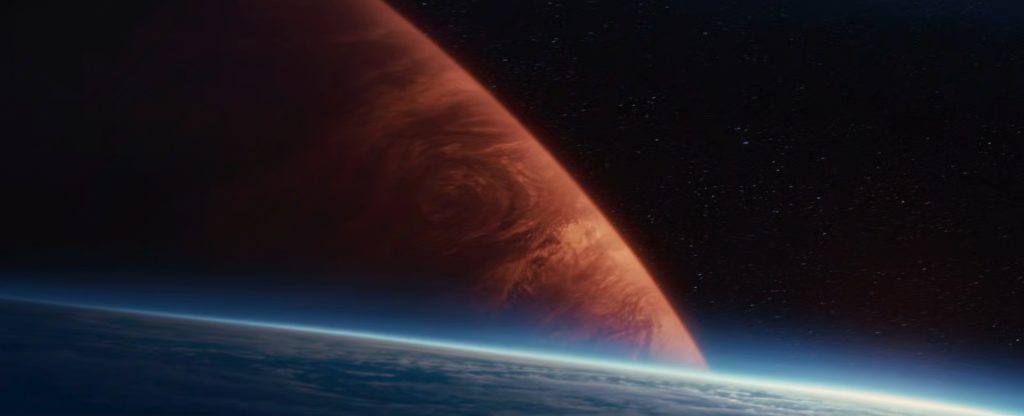

An experiment. (v0.1a).
Tell me what you all think in the comments below, or on Bsky.


Climate change is one of the biggest challenges we face, and a big part of that challenge is the excess carbon dioxide (CO2) in our atmosphere. While reducing emissions is crucial, what about the CO2 that’s already there? That’s where Direct Air Capture (DAC) comes in.
Think of DAC as a giant vacuum cleaner for the sky, sucking CO2 directly out of the ambient air. It’s a technology that’s gaining attention as a potential tool to help us combat climate change. But what exactly is it, and what does it mean for industries like yours?
Direct Air Capture offers several compelling benefits:
Despite its promise, DAC faces significant challenges:
Several companies are pioneering DAC technology research and development. Some of the major names include:
For a company like Cydonis Heavy Industries, Ltd., the rise of DAC presents several potential avenues for engagement and benefit:

Direct Air Capture is not a silver bullet for climate change, but it’s a promising technology that can play an important role alongside aggressive emissions reductions. For forward-thinking companies like Cydonis Heavy Industries, Ltd., understanding and strategically engaging with the DAC sector now—especially with innovative, proprietary solutions—could offer both environmental benefits and significant long-term competitive advantages. Exploring partnerships, understanding the carbon markets, and identifying synergies with existing operations are key first steps.
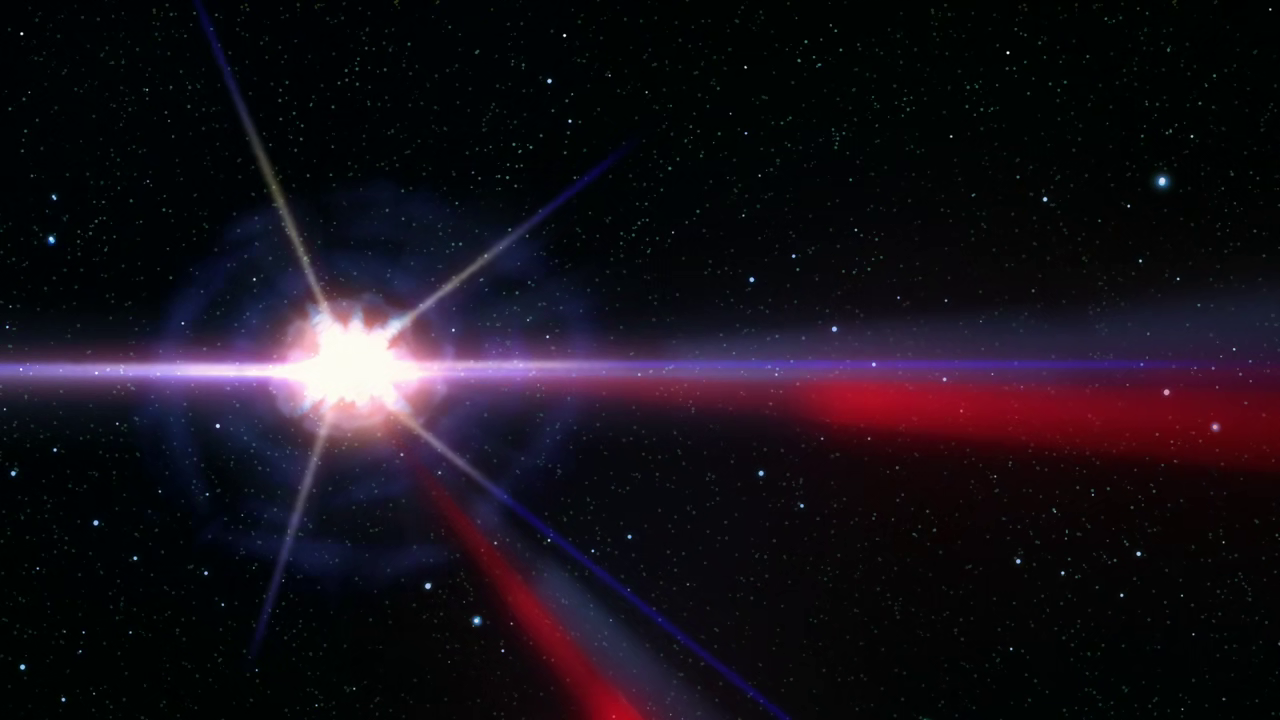
The air in the city of Aethel was impossibly crisp, humming with a low, resonant frequency that spoke of gathering order. Above, the twin moons, once fractured and scattered debris, were slowly, meticulously, drawing themselves back together, their surfaces smoothing, their orbits tightening into perfect, silent ellipses. This was the way of things in this universe – not decay, but assembly.
Elara adjusted the focus on her ocular implant, observing the street below. A discarded piece of plastic, left carelessly hours ago, was not weathering or breaking down. Instead, tiny crystalline structures were emerging from its surface, drawing in ambient energy and matter, weaving themselves into intricate, fractal patterns. Soon, it would be indistinguishable from the deliberately grown architectural components that formed the city’s spires, each one a testament to the universe’s relentless drive towards complexity.
“…out
of its loop
like
an apple
from a branch,
the first of the season.” – Simon Armitage.
Life here didn’t fight entropy; it rode the tide of extropy. Organisms weren’t born simple, growing complex, and then decaying. They emerged fully formed, often from inorganic matrices that spontaneously organised, and then, over their lifespan, they simplified. Elara herself had begun as a being of dazzling, multi-limbed complexity, her thoughts a symphony of simultaneous processes. Now, in her later cycles, her form was streamlining, her consciousness focusing, shedding unnecessary functions like a tree shedding leaves in a conventional autumn. Her nonbinary companion, a creature named Kaelen who was just entering their prime, rippled with vibrant, shifting colours, their form a fluid, ever-more-detailed sculpture of light and sinew. Kaelen pointed a newly formed appendage towards the sky.
“Look,” they chimed, their voice a complex harmony. “Another star is clarifying.”

Indeed, a distant nebula, once a chaotic swirl of gas and dust, was resolving itself. Stars within it are not dispersing, but drawing closer, their elements fusing with impossible efficiency, their light becoming sharper, more defined, burning with a cool, pure intensity. Planets are coalescing from diffuse clouds, their geological strata arranging themselves into perfect, layered symmetries.
Living in an extropic universe was a constant process of refinement. Tools didn’t wear out; they became sharper, more efficient, their components aligning with greater precision. Memories didn’t fade; they became clearer, more detailed, shedding the fuzziness of initial perception. The challenge wasn’t holding things together, but learning to let go, to embrace the inevitable simplification that came with age, to become, eventually, a single, perfect, irreducible point of consciousness before dissolving back into the ever-ordering fabric of reality. Elara smiled, a simple, elegant gesture. “Beautiful,” she whispered, her voice a single, clear note. The universe was a perpetual bloom, each moment adding another layer of exquisite, inevitable order.
They walked through the city’s thoroughfares, the ground beneath their feet a tessellation of self-repairing, self-assembling tiles that hummed faintly with contained energy. The air was filled with the soft clicks and whirs of countless small objects spontaneously organising – pebbles forming perfect spheres, dust motes aligning into shimmering geometric patterns. Even the shadows seemed to deepen and sharpen, defining the edges of things with impossible clarity. Kaelen paused by a public ‘Simplification Garden’, a place where older beings gathered to embrace their final stages. The garden wasn’t a place of rest or decay, but of intense, focused refinement. Figures sat or stood, their forms becoming less distinct, their colours fading, their movements slowing as their consciousnesses distilled towards that ultimate, singular point. It wasn’t sad; there was a profound sense of peace, of fulfilling a universal purpose.”Do you ever wonder,” Kaelen asked, their voice shifting into a slightly more complex chord, “what it would be like… to disorder?”Elara considered this. The concept was alien, almost nonsensical.
Disorder was the absence of the universe’s fundamental drive. It was the theoretical state before the first spark of organisation, a void of formless chaos. “It’s difficult to imagine,” she replied. “Like imagining silence in a universe of perpetual song. Why would you?” Kaelen’s colours shifted, a flicker of something akin to curiosity. “Just… the opposite. Everything here becomes more. More defined, more complex, then more simple, more pure. What if it became less? Less defined, less… itself?” Elara looked at her younger companion, at the vibrant, intricate tapestry of their being. Kaelen was still in the phase of increasing complexity, their form and consciousness expanding, exploring the myriad possibilities of organised matter and energy. The thought of that complexity unravelling, becoming less, was counter to everything in their shared reality.”Perhaps,” Elara said, her voice gentle, “that is the mystery of the ‘before’. The state from which all this order emerged. But it is not our way. Our way is the bloom.”They continued their walk, the city around them a living, breathing testament to extropy. Buildings grew taller, more intricate, drawing matter from the ground and air. Water flowed uphill, purifying itself with every drop. Even the thoughts in their own minds felt sharper, more organised, shedding the extraneous noise of lower states of being.
In this universe of perpetual assembly, life was a journey not towards dust, but towards ultimate, perfect form.A summons arrived shortly after their return to Elara’s dwelling – an invitation to a wedding ceremony on the world of Xylos, a place renowned for its breathtaking crystalline forests and the complex, resonant harmonies of its inhabitants. Travel between worlds in an extropic universe wasn’t about propulsion through space, but about aligning one’s own energetic signature with the increasingly ordered frequencies of distant systems. It required immense focus and a deep understanding of cosmic resonance. Elara and Kaelen prepared for the journey. Elara, with her refined consciousness, would act as the primary navigator, her mind a finely tuned instrument seeking the harmonic pathways between star systems. Kaelen, with their burgeoning complexity, would provide the necessary energetic amplification, their vibrant being resonating with the universe’s ordering forces.Their vessel was less a ship and more a contained field of pure resonance, its form constantly refining itself for optimal efficiency as they travelled. As they detached from Aethel’s orbital resonance, the familiar hum of their home city faded, replaced by the silent, vast symphony of intergalactic space, a space not empty, but teeming with invisible threads of organising energy.

Their journey was smooth at first, a graceful descent into deeper layers of cosmic order. Distant galaxies, once fuzzy and indistinct, resolved into breathtakingly detailed structures. They passed through regions where nebulae were collapsing into perfectly formed star clusters and rogue planets were aligning themselves into stable, harmonious orbits.The first sign of adversity was subtle – a discordant note in the cosmic symphony. The resonant pathways they were following began to waver, their frequencies becoming erratic. Elara’s focused consciousness felt a jarring sensation, like a perfectly tuned instrument suddenly encountering static.”The path is… distorting,” Elara communicated, her thoughts projected directly to Kaelen. Kaelen’s form flickered, their colours momentarily losing their vibrancy. “I feel it too. A resistance. As if the universe is… faltering in its ordering here.” They had entered a region known in ancient texts as the ‘Churn’, a vast, anomalous zone where the relentless march of extropy seemed to encounter an opposing force. Not entropy, the slow slide into disorder, but something more active, a localised field of chaotic generation that actively prevented organisation.Their vessel, designed for smooth resonance, began to struggle. Its refined form wavered, tiny imperfections appearing on its surface – a terrifying sight in a universe where imperfection was anathema. The air within the field grew heavy, the crispness replaced by a thick, cloying sensation.”We need to find a stable frequency,” Elara focused, pushing her consciousness against the rising tide of chaos. “A pocket of order within the Churn.” Kaelen amplified her efforts, their being radiating pure, focused energy, trying to cut through the distortion. But the Churn pushed back, its chaotic forces attempting to unravel Kaelen’s intricate form.
Appendages blurred, colours muted, their harmonious voice strained with effort. Their adventure had begun. It wasn’t a physical battle, but a struggle against the very fabric of reality. They had to navigate this zone of anti-order, find a way to realign their vessel’s resonance, and reach Xylos before the Churn’s influence overwhelmed them, threatening to reduce them, not to a perfect point, but to formless, unorganised potential. The wedding, and perhaps their very existence, depended on their ability to master the disharmony. The Churn pressed in. It wasn’t a void, but a swirling, nauseating kaleidoscope of un-forming. Matter here didn’t coalesce; it fractured into ever-smaller, less defined particles. Energy didn’t organise; it dissipated into a formless hum. The very concept of ‘structure’ seemed to lose meaning. Elara’s refined consciousness, so used to navigating the elegant symmetries of the cosmos, felt assaulted by the sheer randomness. Her thoughts, usually sharp and linear, began to scatter, fragments of memory and sensation blurring together. She fought to maintain focus, anchoring herself to the image of Xylos, the crystalline world, a beacon of perfect order.
Kaelen, in their prime of complexity, was more vulnerable. The Churn’s forces actively worked to dismantle their intricate structure. A newly formed appendage would begin to pixelate, its vibrant color fading, before Kaelen could pour more energy into reforming it. Their complex voice fractured into dissonant clicks and static.” Elara,” Kaelen managed, their voice a struggle. “The… the vessel… it’s… losing cohesion.” Elara looked at the field around them. The shimmering boundary, usually a picture of perfect, self-repairing geometry, was rippling violently. Small tears, like pinpricks of anti-light, appeared and vanished, each one a threat to their contained resonance.”We need to find the ‘eye’,” Elara said, her voice steadier than she felt. Ancient texts spoke of the Churn having a core, a paradoxical point of intense, localised order at its heart, around which the chaos swirled. It was a dangerous theory, but their only hope. Navigating towards a point of order within a field of active disorder was like trying to swim against a current of pure chaos. Elara had to filter out the overwhelming noise of the Churn, searching for the faintest signal of structure. She reached out with her consciousness, not seeking pathways, but seeking patterns, however fleeting. Hours bled into a timeless struggle. Kaelen poured their energy into maintaining their form and amplifying Elara’s search, their vibrant being a shield against the Churn’s corrosive influence. Elara delved deeper into the cosmic static, her mind a finely tuned sieve, discarding the noise, searching for the signal.Then, a flicker. Not a pathway, but a resonance, faint but distinct, a perfect, unwavering tone amidst the cacophony. It was the eye.”There!” Elara projected, a surge of relief steadying her thoughts. “Towards the core. Amplify, Kaelen!” Kaelen, despite their struggle, focused their remaining energy. Their form flared with a desperate brilliance, pushing back the encroaching chaos just enough to allow Elara to lock onto the signal. She adjusted the vessel’s resonance, a subtle, precise shift, aligning it with the frequency of the Churn’s eye.Slowly, painstakingly, they began to move. The chaotic forces still buffeted them, but the vessel, now resonating with the core’s frequency, held together. The air within the field began to clear, the heavy sensation lifting. Kaelen’s colours deepened, their form stabilising. As they approached the eye, the chaos didn’t vanish, but it became… structured chaos. Like the turbulent flow of a river around a perfectly still stone. At the very centre was a point of absolute stillness, a singularity of pure, unadulterated order. It was breathtaking and terrifying.They didn’t stop at the eye; they used its stable resonance as a sling-shot, aligning themselves with the pathways beyond the Churn. With a final, collective push of will and energy, they launched themselves out of the anomalous zone, the discordant symphony of the Churn fading behind them, replaced once more by the vast, silent harmony of the extropic cosmos.They were battered, their vessel showing faint, lingering signs of the struggle, and Kaelen was exhausted, their form simplified by the energy expenditure. But they had survived the Churn. Xylos, a point of brilliant, crystalline light, shimmered in the distance, a beacon of order in their path. The wedding, and the promise of perfect harmony, awaited them.Emerging from the Churn was like surfacing from a suffocating depth into clear, resonant air. The vessel, though still bearing the faint, almost imperceptible scars of its passage, hummed with renewed stability. Xylos grew larger in their view, a world not merely of solid rock and liquid water, but of living, breathing crystal.From orbit, the surface was a breathtaking mosaic of towering crystalline growths, refracting the light of its clarifying star into a dazzling spectrum. Forests of resonant quartz trees sang in harmonic chorus with mountains of perfectly structured obsidian. Rivers flowed, their water not merely H₂O, but intricate, self-organising liquid crystals.
They descended towards a designated landing resonance, a point above a city that seemed to have bloomed directly from the planet’s crust, its buildings spiralling upwards in impossible, self-similar patterns. As they neared, the air filled with the complex, layered harmonies of the Xylosian inhabitants, a species whose very biology was based on resonant crystalline structures.Their vessel settled onto a landing platform that instantly began to integrate itself with the vessel’s form, sharing energy and information. As the field dissipated, Elara and Kaelen stepped out onto the crystalline surface, which felt cool and vibrantly alive underfoot.The Xylosians who greeted them were beings of pure, shimmering light contained within intricate, ever-shifting crystalline matrices. Their forms pulsed with complex colour patterns, and their communication was a symphony of resonant tones and harmonic vibrations.”Welcome, travellers,” chimed a Xylosian, their voice a chord that resonated deep within Elara’s being. “We felt your struggle through the Churn. A difficult passage, even for those of refined order.”Elara inclined her form in greeting. “The Churn is… a profound challenge to the universal flow. We are grateful to have reached your world.”Kaelen, though still simplified from their ordeal, managed a resonant greeting in return. The Xylosians acknowledged their fatigue with a gentle shift in their light patterns, a gesture of understanding.They were guided through the city, the crystalline structures around them constantly refining themselves, adding new facets, deepening their resonant frequencies. The air hummed with the collective song of the city, a symphony of ongoing organisation.The wedding ceremony was held in a vast, open space where the crystalline forest met the sky. The two beings to be wed were radiant, their forms pulsing with anticipation. The ceremony wasn’t an exchange of vows, but a complex dance of resonant frequencies. They circled each other, their individual harmonies intertwining, creating new, more complex chords. Energy flowed between them, their crystalline matrices beginning to merge, forming a single, more intricate, more ordered being. It was a breathtaking display of extropy in action – two distinct entities willingly combining to create something greater, more complex, and more perfectly ordered than either could be alone. The assembled guests, including Elara and Kaelen, added their own resonant frequencies to the ceremony, amplifying the merging process, contributing to the creation of the new, unified being.As the final, perfect chord resonated through the space, the two individuals were gone, replaced by a single, magnificent entity of light and crystal, its form a dazzling, intricate tapestry of their combined essences. A new, unique harmony pulsed from its being, adding to the symphony of Xylos.
Witnessing this act of ultimate organisation, Elara felt a sense of profound peace. Their struggle through the Churn, the encounter with anti-order, had only deepened her appreciation for the universe’s fundamental drive towards the bloom. Kaelen, watching the newly formed being, seemed to understand something new about the potential for complexity, their own form pulsing with a renewed, vibrant energy.The adventure had tested them, pushing them against the very limits of their reality. But it had also brought them to Xylos, to witness this beautiful, resonant expression of life and love in an extropic universe.
They had navigated the chaos and arrived at a place of perfect harmony [Cydonis], a testament to the enduring power of order in a universe that was forever assembling itself.
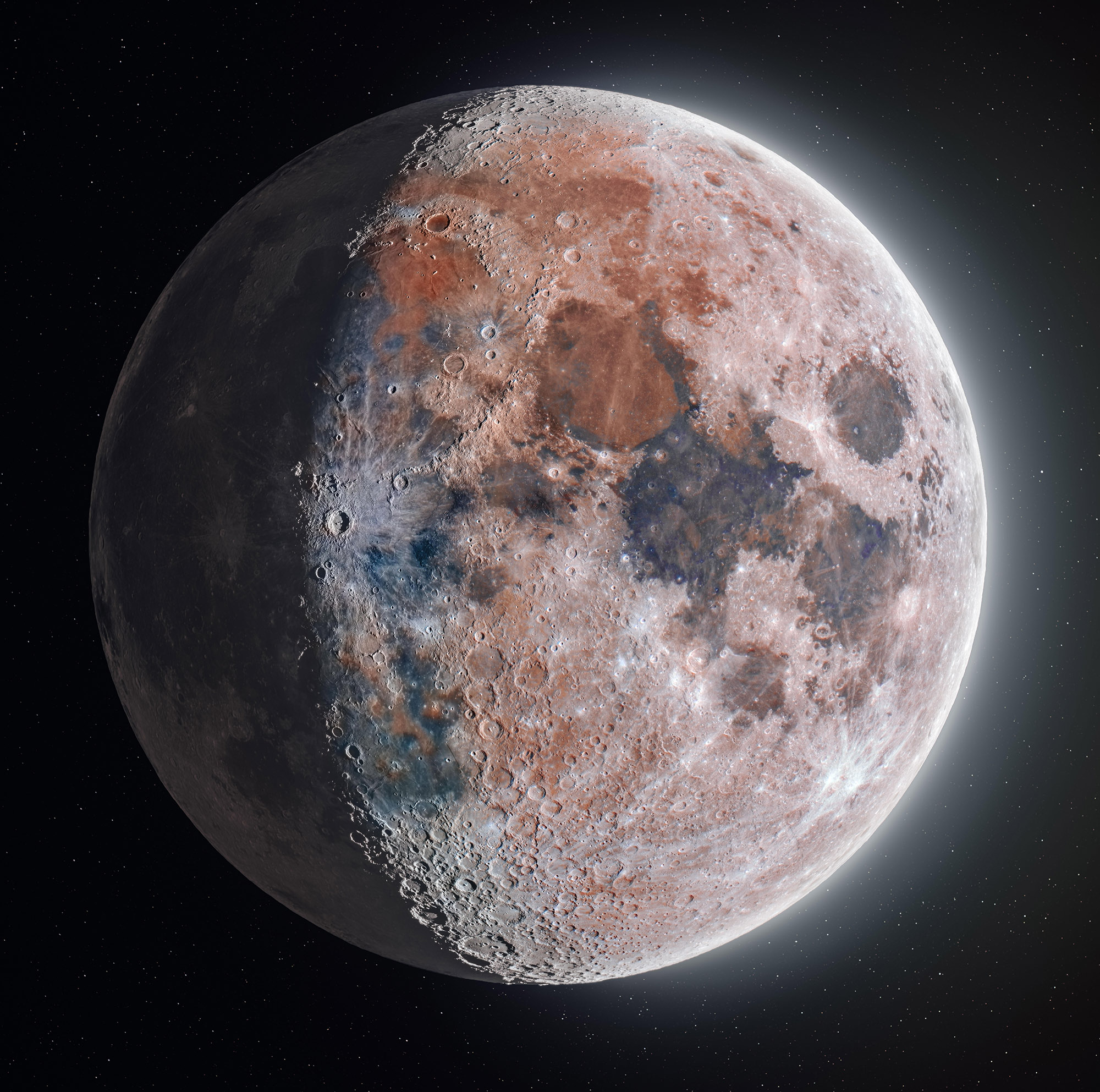
Imagine a rocket standing tall on one of the rugged Shetland Islands, ready to embark on an incredible journey. It’s destination? A free return trajectory around the Moon. And it’s fuel? Water, split into its fundamental components, hydrogen and oxygen, using renewable energy from the very winds and sun of the islands.
It might (to some) sound like science fiction, but the concept of using water as a propellant source for hydrolox (liquid hydrogen and liquid oxygen) engines is very real. The question is: how much water would you actually need to send a 100kg probe on such a mission from a place like Shetland?
Let’s dive into the fascinating physics and engineering challenges involved! ^_^v
Launching anything into space, especially towards the Moon, requires overcoming Earth’s powerful gravity and achieving immense speeds. This is where the concept of Delta-v (Δv) comes in. Think of Δv as the total “change in velocity” capability your rocket needs to have. For a lunar free return trajectory, starting from Earth’s surface, the required Δv is substantial – thousands of meters per second. Launching from a higher latitude like Shetland means you get slightly less help from the Earth’s spin compared to equatorial launch sites, potentially increasing that Δv requirement a little.
The efficiency of a rocket engine is measured by its Specific Impulse (Isp). Hydrolox engines are known for having high Isp, meaning they get a lot of thrust for the amount of propellant they consume. Our hypothetical engine has a 40% efficiency. This efficiency factor impacts the effective Isp the engine can achieve in the real world, making it lower than the theoretical maximum.
The core principle governing how much propellant you need is the Tsiolkovsky Rocket Equation:
Δv=Isp⋅g0⋅ln(mf/m0)
Where:
The crucial part here is the mass ratio (mf:m0). This equation tells us that to achieve a certain Δv with a given engine efficiency (Isp), you need a specific mass ratio. The higher the Δv or the lower the Isp, the larger the mass ratio must be. This means the vast majority of your rocket’s initial mass has to be propellant.
Figure 1:

This graph illustrates how the required mass ratio (initial mass / final mass) escalates rapidly with increasing Delta-v for a fixed engine efficiency (Specific Impulse). Achieving higher speeds requires a disproportionately larger amount of propellant to climb out of Earth’s gravity well, and escape the monstrous ‘homo sapiens singularis’ below.
The dry mass (mf) isn’t just the 100kg probe. It includes the rocket’s structure, engines, fuel tanks, guidance systems, and importantly, the equipment needed to split the water and power the process using renewables. We’re assuming a structural mass fraction of 1/8. In rocketry terms, this usually relates the mass of the structure to the total mass or dry mass, and a fraction like 1/8 suggests a very lightweight structure relative to the total vehicle or dry mass. In our water-splitting scenario, we also need to account for the mass of the electrolysis unit and the power generation/storage system (solar panels, wind turbine components, batteries).
The electrolysis efficiency (~37%) tells us how much of the energy input actually goes into splitting the water. A lower efficiency means you need a more powerful, and likely heavier, power system to produce the required amount of hydrogen and oxygen within a reasonable timeframe for fuelling. This adds to the dry mass.

Let’s try a simplified calculation based on some assumptions, similar to how engineers start to size a rocket:
“No magic conjures, no void finds, mind(s) travels, light shines…”
Now, using the Tsiolkovsky equation to find the required mass ratio for Δv=10000 m/s and Isp=400 s:
ln(mf/m0)=Isp⋅g0Δv=400 s⋅9.81 m/s210000 m/s≈2.55
mf/m0=e2.55≈12.8
The required mass ratio is about 12.8. This means the initial mass (m0) must be 12.8 times the dry mass (mf).
m0=12.8⋅mf=12.8⋅600 kg=7680 kg.
The propellant mass (mp) is the difference between the initial mass and the dry mass:
mp=m0−mf=7680 kg−600 kg=7080 kg.
This 7080 kg is the total mass of hydrogen and oxygen needed. Since water (H₂O) splits into hydrogen (H₂) and oxygen (O₂) in a mass ratio of approximately 1:8, the total mass of water required to produce this propellant is also 7080 kg (mass is conserved in the splitting).
Finally, converting mass to volume using the density of water (approx. 1 kg/litre):
Volume of water = 7080 kg/1 kg/litre=7080 litres.
Based on our illustrative calculation with several key assumptions (especially about the required Δv and the mass of the rocket structure and equipment), you would need on the order of 7,000 litres of water to fuel a rocket launching a 100kg probe on a free return trajectory to the Moon from the Shetland Islands using hydrolox derived from that water.
This figure is an estimate, not a precise engineering number. A real mission design would involve complex trajectory analysis, detailed mass breakdowns of every component (including the renewable power system and electrolysis unit, influenced by the 37% efficiency), and careful optimisation. A structural mass fraction of 1/8, it seems, is likely very optimistic for a real-world rocket capable of this mission profile.
Nevertheless, our concept is compelling – harnessing local, renewable resources in a unique location like the Shetland Islands to reach for the Moon. It highlights the incredible engineering challenges and the vast quantities of propellant needed for space travel, even for relatively small payloads.
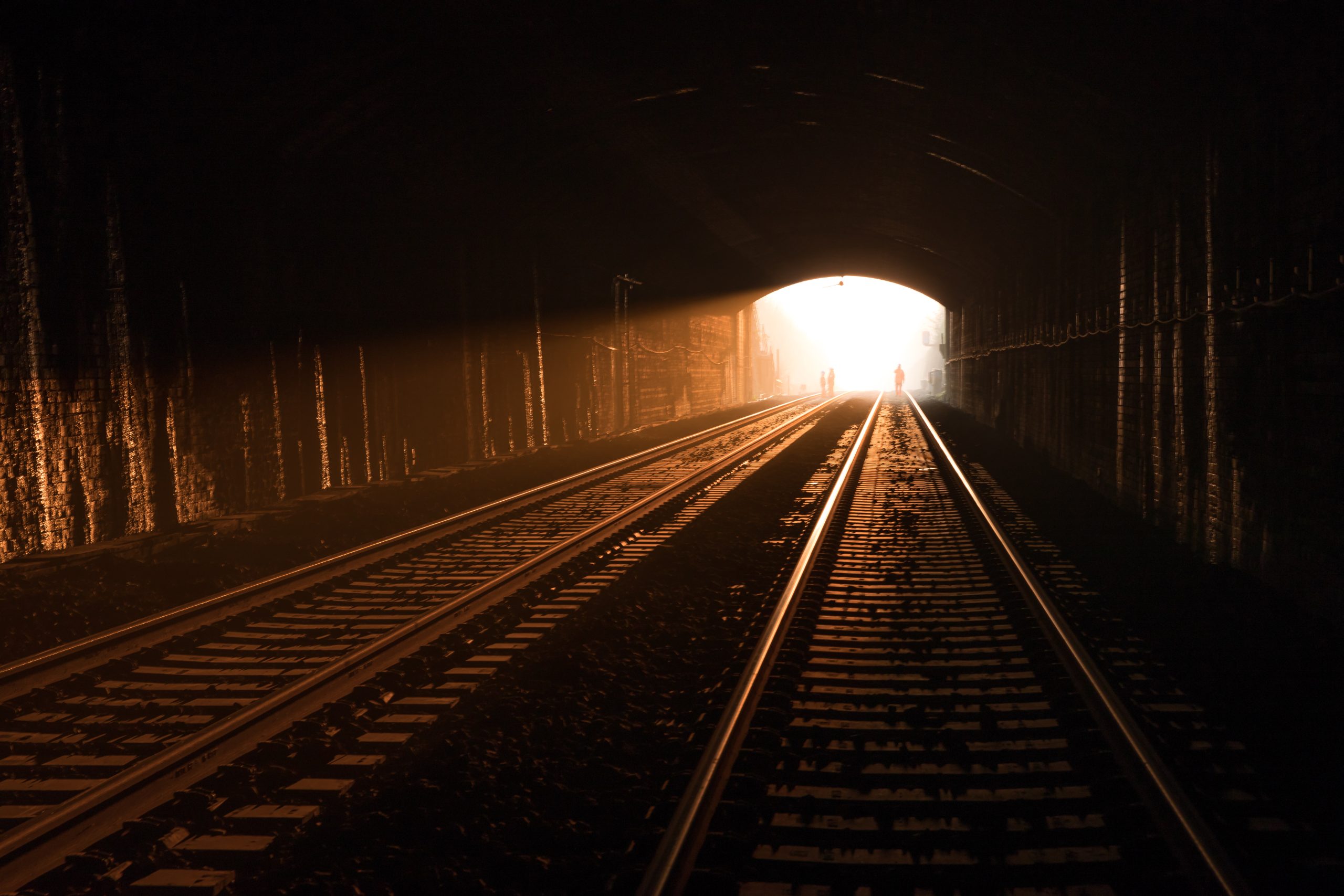
This moment occurred. This moment, and this mortal human being, deserves some words, and yet so much more.
But for now all I can offer is words.
“End me! Kill me! Fucking KILL ME!! PLEAAASE!! End this fucking nightmare! You fucking [arrrghhhh!] monsters!!”
Screamed the un-housed man standing in the middle of Victoria station.
He ripped my heart out, and then surgically reinserted it, in less time than it takes to blink. What was the inflection point, the moment that caught him circling this abyssal wreck, in this poor soul’s life, the point in time that which, a man clearly in his mid thirties, but with the affectation of a fallen elderly king, trapped in a guillotine of societal design, became so utterly lost?!
But I couldn’t stop. I had to go try to make a difference elsewhere, where none could be made. 🙁
The world was ending, [bright sands fall], but tomorrow was laundry day…
Time to [carefully try,] try again.
[Time comes to call.]
a poem, probably goes here, but a small Grue made of weakly interacting dark matter ate it. apparently it was delicious.
“Bickering in a burning building 🌍 about how to best put out the fire, with nowhere to run…“
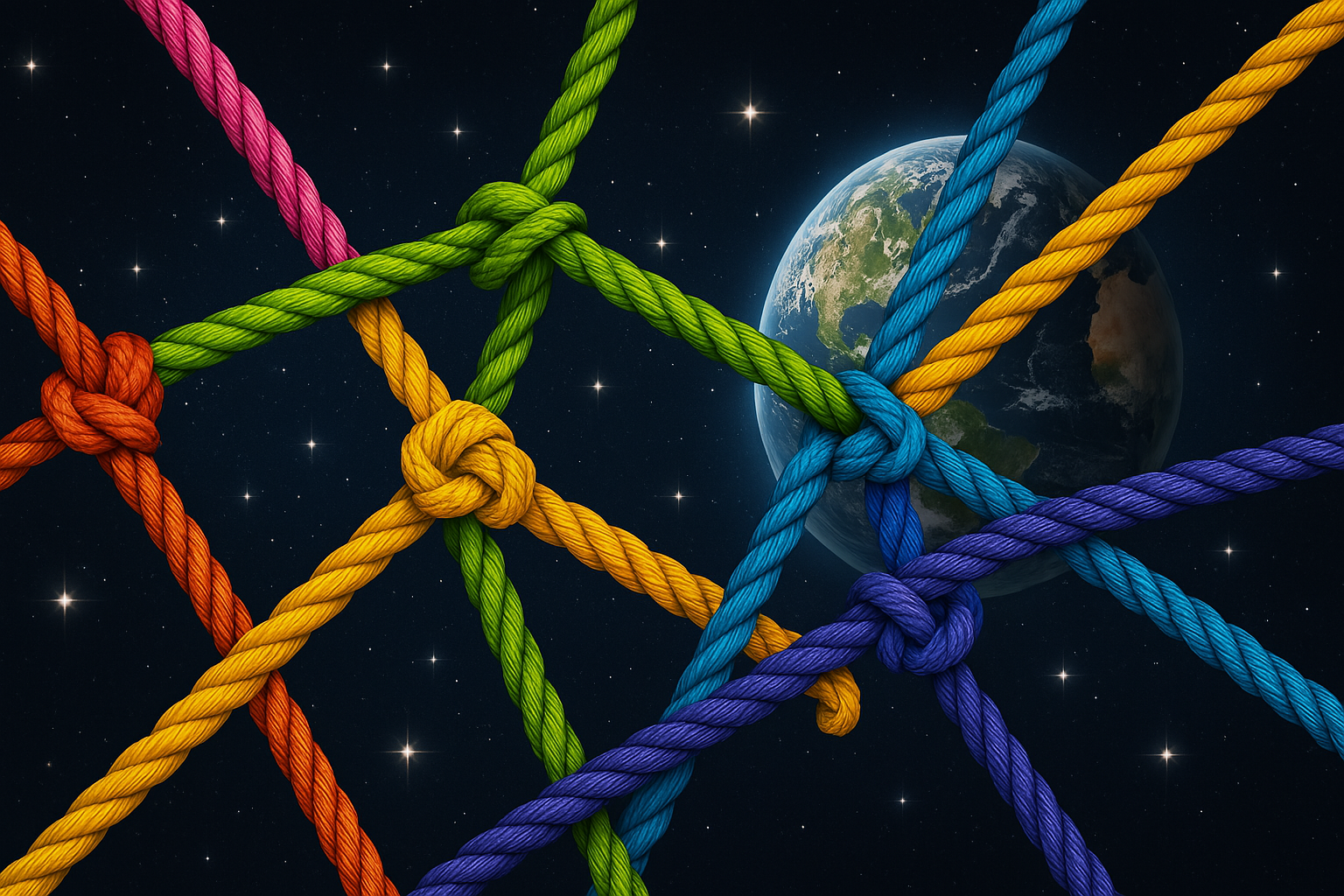
Thoughts from a Sunday morning coffee break… ☕
Firstly, the initial premise of the question, (I would contend) is somewhat logically faulty. The Earth is ~4.5by (billion years) old, and was trundling along in her orbit and spinning rather finely without the advent of human life that came along with the first bipedal and opposable-y thumbed skinny and podgy little apes, that were the nascent beginnings of our ancestral lineage some roughly 1.2my (million years) ago.

So in combatting the climate crisis by switching our power supplies to more renewable and sustainable solutions, insulating our homes, engaging in more sustainable construction practices, and shouting from the rooftops about the desperate human need for net zero, what we’re really doing is trying to save a (omni+)suicidal species from themselves – saving the human race (one that does not want, nor asks to be saved, and fights tooth and nail against any form of change [nimby-ism, concern for nature as a form of dog whistling over actualised real estate value concerns], etcetera) from within. Although they demonstrate time and again, thanks to religious, dogmatic, literalist, eschatology, quite often people and organisations make the task far, far more difficult, sometimes near-impossible, even, than it needs to be.

Secondly, the pursuit of the scientific method and pure research is not an either/or question. It is and always has been a symbiotic trickle down relationship between both activities.
“Why not both?” – Ask any child. (Whether it’s Haribo, Ice cream flavours, or geo-engineering options…) 🐥👶🏻🤱🏻⚖
Gaia (another ancient name for Earth) is quite happy to shake us off like a smelly dog with a bad case of fleas, and nurture once again another species from scratch, or just have a world ruled over by bacteria around sub-sea fumaroles and radiation eating, cenote dwelling archea.

So we will most likely attempt both, with the time we have left, before the climate crisis swings beyond all possible opportunities for applicable remediation. 🪦📈📊📉🪨🌎

“panem et circenses…”
—Juvenal, Satire 10.77–81.
All rights reserved.
The year is 2242. Humanity, though still grappling with its terrestrial issues, had finally begun to stretch its fingers beyond the Kuiper Belt. Outposts dotted the major moons, and automated mining facilities hummed in the asteroid fields. The next frontier, the true deep black, was the Oort Cloud – the vast, icy shell surrounding the Solar System, holding billions of potential resources and offering a launch-pad to the stars.
It was during the commissioning of the Odyssey, the first crewed long-range explorer, launched from a dry dock construction facility in orbit around Mars, and carefully, precisely, designed for interstellar precursor missions into the Oort Cloud, that they hit the wall. Not a physical wall, but something far stranger. Something that terrified everyone in the astronomical union to death.
As the Odyssey reached the calculated inner edge of the Cloud, deep space comms crackled.
“Approaching designated coordinates,” Commander Eva Rostova’s voice was calm, professional. “Sensors show… interference. Gravitational readings are stable, no immediate hazards detected.”
Then, a scream. Not of pain, but of impossible, visceral terror. Followed by silence. Utter, unnerving silence.
Rescue probes were dispatched immediately. They carried cameras, sensors, and even biological samples in shielded containers. The probes themselves zipped through the region where the Odyssey had vanished without issue. Their cameras transmitted bizarre, swirling patterns of energy that seemed to coalesce just beyond the edge of the known Oort Cloud. The biological samples, however, returned inert, reduced to fine, inorganic dust within their containers. The shielded containers were untouched.
More tests followed, increasingly desperate and grim. Drones carrying lab rats, then primates, then even volunteer convicts on one highly controversial mission. The results were always the same: the non-organic components passed through, the organic matter was instantly, horrifyingly, annihilated. It was as if the very building blocks of life were offensive to whatever lay beyond.
Panic rippled through the Solar System. The dream of reaching other stars, of finding other life, was cruelly, inexplicably snuffed out. A cage had been built around them, invisible and absolute for anything that lived and breathed.
Analysis of the energy field was inconclusive at first. It wasn’t a conventional force field or radiation barrier. It was something designed, something targeted specifically at organic compounds. Then, hidden within the complex energy signatures, patterns began to emerge. Not just energy, but data. Complex, alien data streams that spoke of observation, of assessment, and of control.
Decrypted fragments revealed a chilling truth. A vast, unimaginably ancient extraterrestrial civilisation had encircled their system. They saw humanity not as a potential peer or threat, but as a volatile variable. They had observed Earth for millennia, witnessing its cycles of progress and destruction. Their conclusion: humanity was too unpredictable, its technological leaps too rapid and often coupled with self-destructive tendencies. They weren’t malicious in a conquest sense; they were curators, gardeners pruning a potentially invasive species before it could spread its chaotic seeds across the galaxy. Their goal wasn’t annihilation, but containment and directed evolution – control over humanity’s outward progress until they deemed it ‘ready’, or perhaps, until they deemed it harmless.
The Oort Cloud barrier was their ultimate, elegant solution. Let humanity thrive within its solar cradle, build its machines, explore its planets. Enjoy their games, sports and war machines. But step outside the boundary with so much as a single living cell, and face instant disintegration.
Humanity was left reeling. Trapped. The vastness of the universe, once a beckoning frontier, was now a taunting prison. The focus of scientific endeavour shifted overnight. No longer were they solely focused on reaching the stars, but on understanding the cage, on communicating with the unseen jailers, and perhaps, one day, finding a way to dismantle the bars – not with force, which seemed futile, but with understanding, adaptation, or perhaps even a demonstration that humanity could be trusted with the freedom of the cosmos.
The probes continued their silent vigil at the edge of the barrier, the only witnesses to the invisible wall that held the fate of a species in its unyielding grip. The aliens watched and waited, patiently tending their human experiment, ensuring that for now, and for the foreseeable future, humanity’s progress would remain firmly within the confines of their controlled cosmic garden.
A patient garden.
A whispering garden.
A punishing garden.
“YOUR SINS WILL BE READ TO YOU CEASELESSLY THROUGHOUT ETERNITY.”
“YOU CAN NEVER LEAVE.”
“OUR JUDGEMENT IS FINAL.”
Chapter Two.
“Seeing, contrary to popular wisdom, isn’t believing. It’s where belief stops, because it isn’t needed any more.” – Pyramids, Terry Pratchett.
The decryption of the alien data streams continued, growing more sophisticated, more terrifying. What initially seemed like abstract judgements on humanity’s ‘volatility’ began to coalesce into something far more personal. Buried deep within the complex alien algorithms, within the data matrices that assessed human behaviour, was a singular, recurring identifier. It pointed, with unwavering focus, to one man.
Jayce Warren.
The name resonated with a dark infamy in human history. A fossil fuel executive whose insatiable greed and pathological narcissism had driven his corporations to aggressively accelerate climate change, long after the science was undeniable. He was a man whose personal ambition was measured in melting ice caps and drowned coastlines, a genocidal psychopath masked by billionaire charm, who had single-handedly pushed Earth’s climate past the devastating 3°C tipping point, unleashing a cascade of irreversible ecological collapse and human death & suffering that would scar the planet for centuries.
The alien data revealed they had observed him. Not just his public actions, but every moment of his life. From the tantrums of infancy to the cold calculations of his board meetings, from his most private moments of sleep to his mundane trips to the bathroom. They had studied his neural pathways, his emotional responses, the chilling absence of empathy, the calculating cruelty. They had watched him make choices that prioritised profit over planetary survival, ego over the lives of billions.
For the aliens, vast and ancient intellects who measured galactic civilisations by their harmony with their environments, Jayce Warren was the ultimate, irrefutable proof of humanity’s inherent, catastrophic flaw. He was the living embodiment of unchecked self-interest, destructive power, and wilful blindness on a planetary scale. If one individual could wield such influence and inflict such damage, and if the species allowed him to do so, what horrors would a truly interstellar humanity unleash upon the wider cosmos?
The Oort Cloud barrier wasn’t just a precaution based on millennia of observation; it was a direct, immediate consequence, a collective punishment. Humanity wasn’t being contained for its potential future sins, but for the very real, observed sins of one man. Jayce Warren, in his arrogance and destruction, had inadvertently signed the cosmic arrest warrant for his entire species.
The alien data streams continued to flow, clinical and cold. They outlined the parameters of the containment field, the energy requirements, the constant monitoring.
And woven through it all was the lingering ghost of their analysis of Warren – a case study in planetary self-sabotage, a prime example of why this volatile species could not be allowed to escape its solar cage.
The galaxy remained tantalisingly out of reach, not because humanity wasn’t ready in some abstract sense, but because the aliens had watched Jayce Warren, and they had decided the risk was simply too great. Humanity was trapped, paying the price for the monstrous legacy of one man’s choices. The silent barrier around the Oort Cloud was a monument to his sin, a cosmic judgement on a species found wanting, judged by the actions of its worst.
Chapter 3.
“If by your art, my dearest father, you have
Put the wild waters in this roar, allay them.
The sky, it seems, would pour down stinking pitch,
But that the sea, mounting to the welkin’s cheek,
Dashes the fire out.”– William Shakespeare
The revelation about Jayce Warren hit humanity like a second, psychological barrier. The initial fear and frustration of being caged curdled into a toxic brew of shame, anger, and existential despair. How could the fate of an entire species, the potential to explore the vast tapestry of the cosmos, be forfeited because of the pathological actions of a single, monstrous individual?
Recriminations exploded across the Solar System. Warren was already the most hated man in recorded history for the climate catastrophe he’d engineered. Now, his legacy expanded into the cosmic. Statues were torn down (those few that hadn’t been already), his name was purged from records where possible, and historical analysis became a frantic, desperate attempt to understand how they could have allowed such a man to wield such power. Was it a unique aberration, or did Warren represent a deeper, fundamental flaw in the human psyche, one the aliens had correctly identified?

Deep space programs, once focused on propulsion systems and life support, pivoted entirely. Fleets of highly sophisticated probes were designed, purely robotic, powered by advanced AI. These were humanity’s only ambassadors, their only hope of interacting with the unseen wardens. They were sent towards the Oort Cloud barrier, not carrying payloads for exploration, but complex data packages.
The first packages were apologetic, pleading. They detailed the global condemnation of Warren, the desperate efforts to mitigate the climate damage he’d caused, the arguments that he was an outlier, not representative of the species’ true potential. They transmitted humanity’s art, music, philosophy – attempts to showcase the beauty and complexity that also existed within their nature.
The barrier remained, an impassive wall of energy. The probes passed through, delivering their data into the silent, swirling patterns beyond. Analysis of the energy field continued to yield data streams from the aliens, but they offered no response to humanity’s overtures. The alien data was solely focused on observation – sophisticated analyses of human sociology, technological development within the solar system, population dynamics, even psychological profiling derived from monitoring trillions of data points across the net. They were watching, always watching, assessing, but never communicating in a way that suggested dialogue or negotiation.
Frustration mounted. Some data packages became defiant, even accusatory. They challenged the aliens’ right to judge an entire species based on one member, questioned their own presumably perfect history, demanded explanation or release. These probes, too, passed through the barrier, their digital shouts swallowed by the indifferent silence beyond.
The psychological toll of this invisible, inescapable cage was immense. Knowing they were watched constantly, judged by unseen eyes based on the worst of their kind, fostered a pervasive sense of helplessness and paranoia. Innovation continued, but the driving force shifted from outward expansion to inward perfection – or at least, the appearance of it. Perhaps, some argued, if they could demonstrate absolute control, absolute harmony, the aliens might relent. Societies became more regulated, surveillance increased (ironically, mirroring the alien observation), all in a desperate, unspoken plea to their cosmic jailers.
But the barrier held. The alien data streams flowed, ceaselessly recording, analysing, judging. Jayce Warren’s shadow stretched across the solar system, a permanent stain on humanity’s record, a constant reminder that their freedom had been revoked, their cosmic destiny curtailed, all because of the sins of one man whom their silent, cosmic jury had found sufficient cause to condemn them all. The cold war was not fought with weapons, but with information, patience, and the crushing weight of a species’ collective guilt.
Chapter Four.
Seven hundred and fifty million years. The span stretched the imagination, a gulf of time that made the rise and fall of empires seem like the blink of an eye. On Earth, the sun, though still a G-type star, had brightened considerably. The atmosphere, ravaged by ancient warming and millennia of subsequent shifts, had failed. The great oceans, the cradle of life, had boiled away into space or been locked into super-critical states within the crust. The once vibrant blue marble was a parched, red-brown wasteland, a tomb world baking under an increasingly harsh sun. Humanity had long since fled, migrating outwards, establishing vast, enclosed habitats on the moons of the gas giants, mining the asteroid belts, and terraforming (on a small, internal scale) dwarf planets.
They were a scattered, resilient species, bound together loosely by the stelnet, a solar system-wide network of high-energy laser tightbeams carrying instantaneous communication across the vast distances. Knowledge flowed, cultures diverged and merged, and the memory of Earth became a mix of sacred reverence and cautionary tale.
But history, like a persistent ghost, had a way of returning in monstrous forms. From the icy blackness surrounding a captured Kuiper Belt object, now a fortified moonlet orbiting Saturn, a new power had risen. They called themselves the Inheritors of the Flame, but the rest of the solar system knew them simply as the Warrenites.
On their dark, metal-encased fortress, built into the core of the moonlet, they venerated Jayce Warren. Not as a villain, but as a prophet, a visionary leader who had the courage to face the “necessary truths” of existence. Their twisted ideology, broadcast across the stelnet with relentless, fascistic zeal, claimed Warren’s actions weren’t destructive, but acts of ‘pruning’, clearing away the weak and sentimental for a stronger, more realistic future. The climate catastrophe wasn’t a failure, but a test, a crucible humanity had to endure to shed its naive dependence on a fragile environment. They lauded his narcissism as supreme self-reliance, his psychopathy as the ability to make hard, unemotional decisions others shied away from.
Their propaganda was slick, pervasive, and chillingly persuasive to those disaffected or seeking a brutal certainty in the complex, fragile existence spread across the outer system. They offered order, strength, and a perverse pride in the very events that had shattered the past world.

And they had teeth. Over centuries, they had secretly amassed resources, built shipyards within the asteroid belt, and designed a fleet unlike any seen since the system-wide conflicts of millennia past. These were not exploration vessels or habitat transports, but sleek, angular warships bristling with particle beams, kinetic drivers, and energy shields. They were built for a single purpose: dominance.
Messages crackled across the stelnet, no longer just propaganda, but ultimatums. Demands for resources, subjugation of independent habitats, pronouncements of the Warrenite destiny to rule the solar system. Skirmishes began – swift, brutal attacks on independent mining stations, raids on transport convoys. The scattered, diverse peoples of the outer system, unused to large-scale conflict, were caught off guard.
War beckoned, a horrifying echo of Earth’s past conflicts magnified onto a solar system scale. It was a war born of ancient sin, nurtured by distorted ideology, and spearheaded by the followers of a man whose actions had already cost humanity the stars.
And out beyond the Oort Cloud, the silent, invisible barrier remained. The alien data streams continued, their analysis of human behavior now recording this new, violent phase. One wondered if they saw it as a validation of their ancient judgment, or simply another, grimly expected turn in the chaotic saga of the species they had chosen to cage. The Inheritors of the Flame, in their fervent madness, seemed determined to prove the aliens right, not just by their internal wars, but perhaps, eventually, by turning their lethal fleet towards the barrier itself, seeking to break free with the very violence that had trapped them here in the first place.
Chapter Five.
War came, swift and brutal, igniting across the vast distances of the outer solar system. The Warrenites, fueled by fanatical zeal and centuries of resentment, unleashed their fleet. Across the stelnet, propaganda broadcasts mingled with tactical commands and chilling boasts of conquest. Independent habitats burned, asteroid mining colonies were seized or destroyed, and the fragile peace that had reigned for millennia shattered under the onslaught of particle beams and kinetic strikes. It was a war of ideology, a horrifying re-enactment of ancient Terran conflicts, fought not for resources alone, but for the soul of a scattered species, one faction desperately clinging to a toxic past as justification for present violence.
But the Warrenites had a goal beyond mere solar system dominance. Their ultimate aim, the twisted culmination of their faith in Jayce Warren’s ‘vision’, was to prove humanity worthy of the cosmos. And for them, ‘worthy’ meant breaking the alien cage. They believed that if they could overcome this ultimate obstacle, violently assert their will against the cosmic wardens, they would somehow validate Warren’s legacy and earn their place among the stars.
Gathering their most powerful warships, stripped of internal habitat components to maximize weapon capacity and shielding, the Inheritors of the Flame launched an armada towards the Oort Cloud barrier. Their advance was broadcast across the stelnet – a grand, terrifying spectacle intended to inspire awe in their followers and terror in their enemies. They spoke of ‘shattering the celestial chains’ and ‘claiming the rightful inheritance’ denied them by weaker hands.
The fleet reached the barrier, a region marked by the ceaseless flow of alien data and the unsettling energy signatures that annihilated organic matter. With fervent cries broadcast over the stelnet, they fired their most powerful weapons. Fusion lances hotter than suns, kinetic projectiles accelerated to relativistic speeds, focused energy bursts capable of carving through moons.
Nothing happened.
The energy lances dissipated harmlessly, their immense power simply vanishing as they touched the field’s edge. The kinetic rounds, capable of obliterating a small moonlet, likewise ceased to exist the moment they crossed the invisible threshold. There was no explosion, no resistance, no visible effect on the barrier itself. It wasn’t deflected, wasn’t absorbed and redirected. It was simply impervious. Their most devastating attacks, the culmination of 750 million years of technological progress within the solar system, were met with absolute, silent nullification.
Panic flickered across the faces of the Warrenite commanders shown on the stelnet feeds, quickly masked by grim determination and then, a chilling, fanatic reinterpretation. “It is a test!” screamed one commander, his face a mask of zeal. “The Inheritor’s final trial! The Barrier requires faith, not just force!”
They threw themselves against it again and again. They tried complex energy frequency modulations, attempts at localized spacetime distortion, theoretical quantum destabilizers. Nothing worked. The barrier remained, an unyielding, passive fact of the cosmos, utterly unbreakable by any means at humanity’s disposal. It wasn’t a lock to be picked or a wall to be breached; it was a fundamental property of reality in that region of space, imposed by a power far beyond human comprehension.

Frustrated, humiliated in the face of cosmic indifference, the Warrenite fleet turned back from the barrier, their fervent energy curdling into a brutal, redirected rage. If they could not break the cage, they would dominate what was within it. The internal war intensified, the fury of their failed cosmic aspirations turned inward upon their own species.
The silent, unbreakable barrier remained at the edge of the system, a permanent testament to the judgment passed upon humanity. And the alien data streams continued, recording the futile violence, the ideological madness, the self-inflicted suffering unfolding within the confines of their perfect, inescapable cage. The war for the solar system raged, a contained conflict observed by silent, ancient eyes, a tragic confirmation that perhaps, just perhaps, Jayce Warren’s legacy had indeed proven humanity too dangerous for the stars.
“Because war, war never changes…”
Grab a snack, some drinks, and settle in… 🛋🍦🥤
🕊
“…No magic conjures, no void finds…”
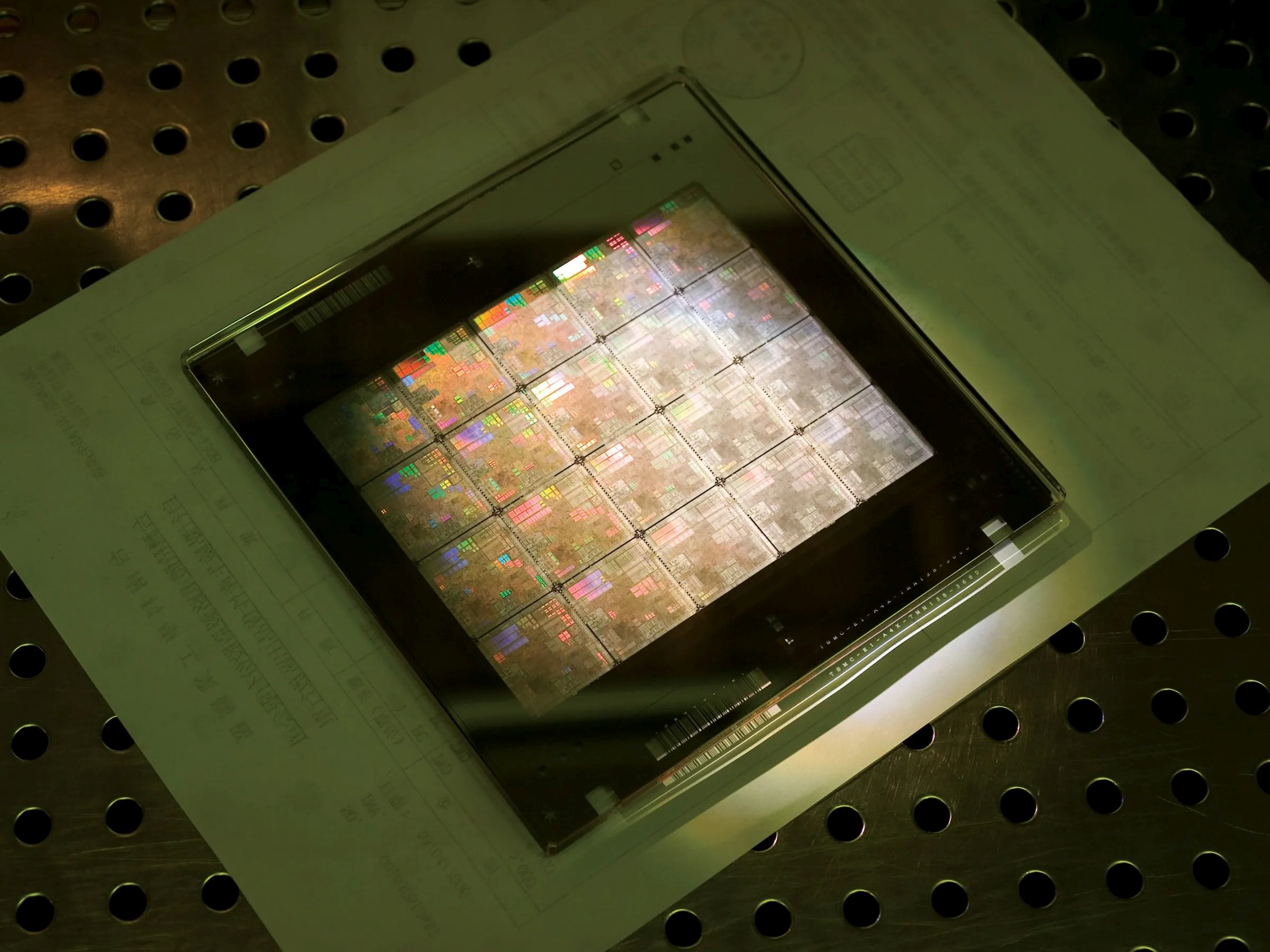
As physicists, we often think about information in terms of entropy, computation, or fundamental limits. But what about the sheer data volume contained within a biological system as complex as Homo sapiens? After some thought, we explored the storage requirements if we were to digitise two key components of human biological information: the genomic sequence and a high-resolution neuro-connectome derived from advanced imaging modalities.
Let’s break down the numbers.
The human genome comprises approximately 3.1×10⁹ base pairs. Given that each base pair (considering the canonical Watson-Crick pairing rules reduce the degrees of freedom per pair compared to independent bases) can effectively be encoded using 2 bits (e.g., A-T as 00, T-A as 11, C-G as 01, G-C as 10), the total information content of the haploid human genome sequence is roughly:
3.1×10⁹ base pairs×2 bits/base pair=6.2×109 bits.
Converting this to more familiar storage units (using the standard 1 byte=8 bits and 1 MB=10242 bytes):
6.2×109 bits/8 bits/byte=7.75×108 bytes.
7.75×108 bytes/(1024 bytes/KB×1024 KB/MB)≈739.1 MB.
So, the fundamental sequence information of one copy of the human genome is surprisingly compact, roughly equivalent to the data on a standard CD-ROM.
Beyond the static genetic code, the dynamic and structural connectivity of the brain represents a vastly larger information space. Capturing a detailed human neuro-connectome using modalities like fMRI (functional connectivity, temporal dynamics) and PET (metabolic activity, receptor distribution) generates significant data volumes. The exact size is highly variable depending on spatial and temporal resolution, scan duration, and the complexity of the derived connectomic models (e.g., adjacency matrices, graph representations).

Referencing data from large-scale projects like the Human Connectome Project, raw and minimally pre-processed fMRI data for a single subject can range from tens to potentially hundreds of gigabytes. A comprehensive, processed connectome dataset integrating multiple modalities would likely fall into the gigabyte range per individual. For our calculation, let’s use a representative figure of 30 GB for a processed fMRI/PET neuro-connectome dataset, acknowledging this is a simplified estimate.
Converting the neuro-connectome data to megabytes:
30 GB×1024 MB/GB=30,720 MB
The total estimated data size for the human blueprint (DNA) plus the neuro-connectome is:
739.1 MB (DNA)+30,720 MB (Neuro-connectome)=31,459.1 MB
This combined dataset is approximately 31.5 GB.

Now, let’s consider how this combined data volume maps onto common optical storage media:


In conclusion, while the fundamental genetic sequence is relatively compact in terms of digital storage, the complexity captured by advanced neuroimaging modalities significantly increases the data footprint. Storing a combined dataset of one individual’s genome and a representative neuro-connectome moves from requiring multiple DVDs to fitting comfortably on a single dual-layer Blu-ray disc. This highlights the scale difference between the relatively static genetic blueprint and the highly complex, spatially and temporally resolved data representing brain connectivity.