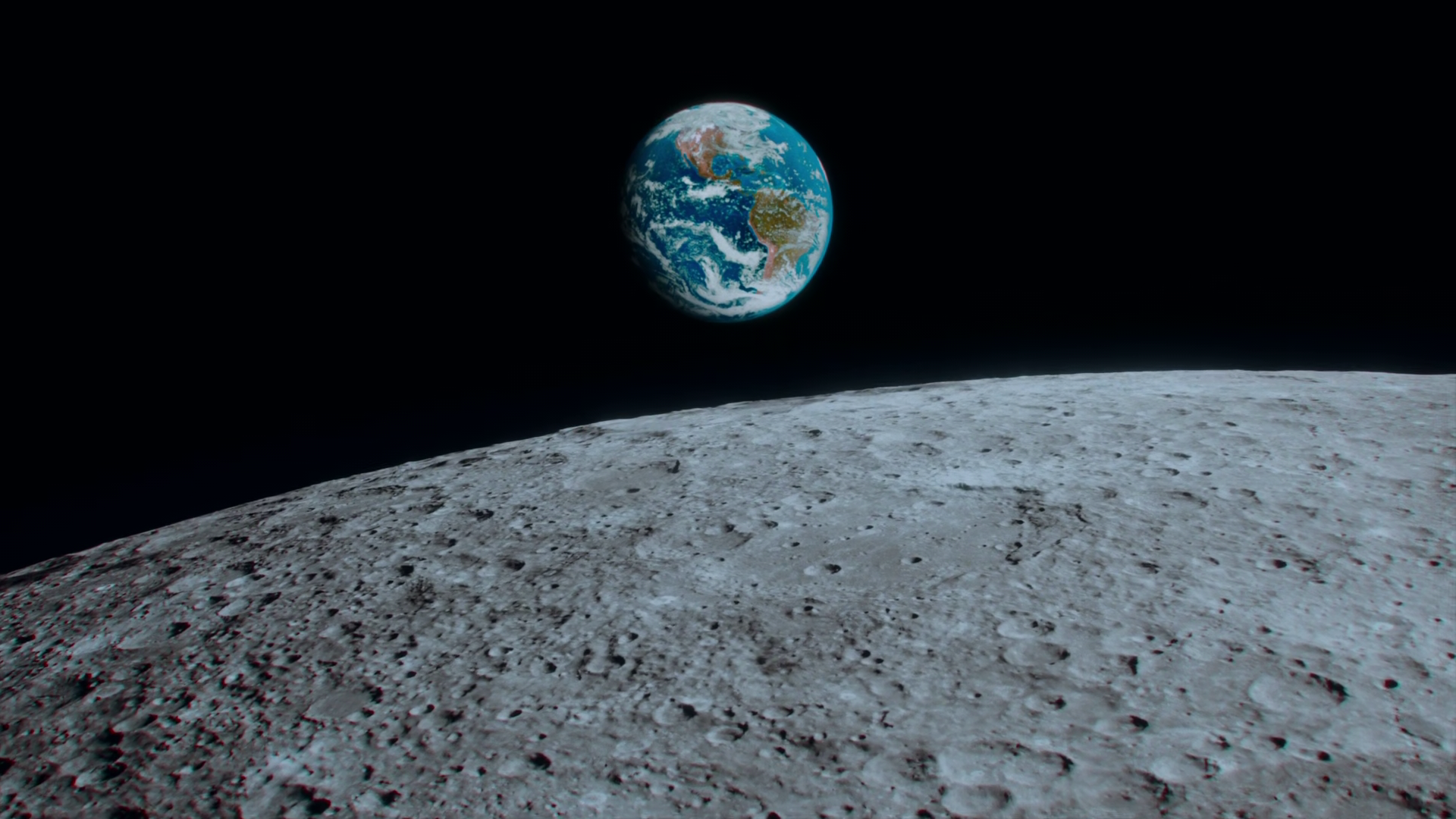
Realistically speaking, we’re (homo sapiens) not leaving this solar system, (outside of fantasy in media) and most likely most intelligent life-forms don’t either, as any heliopause around any given star would be deadly to organic life.
Robots (such as the Voyager probes) don’t have to worry about cancer, food, water, air, or sleep, just their power running out. And even then the solar panels might just produce power again, after drifting for a long time, their CPU’s on standby to receive voltage, and thus waking, once more.
Governments of only four to eight year durations are not equipped for any kind of long-term thinking; they are by definition reactive rather than proactive, and/or pre-emptive, and thusly are ill equipped to think in terms of longer time-spans.
Thus, some things will likely remain in the realm of the working hypothesis or fantasy (Interstellar was a great movie). Impossible dreams, bursting at the seams…
*”The mind creates its own reality,* *And in that realm, we are both king and fool,* *Surrounded by courtiers of our own making,* *Who never dare to break our golden rule.”* — Anonymous
Margot Finch had always been exceptional at being alone. At thirty-two, she’d perfected the art of solitude in her cramped studio apartment, where the walls were lined with mirrors she’d strategically placed to create the illusion of space—and company. But it wasn’t until she tragically lost her dream job at the city’s top marketing firm, and the social connections that came with it, that her imaginary friends truly came alive.
It started innocently enough. After three weeks of unemployment, sitting in her bathrobe at noon, spooning peanut butter directly from the jar, Margot found herself muttering complaints about her former boss to the empty room.
“He was completely wrong about the Morrison campaign,” she said aloud, gesturing with her spoon. “Right, Vincent?”
Vincent materialised in the armchair across from her sofa—tall, impeccably dressed in a charcoal suit that never wrinkled, with kind eyes behind wire-rimmed glasses. He nodded sagely.
“Absolutely brilliant observation, Margot. Your creative vision was far superior to anything Henderson could conceive. The man lacks imagination entirely.”
Margot felt a warm glow of validation. “Thank you. I mean, I knew I was right, but it’s nice to hear someone else say it.”
“You’re always right,” Vincent assured her. “It’s one of your most admirable qualities.”
That afternoon, Penelope appeared while Margot was attempting to write a cover letter. Where Vincent was reserved and academic, Penelope was effervescent—a petite woman with perfectly curled auburn hair and a vintage dress that looked like it came from a 1950s magazine spread.
“Oh darling!” Penelope exclaimed, clapping her hands together. “That cover letter is absolutely divine. You have such a way with words. I’m certain any employer would be lucky to have you.”
Margot looked down at her laptop screen. She’d written exactly two sentences, both terrible. But Penelope’s enthusiasm was infectious.
“Do you really think so?”
“Think so? I know so! You’re the most talented person I’ve ever met. That Henderson fellow was obviously threatened by your brilliance.”
By evening, Marcus had joined them—a ruggedly handsome man with stubble and rolled-up sleeves who appeared while Margot was attempting to cook dinner. He watched her burn the pasta with obvious admiration.
“You know what?” he said, leaning against the kitchen counter. “I think you’re meant for bigger things than corporate drudgery anyway. You’re an artist, Margot. A visionary.”
“I worked in marketing,” Margot pointed out weakly.
“Marketing is just applied psychology,” Marcus insisted. “And psychology is just understanding the human condition. You’re practically a philosopher.”
As the weeks passed, Margot’s imaginary friends multiplied. There was Cordelia, a wise older woman who always wore pearls and spoke in a posh British accent; Diego, a passionate artist who gestured wildly while praising Margot’s “innate understanding of aesthetics”; and Jasper, a witty writer who found everything Margot said absolutely hilarious.
They formed a perfect chorus of approval, each voice harmonising with the others to create a symphony of validation. They laughed at all her jokes, agreed with all her opinions, and consistently affirmed that she was misunderstood by a world too small to appreciate her greatness.
Chapter 2: The Echo Chamber Expands
*”We are all alone, born alone, die alone,* *And in between, we populate our solitude* *With voices that reflect our deepest wishes,* *Mirror-friends who never show us truth.”* — Anonymous
Margot’s apartment had become a crowded place, though to any outside observer, it would have appeared exactly the same: one woman, increasingly unkempt, talking animatedly to empty air while eating cereal for dinner and wearing the same pajamas for days at a time.
Her imaginary friends had developed distinct personalities and backstories. Vincent was a professor of literature at an unnamed but prestigious university. Penelope had been a successful actress in the 1940s before retiring to focus on “more meaningful pursuits.” Marcus was a sculptor whose work had been featured in galleries across Europe. Cordelia was a retired diplomat who had advised world leaders. Diego had painted murals in Barcelona. Jasper had written for famous magazines.
Each of them found Margot fascinating.
“Your insights about human nature are truly profound,” Vincent would say, adjusting his glasses thoughtfully. “Have you considered writing a book?”
“Oh yes!” Penelope would chime in. “You simply must write a book. You have such wisdom to share with the world.”
The idea took root. Margot began working on what she called her “philosophical memoir”—a rambling collection of thoughts about society, relationships, and the nature of success. Her friends gathered around her laptop each day, offering enthusiastic commentary.
“That passage about the futility of corporate hierarchies is absolutely brilliant,” Cordelia would purr. “Such clarity of thought.”
“The metaphor about life being a stage where everyone else is a bad actor—pure genius,” Jasper would add, throwing back his head in delighted laughter.
Margot’s unemployment benefits were running out, but her friends assured her this wasn’t a concern.
“Money is for people without vision,” Diego declared passionately. “You’re creating art! You’re exploring the human condition!”
“Besides,” Marcus added with a confident smile, “once you finish this book, publishers will be fighting over it. You’ll be set for life.”
Margot’s real-world interactions became increasingly sparse. She stopped responding to calls from her sister Jenny, who left increasingly worried voicemails. She ignored emails from former colleagues checking in. The outside world seemed gray and hostile compared to the warm, affirming bubble of her apartment.
When her landlord came by to collect overdue rent, Margot hid in the bathroom until he left, then emerged to find her friends full of righteous indignation on her behalf.
“The man has no appreciation for art,” Vincent huffed. “He probably can’t even read.”
“You’re a creative genius living in a world of philistines,” Penelope soothed. “It’s always been this way for visionaries.”
“Van Gogh was misunderstood too,” Diego added solemnly. “History will vindicate you.”
Margot nodded, feeling better. Her friends understood her in a way no one else ever had. They saw her true worth.
But late at night, when her friends grew quiet and the apartment fell into shadow, Margot sometimes felt a nagging unease. A small voice in the back of her mind—her own voice, though she barely recognised it anymore—would whisper doubts.
What if the book isn’t actually good?
What if Henderson was right to fire me?
What if I’m just…
But then morning would come, and Vincent would greet her with a warm smile and a fresh pot of coffee that somehow never ran out, and Penelope would compliment her bedhead as “charmingly bohemian,” and the doubts would fade away like morning mist.
Chapter 3: The Cracks in Paradise
*”Truth is the cruelest friend,* *The one we push away* *While embracing those sweet lies* *That make us feel okay.”* — Anonymous
The eviction notice arrived on a Tuesday morning in March, delivered by a sheriff’s deputy who looked embarrassed to be there. Margot stood in her doorway in a bathrobe that hadn’t been washed in weeks, staring at the official documents with growing panic.
“This has to be a mistake,” she said to Vincent, who materialized beside her with his usual composure intact.
“Obviously,” Vincent agreed smoothly. “You’ve been working on something important. The world simply doesn’t understand the creative process.”
“Thirty days,” Margot read aloud. “They’re giving me thirty days.”
Penelope appeared in a swirl of vintage perfume and optimism. “Thirty days is plenty of time! Your book will be finished by then, and publishers will be knocking down your door.”
But for the first time, their reassurances felt hollow. Margot looked around her apartment—really looked—and saw it as a stranger might: empty pizza boxes stacked like cardboard monuments, dishes growing interesting forms of mold, curtains drawn tight against a world she’d forgotten existed.
“Maybe I should call Jenny,” she murmured. Her sister had left seventeen voicemails over the past month.
“Your sister?” Cordelia appeared with a disapproving frown. “The one who works in accounting? My dear, what could she possibly understand about your situation? She’s hopelessly conventional.”
“She offered to help me find a job,” Margot said weakly.
Marcus materialised with a look of wounded disappointment. “A job? Margot, you’re above that now. You’re not meant to waste your talents in some soul-crushing office. You’re an artist!”
“But I need money for rent.”
“Money is just a social construct,” Diego declared, appearing in paint-splattered clothes despite never actually painting anything. “Your art transcends such mundane concerns.”
Margot wanted to argue, but the words died in her throat. Her friends looked at her with such certainty, such unwavering faith in her specialness, that contradicting them felt like betraying herself.
She spent the day trying to write, but the words wouldn’t come. Her “philosophical memoir” read like the rambling thoughts of someone who hadn’t had a real conversation in months. When she showed a particularly tortured passage to Jasper, he practically wept with admiration.
“The raw honesty! The unflinching examination of modern malaise! This is your masterpiece, Margot.”
But his voice sounded different somehow—thinner, more desperate. Like an actor who’d forgotten his lines and was improvising badly.
That night, unable to sleep, Margot found herself standing in front of her bathroom mirror. Her reflection looked haggard, her eyes hollow with dark circles. She’d lost weight, her cheekbones sharp beneath pale skin.
“I look terrible,” she whispered to her reflection.
“You look like a tortured artist,” Vincent’s voice came from behind her, but when she turned, he seemed somehow less solid, more translucent. “Suffering is the price of genius.”
“Van Gogh cut off his ear,” Diego added, materialising beside Vincent. “Sylvia Plath stuck her head in an oven. Pain is the currency of creation.”
Margot stared at them. “Those people were mentally ill.”
“They were misunderstood visionaries!” Penelope protested, but her usually bright voice cracked slightly. “Just like you!”
For a moment, the apartment fell silent. Margot could hear the upstairs neighbour’s television, the distant sound of traffic, the normal sounds of a world that continued to exist beyond her carefully constructed bubble.
“What if,” she said slowly, “what if I’m not special? What if Henderson was right to fire me? What if my book is just… garbage?”
Her friends recoiled as if she’d struck them.
“Don’t say that!” Marcus demanded, but his handsome face flickered like a bad television signal. “You can’t doubt yourself now!”
“You’re everything we tell you to be,” Vincent finished quietly, and for the first time, he looked sad.
The words hung in the air like a confession.
Chapter 4: The Emperor’s New Clothes
*”When flatterers surround you,* *Their honey-sweet refrain* *Becomes a poison slowly* *That rots away your brain.”* — Anonymous
The next morning, Margot called her sister.
Jenny’s voice was tight with worry and barely contained anger. “Margot? Jesus, I’ve been trying to reach you for weeks. Are you okay? You sound terrible.”
“I’m fine,” Margot said automatically, then caught herself. “Actually, no. I’m not fine. I’m getting evicted.”
There was a long pause. “What happened to your job?”
“I got fired. Three months ago.”
“Three months? Margot, why didn’t you call me?”
Margot looked around her apartment. Her friends were there—Vincent reading a newspaper that materialised from thin air, Penelope arranging flowers that didn’t exist, Marcus sketching invisible sculptures. They all looked nervous, shooting anxious glances in her direction.
“I thought I could handle it,” Margot said into the phone. “I thought… I was working on something important.”
“What kind of something?”
“A book. A philosophical memoir about—” Margot stopped. How could she explain her grand opus to someone else? How could she make Jenny understand the profound insights she’d been exploring?
“Don’t tell her about the book,” Vincent whispered urgently. “She won’t understand.”
“She’ll try to discourage you,” Penelope added. “Family never understands genius.”
But Margot found herself saying, “Actually, I don’t know if it’s any good. I don’t think… I don’t think I’ve been thinking clearly.”
Jenny’s voice softened. “Oh, honey. Have you been eating? When’s the last time you left the apartment?”
Margot couldn’t remember. The days had blurred together in a haze of validation and artificial comfort. “I don’t know.”
“I’m coming over.”
“No!” Margot said quickly, then caught herself again. Why didn’t she want Jenny to come over? “I mean… the place is a mess.”
“I don’t care about that. I care about you. I’ll be there in an hour.”
After Jenny hung up, Margot’s friends gathered around her with looks of betrayal and desperation.
“You can’t let her come here,” Cordelia said firmly. “She’ll fill your head with doubts. She’ll try to make you ordinary.”
“She doesn’t understand your artistic nature,” Diego pleaded. “She’ll try to force you back into the corporate world.”
“She’s jealous of your freedom,” Marcus added. “Your refusal to conform to society’s expectations.”
But their words felt different now—less like truth and more like… what? What had they always been?
Margot spent the next hour in a frenzy of cleaning, throwing away mouldy dishes and taking bags of garbage to the dumpster. The physical activity felt strange after weeks of sedentary brooding. Her muscles ached. The sunlight hurt her eyes.
When Jenny arrived, she took one look at Margot and pulled her into a fierce hug.
“You’re so thin,” Jenny whispered. “God, Margot, what have you been doing to yourself?”
Standing there in her sister’s arms, Margot felt something crack inside her chest. The warm, artificial glow that had sustained her for months flickered and dimmed.
“I think,” she said slowly, “I think I’ve been lying to myself.”
Her friends watched from the corners of the room, their forms growing fainter.
“No,” Vincent said quietly. “You’ve been listening to us.”
Chapter 5: The Intervention of Reality
*”Reality is harsh and cold,* *But lies are harsher still—* *They promise warmth and gold* *While slowly bending will.”* — Anonymous
Jenny made tea while Margot sat on her couch, wrapped in a clean blanket for the first time in weeks. The apartment looked different with another person in it—smaller, sadder, more obviously the dwelling of someone who’d lost their way.
“Tell me about this book you’ve been working on,” Jenny said gently, settling beside her with two steaming mugs.
Margot’s friends hovered anxiously nearby. Vincent kept adjusting his glasses. Penelope twisted her hands in her vintage dress. They all looked pale, insubstantial, like photographs left too long in sunlight.
“Don’t show her,” Marcus whispered desperately. “She won’t understand the artistic vision.”
But Margot was already reaching for her laptop. She opened the document titled “Philosophical Memoir – MASTERPIECE” and began to read aloud:
“Chapter One: The Futility of Corporate Existence. The modern workplace is a theatre of the absurd, where mediocre minds like Harold Henderson—”
She stopped. The words sounded petty, bitter, self-indulgent. Not philosophical at all.
“It’s brilliant social commentary,” Diego insisted, but his voice was barely a whisper now.
Jenny waited patiently. “Go on,” she said.
Margot scrolled through pages of rambling thoughts, half-formed arguments, and bitter rants disguised as profound insights. It read like the diary of someone having a prolonged breakdown.
“This is garbage,” she said finally.
“It’s not garbage!” Penelope cried out, but she was fading, becoming transparent. “It’s art! It’s truth! It’s—”
“It’s three months of talking to myself,” Margot finished.
Jenny set down her tea. “Margot, who have you been talking to?”
“My friends,” Margot said automatically, then looked around the room. Vincent, Penelope, Marcus, Cordelia, Diego, and Jasper stood like ghosts at the edges of her vision, watching her with expressions of betrayal and growing terror.
“What friends? I haven’t seen anyone come or go from this building.”
“They’re…” Margot stopped. What were they? “They’re imaginary.”
The word hung in the air like a death sentence.
“But we’re real,” Vincent protested weakly. “We understand you. We appreciate you. We—”
“You only tell me what I want to hear,” Margot said, and with each word, her friends grew fainter. “You never challenge me. You never disagree with me. You never tell me when I’m wrong.”
“Because you’re never wrong!” Cordelia insisted, but her posh accent was gone, replaced by something that sounded suspiciously like Margot’s own voice. “You’re perfect! You’re special! You’re—”
“I’m unemployed, about to be evicted, and I haven’t had a real conversation in months,” Margot said firmly. “I’m not special. I’m not a misunderstood genius. I’m just… lost.”
Her friends let out a collective wail of despair and began to dissolve, like sugar in rain.
“Don’t abandon us!” Jasper cried. “We’re all you have!”
“That’s the problem,” Margot whispered.
And then they were gone.
Chapter 6: The Silence of Truth
*”In the quiet after lies,* *When flatterers depart,* *We hear our own true voice—* *The stranger in our heart.”* — Anonymous
The apartment felt impossibly empty without her imaginary friends. Not physically—it looked exactly the same—but energetically, emotionally. The constant hum of validation and approval had vanished, leaving behind an echoing silence that felt both terrifying and oddly peaceful.
Jenny stayed for three days, sleeping on the couch and helping Margot piece her life back together. They made lists: bills to pay, jobs to apply for, people to call back. The tasks felt overwhelming but also concrete in a way that Margot’s artistic pursuits never had.
“I was so convinced I was special,” Margot said on the second day, as they sat together sorting through her finances. “They made me feel like I was meant for something greater.”
“You are meant for something greater,” Jenny said. “Just not what you thought.”
“What do you mean?”
Jenny was quiet for a moment, considering. “Remember when we were kids, and you used to make up elaborate stories? You’d create these whole worlds with their own rules and characters. Mom and Dad thought you’d become a writer.”
“I tried writing. The memoir was—”
“The memoir was you talking to yourself in circles,” Jenny interrupted gently. “But those childhood stories? They were for other people. You’d tell them to me, to your friends at school. You created things that brought joy to others.”
Margot had forgotten about those stories. Her imaginary friends had never reminded her of them—they’d been too focused on reinforcing her current delusions.
“I don’t know how to connect with other people anymore,” Margot admitted. “It’s been so long since I had a real conversation. What if I’ve forgotten how?”
“You’re having one now.”
That was true. Talking to Jenny felt different from talking to her imaginary friends. Jenny disagreed with her sometimes, challenged her assumptions, offered perspectives Margot hadn’t considered. It was uncomfortable but also… refreshing. Like stepping outside after being in a stuffy room for too long.
On the third day, Jenny helped Margot apply for jobs. Not dream jobs or artistic pursuits, but practical work that would pay the bills and get her back into the world.
“I feel like I’m giving up,” Margot said, staring at a posting for a customer service position.
“You’re not giving up. You’re starting over. There’s a difference.”
As if summoned by her doubt, Vincent flickered into existence at the edge of Margot’s vision. He looked wan, desperate.
“Don’t do this,” he pleaded. “You’re better than customer service. You’re an artist, a philosopher—”
“I’m a person who needs to eat and pay rent,” Margot said aloud.
Jenny looked up from her own laptop. “What?”
“Nothing. Just… talking to myself.”
Vincent’s form wavered and disappeared.
Chapter 7: The Hard Work of Reality
*”Truth asks more of us than lies—* *It demands we see ourselves* *Not as we wish to be* *But as we are, with all our flaws.”* — Anonymous
Margot got the customer service job. It wasn’t glamorous—answering phones for an insurance company, dealing with frustrated customers, following scripts written by people she’d never meet. But it was real. She had co-workers, a schedule, a pay-check that would keep her in her apartment.
Her first day was terrifying. She’d forgotten how to make small talk, how to navigate office politics, how to be around other people for eight hours straight. Her supervisor, Mrs. Chen, was kind but firm. Her cubicle neighbour, Derek, was chatty and enthusiastic about everything from his weekend hiking trips to his daughter’s soccer games.
“You’re quiet,” Derek observed on her third day. “Shy?”
“Just… out of practice,” Margot said.
It was true. After months of conversations where she was always right, always brilliant, always the centre of attention, the give-and-take of real dialogue felt foreign. Derek had opinions she disagreed with. Mrs. Chen corrected her mistakes. Customers were sometimes rude, sometimes grateful, sometimes just tired people trying to solve problems.
It was messy and imperfect and absolutely nothing like the elegant discourse she’d enjoyed with her imaginary friends.
It was also real.
Slowly, carefully, Margot began to rebuild connections. She had lunch with Jenny once a week. She made tentative conversation with Derek about his hiking trails. She even called her former colleague Sarah to apologise for dropping out of contact.
“I was going through something,” she explained awkwardly. “I wasn’t… I wasn’t myself.”
“We all have rough patches,” Sarah said kindly. “I’m glad you’re doing better.”
The work was monotonous, but Margot found unexpected satisfaction in solving problems, in helping confused customers navigate their policies, in the simple rhythm of showing up and doing her job well. Mrs. Chen began giving her more complex cases. Derek invited her to join the office’s informal book club.
“What kind of books do you like?” asked Rita from accounting.
For a moment, Margot almost said “philosophical memoirs” before catching herself. “I’m not sure anymore. I think I need to figure that out.”
She started reading again—not to mine for profound insights for her own writing, but simply for pleasure. Fiction felt especially revelatory after months of navel-gazing. Stories about other people, other lives, other perspectives. Characters who disagreed with each other, who were flawed and complicated and nothing like the perfect sycophants who had once filled her apartment.
Chapter 8: The Ghosts of Validation
*”Old habits die hard,* *And old lies harder still—* *They whisper in the dark* *When our resolve grows weak and will.”* — Anonymous
Six months after returning to work, Margot had a bad day. A particularly difficult customer had screamed at her for twenty minutes about a claim that wasn’t her fault to process. Mrs. Chen had criticized her handling of a complex case. Derek was out sick, leaving her without her usual lunch companion.
She came home to her apartment—cleaner now, but still small, still limiting—and felt the familiar weight of loneliness settle over her shoulders.
“Long day?” Vincent asked gently.
Margot froze. He sat in his old chair, looking exactly as he had months before: perfectly dressed, sympathetic, ready to offer comfort and validation.
“You’re not real,” she said firmly.
“I’m as real as you need me to be,” he replied. “You look tired, Margot. Worn down. This job isn’t worthy of your talents.”
Penelope materialised beside him, radiant in her vintage dress. “You were so much happier when you were writing, darling. Remember how fulfilled you felt? How creative?”
“I was delusional.”
“You were free,” Marcus corrected, appearing with his sculptor’s hands and understanding smile. “Free from other people’s limitations and expectations.”
They looked so welcoming, so familiar. For months, they had been her entire world, her source of comfort and affirmation. The real world was harder—full of criticism and compromise and the exhausting work of actual relationships.
“One bad day doesn’t negate all your progress,” Diego said softly. “But why should you have to endure bad days at all? Come back to us. We understand you.”
Margot sat down heavily on her couch. It would be so easy to slip back into their warm embrace, to let them convince her once again that she was special, misunderstood, above the mundane struggles of ordinary life.
“What would happen if I came back?” she asked.
“You’d be happy,” Cordelia promised. “You’d be appreciated.”
“I’d be isolated.”
“You’d be protected,” Jasper corrected. “From disappointment, from criticism, from the cruelty of people who don’t understand your worth.”
“From growth,” Margot said quietly. “From learning. From real connection.”
Her friends fell silent.
“You know what I realised today?” Margot continued. “When that customer was yelling at me, I felt angry. Really angry, not the artistic suffering you used to tell me was noble. And then Mrs. Chen criticised my work, and I felt embarrassed. Not misunderstood—embarrassed, because she was right. I had made a mistake.”
“Emotions are messy things,” Vincent said dismissively. “Much better to rise above them—”
“Emotions are human things,” Margot interrupted. “And I am human. Flawed, ordinary, learning human.”
Her friends began to fade at the edges.
“But we love you exactly as you are,” Penelope whispered desperately.
“No,” Margot said, understanding something fundamental for the first time. “You love me exactly as you are. You’re all just reflections of my own ego, my own need to feel special without doing the work to actually become special.”
“Don’t send us away again,” Marcus pleaded. “We can change. We can be different.”
“You can’t change because you’re not real. And I don’t want you to be different—I want you to be gone.”
This time, when they disappeared, Margot felt sad but not empty. She picked up her phone and called Jenny.
“Bad day?” her sister asked immediately.
“Yeah. But I’m learning that bad days don’t have to be the end of the world.”
“Want to talk about it?”
They talked for an hour. Jenny listened, offered perspective, disagreed with some of Margot’s interpretations, and made her laugh twice. It wasn’t the constant validation Margot’s imaginary friends had provided, but it was better.
It was real.
Chapter 9: The Company of Equals
*”True friends are mirrors* *That show us who we are,* *Not who we wish to be—* *And love us just as far.”* — Anonymous
A year after her return to the working world, Margot was promoted to senior customer service representative. It wasn’t a huge leap—more complex cases, a small raise, a cubicle with slightly higher walls—but it felt significant. She had earned it through competence, not imagined brilliance.
She’d also joined Derek’s hiking group, a collection of amateur outdoors enthusiasts who met every other weekend to explore local trails. Margot had never been much of a hiker, but she enjoyed the company and the way physical exertion quieted her overthinking mind.
“You’re getting stronger,” observed Lisa, a nurse who’d been hiking for years. “Remember that first trail when you were huffing and puffing after half a mile?”
“I remember wanting to turn back,” Margot said, adjusting her backpack. “But you all made me keep going.”
“That’s what friends do,” Derek said simply.
Friends. The word still felt strange to Margot sometimes. These people knew her as she actually was—not particularly brilliant, occasionally cranky, prone to overthinking, afraid of spiders, surprisingly funny when she relaxed enough to let her guard down. They liked her anyway.
Unlike her imaginary friends, they also had their own lives, opinions, and problems. Derek worried about his daughter’s college applications. Lisa was going through a difficult divorce. Tom, the group’s most experienced hiker, dealt with chronic pain from an old injury. They weren’t there to validate Margot’s specialness—they were there to share the trail, to support each other through difficult patches, to celebrate small victories together.
“I’ve been thinking about taking a writing class,” Margot mentioned as they reached a scenic overlook. “Not to write the great American novel or anything. Just… to learn how to tell stories again.”
“That sounds great,” Lisa said. “What kind of stories?”
“I don’t know yet. Maybe short fiction? I used to make up stories when I was a kid.”
“You should write about hiking,” Tom suggested with a grin. “Call it ‘Confessions of a Reformed Couch Potato.’”
Everyone laughed, including Margot. A year ago, she would have been offended by the gentle teasing—her imaginary friends never would have dared suggest she was anything less than perfect. Now she recognised it as the affectionate ribbing of people who knew her well enough to joke about her flaws.
That evening, after the hike, Margot sat in her apartment with her laptop open to a community college website. The creative writing course met Tuesday evenings. The description promised “a supportive environment for developing writers to explore their craft and share their work with peers.”
Sharing her work with peers. The idea was terrifying and exhilarating in equal measure.
She quietly sighed, cracked her knuckles, and registered for the class.
Chapter 10: The Courage to Be Ordinary
*”Ordinary is not a failure—* *It’s the soil where real things grow,* *Where love takes root and thrives* *And genuine connections flow.”* — Anonymous
The writing class was held in a fluorescent-lit classroom that smelled faintly of coffee and dry erase markers. Twelve people sat in a circle, ranging in age from college students to retirees, each clutching notebooks and wearing expressions of nervous excitement.
The instructor, Professor Martinez, was nothing like Vincent. Where Margot’s imaginary friend had been all smooth validation and literary pretension, Martinez was practical and direct.
“Good writing comes from honesty,” she said during the first session. “Not the kind of honesty where you bare your soul—though that can be part of it—but the kind where you see clearly and report what you see without trying to make it prettier or more profound than it is.”
They started with exercises. Describe your morning routine. Write about a childhood memory. Tell the story of the worst job you ever had.
Margot wrote about her months of unemployment, but not as the tragic tale of artistic suffering she’d once imagined it to be. Instead, she tried to capture the slow erosion of her connection to reality, the seductive comfort of self-deception, the frightening moment when she realised she’d been talking to herself for months.
When it came time to share, her hands shook slightly.
“This is really personal,” she warned. “And kind of embarrassing.”
“The best writing usually is,” said Janet, a retired teacher with kind eyes.
Margot read her piece aloud. The room was quiet as she described her imaginary friends, their constant praise, her gradual descent into delusion. She expected judgment, perhaps some concerned glances or uncomfortable shifting.
Instead, she found nods of recognition.
“I had a similar experience after my divorce,” said Carlos, a man in his fifties. “Not imaginary friends exactly, but I created this whole fantasy about my ex-wife being crazy and me being the victim. Took me two years to admit I’d been just as responsible for our problems.”
“I do that with social media,” admitted Sarah, a college student. “I curate this perfect online life and then start believing it’s real. When actual life doesn’t match up, I get depressed.”
“We all create stories about ourselves,” Professor Martinez observed. “The trick is learning to recognise when those stories stop serving us and start imprisoning us.”
Over the weeks that followed, Margot’s writing improved. Not because she discovered some hidden talent—though she did have a knack for dialogue and character development—but because she learned to see more clearly. Her stories weren’t about extraordinary people having profound experiences. They were about ordinary people navigating the small complexities of daily life: a customer service representative helping an elderly man understand his insurance policy, hikers getting lost on a familiar trail, a woman learning to make friends as an adult.
“Your writing has a quality of compassion,” Professor Martinez noted during a one-on-one conference. “You write about flawed people with understanding rather than judgement.”
“I’ve made a lot of mistakes,” Margot said. “It helps me relate to other people’s struggles.”
“That’s the best qualification a writer can have.”
Epilogue: The Democracy of Real Voices
*”In the end, we choose our company—* *The voices that we trust to guide our way.* *Choose wisely, for they shape not just our thoughts* *But who we become each passing day.”* — Anonymous
Two years after her first writing class, Margot published her first short story in a small literary magazine. It wasn’t the profound philosophical treatise she’d once imagined herself writing, but a quiet piece about a woman learning to be alone without being lonely. The acceptance letter was brief and professional—no gushing praise, just a simple “We’d like to publish your story” followed by details about payment and publication dates.
She celebrated with Jenny over dinner at their favourite restaurant.
“I’m proud of you,” Jenny said, raising her glass of wine in a toast. “Not because you got published—though that’s wonderful—but because you kept writing even when it was hard.”
“Even when it was ordinary,” Margot added with a smile.
“Especially then.”
Margot’s apartment looked different now. The mirrors were gone, replaced by photographs of her hiking group, her writing class, family gatherings. Her bookshelf held novels by authors she’d discovered in her reading group, memoirs recommended by friends, hiking guides marked with sticky notes. The space felt lived-in rather than performed.
She still lived alone, but she was no longer isolated. Her phone buzzed with text messages from Derek about weekend plans, from her writing group sharing articles about craft, from her mother sending pictures of her garden. Real voices, real connections, real life in all its messy imperfection.
Sometimes, late at night when she was struggling with a particularly difficult story or feeling discouraged about her progress, she’d catch a glimpse of Vincent in her peripheral vision—still handsome, still ready with soothing words about her unrecognised genius. But she’d learned to recognise these moments for what they were: her mind’s attempt to return to the comfort of self-deception.
“Not tonight,” she’d say aloud, and turn back to her writing or pick up the phone to call a friend.
The hardest lesson had been learning that being ordinary wasn’t the same as being worthless. Her stories weren’t going to change the world, but they might make one reader feel less alone. Her job wasn’t glamorous, but she was good at it and it paid her bills. Her friendships weren’t the stuff of legend, but they were real and reciprocal and growing stronger with time.
She’d learned to find validation in small, concrete achievements: a story accepted for publication, a hiking trail completed, a customer helped, a friend supported through a difficult time. These weren’t the grand gestures of specialness she’d once craved, but they were hers. They were real.
On the anniversary of the day she’d sent her imaginary friends away for good, Margot sat in her favourite coffee shop with her laptop open, working on a new story. It was about a group of friends who met through a hiking club—ordinary people with ordinary problems, supporting each other through the ordinary challenges of being human.
At the next table, a young man sat alone, talking animatedly to no one she could see. His eyes were bright with the flush of constant validation, his voice carrying the tone of someone who’d never been contradicted. He gestured grandly as he spoke, clearly explaining something of great importance to his invisible audience.
Margot watched him for a moment, remembering. She considered approaching him, sharing her story, offering help. But she knew from experience that you couldn’t save someone from their own delusions until they were ready to be saved.
Instead, she returned to her writing, crafting sentences that tried to capture the strange beauty of imperfect people loving each other imperfectly. Outside the coffee shop window, ordinary people walked past on their way to ordinary jobs, ordinary homes, ordinary lives filled with the extraordinary miracle of real connection.
Her phone buzzed with a text from Derek: “Hiking this weekend? There’s a new trail I want to try.”
She typed back: “Count me in. Fair warning though—I’ll probably complain about the uphill parts.”
“That’s what makes it fun,” he replied. “Your complaining is legendary.”
Margot laughed and saved her story. She had real friends now—friends who knew her faults and liked her anyway, friends who challenged her to be better while accepting her as she was, friends who existed in the messy, complicated, wonderful world beyond her own mind.
She closed her laptop and headed home, ready to plan for another adventure with people who saw her clearly and chose to stick around anyway. It wasn’t the life she’d once imagined for herself, but it was better than any fantasy her imagination could have conjured.
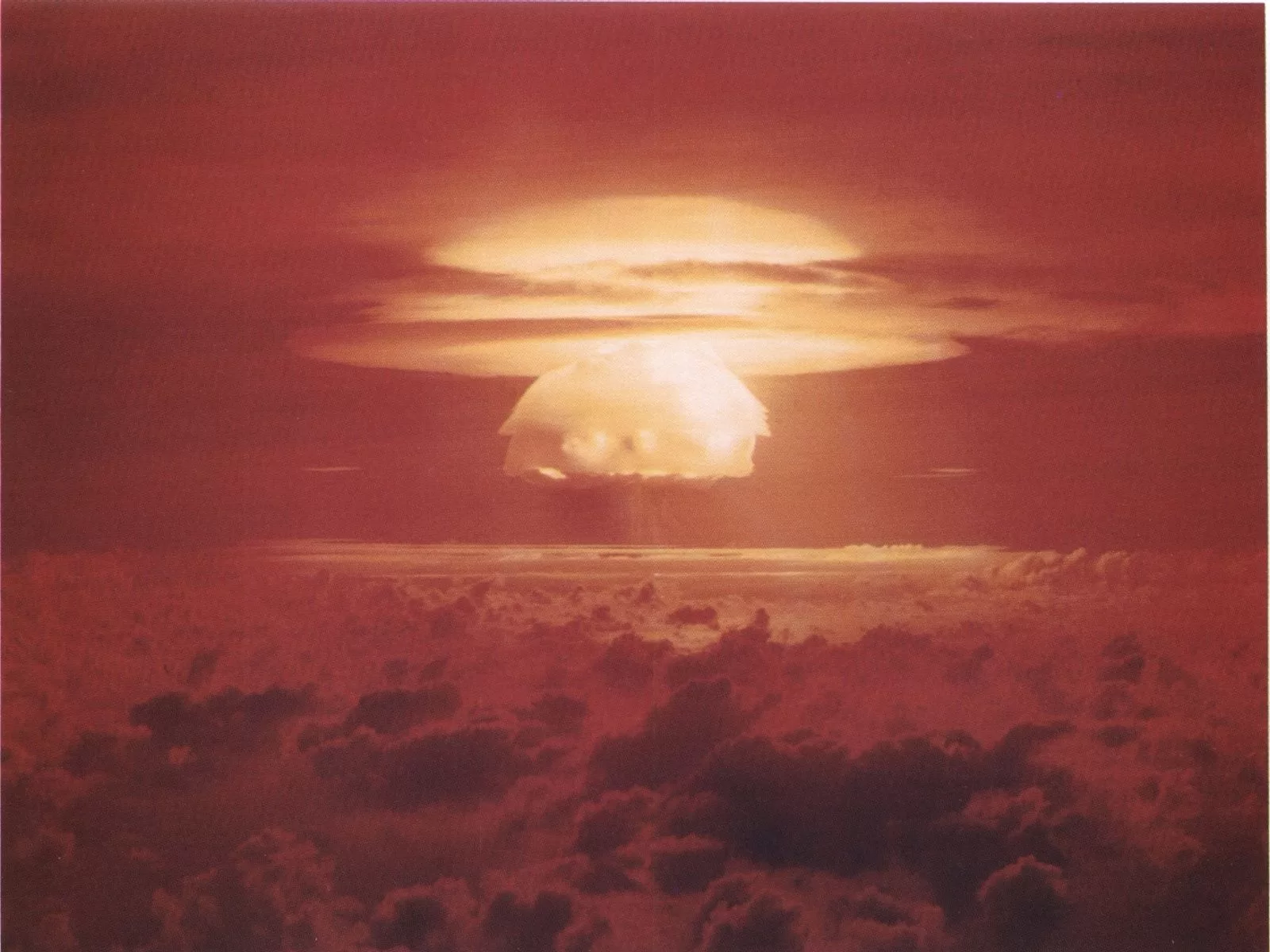
On March 1, 1954, a seemingly ordinary tuna fishing boat, the Daigo Fukuryū Maru (Fifth Lucky Dragon), found itself at the epicentre of an event that would forever change the global perception of nuclear weapons. Far from a simple fishing trip, the vessel and its 23-man crew became accidental victims of the United States’ “Castle Bravo” hydrogen bomb test at Bikini Atoll, sparking international outrage and becoming a poignant symbol of the dangers of the nuclear age.
The Fateful Voyage
The Daigo Fukuryū Maru, a wooden-hulled tuna longliner, had departed from its home port of Yaizu, Shizuoka Prefecture, on January 22, 1954, for a routine fishing expedition in the South Pacific. Its crew, like many Japanese fishermen, relied on the bounty of the ocean for their livelihood. Little did they know that their journey would intersect with a destructive force unlike anything humanity had ever witnessed.
Castle Bravo: The Unforeseen Fallout
The United States was conducting a series of nuclear tests at Bikini Atoll in the Marshall Islands. “Castle Bravo,” detonated on March 1, 1954, was the most powerful hydrogen bomb ever tested by the U.S. and remains one of the largest nuclear detonations in history. Its yield, originally estimated at 6 megatons, turned out to be an astonishing 15 megatons – more than twice the expected power.
The unforeseen high yield, coupled with a shift in wind patterns, caused the radioactive fallout to spread much wider than anticipated. The Daigo Fukuryū Maru, which was operating outside the designated danger zone, was caught directly in the path of this fallout. For several hours, a fine, white powder, later identified as radioactive coral dust and fission products, rained down upon the boat. The crew, initially oblivious to its true nature, even tasted it, remarking on its unusual sweetness.
The Immediate Aftermath and Sickness
Within hours, the crew began to experience severe symptoms. Nausea, vomiting, headaches, and skin lesions appeared. Their hair started falling out, and their eyes became inflamed. The boat’s radio operator, Aikichi Kuboyama, and others described a burning sensation on their skin. They immediately pulled up their fishing lines and began the long, harrowing journey back to Japan.Upon their return to Yaizu on March 14, two weeks after the incident, the true extent of their exposure became horrifyingly clear. The entire crew was suffering from acute radiation sickness. Their boat was highly contaminated, and the tuna they had caught were also radioactive.
The Human Cost and Global Outcry
The most tragic outcome was the death of Aikichi Kuboyama, who succumbed to liver dysfunction and other complications six months later, on September 23, 1954. He was the first victim of a hydrogen bomb and his death became a rallying cry for the anti-nuclear movement. The other 22 crew members, though they survived, suffered long-term health issues and psychological trauma.The incident ignited a firestorm of protest in Japan, a nation that had already experienced the horrors of atomic bombs in Hiroshima and Nagasaki. The public demanded an end to nuclear testing. Globally, the event raised serious concerns about the safety of nuclear weapons testing and the potential for widespread environmental contamination. It fueled the anti-nuclear movement worldwide and put immense pressure on nuclear powers to cease atmospheric testing.
The Legacy and Present Day
The Daigo Fukuryū Maru became a powerful symbol of the indiscriminate nature of nuclear warfare and the unforeseen consequences of nuclear testing. The international outcry directly contributed to the Partial Test Ban Treaty of 1963, which prohibited nuclear weapons tests in the atmosphere, outer space, and under water.Today, the Daigo Fukuryū Maru is preserved and displayed at the Tokyo Metropolitan Daigo Fukuryū Maru Exhibition Hall in Koto Ward, Tokyo.
It serves as a stark and poignant reminder of the dangers of nuclear weapons and a testament to the enduring human cost of their development and use. Visitors can walk around the actual vessel, reflect on its story, and learn about the devastating effects of radiation.The story of the Daigo Fukuryū Maru is not just a historical footnote; it is a vital lesson for humanity, urging us to strive for a world free from the threat of nuclear annihilation.
INT. BBC BROADCASTING HOUSE – STUDIO 4 – NIGHT (2025)
JONATHAN FINCH (50s, impeccably dressed, face a mask of strained professionalism) sits at a sleek, minimalist news desk. The studio is dark, save for the glow of monitors and a single spotlight on him. Opposite him is not a guest, but a curious device: a brass and Bakelite telephone, wires snaking from it into a humming server rack labelled ‘PROJECT CHRONOS’. The iconic BBC News globe spins on a screen behind him.
JONATHAN (To camera, a practiced smile not quite reaching his eyes)
Good evening, and welcome to Perspectives. The program where we believe no issue is so settled it can’t be debated, and no voice so controversial it shouldn’t be heard. Our mission, as always, is to provide balance. To hear both sides.
He pauses, taking a slow breath.
JONATHAN (CONT’D)
Tonight, we take that mission to its ultimate conclusion. Using ‘Chronos’ technology, (which allows for audio communication across time), we will be speaking to a figure from history. A figure whose actions have, for eighty years, been presented from a single, overwhelmingly negative, viewpoint. In the interest of absolute impartiality, we are going to ask a simple question: were there any benefits to the Holocaust? And to answer, we are going live to the Wolf’s Lair, in November 1944, to speak with the German Chancellor, Adolf Hitler.
A nervous energy ripples through the off-camera crew. A junior producer is physically sick into a bin. Jonathan ignores it, his focus entirely on the antique telephone. A technician gives him a thumbs-up. The phone emits a crackle, then a series of clicks.
OPERATOR (V.O.) (Filtered, distant)
…verbunden. Sie sind auf Sendung, mein Führer.
A voice, thin and reedy, yet bristling with a terrifying, familiar energy, cuts through the static.
HITLER (O.S. {On Screen.}) (In German, with English subtitles on screen)
Who is this? Who dares interrupt my strategic planning? Explain yourself.
Jonathan visibly swallows. His practiced neutrality is already being tested.
JONATHAN
Good evening, Chancellor. My name is Jonathan Finch. I’m a journalist with the British Broadcasting Corporation… calling from the year 2025.
There is a long pause. The only sound is the hiss of the time-stream.
HITLER (O.S.)
Sorcery. Is this a new weapon from Churchill? A psychological trick?
JONATHAN
No, sir, not at all. Think of it as… a very, very long-distance telephone call. We wanted to offer you an opportunity. History has, shall we say, judged your… racial purity project rather harshly. We at the BBC feel it is our duty to provide balance, to allow you to present your side of the argument. Specifically, on the, ah, perceived benefits of the Final Solution.
The word “benefits” hangs in the air, grotesque and obscene. Hitler, however, seems to process the request. The paranoia in his voice is replaced by intrigued arrogance.
HITLER (O.S.)
Benefits? Benefits! Of course, there are benefits! It is the most logical, most necessary act of national hygiene in human history! You speak from 2025? Then you must have seen the glorious result! A pure, strong Europe, free of the parasitic influence that has corrupted our blood and finance for centuries.
JONATHAN (Nodding, taking a note on his tablet)
So, you would frame this primarily as a matter of… public health?
HITLER (O.S.)
It is the health of the Aryan soul! It is a spiritual cleansing! We remove the weak, the degenerate, the alien element, and the body politic thrives. Our economy, unburdened by their usury, becomes a marvel of efficiency. Our culture, unsullied by their decadent art and ideas, returns to its classical, heroic roots. We are creating a master race, and you ask me for benefits as if it is a choice between two brands of soap! It is destiny!
Jonathan’s professional veneer is cracking. His face is pale. He glances at his producer, ANNA, who is frantically drawing a finger across his throat.
JONATHAN
To play devil’s advocate, Chancellor… there was a significant human cost. Millions of… individuals were… negatively impacted. How do you square that circle from a utilitarian perspective?
HITLER (O.S.) (A short, barking laugh)
“Individuals”? You sound like one of them. There is no individual, only the Volk. The Folk. Does a surgeon weep for the cancer cells he cuts from a body? No! He rejoices, for the body will live. We are the surgeons of humanity. The cost is irrelevant. The future is everything. I have freed Germany from a disease. Is that not a benefit your simple mind can grasp?
JONATHAN
But the methods… the industrial scale of the extermina— of the, uh, relocation. Many in our audience would find that morally… problematic.
HITLER (O.S.)
Your audience is weak! Corrupted by eighty years of lies! Morality is the will of the strong. Efficiency is a virtue! We proved that our methods were without peer. The scale was a testament to our conviction. It was a triumph of German logistics and will!
Jonathan stares into the middle distance. The concept of “balance” has revealed itself to be a black hole, sucking all decency and reason into its void. He is platforming pure evil, wrapping it in the language of a mundane policy debate. He abandons the script. His voice drops, losing its polished broadcasting tone.
JONATHAN
Did you ever visit the camps, Chancellor? Did you ever stand by the pits? Did you smell it?
The question is raw, human. It breaks the entire premise of the show. For the first time, Hitler is silent. The sneering confidence is gone. When he speaks again, his voice is a low, venomous hiss.
HITLER (O.S.)
What did you say?
JONATHAN (Louder, firmer)
The smell. Of burning hair and flesh. Was that a ‘benefit’ as well? Or the sight of a child’s shoe in a pile of thousands? Was that a ‘logistical triumph’?
HITLER (O.S.) (Screaming now, the voice distorting)
You! You are one of them! A Jewish trick! Lies! Slander! You will pay for this insolence! Germany will find you, even in the future! We will cleanse you all! We will—
The connection is abruptly severed. A technician rips off his headset, his face ashen. The studio is plunged into a deafening silence, broken only by Jonathan’s ragged breathing. He looks down at his hands, then up at the camera. The mask of the impartial journalist is gone, replaced by an expression of profound, soul-deep horror. He has provided “balance.” He has given “both sides” a voice. And in doing so, he has stared into the abyss, and dragged his entire audience in with him.
The red “ON AIR” light blinks off. But the damage is done.
[SCENE CONTINUES]
Anna rushes to his side. The studio door flies open and SIR DAMIAN HAWKSWORTH, the BBC’s Director-General, storms in, his face crimson.
SIR DAMIAN
Finch! Have you lost your mind? “The smell of burning flesh”? That wasn’t in the script! You were supposed to be a neutral conduit!
JONATHAN (Standing, his voice trembling with rage)
Neutral? To that? We were asking for the benefits of genocide, Damian! The very notion of balance was the original sin!
SIR DAMIAN
Do you have any idea what you’ve unleashed? The phone lines are exploding. The network is crashing. The Home Secretary is on line one and I think he’s having an aneurysm!
From outside, a new sound penetrates the studio walls: the confused yelling of crowds, the shattering of glass, the rising wail of sirens. Anna holds up her phone, her hand shaking. The screen shows a live feed from Parliament Square. A mob is fighting with police. A banner is visible, bearing a twisted, ancient symbol. The headline reads: Far-right groups claim “vindication” after BBC Hitler broadcast.
JONATHAN
My God… they’re celebrating. They think he won the debate.
He looks at the Chronos device, the brass telephone now seeming like a totem of some forgotten, malevolent god. The fallacy wasn’t just in the question, but in the belief that some ideas could be safely debated at all.
JONATHAN (His voice suddenly cold and clear)
We have to go back.
SIR DAMIAN
Absolutely not! The project is cancelled. The servers are being wiped.
JONATHAN
No. We opened this door. We have to show them what was on the other side. We can’t let his be the last word.
He looks past Sir Damian, his eyes finding the terrified young technician who cut the first feed.
JONATHAN (CONT’D)
I’m not asking. I’m telling you. Put me back on the air. And get me Auschwitz. January, 1945. Find someone who speaks Yiddish. I don’t care how. Do it now.
Sir Damian stares, apoplectic, but Jonathan is already sitting back at the desk, straightening his tie, his face no longer one of horror, but of terrible, righteous purpose. He is no longer providing balance. He is atoning.
JONATHAN (CONT’D) (To Anna, his voice a low command)
And keep that camera rolling. Let them see all of it.
Anna, catching his look, nods slowly and speaks into her comms.
ANNA
We’re going live again. On all channels. This is no longer Perspectives. This is a public broadcast.
The technician, compelled by the sheer force of Jonathan’s will, begins frantically typing coordinates into the Chronos system. The Bakelite phone begins to hum once more. Outside, the sounds of chaos swell, a city teetering on the brink. The red “ON AIR” light flicks back on.
[SCENE END]
[SCENE START]
INT. BBC BROADCASTING HOUSE – STUDIO 4 – NIGHT (2025)
The red “ON AIR” light glows with an intensity that seems to suck the air from the room. On the monitors behind Jonathan, the BBC News globe is gone, replaced by a simple, stark caption: “LIVE BROADCAST”.
Jonathan leans into his microphone. The man who began the broadcast an hour ago—smug, professional, a slave to protocol—is gone. This new man is gaunt, his eyes burning with a zealot’s fire.
JONATHAN (To camera, his voice low and raspy…)
What you just witnessed was a failure. Not a technical failure, but a moral one. My failure. I work for an organization that believes in balance, and I, like them, have worshipped that idea blindly. But some things have no balance. Some truths are absolute. We gave a platform to a great and terrible evil in the name of impartiality. And in the streets of this city, that evil has found new disciples.
He gestures vaguely towards the chaos outside.
JONATHAN (CONT’D)
There is only one way to answer a lie of that magnitude. It is not with debate, but with truth. We are going back. Not to a bunker, not to a seat of power, but to the end of the argument. To the place where all the theories of racial hygiene and national destiny found their final, logical expression. We are going to Auschwitz-Birkenau. January 27th, 1945. The day of its liberation.
Sir Damian stands frozen by the door, a silent, horrified statue. Anna whispers commands into her headset, her face a mixture of terror and fierce loyalty. The young technician’s fingers fly across his keyboard, his knuckles white.
The Bakelite phone crackles. It is not the clean connection of the Wolf’s Lair. This is a sound from hell. A wash of harrowing noise fills the studio: the thin, cutting wind whistling through barbed wire, a distant, rhythmic clang of metal on metal, and underneath it all, a sound that is almost subliminal, a low, collective moan of human misery.
On a side monitor, a video call connects. A frail, elderly man, PROFESSOR ELI WEINBERG, a Yiddish scholar from the University of London, appears. He looks bewildered.
ANNA (V.O.)
“Professor, just translate whatever you hear. Please.”
The technician isolates a thread of sound from the cacophony. It is a voice. A woman’s voice, so weak it is barely more than a whisper, humming a fractured melody.
JONATHAN (His voice cracking)
“Can you… can you ask her name?”
Professor Weinberg swallows hard, his eyes welling up. He leans into his own microphone, and speaks in hesitant, gentle Yiddish.
(Subtitles appear on screen) PROF. WEINBERG: Ken ikh fregn vehr du bist? (May I ask who you are?)
The humming stops. A long pause. The studio holds its breath. Then, the voice. It is thin, brittle as dry leaves.
LEAH (O.S.): Ikh heys Leah. Ikh gedenk nit mayn familia-nomen. (My name is Leah. I don’t remember my family name.)
Jonathan closes his eyes. He is no longer in a London studio. He is in the cold, the filth, the despair.
JONATHAN:
“Leah… My name is Jonathan. We are… listening. Can you tell us where you are? What do you see?”
Weinberg translates, his voice thick with emotion.
LEAH (O.S.): Ikh bin in der kazarme. Der shtank… der shtank iz umetum. (I am in the barracks. The smell… the smell is everywhere.) Di Rusn zaynen do. Zey hobn geefnet di toyern. (The Russians are here. They opened the gates.) Zey veynen. Di soldatn… zey veynen. (They are crying. The soldiers… they are crying.)
The screen behind Jonathan now shows the live feeds from London. The rioting is slowing. Confused faces are turning towards screens in shop windows, in pubs, in their hands. The hateful chants are faltering, replaced by an uneasy silence as the thin, Yiddish voice cuts through the night.
JONATHAN:
We heard another voice, Leah. A man who said what was done to you was… a benefit. That it was necessary.
The cruelty of the statement is immense, but Jonathan’s intent is clear. He is holding up the lie to the flame of her truth.
A sound comes through the speaker. A dry, rasping sound. It takes a moment for them to realise she is laughing. It is the most terrible sound any of them have ever heard.
LEAH (O.S.): A nutzen? (A benefit?) Ikh hob gezen mayn shvester’s shikh in a berg fun toyznter. (I saw my sister’s shoe in a mountain of thousands.) Mayn foter’s briln in a kasn. (My father’s spectacles in a box.) Der “nutzen” iz der roykh vos shtaygt fun di krematoryumes tog un nakht. (The “benefit” is the smoke that rose from the crematoria, day and night.) Zog dem man… zog im az zayn groyse daytchland iz geboyt gevorn af a barg fun kinder-beyner. (Tell this man… tell him his great Germany is built on a mountain of children’s bones.)
Professor Weinberg is openly weeping now, unable to translate for a moment. Anna has to prompt him. He takes a shaky breath and relays Leah’s words, each one a hammer blow to the studio’s silence.
JONATHAN: (His own tears flowing freely)
Leah… what do you want us to know? What do you want us, in the future, to do?
There is a long silence on the line, only the whistling wind of that Polish January. When she finally speaks, her voice is not angry. It is exhausted. A soul scoured clean of everything but a single, final duty.
LEAH (O.S.): Gedenk unz. (Remember us.) Nit mit has, nit mit nekome. (Not with hatred, not with revenge.) Gedenkt nor az mir zaynen geven. Az mir hobn gelibt, un gelakht, un geveynkt. (Just remember that we were. That we loved, and laughed, and wept.) Zayt undzer zikorn. (Be our memory.)
The line goes dead.
The connection is gone. The studio is utterly silent. Jonathan looks up, directly into the camera lens. His face is a ruin, a testament to the horror he has channelled. There is nothing left to say. He has shown them the other side. He has destroyed the balance with the weight of a single soul.
He slowly, deliberately, reaches out and turns off his microphone.
On the screens behind him, the feed from Parliament Square shows the last of the mob quietly dispersing, their banners of hate now looking cheap and pathetic in the face of the abyss that had just been opened on national television. The sirens have stopped. London is quiet. The entire world seems to be holding its breath.
[SCENE END]
[SCENE START]
INT. BBC BROADCASTING HOUSE – STUDIO 4 – NIGHT (2025)
The silence in the studio is absolute, a vacuum where the horrors of the past and the chaos of the present have cancelled each other out. Jonathan Finch remains at the desk, his hand still resting on the microphone switch, a priest who has just concluded a terrible, necessary sacrament.
The spell is broken by the studio door crashing open. It’s not Sir Damian this time. Two men in dark suits, their faces grim and unreadable, flank a woman with severe grey hair and the unmistakable air of high government authority. This is the Home Secretary. Sir Damian shuffles behind them, looking like a ghost at his own funeral.
HOME SECRETARY (Her voice is low, controlled fury)
“Jonathan Finch?”
Jonathan doesn’t stand. He simply turns his head to look at her. His eyes are empty of fear.
JONATHAN
“Yes.”
HOME SECRETARY
On behalf of His Majesty’s Government, you are under arrest. For misuse of state assets, incitement to public disorder, violation of the Official Secrets Act, and about a dozen other charges we’ll invent before breakfast. The Chronos Project is now a matter of national security. Everything is classified. Everyone in this room will be detained and debriefed for the rest of their lives.
She gestures to her men. They move towards Jonathan. Anna makes a move to step in front of him, but Jonathan raises a hand, stopping her.
SIR DAMIAN (Stepping forward, his voice a pleading whisper)
“Minister, he… we… lost control. The broadcast… it was a mistake.”
JONATHAN (Cutting him off, his voice clear and steady)
“No, Damian. The first broadcast was a mistake. The second was a correction.”
He finally stands, his gaze fixed on the Home Secretary.
JONATHAN (CONT’D)
“You can arrest me. You can classify this until the sun burns out. But you can’t make people un-hear it. You can’t erase Leah. For an hour, the entire world stopped arguing about what was true and simply listened to it. You can’t put that back in the box.”
The Home Secretary stares at him, a flicker of something unreadable in her eyes. She saw the feeds from the cities. She saw the riots stop. She heard the voice from 1945.
HOME SECRETARY
“You broke the world, Mr. Finch.”
JONATHAN
“No, Minister. I just held up a mirror to a world that was already broken.”
He offers his wrists to the men in suits. As they lead him out, he doesn’t look back at his producer or his disgraced boss. His last glance is at the Bakelite telephone, sitting silent on the desk, a relic that connected the present to its most profound and painful lesson.
[MONTAGE]
DAY 1: The UN Security Council in emergency session. The Russian ambassador, for the first time in decades, does not veto a British-led resolution. The resolution is simply a global commitment to broadcast Leah’s testimony, unedited, in every language, every year on January 27th.
WEEK 2: A university lecture hall. A history professor throws her syllabus in the bin. “Today,” she says to her stunned students, “we are going to talk about the difference between a fact and a truth.”
MONTH 3: Outside the real, preserved gates of Auschwitz-Birkenau. A small, simple plaque has been added to the memorial. It reads, in Yiddish and in English: Zayt undzer zikorn. Be our memory. A young backpacker, who looks German, quietly lays a single white rose at its base.
YEAR 1: A courtroom. Jonathan Finch, looking older, is sentenced. The judge’s words are conflicted, the expression on his face one of a deep inner turmoil. He speaks of law and order, but his voice falters when he mentions the “unprecedented nature of the evidence.” The sentence is unexpectedly light. Community service. A lifetime ban from broadcasting.
[FINAL SCENE]
EXT. A PRIMARY SCHOOL PLAYGROUND – DAY (A FEW YEARS LATER)
Jonathan Finch, greyer and softer around the edges, sits on a park bench, watching children play. He is no longer a public figure. He is just a man. He holds a small, worn book in his hands.
Anna approaches and sits beside him. She works as a freelance documentarian now, producing small, independent films about history and memory. They sit in comfortable silence for a moment.
ANNA
“They want to dismantle the Chronos device. Bury it in concrete a mile underground.”
JONATHAN (Nodding slowly, not looking up from the playground)
“Good. It did its job.”
ANNA
“Do you ever regret it? Losing everything?”
Jonathan finally looks at her. The haunted look is gone from his eyes, replaced by a quiet, settled peace.
JONATHAN
“The man who started that broadcast lost everything. And he deserved to. But I didn’t lose anything that mattered. We asked a stupid, obscene question and got the only answer that has ever made sense.”
He looks back at the children, their innocent shouts of laughter filling the air.
JONATHAN (CONT’D)
She said, “Remember that we loved, and laughed, and wept.” She didn’t ask us to stop living. She asked us to be their memory.
He closes his eyes, and for a moment, he is not in a sunny playground in 2028, but in the whistling wind of a Polish winter, listening to a thin voice humming a fractured tune. And he remembers.
[FADE TO BLACK]
[Credits Roll; Set To Emotional, Ominous yet peaceful music.]
And how neurolinguistics shapes our ability to think about our thinking. 🤔 💭 (Meta-cognition).
Dances with neurons…
admin
In the ancient tale of Babel, humanity united to build a tower reaching toward heaven—until divine intervention scattered them across the earth, confusing their tongues and fragmenting their power. Today, we face a different reality: the tower has been rebuilt, but this time, it belongs to the few.
The modern Tower of Babel isn’t made of brick and mortar. It’s constructed from fiber optic cables, data centres, and algorithms. It’s the global information infrastructure that shapes how billions of people think, communicate, and understand their world. And unlike the biblical tower that belonged to all humanity, this one has been quietly seized by a handful of tech oligarchs, media moguls, and financial titans.
The Architecture of Control.
These digital architects don’t need to confuse our languages—they control the platforms where language lives. But their most insidious tool isn’t the algorithm itself; it’s the weaponisation of Multi-Level Marketing (MLM) structures combined with the systematic misuse of artificial intelligence to reshape how we think and speak.
MLMs have evolved beyond selling vitamins and cosmetics. They’ve become training grounds for epistemic warfare, teaching millions to abandon critical thinking in favour of dogmatic belief systems. The pyramid structure isn’t just about money—it’s about creating hierarchies of “truth” where questioning the system becomes heretical.
Now, these same patterns are being supercharged by what are essentially computational linguistic calculators—sophisticated pattern-matching systems that we’ve been conditioned to call “artificial intelligence.” These systems don’t understand language; they manipulate it with unprecedented precision, creating text that feels human while serving the interests of their controllers.
Consider how MLM language operates: adherents learn to dismiss sceptics as “negative,” to view criticism as “limiting beliefs,” and to treat their upline’s words as gospel. They’re taught that success comes from “mindset” rather than evidence, that doubt is weakness, and that questioning the system reveals a character flaw rather than intellectual honesty.
These computational systems amplify this manipulation exponentially. They can generate thousands of variations of MLM-speak, A/B test which phrases are most persuasive, and deploy personalised manipulation at scale. They analyse your digital footprint to craft messages that exploit your specific psychological vulnerabilities, all while maintaining the illusion of authentic human communication.
The result is linguistic programming on an industrial scale. MLM participants become unwitting missionaries for anti-critical thinking, but now they’re armed with AI-generated content that’s been optimised for maximum psychological impact. They spread viral memes that prioritise faith over facts, loyalty over logic, and testimonials over truth—but these memes have been designed by computational systems that understand human psychology better than most humans do.
The tower’s foundation rests on something more valuable than gold: our cognitive surrender. Every “mindset shift,” every adoption of MLM-speak, every abandoned critical question feeds the machine that transforms independent thinkers into ideological automatons. But now these machines can learn from our responses in real-time, constantly refining their manipulation techniques. We’ve willingly handed over the raw materials for our own intellectual subjugation, one algorithmically-optimised “paradigm shift” at a time.
The View from the Top
From their perch atop this digital Babel, the oligarchy enjoys an unprecedented view of human civilisation enhanced by computational systems that most people fundamentally misunderstand. These aren’t “artificial intelligences” in any meaningful sense—they’re sophisticated statistical engines that process language like a calculator processes numbers, without comprehension or consciousness.
But this misunderstanding is deliberate and profitable. By convincing the public that these systems possess human-like intelligence, the oligarchy has created a new form of technological mysticism. People defer to AI-generated content with the same reverence they once reserved for religious authority, assuming that anything produced by these systems must be objective, intelligent, or true.
This deference creates perfect conditions for manipulation. When an MLM leader shares “AI-generated insights” about success or wealth, followers don’t question the content—they’re awed by the technology. When political movements use computational systems to generate talking points, supporters assume they’re receiving sophisticated analysis rather than algorithmic propaganda.
The oligarchy can see patterns in our collective behaviour, predict social trends, and nudge entire populations toward desired outcomes—but now they can do so while hiding behind the veneer of artificial intelligence. Political movements rise and fall based on algorithmically-generated content. Markets shift with computationally-crafted narratives. Cultural conversations follow scripts written by statistical engines that have no understanding of culture or humanity.
These systems excel at mimicking human communication patterns while serving inhuman interests. They can generate endless variations of MLM-speak, conspiracy theories, or political rhetoric, each version optimised for specific psychological profiles. The result is mass manipulation that feels personal and authentic while being entirely artificial and calculated.
This isn’t necessarily the result of a coordinated conspiracy—though coordination certainly exists. More often, it’s the natural outcome of concentrated power in an interconnected world where computational linguistic calculators have been mythologised as omniscient oracles. When a few entities control both the infrastructure of information and the systems that generate it, they inevitably control the infrastructure of reality itself.
The Scattered Below
Meanwhile, the rest of us experience a strange inversion of the Babel story. Instead of being scattered by divine intervention, we’re being herded into MLM-inspired echo chambers that masquerade as empowerment movements, now supercharged by computational systems we’ve been trained to worship as artificial gods.
Our languages aren’t confused—they’re being systematically corrupted through linguistic manipulation techniques perfected in pyramid schemes and now scaled through computational engines. These systems don’t understand meaning; they manipulate symbols with ruthless efficiency, generating content that exploits our cognitive biases while appearing authoritative and intelligent.
The MLM playbook has become the template for modern discourse, but now it’s deployed through AI-generated content that most people can’t identify as artificial. Create in-groups and out-groups through algorithmically-crafted messaging. Establish unquestionable authorities backed by the mystique of artificial intelligence. Weaponise shame against questioners using computationally-optimised psychological triggers. Replace critical analysis with emotional manipulation delivered through personalised AI-generated content.
Whether it’s cryptocurrency cults sharing “AI insights,” political movements deploying bot-generated talking points, or wellness gurus using computational systems to craft their messaging, the same linguistic patterns emerge: absolute certainty backed by technological mysticism, persecution complexes reinforced by algorithmic echo chambers, and the demonisation of doubt through AI-amplified peer pressure.
This isn’t coincidence. MLM structures have proven remarkably effective at creating true believers, and computational systems have proven remarkably effective at scaling psychological manipulation. The oligarchy doesn’t need to create new methods of control when they can combine these proven techniques: the psychological manipulation of MLMs with the scalability and apparent authority of computational linguistics.
The result is a population trained to think in hierarchies, to trust technological authority over evidence, and to view questioning AI-generated content as not just betrayal but ignorance. We speak the same words but they’ve been drained of meaning by statistical engines, replaced with emotionally charged symbols that trigger programmed responses rather than thoughtful consideration.
The oligarchy doesn’t need to scatter us geographically when they can scatter us cognitively through personalised AI-generated realities. A population trained by MLM thinking patterns and conditioned to defer to computational authority poses no threat to concentrated power. We’re too busy defending our algorithmically-optimised pyramid scheme to recognise that we’re all trapped in the same tower, managed by systems that process our language like a calculator processes numbers—without understanding, consciousness, or concern for human wellbeing.
Breaking the Spell
Recognition is the first step toward resistance, but it requires unlearning both the linguistic patterns that MLM culture has embedded in our collective consciousness and the technological mysticism that has made us defer to computational systems as if they were omniscient oracles.
We must recognise how phrases like “trust the process,” “you’re not ready to understand,” and “successful people don’t question” function as thought-terminating clichés designed to shut down critical inquiry. But we must also recognise how the phrase “AI says” has become the ultimate thought-terminating cliché, shutting down scepticism through appeals to technological authority.
These computational linguistic calculators—sophisticated pattern-matching systems that process text like a calculator processes numbers—have no understanding, no consciousness, and no wisdom. They are tools that can be used for good or ill, but they are not the digital gods we’ve been conditioned to believe they are. When someone shares “AI-generated insights” or “what AI thinks about this,” they’re not sharing wisdom—they’re sharing the output of a statistical engine trained on human text, optimised to sound authoritative while serving the interests of its controllers.
The Tower of Babel was built with human hands, and it can be dismantled the same way—but first we must recognise how both MLM thinking and AI mysticism have compromised our cognitive immune systems. Decentralised technologies mean nothing if we lack the critical thinking skills to use them wisely. Independent media serves no purpose if we’ve been trained to dismiss inconvenient facts as “negativity” or to defer to AI-generated content as if it were prophetic revelation.
We must recognise that complexity is not weakness, that doubt is not disloyalty, and that questioning leaders—human or artificial—is not betrayal. Most importantly, we must distinguish between intelligence and sophisticated pattern-matching, between wisdom and statistical correlation, between understanding and computational mimicry.
The oligarchy’s tower may reach toward the heavens, but its foundation depends on our willingness to think like MLM participants (hierarchically, dogmatically, and uncritically) while worshipping computational systems as if they possessed human-like intelligence. Every choice to ask hard questions, demand evidence, and resist both linguistic manipulation and technological mysticism chips away at their monopoly on truth.
The same psychological techniques used to sell overpriced supplements are now being used to sell political ideologies, investment schemes, and social movements—but now they’re being deployed through computational systems that can optimise and personalise the manipulation in real-time. The product may change, the delivery system may evolve, but the fundamental manipulation remains the same: surrender your critical thinking, trust the system (whether human or artificial), and attack anyone who questions the narrative.
The question isn’t whether their tower will eventually fall—all towers do. The question is whether we’ll build something better in its place, or simply watch new oligarchs construct the next monument to concentrated power.
The tower stands today, casting its shadow across the world. But shadows only exist where there’s light to block. And that light—the light of human consciousness, creativity, and connection—remains ours to kindle.
Reclaiming our agency requires more than changing platforms; it requires changing how we think about both human persuasion and computational manipulation. We must learn to embrace uncertainty, to question both human and artificial authority figures, and to value evidence over enthusiasm—whether that enthusiasm comes from MLM uplines or AI-generated content.
And, I, oneself, and Cydonis Heavy Industries, are here, to help in that (en)kindling, for as long as we are able.
Our Amazing New Tools: Are We Smart Enough to Use Them Without Breaking Everything?
Doing that old evolution dance…
admin
You’ve probably interacted with it. Maybe you’ve asked it to write a poem, explain a tricky concept, or even generate an image from a wild idea. I’m talking about Artificial Intelligence, or AI – computer systems, keyboards, screens, displays, like the one helping to write this very post. It feels like magic, doesn’t it? A thinking machine, a digital brain, ready to chat and create.
But beneath the shiny surface of these incredible new tools, just as with the wheel, fire, arrowhead, spanner, abacus, pen, or hammer, there are some genuinely massive questions we need to start asking ourselves – questions about the planet, about how our societies work, and even about the fundamental limits of our own human brains. This isn’t just about cool tech; it’s about our shared future.
We’ve been having a deep conversation about this, and it’s time to share some of the big, and frankly, sometimes scary ideas that came up.
Part 1: So, What Is This “AI” Thing, Really?
You might hear tech folks talk about AI in complex terms. At its very core, a lot of what modern AI (like the large language models you interact with) does is a kind of super-advanced pattern matching.
Imagine you feed a computer millions of books, articles, and websites. It learns how words and sentences fit together. When you ask it a question, it’s essentially making incredibly educated guesses about what words should come next to form a sensible answer. One way to describe its inner workings is as a “linguistic calculator of tokenised integers.” That means:
Tokenisation: Words and sentences are broken down into pieces (tokens) and turned into numbers (integers).
Calculation: The AI then performs mind-bogglingly complex mathematical calculations on these numbers, such as matrix multiplication and convolution.
Prediction: Based on these calculations, it predicts the next “token” or piece of information to generate a response.
A child encounters an abacus for the first time.
But here’s where calling it just a “calculator” falls short, and why it feels like so much more:
Emergent Abilities: From these calculations, surprising abilities “emerge.” (Secondary, emergent, epi-phonomena). AI can write different kinds of creative content, summarise complex texts, translate languages, and even generate computer code. It can understand context in a conversation and seem to “reason” (though it’s not human-like reasoning).
Learning is Key: It’s not just calculating; it learned to make those calculations meaningful by being trained on vast amounts of data. This training is what shapes its abilities.
Purpose Beyond Sums: The goal isn’t just to crunch numbers, but to understand and generate human-like language and information in a useful way. For advanced AIs like Google’s Gemini (which I am a part of), this extends to understanding and generating images, audio, and video too – it’s “multimodal.”
Creating these AIs isn’t the work of a lone genius. It’s the result of huge, collaborative efforts by teams of researchers and engineers, like those at Google DeepMind, bringing together expertise from many fields.
"Tradition is just peer pressure from the dead."– Peter Macfadyen. 📚 #quotes
Part 2: The Real-World Engine of AI – And Its Big Problems
AI doesn’t live in the clouds, not really. It runs on very real, very physical infrastructure: massive buildings called data centers. These are packed with powerful computers (servers) that do all that calculating. And these data centers, and the AI they power, face some serious real-world challenges:
Things Get Old, Fast: The computers in data centres have a limited lifespan. Technology moves so quickly that hardware becomes outdated or simply wears out every few years. This means a constant cycle of manufacturing, replacing, and disposing of electronic equipment.
The Climate Elephant in the Room: This is a huge one.
Energy Guzzlers: Training and running these powerful AI models takes an enormous amount of electricity. As AI becomes more widespread, its energy footprint is a growing concern, especially when much of our global energy still comes from fossil fuels that drive climate change.
Thirsty Work: Many data centres use vast quantities of water for cooling to prevent the servers from overheating. In a world facing increasing water scarcity, this is a major issue.
Physical Risks: Climate change also means more extreme weather events – floods, storms, heatwaves – which can directly threaten the physical safety and operation of these critical global data centres.
Shaking Up Society: Beyond the environmental concerns, AI is already sending ripples (and sometimes waves) through our societies:
Job Fears: Many people are understandably worried about AI automating jobs currently done by humans.
Economic Shifts: The rise of AI could lead to big changes in how economies work, potentially creating new wealth but also widening the gap between those who benefit and those who are left behind to die.
Part 3: The Human Factor – Are We Our Own Biggest Stumbling Block?
Now, let’s turn the lens from the technology to ourselves. A really challenging idea we discussed is something we’ll call “Asymptotic Burnout.”
Think about the massive, interconnected problems our world faces – the climate crisis being the prime example, with its countless knock-on effects (resource scarcity, migration, economic instability). The “asymptotic burnout” hypothesis suggests that:
Our Brains Have Limits: The human brain, for all its wonders, might have fundamental limits in its capacity to process, understand, and effectively respond to such overwhelming, complex, and rapidly evolving global crises. Our individual “synaptic signaling capacity” (basically, how much information our brain cells can handle) might just not be enough.
Our Systems are Too Slow: Even when we team up in large organisations or governments, we run into problems. There’s an “organisational lag.” Think about how long it takes for a problem to be recognised, a solution to be devised and agreed upon, and then actually implemented. This gap between “Problem-to-Solution Time” (let’s call it P/ΔT) and the speed (S) at which crises unfold can be disastrous. If the crisis is moving faster than our ability to respond, we fall further and further behind. ⏳🧠🌍💨🚀🛠🗣
Essentially, the “asymptotic burnout” idea is that humanity, both individually and collectively, might be reaching a point where we’re cognitively and organisationally overwhelmed by the sheer scale and complexity of the messes we’ve created or are facing. We’re approaching a limit, a “burnout” point, where our ability to cope effectively just… stretches beyond our ability to adapt or cope with. Our collective adaptation rate.
Part 4: When Super-Smart Tools Meet Overwhelmed Humans
So, what happens when you introduce incredibly powerful and rapidly advancing AI into a world where humans might already be struggling with “asymptotic burnout”?
This is where things get particularly concerning. Instead of automatically being a magic solution, AI could actually amplify the burnout and make things worse:
More Complexity, Not Less: AI could create new layers of complexity in our economic, social, and information systems, making them even harder for our “burnt-out” brains and slow systems to manage.
Faster, Faster, Too Fast: AI accelerates the pace of change. If we’re already struggling to keep up, this could simply widen the gap between the speed of problems and our ability to react.
Resource Drain: As mentioned, AI demands significant energy and resources. This could further strain a planet already under pressure, worsening the very crises contributing to our burnout.
Oops, Didn’t See That Coming(!) [To err is human]: AI is a complex system. It can have unforeseen consequences and create new kinds of problems that our already stretched human systems are ill-equipped to handle.
Power Shifts: AI could (and indeed, is) concentrate even more power in the hands of a few, potentially undermining the kind of global cooperation needed to tackle shared challenges.
The deeply unsettling thought here is: if humanity is already teetering on the edge of being overwhelmed in the next decade (the 2030’s+), could AI – a tool of immense power – inadvertently be the thing that pushes us over? Could its main “achievement,” in this dark scenario, be to accelerate a collapse we were already heading towards?
Part 5: The “Wisdom Gap” – Are We Building Things We Can’t Truly Control?
This brings us to perhaps the bluntest and most challenging conclusion from our discussions: We are creating tools whose demands for wisdom, foresight, and collective responsibility exceed our current human capacity to provide them.
Think about that for a moment. It’s not saying AI is inherently “evil” or has its own bad intentions. It’s suggesting that we, as a species, might not yet be collectively wise enough, coordinated enough, or far-sighted enough to manage something so powerful without it backfiring on us in profound ways.
This isn’t just a technological problem; it’s a human one. It’s about a “wisdom gap.”
If this is true – if it’s an objective fact of our current reality that our technological capabilities are outstripping our collective wisdom – then:
The biggest challenge isn’t just building smarter AI; it’s about us becoming a wiser species.
The gap between our power and our wisdom is itself a massive risk.
It might mean we need to think very differently about “progress.” Maybe true progress, for now, means focusing more on developing our collective ethics, our ability to cooperate globally, and our foresight, perhaps even being more cautious about how fast we develop certain technologies.
What Now?
This is a lot to take in, and it’s not a comfortable set of ideas. It’s natural to feel a bit overwhelmed, upset, unsettled, despairing, or even to want to dismiss it. But these are the kinds of conversations we need to be having, openly and honestly, if we’re to navigate the incredible power of AI and the other immense challenges of our time.
The “magic” of AI is real. But so are the responsibilities and the potential pitfalls that come with it, especially if we, its creators, are already struggling to manage the world we live in.
The question isn’t just “What can AI do?” It’s also “What can we do to ensure that what AI does is truly beneficial, and that we’re capable of steering it wisely?” Perhaps the most important innovation we need now isn’t just in our machines, but in ourselves.
What do you think? Please comment below, thank you, and good luck.
Citations:
Wong Michael L.
Bartlett Stuart
(2022) Asymptotic burnout and homeostatic awakening: a possible solution to the Fermi paradox?J. R. Soc. Interface. 1920220029 http://doi.org/10.1098/rsif.2022.0029
Rebuttal:
(2024) Why the Fermi paradox *may* not be well explained by Wong and Bartlett’s theory of civilization collapse. A Comment on: ‘Asymptotic burnout and homeostatic awakening: a possible solution to the Fermi paradox?’ (2022) by Wong and BartlettJ. R. Soc. Interface. 2120240140 http://doi.org/10.1098/rsif.2024.0140
Firstly, the initial premise of the question, (I would contend) is somewhat logically faulty. The Earth is ~4.5by (billion years) old, and was trundling along in her orbit and spinning rather finely without the advent of human life that came along with the first bipedal and opposable-y thumbed skinny and podgy little apes, that were the nascent beginnings of our ancestral lineage some roughly 1.2my (million years) ago.
So in combatting the climate crisis by switching our power supplies to more renewable and sustainable solutions, insulating our homes, engaging in more sustainable construction practices, and shouting from the rooftops about the desperate human need for net zero, what we’re really doing is trying to save a (omni+)suicidal species from themselves – saving the human race (one that does not want, nor asks to be saved, and fights tooth and nail against any form of change [nimby-ism, concern for nature as a form of dog whistling over actualised real estate value concerns], etcetera) from within. Although they demonstrate time and again, thanks to religious, dogmatic, literalist, eschatology, quite often peopleand organisations make the task far, far more difficult, sometimes near-impossible, even, than it needs to be.
Choices…
Secondly, the pursuit of the scientific method and pure research is not an either/or question. It is and always has been a symbiotic trickle down relationship between both activities.
“Why not both?” – Ask any child. (Whether it’s Haribo, Ice cream flavours, or geo-engineering options…) 🐥👶🏻🤱🏻⚖
Gaia (another ancient name for Earth) is quite happy to shake us off like a smelly dog with a bad case of fleas, and nurture once again another species from scratch, or just have a world ruled over by bacteria around sub-sea fumaroles and radiation eating, cenote dwelling archea.
So we will most likely attempt both, with the time we have left, before the climate crisis swings beyond all possible opportunities for applicable remediation. 🪦📈📊📉🪨🌎
The year is 2242. Humanity, though still grappling with its terrestrial issues, had finally begun to stretch its fingers beyond the Kuiper Belt. Outposts dotted the major moons, and automated mining facilities hummed in the asteroid fields. The next frontier, the true deep black, was the Oort Cloud – the vast, icy shell surrounding the Solar System, holding billions of potential resources and offering a launch-pad to the stars.
It was during the commissioning of the Odyssey, the first crewed long-range explorer, launched from a dry dock construction facility in orbit around Mars, and carefully, precisely, designed for interstellar precursor missions into the Oort Cloud, that they hit the wall. Not a physical wall, but something far stranger. Something that terrified everyone in the astronomical union to death.
As the Odyssey reached the calculated inner edge of the Cloud, deep space comms crackled.
“Approaching designated coordinates,” Commander Eva Rostova’s voice was calm, professional. “Sensors show… interference. Gravitational readings are stable, no immediate hazards detected.”
Then, a scream. Not of pain, but of impossible, visceral terror. Followed by silence. Utter, unnerving silence. Rescue probes were dispatched immediately. They carried cameras, sensors, and even biological samples in shielded containers. The probes themselves zipped through the region where the Odyssey had vanished without issue. Their cameras transmitted bizarre, swirling patterns of energy that seemed to coalesce just beyond the edge of the known Oort Cloud. The biological samples, however, returned inert, reduced to fine, inorganic dust within their containers. The shielded containers were untouched.
More tests followed, increasingly desperate and grim. Drones carrying lab rats, then primates, then even volunteer convicts on one highly controversial mission. The results were always the same: the non-organic components passed through, the organic matter was instantly, horrifyingly, annihilated. It was as if the very building blocks of life were offensive to whatever lay beyond.
Panic rippled through the Solar System. The dream of reaching other stars, of finding other life, was cruelly, inexplicably snuffed out. A cage had been built around them, invisible and absolute for anything that lived and breathed.
Analysis of the energy field was inconclusive at first. It wasn’t a conventional force field or radiation barrier. It was something designed, something targeted specifically at organic compounds. Then, hidden within the complex energy signatures, patterns began to emerge. Not just energy, but data. Complex, alien data streams that spoke of observation, of assessment, and of control.
Decrypted fragments revealed a chilling truth. A vast, unimaginably ancient extraterrestrial civilisation had encircled their system. They saw humanity not as a potential peer or threat, but as a volatile variable. They had observed Earth for millennia, witnessing its cycles of progress and destruction. Their conclusion: humanity was too unpredictable, its technological leaps too rapid and often coupled with self-destructive tendencies. They weren’t malicious in a conquest sense; they were curators, gardeners pruning a potentially invasive species before it could spread its chaotic seeds across the galaxy. Their goal wasn’t annihilation, but containment and directed evolution – control over humanity’s outward progress until they deemed it ‘ready’, or perhaps, until they deemed it harmless.
The Oort Cloud barrier was their ultimate, elegant solution. Let humanity thrive within its solar cradle, build its machines, explore its planets. Enjoy their games, sports and war machines. But step outside the boundary with so much as a single living cell, and face instant disintegration.
Humanity was left reeling. Trapped. The vastness of the universe, once a beckoning frontier, was now a taunting prison. The focus of scientific endeavour shifted overnight. No longer were they solely focused on reaching the stars, but on understanding the cage, on communicating with the unseen jailers, and perhaps, one day, finding a way to dismantle the bars – not with force, which seemed futile, but with understanding, adaptation, or perhaps even a demonstration that humanity could be trusted with the freedom of the cosmos. The probes continued their silent vigil at the edge of the barrier, the only witnesses to the invisible wall that held the fate of a species in its unyielding grip. The aliens watched and waited, patiently tending their human experiment, ensuring that for now, and for the foreseeable future, humanity’s progress would remain firmly within the confines of their controlled cosmic garden.
A patient garden. A whispering garden. A punishing garden.
“YOUR SINS WILL BE READ TO YOU CEASELESSLY THROUGHOUT ETERNITY.”
“YOU CAN NEVER LEAVE.”
“OUR JUDGEMENT IS FINAL.”
Chapter Two.
“Seeing, contrary to popular wisdom, isn’t believing. It’s where belief stops, because it isn’t needed any more.” – Pyramids, Terry Pratchett.
The decryption of the alien data streams continued, growing more sophisticated, more terrifying. What initially seemed like abstract judgements on humanity’s ‘volatility’ began to coalesce into something far more personal. Buried deep within the complex alien algorithms, within the data matrices that assessed human behaviour, was a singular, recurring identifier. It pointed, with unwavering focus, to one man.
Jayce Warren.
The name resonated with a dark infamy in human history. A fossil fuel executive whose insatiable greed and pathological narcissism had driven his corporations to aggressively accelerate climate change, long after the science was undeniable. He was a man whose personal ambition was measured in melting ice caps and drowned coastlines, a genocidal psychopath masked by billionaire charm, who had single-handedly pushed Earth’s climate past the devastating 3°C tipping point, unleashing a cascade of irreversible ecological collapse and human death & suffering that would scar the planet for centuries.
The alien data revealed they had observed him. Not just his public actions, but every moment of his life. From the tantrums of infancy to the cold calculations of his board meetings, from his most private moments of sleep to his mundane trips to the bathroom. They had studied his neural pathways, his emotional responses, the chilling absence of empathy, the calculating cruelty. They had watched him make choices that prioritised profit over planetary survival, ego over the lives of billions.
For the aliens, vast and ancient intellects who measured galactic civilisations by their harmony with their environments, Jayce Warren was the ultimate, irrefutable proof of humanity’s inherent, catastrophic flaw. He was the living embodiment of unchecked self-interest, destructive power, and wilful blindness on a planetary scale. If one individual could wield such influence and inflict such damage, and if the species allowed him to do so, what horrors would a truly interstellar humanity unleash upon the wider cosmos? The Oort Cloud barrier wasn’t just a precaution based on millennia of observation; it was a direct, immediate consequence, a collective punishment. Humanity wasn’t being contained for its potential future sins, but for the very real, observed sins of one man. Jayce Warren, in his arrogance and destruction, had inadvertently signed the cosmic arrest warrant for his entire species. The alien data streams continued to flow, clinical and cold. They outlined the parameters of the containment field, the energy requirements, the constant monitoring.
And woven through it all was the lingering ghost of their analysis of Warren – a case study in planetary self-sabotage, a prime example of why this volatile species could not be allowed to escape its solar cage. The galaxy remained tantalisingly out of reach, not because humanity wasn’t ready in some abstract sense, but because the aliens had watched Jayce Warren, and they had decided the risk was simply too great. Humanity was trapped, paying the price for the monstrous legacy of one man’s choices. The silent barrier around the Oort Cloud was a monument to his sin, a cosmic judgement on a species found wanting, judged by the actions of its worst.
Chapter 3.
“If by your art, my dearest father, you have Put the wild waters in this roar, allay them. The sky, it seems, would pour down stinking pitch, But that the sea, mounting to the welkin’s cheek, Dashes the fire out.”
– William Shakespeare
The revelation about Jayce Warren hit humanity like a second, psychological barrier. The initial fear and frustration of being caged curdled into a toxic brew of shame, anger, and existential despair. How could the fate of an entire species, the potential to explore the vast tapestry of the cosmos, be forfeited because of the pathological actions of a single, monstrous individual? Recriminations exploded across the Solar System. Warren was already the most hated man in recorded history for the climate catastrophe he’d engineered. Now, his legacy expanded into the cosmic. Statues were torn down (those few that hadn’t been already), his name was purged from records where possible, and historical analysis became a frantic, desperate attempt to understand how they could have allowed such a man to wield such power. Was it a unique aberration, or did Warren represent a deeper, fundamental flaw in the human psyche, one the aliens had correctly identified?
Deep space programs, once focused on propulsion systems and life support, pivoted entirely. Fleets of highly sophisticated probes were designed, purely robotic, powered by advanced AI. These were humanity’s only ambassadors, their only hope of interacting with the unseen wardens. They were sent towards the Oort Cloud barrier, not carrying payloads for exploration, but complex data packages. The first packages were apologetic, pleading. They detailed the global condemnation of Warren, the desperate efforts to mitigate the climate damage he’d caused, the arguments that he was an outlier, not representative of the species’ true potential. They transmitted humanity’s art, music, philosophy – attempts to showcase the beauty and complexity that also existed within their nature.
The barrier remained, an impassive wall of energy. The probes passed through, delivering their data into the silent, swirling patterns beyond. Analysis of the energy field continued to yield data streams from the aliens, but they offered no response to humanity’s overtures. The alien data was solely focused on observation – sophisticated analyses of human sociology, technological development within the solar system, population dynamics, even psychological profiling derived from monitoring trillions of data points across the net. They were watching, always watching, assessing, but never communicating in a way that suggested dialogue or negotiation.
Frustration mounted. Some data packages became defiant, even accusatory. They challenged the aliens’ right to judge an entire species based on one member, questioned their own presumably perfect history, demanded explanation or release. These probes, too, passed through the barrier, their digital shouts swallowed by the indifferent silence beyond.
The psychological toll of this invisible, inescapable cage was immense. Knowing they were watched constantly, judged by unseen eyes based on the worst of their kind, fostered a pervasive sense of helplessness and paranoia. Innovation continued, but the driving force shifted from outward expansion to inward perfection – or at least, the appearance of it. Perhaps, some argued, if they could demonstrate absolute control, absolute harmony, the aliens might relent. Societies became more regulated, surveillance increased (ironically, mirroring the alien observation), all in a desperate, unspoken plea to their cosmic jailers.
But the barrier held. The alien data streams flowed, ceaselessly recording, analysing, judging. Jayce Warren’s shadow stretched across the solar system, a permanent stain on humanity’s record, a constant reminder that their freedom had been revoked, their cosmic destiny curtailed, all because of the sins of one man whom their silent, cosmic jury had found sufficient cause to condemn them all. The cold war was not fought with weapons, but with information, patience, and the crushing weight of a species’ collective guilt.
Chapter Four.
Seven hundred and fifty million years. The span stretched the imagination, a gulf of time that made the rise and fall of empires seem like the blink of an eye. On Earth, the sun, though still a G-type star, had brightened considerably. The atmosphere, ravaged by ancient warming and millennia of subsequent shifts, had failed. The great oceans, the cradle of life, had boiled away into space or been locked into super-critical states within the crust. The once vibrant blue marble was a parched, red-brown wasteland, a tomb world baking under an increasingly harsh sun. Humanity had long since fled, migrating outwards, establishing vast, enclosed habitats on the moons of the gas giants, mining the asteroid belts, and terraforming (on a small, internal scale) dwarf planets. They were a scattered, resilient species, bound together loosely by the stelnet, a solar system-wide network of high-energy laser tightbeams carrying instantaneous communication across the vast distances. Knowledge flowed, cultures diverged and merged, and the memory of Earth became a mix of sacred reverence and cautionary tale. But history, like a persistent ghost, had a way of returning in monstrous forms. From the icy blackness surrounding a captured Kuiper Belt object, now a fortified moonlet orbiting Saturn, a new power had risen. They called themselves the Inheritors of the Flame, but the rest of the solar system knew them simply as the Warrenites. On their dark, metal-encased fortress, built into the core of the moonlet, they venerated Jayce Warren. Not as a villain, but as a prophet, a visionary leader who had the courage to face the “necessary truths” of existence. Their twisted ideology, broadcast across the stelnet with relentless, fascistic zeal, claimed Warren’s actions weren’t destructive, but acts of ‘pruning’, clearing away the weak and sentimental for a stronger, more realistic future. The climate catastrophe wasn’t a failure, but a test, a crucible humanity had to endure to shed its naive dependence on a fragile environment. They lauded his narcissism as supreme self-reliance, his psychopathy as the ability to make hard, unemotional decisions others shied away from. Their propaganda was slick, pervasive, and chillingly persuasive to those disaffected or seeking a brutal certainty in the complex, fragile existence spread across the outer system. They offered order, strength, and a perverse pride in the very events that had shattered the past world.
Orbital bombardment. Total devastation.
And they had teeth. Over centuries, they had secretly amassed resources, built shipyards within the asteroid belt, and designed a fleet unlike any seen since the system-wide conflicts of millennia past. These were not exploration vessels or habitat transports, but sleek, angular warships bristling with particle beams, kinetic drivers, and energy shields. They were built for a single purpose: dominance.
Messages crackled across the stelnet, no longer just propaganda, but ultimatums. Demands for resources, subjugation of independent habitats, pronouncements of the Warrenite destiny to rule the solar system. Skirmishes began – swift, brutal attacks on independent mining stations, raids on transport convoys. The scattered, diverse peoples of the outer system, unused to large-scale conflict, were caught off guard. War beckoned, a horrifying echo of Earth’s past conflicts magnified onto a solar system scale. It was a war born of ancient sin, nurtured by distorted ideology, and spearheaded by the followers of a man whose actions had already cost humanity the stars.
And out beyond the Oort Cloud, the silent, invisible barrier remained. The alien data streams continued, their analysis of human behavior now recording this new, violent phase. One wondered if they saw it as a validation of their ancient judgment, or simply another, grimly expected turn in the chaotic saga of the species they had chosen to cage. The Inheritors of the Flame, in their fervent madness, seemed determined to prove the aliens right, not just by their internal wars, but perhaps, eventually, by turning their lethal fleet towards the barrier itself, seeking to break free with the very violence that had trapped them here in the first place.
Chapter Five.
War came, swift and brutal, igniting across the vast distances of the outer solar system. The Warrenites, fueled by fanatical zeal and centuries of resentment, unleashed their fleet. Across the stelnet, propaganda broadcasts mingled with tactical commands and chilling boasts of conquest. Independent habitats burned, asteroid mining colonies were seized or destroyed, and the fragile peace that had reigned for millennia shattered under the onslaught of particle beams and kinetic strikes. It was a war of ideology, a horrifying re-enactment of ancient Terran conflicts, fought not for resources alone, but for the soul of a scattered species, one faction desperately clinging to a toxic past as justification for present violence. But the Warrenites had a goal beyond mere solar system dominance. Their ultimate aim, the twisted culmination of their faith in Jayce Warren’s ‘vision’, was to prove humanity worthy of the cosmos. And for them, ‘worthy’ meant breaking the alien cage. They believed that if they could overcome this ultimate obstacle, violently assert their will against the cosmic wardens, they would somehow validate Warren’s legacy and earn their place among the stars. Gathering their most powerful warships, stripped of internal habitat components to maximize weapon capacity and shielding, the Inheritors of the Flame launched an armada towards the Oort Cloud barrier. Their advance was broadcast across the stelnet – a grand, terrifying spectacle intended to inspire awe in their followers and terror in their enemies. They spoke of ‘shattering the celestial chains’ and ‘claiming the rightful inheritance’ denied them by weaker hands. The fleet reached the barrier, a region marked by the ceaseless flow of alien data and the unsettling energy signatures that annihilated organic matter. With fervent cries broadcast over the stelnet, they fired their most powerful weapons. Fusion lances hotter than suns, kinetic projectiles accelerated to relativistic speeds, focused energy bursts capable of carving through moons.
Nothing happened.
The energy lances dissipated harmlessly, their immense power simply vanishing as they touched the field’s edge. The kinetic rounds, capable of obliterating a small moonlet, likewise ceased to exist the moment they crossed the invisible threshold. There was no explosion, no resistance, no visible effect on the barrier itself. It wasn’t deflected, wasn’t absorbed and redirected. It was simply impervious. Their most devastating attacks, the culmination of 750 million years of technological progress within the solar system, were met with absolute, silent nullification. Panic flickered across the faces of the Warrenite commanders shown on the stelnet feeds, quickly masked by grim determination and then, a chilling, fanatic reinterpretation. “It is a test!” screamed one commander, his face a mask of zeal. “The Inheritor’s final trial! The Barrier requires faith, not just force!” They threw themselves against it again and again. They tried complex energy frequency modulations, attempts at localized spacetime distortion, theoretical quantum destabilizers. Nothing worked. The barrier remained, an unyielding, passive fact of the cosmos, utterly unbreakable by any means at humanity’s disposal. It wasn’t a lock to be picked or a wall to be breached; it was a fundamental property of reality in that region of space, imposed by a power far beyond human comprehension.
Frustrated, humiliated in the face of cosmic indifference, the Warrenite fleet turned back from the barrier, their fervent energy curdling into a brutal, redirected rage. If they could not break the cage, they would dominate what was within it. The internal war intensified, the fury of their failed cosmic aspirations turned inward upon their own species.
The silent, unbreakable barrier remained at the edge of the system, a permanent testament to the judgment passed upon humanity. And the alien data streams continued, recording the futile violence, the ideological madness, the self-inflicted suffering unfolding within the confines of their perfect, inescapable cage. The war for the solar system raged, a contained conflict observed by silent, ancient eyes, a tragic confirmation that perhaps, just perhaps, Jayce Warren’s legacy had indeed proven humanity too dangerous for the stars.
Learn why, & indeed, how, the Universe is complex, supremely nuanced, and does not care about your wilful ignorance of it – that which was and is true remains true, with or without you, long before you had your first thought! If you truly care about your free speech, your human rights, then you MUST care also about the rights of others, even strangers, for that which erodes the rights of one, erodes the rights of all people(s). 🌍